
Best Heat Pump Financing for Veterans in 2026
- Bryn Fortmuller
- Jul 11
- 9 min read
Veterans deserve every dollar of savings available when upgrading to a heat pump, and right now there are more ways to pay for one than most people realize. Between federal tax credits, VA loan add-ons, California rebate programs, and veteran-friendly local contractors, the real challenge is knowing which option fits your situation. Here are the seven best financing paths for veterans in Placer County, Nevada County, and beyond.
1. Home Worx Heating and Cooling , Veteran-Friendly Local Financing in Placer & Nevada County
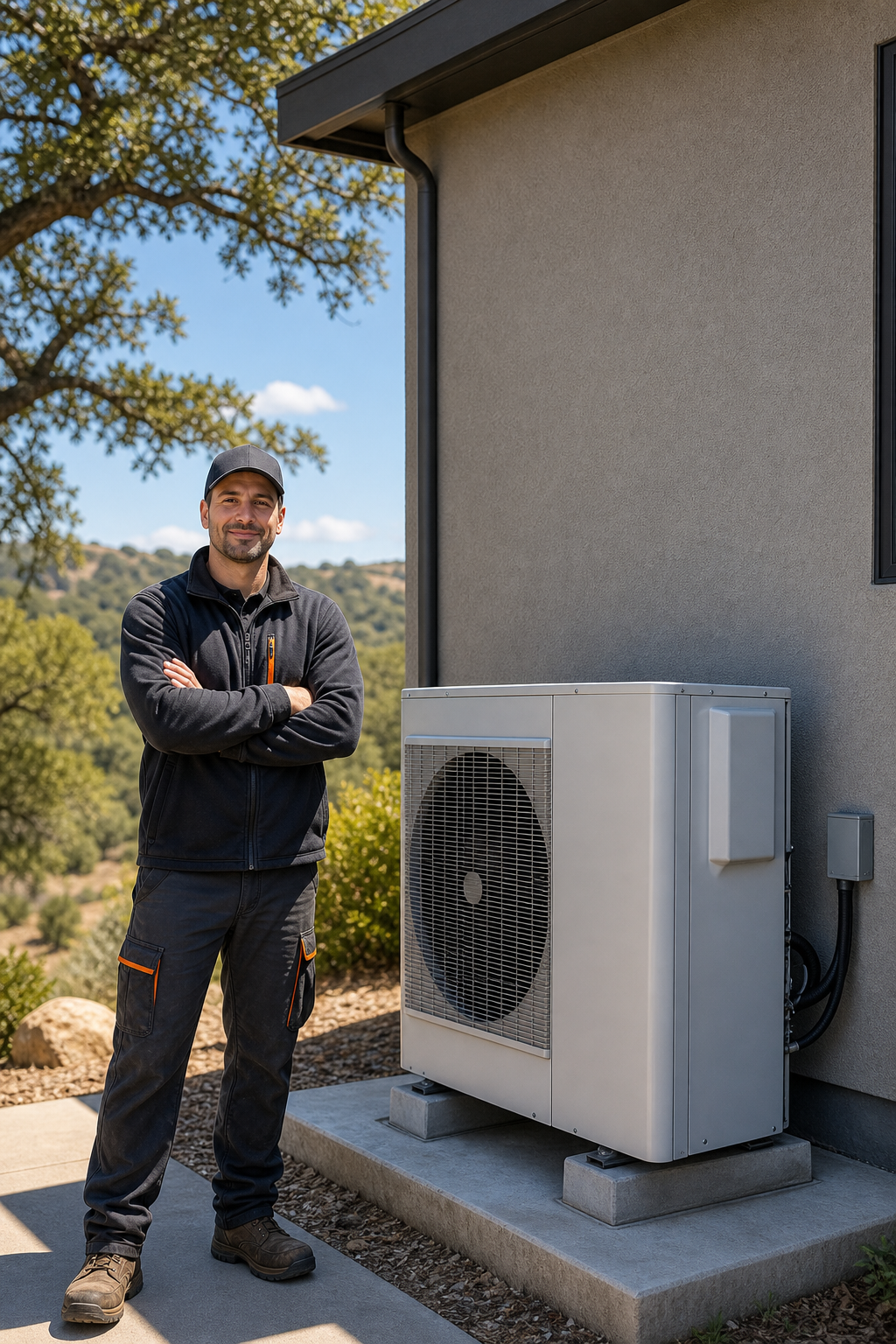
Home Worx Heating and Cooling is our top pick for veterans in Placer and Nevada County. It's a family-owned contractor based in Colfax, and it offers a 10% veteran discount on every job. That discount stacks on top of any rebate or tax credit you're already entitled to, which can take a meaningful chunk off an installation that might otherwise run $8,000 to $15,000.
Financing runs through Optimus, a third-party lender that approves more than 90% of applicants. You don't need perfect credit. The application takes minutes, and approval often comes the same day. No down payment is required, and monthly payments can be spread over terms long enough to keep the bill manageable, sometimes as low as a few dollars a day depending on system size.
Beyond the price, Home Worx backs every installation with a 5-year labor warranty and a 10-year factory warranty on parts. The team handles ducted and ductless heat pumps, so whether your Auburn or Colfax home has existing ductwork or needs a ductless mini-split in an addition, they can size the system correctly for your layout. If you want to understand how credit score affects your approval odds before you apply, the Home Worx guide on HVAC financing credit requirements breaks down exactly what lenders look for.
The one caveat: service is focused on Placer and Nevada County. If you're in Sacramento or farther south, you may need to pair this with another program from the list below.
2. VA Energy-Efficient Mortgage (EEM) , Roll Heat Pump Costs Into Your Home Loan
A VA Energy-Efficient Mortgage lets eligible veterans add up to $6,000 in energy improvement costs directly to a new VA purchase loan or a VA refinance. A heat pump qualifies. The advantage is straightforward: you borrow at the VA loan rate (typically lower than a personal loan or credit card), and the cost folds into your mortgage payment instead of sitting as a separate debt.
To use it, you need a VA appraisal that confirms the energy improvements will be cost-effective over the life of the loan. In most cases, a modern heat pump replacing an old gas furnace and central AC clears that bar without trouble, especially in California where electricity costs and climate make heat pump efficiency compelling.
The $6,000 cap does limit this option. A full ducted system can run above that, so many veterans use the EEM to cover part of the cost and combine it with the federal tax credit (Section 3 below) to close the gap. If you're not buying or refinancing, this option doesn't apply.
Good to know: the VA loan program has no private mortgage insurance requirement, which keeps carrying costs lower than FHA alternatives. Veterans with remaining entitlement who are already refinancing for rate reasons will find this the cleanest path to rolling in an HVAC upgrade at no extra financing cost.
3. Federal IRA Tax Credit (25C) , Up to $2,000 Back on a New Heat Pump
The Inflation Reduction Act's 25C tax credit gives homeowners 30% back on the cost of a qualifying heat pump, up to $2,000 per year. This is a direct tax credit, not a deduction, so it reduces what you owe the IRS dollar-for-dollar. Veterans who own their home and file federal taxes can claim it. The credit resets annually, so if you're doing a phased upgrade (adding a second zone next year, for example), you can claim again.
According to the U.S. Department of Energy's energy efficiency tax credit guidance , the system must meet specific efficiency thresholds to qualify. For heat pumps, that generally means a high-SEER2 unit certified by the Consortium for Energy Efficiency (CEE). Most major brands sold today hit that bar, but it's worth confirming with your contractor before you commit to a specific model.
You claim the credit on IRS Form 5695 when you file your return. Keep your itemized receipt from the installer and the product's manufacturer certification statement. Home Worx can provide the documentation you need at the time of installation, which makes the paperwork simpler.
Pro Tip:If your heat pump installation also involves adding insulation or sealing air leaks, those upgrades have their own 25C sub-limits. Tackling them in the same tax year lets you claim multiple credits on one return without touching the $2,000 heat pump cap.
4. HOMES and HEEHRA Rebate Programs , Free Money for Energy Upgrades
The IRA also funded two rebate programs separate from the tax credit: HOMES (Home Owner Managing Energy Savings) and HEEHRA (High-Efficiency Electric Home Rebate Act). California is rolling these out through the California Energy Commission. Once fully available, HEEHRA can cover up to $8,000 toward a heat pump for households that qualify by income, with no repayment required.
HOMES rebates are performance-based: the bigger the modeled energy savings, the larger the rebate. A whole-home switch from gas heating to a heat pump typically produces savings large enough to trigger the higher rebate tiers. Veterans at moderate income levels may qualify for rebates that effectively make the heat pump free after combining HEEHRA, HOMES, and the 25C credit.
The catch is timing. California's rollout has been gradual, and not every contractor is enrolled as a participating installer yet. Home Worx stays current on available programs in Placer and Nevada County. Ask the team directly what's active when you schedule your estimate, because the landscape shifts as new funding tranches open. Veterans who are also doing attic insulation upgrades alongside a heat pump install may find their combined project qualifies for a larger total rebate under the HOMES performance model.
Income documentation is the main requirement. You'll need recent tax returns or pay stubs to verify household income relative to area median income (AMI). The program sets rebate levels at 80% AMI and 150% AMI thresholds.
5. California CHEEF & PACE Financing , Low-Interest Loans Tied to Your Property
California's Clean Energy and Energy Efficiency Financing (CHEEF) program offers low-interest loans specifically for energy upgrades, including heat pumps. These loans run through participating lenders and are designed for homeowners who don't qualify for the best personal loan rates or who prefer keeping the financing tied to the project rather than their credit profile.
PACE (Property Assessed Clean Energy) financing is a related but different structure. With PACE, the loan attaches to your property and repays through your property tax bill rather than a separate monthly payment. You don't need strong credit to qualify; the lender looks at your home equity and tax payment history instead. For veterans who carry credit challenges from service-related financial disruptions, PACE can open a door that conventional lenders close.
The tradeoff with PACE is worth understanding clearly. Because the assessment attaches to the property, it can complicate a future sale or refinance if a mortgage lender demands payoff. The California PACE market also has a history of aggressive sales practices, so read the terms carefully and confirm the annual payment before signing. A reputable contractor will walk you through the numbers honestly.
For veterans in Nevada County who want to explore what financing looks like before committing, the Nevada City HVAC service page from Home Worx outlines financing options available to Grass Valley and Nevada City homeowners specifically.
Key Takeaway:PACE can work well for veterans with equity but limited credit, as long as you confirm the payoff terms before any planned home sale or refinance.
6. PG&E On-Bill Financing , Zero-Interest Heat Pump Loans for Northern California Veterans
Pacific Gas and Electric's on-bill financing program offers zero-interest loans for qualifying energy efficiency upgrades, repaid through your monthly utility bill. Heat pumps qualify. The loan amount and repayment term are set so that the monthly energy savings from switching to a heat pump roughly offset the repayment charge on the bill. For many Northern California veterans, the net monthly cost is close to zero.
You must be a PG&E residential customer with a clean payment history to qualify. The home also needs to be owner-occupied, which lines up with most veteran homeowner situations. The zero-interest structure makes this one of the cheapest financing methods available in terms of total cost, since you're paying back exactly what you borrowed with no interest added.
The limit on this option is the loan ceiling, which varies by program cycle and equipment type. Larger whole-home heat pump systems may exceed what the on-bill program covers alone, which is where stacking it with the 25C tax credit becomes useful. Veterans in Auburn, Colfax, Roseville, and other PG&E service areas in Placer County are in the right geography for this. Home Worx can confirm whether a specific installation qualifies when they conduct your free estimate. If your project also includes attic work to improve efficiency, reviewing typical attic insulation removal costs in the Sacramento region can help you budget the full scope before financing.
7. Veterans Affairs Specially Adapted Housing (SAH) Grant , Grants for Disabled Veterans
The VA Specially Adapted Housing grant provides funds to veterans with certain service-connected disabilities to modify or build a home that supports independent living. HVAC improvements, including heat pump installation, can qualify as part of a broader adaptive modification project when the climate control system is medically necessary or required for the veteran's accessibility needs.
The grant amounts are substantial. The SAH grant goes up to roughly $109,000 (amounts are adjusted periodically by Congress), and a smaller SHA (Special Home Adaptation) grant is available for a different set of qualifying disabilities. These are grants, not loans. No repayment required.
Eligibility is specific. You need a service-connected disability that affects mobility or requires adaptive housing. The VA evaluates each case individually, and a heat pump installation would need to fit within an approved modification plan. Veterans who already receive SAH benefits for other modifications should check with their VA regional loan center about whether HVAC work can be included in an existing or supplemental grant application.
If you're unsure whether you qualify, the VA's eBenefits portal or a Veterans Service Organization (VSO) representative can pull your records and walk through eligibility at no cost. This option is narrow but potentially the most valuable on this list for the veterans it fits.
How to Compare These Financing Options as a Veteran
The best path depends on three things: your credit, your home equity, and whether you're buying, refinancing, or already settled in your home. Here's a quick decision grid.
Option | Type | Max Benefit | Credit Required | Best For |
Home Worx Local Financing | Installment loan | Full system cost | 580+ | Placer/Nevada County veterans wanting fast approval |
VA Energy-Efficient Mortgage | Loan add-on | $6,000 | VA entitlement required | Veterans buying or refinancing |
Federal 25C Tax Credit | Tax credit | $2,000/year | Any (tax filer) | All veteran homeowners who file federal taxes |
HOMES / HEEHRA Rebates | Rebate (grant) | Up to $8,000 | Income-based | Moderate-income veterans |
CHEEF / PACE | Property-tied loan | Varies | Equity-based | Veterans with equity, limited credit |
PG&E On-Bill Financing | Zero-interest loan | Varies by cycle | PG&E account history | Northern California PG&E customers |
VA SAH Grant | Grant (no repayment) | ~$109,000 | Service-connected disability | Disabled veterans needing adaptive housing |
Most veterans will stack two or three of these. A common combination: Home Worx financing to cover the install upfront, the 25C credit to recover $2,000 at tax time, and a HEEHRA rebate if income qualifies. For Auburn and Placer County homeowners , Home Worx can help map which programs apply to your specific project before you commit to anything.
FAQ
Can veterans get free heat pumps through government programs?
Veterans can get heat pumps at little or no out-of-pocket cost by combining programs, but "free" depends on income and disability status. The HEEHRA rebate covers up to $8,000 for qualifying lower-income households. The VA SAH grant can cover HVAC as part of adaptive housing modifications for disabled veterans. Stack those with the 25C tax credit and you may get most or all of the cost back.
Does the VA loan cover heat pump installation?
Yes, through the VA Energy-Efficient Mortgage add-on. Veterans can roll up to $6,000 in energy improvements into a new VA purchase loan or VA refinance. The heat pump must be deemed cost-effective over the loan term, which a qualifying modern system typically satisfies. This doesn't work if you're not actively buying or refinancing your home.
What credit score do I need for heat pump financing as a veteran?
It depends on the lender. Home Worx's Optimus financing accepts scores from around 580. PACE financing skips the credit check entirely and looks at home equity instead. The federal tax credit and rebate programs have no credit requirement at all. Veterans with lower scores have more paths available for heat pump financing than most people assume.
Are heat pump installations eligible for the federal tax credit in 2026?
Yes. The 25C tax credit remains active and covers 30% of a qualifying heat pump's cost, up to $2,000. The system must meet current efficiency standards set by the IRS and Department of Energy. Any veteran who owns their home and files federal taxes can claim it on Form 5695 for the tax year the installation is completed.
Can I combine multiple financing programs for a heat pump?
Absolutely. Stacking is how most veterans get the best outcome. A typical combination: contractor financing to pay the installer upfront, the 25C federal credit at tax time to recover $2,000, and a HEEHRA rebate if income qualifies. The VA EEM can replace contractor financing if you're refinancing anyway. Programs generally don't prohibit each other, but confirm stacking eligibility with your contractor and tax advisor.
Conclusion
The strongest move for most veterans in Placer and Nevada County is to start with Home Worx: get a free estimate, confirm which rebates apply to your home, and let the team handle the documentation. We offer the veteran discount, the financing, and the installation expertise to make the process clean from start to finish. Reach out to the Home Worx team and ask about current program availability in your area before prices or rebate funding change.