
Bipolar Ionization Air Filter Benefits Explained
- Bryn Fortmuller
- Jun 30
- 4 min read
Fresh, clean air feels like a breath of relief. That’s what bipolar ionization promises for your home’s HVAC system. Below we break down how the technology works, why it matters for health, what the numbers look like, and how to install it right.
How Bipolar Ionization Works: Mechanism and Particle Agglomeration
In a bipolar ionizer, high‑voltage electrodes split water‑vapor molecules in the airstream into positive (H⁺) and negative (O₂⁻) ions. Those ions behave like tiny magnets, pulling opposite charges together. When they encounter airborne particles, dust, pollen, or microbes, the particles gain extra mass and clump into larger agglomerates that fall out of the breathing zone or get trapped by the HVAC filter.
Because the ions are short‑lived (about 60 seconds), the device must be positioned where the ions can reach the occupied space before they dissipate. ISO‑Aire explains the chemistry behind this rapid ion creation and why proper airflow is critical for effectiveness.
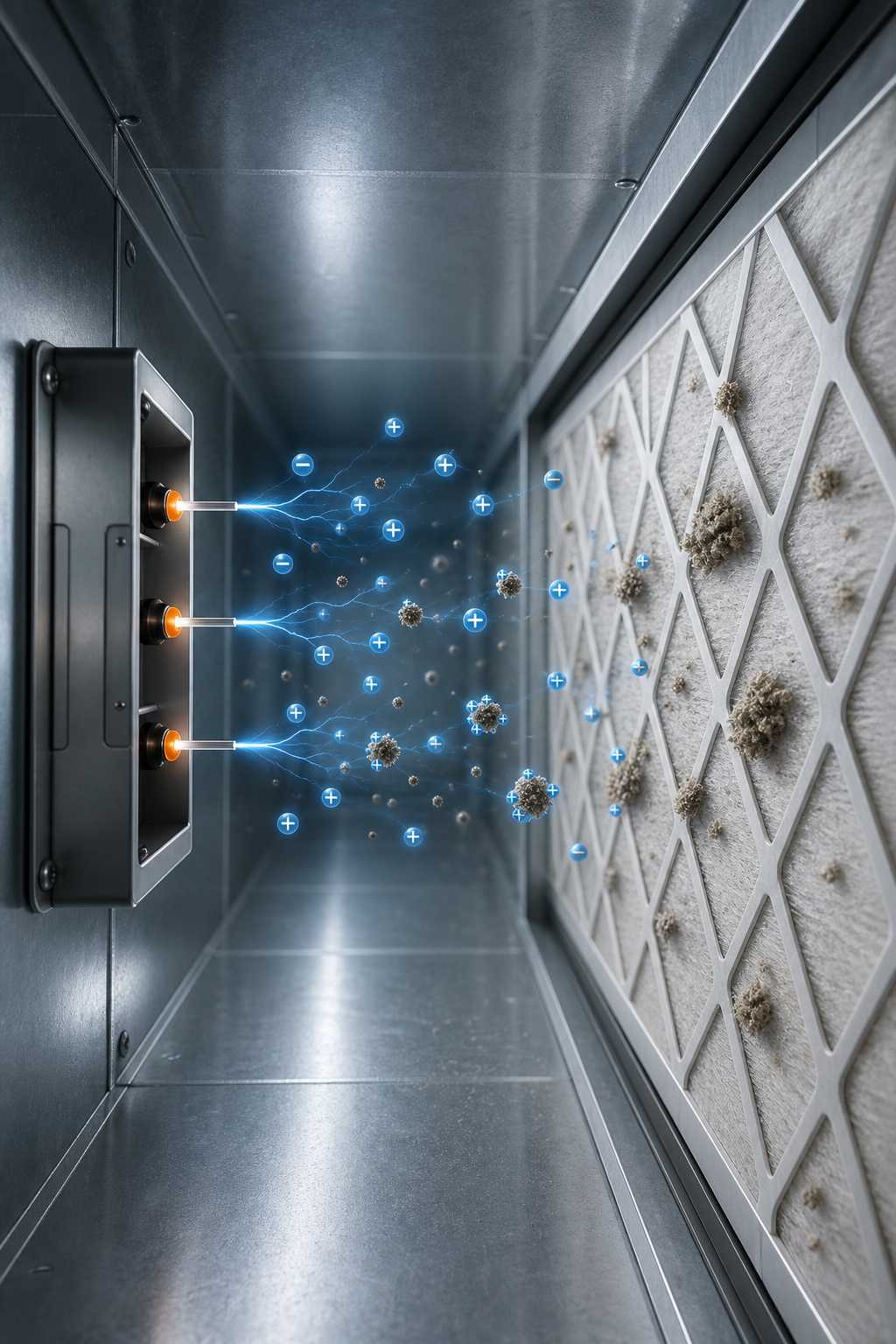
Home Worx Heating and Cooling often pairs the ionizer with a high‑efficiency filter. The combo lets the larger agglomerates settle onto the filter media, giving you cleaner air without a major pressure drop.
Think about it this way: the ions act like invisible hands that gather stray particles, then the filter does the heavy lifting. That two‑step dance is why many installers recommend a dedicated ionization unit rather than a generic ion plug‑in.
Pro Tip:Aim for a strong ion presence in occupied rooms. An appropriate measurement device can verify the ion levels.
Health Benefits: Pathogen Neutralization and VOC Reduction
Lab work shows bipolar ionization can inactivate up to 99.8% of bacteria and 94% of a test coronavirus on surfaces after just two hours. In a real‑world test, a bipolar ionization system cut airborne particle counts by roughly 60% and lowered volatile organic compound (VOC) levels by about 20% after four hours of operation.
Those numbers come from a peer‑reviewed study that measured Bacillus subtilis, Staphylococcus aureus, and a surrogate coronavirus in a sealed chamber. The study confirms high bacterial kill rates while noting no ozone or formaldehyde was produced. That safety note matters because some ionizers can generate unwanted by‑products if they aren’t UL 2998 certified.
For homeowners, the usable upside is fewer allergy triggers and a lower chance of airborne illness spreading through the house. The technology also helps break down odorous VOCs, leaving the indoor environment smelling fresher.
Key Takeaway:Expect solid pathogen reduction, modest VOC cuts, and zero ozone when using a certified bipolar ionization system.
Performance Metrics: Ion Concentration, Removal Rates, and Energy Use
Real‑world tests report ion concentrations can vary widely. At effective levels, particle removal can reach 60% in minutes, and viral aerosol reductions hover around 80% after half an hour.
Studies indicate that when a bipolar ionizer works alongside a high‑efficiency filter, overall HVAC fan power can drop because the filter sees less fine dust buildup. EPA’s guidance confirms the energy‑saving potential and stresses the need for ozone‑free certification .
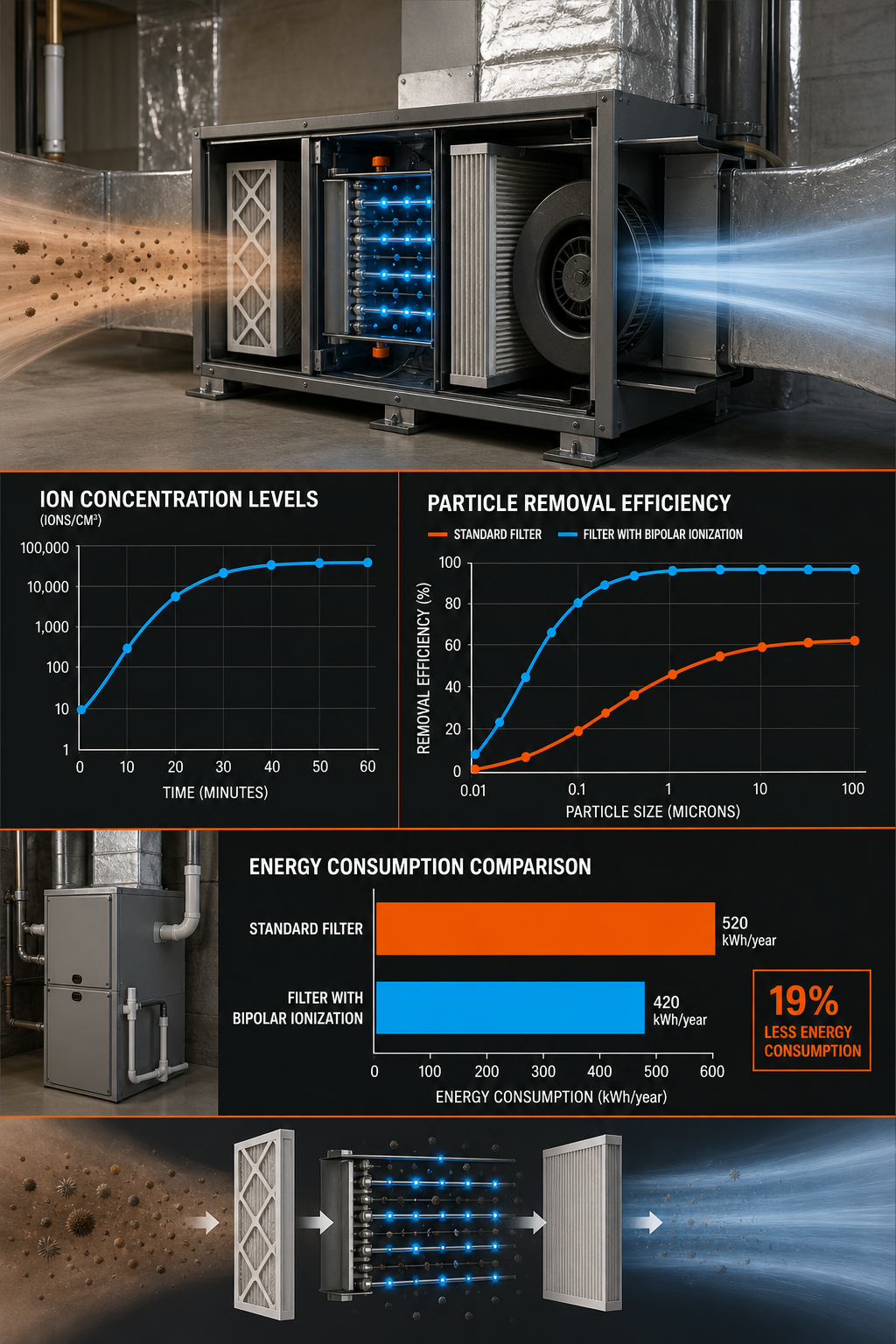
Keep in mind the ion count falls off quickly as air travels through long duct runs. For larger homes, placing a unit in the return air plenum or using multiple in‑room modules can maintain effective coverage.
Key Takeaway:Maintain a strong ion concentration; expect ~60% particle cut and notable fan‑energy savings when paired with a good filter.
Home Worx’s technicians can measure ion output on‑site to confirm you’re getting the promised performance.
Installation & Maintenance: In‑Duct vs. In‑Room Placement and Service Tips
In‑duct units sit inside the HVAC return and feed ions into the whole house’s airflow. They’re hidden, require no user interaction, and work best when the duct run is short. The downside is ion loss over distance, long runs may leave some rooms under‑ionized.
In‑room (or “portable”) modules attach to a wall or ceiling and release ions directly into the occupied space. They guarantee strong ion density where you need it, but you may need more than one unit for larger floor plans.
Maintenance is simple: needlepoint designs self‑clean every few days, so you never have to open a brush tray. The only routine task is a yearly visual inspection of the electrode tubes to ensure they haven’t degraded.
When you sign up for our full range of HVAC services , we include a check of the ionizer’s UL 2998 certification and verify that the unit’s ion output stays within the target range.
One usable tip: schedule the ionizer service during your regular HVAC filter change. That way the technician can verify both filter integrity and ion performance in one visit.
FAQ
What exactly does a bipolar ionization air filter do?
It creates positive and negative ions that attach to airborne particles and microbes, making them larger so the filter can capture them and neutralizing pathogens on contact.
Are bipolar ionizers safe for my family?
Yes, when the unit is UL 2998 certified it produces no detectable ozone or formaldehyde, meeting EPA safety standards.
How much can I expect my energy bills to drop?
Studies show up to a 42% reduction in fan power when a bipolar ionizer works with a high‑efficiency filter, because the filter stays cleaner longer.
Do I need to replace the ionizer regularly?
No, self‑cleaning ionization systems clean themselves every three to five days and only need a yearly visual check of the electrode tubes.
Can I install the unit myself?
Professional installation is recommended; correct placement ensures the ions reach the occupied space before they decay, and a certified installer can verify UL 2998 compliance.
Will the ionizer remove all odors?
It reduces many common indoor odors by breaking down volatile organic compounds, but strong source odors (like cooking smoke) may need additional ventilation.
For a deeper look at indoor‑air solutions, on Roseville HVAC upgrades . If you’re ready to improve your home’s air quality, contact Home Worx for a free estimate and let us handle the installation.