
California HVAC Rebates for Energy Efficiency (2026)
California homeowners can stack thousands of dollars in incentives onto a new heat pump or high-efficiency system. The catch? The biggest rebates fill up fast, the rules are scattered across agencies, and a few key windows are closing. Here's a curated map of California rebates for energy efficient HVAC systems in 2026: who runs each program, how much you can get, what equipment qualifies, and the exact paperwork you'll need to claim it. We pulled this from official state, federal, and utility sources so you can plan before you buy. If you want a local pro to handle the filing, Home Worx Heating and Cooling works these programs for Placer and Nevada County homeowners.
Federal Tax Credits for Energy Efficient HVAC
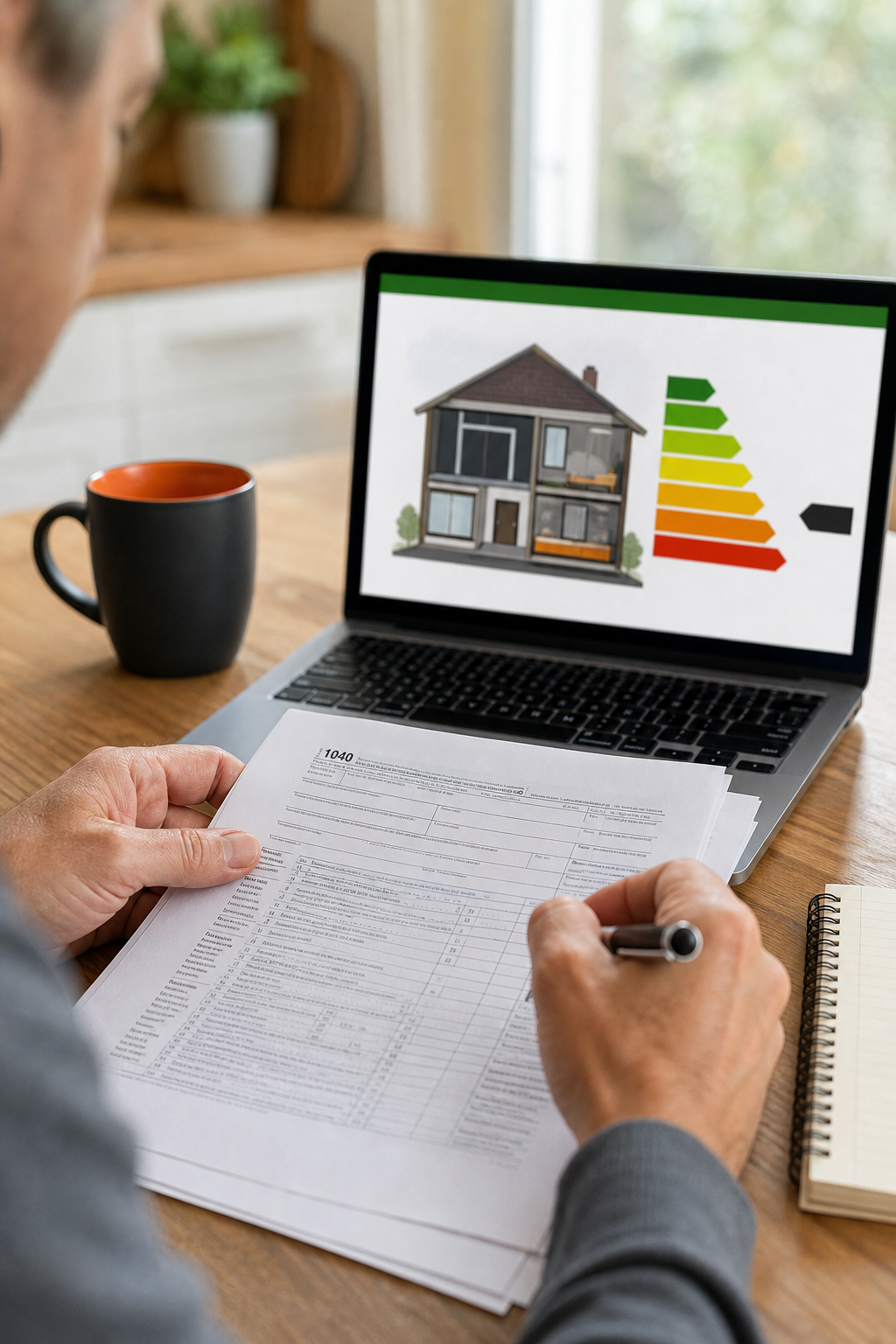
The federal Energy Efficient Home Improvement Credit (25C) gave homeowners 30% back on qualified HVAC upgrades. It's the first thing most people ask about, so let's set the record straight on where it stands.
Under the credit, a qualifying heat pump earned up to $2,000 per year. Air conditioners and gas furnaces that meet the highest efficiency tier earned up to $600 each. The credit equals 30% of qualified costs, and it applies only to property placed in service before December 31, 2025.
Read that date again. The credit was originally set to run through 2032, but a 2025 budget law moved up the sunset. For many homeowners, the $2,000 heat pump limit was often the difference between a standard efficiency system and a high efficiency system. If you completed and paid for a qualifying install in 2025, you claim it on your federal tax return, even if you're filing in 2026 on an extension.
A few rules trip people up. The credit is nonrefundable, so it only offsets tax you actually owe, with no carryover. It applies to your primary residence, not rentals you don't live in. And starting in 2025, each item needed a Qualified Manufacturer Identification Number reported on your return. One more wrinkle: if your utility paid a subsidy toward the equipment, you subtract that amount before figuring the credit.
Key Takeaway:The 25C federal credit applies only to systems placed in service by December 31, 2025, so any 2026 install relies on state, utility, and local rebates instead.
California State Programs and the TECH Clean Initiative
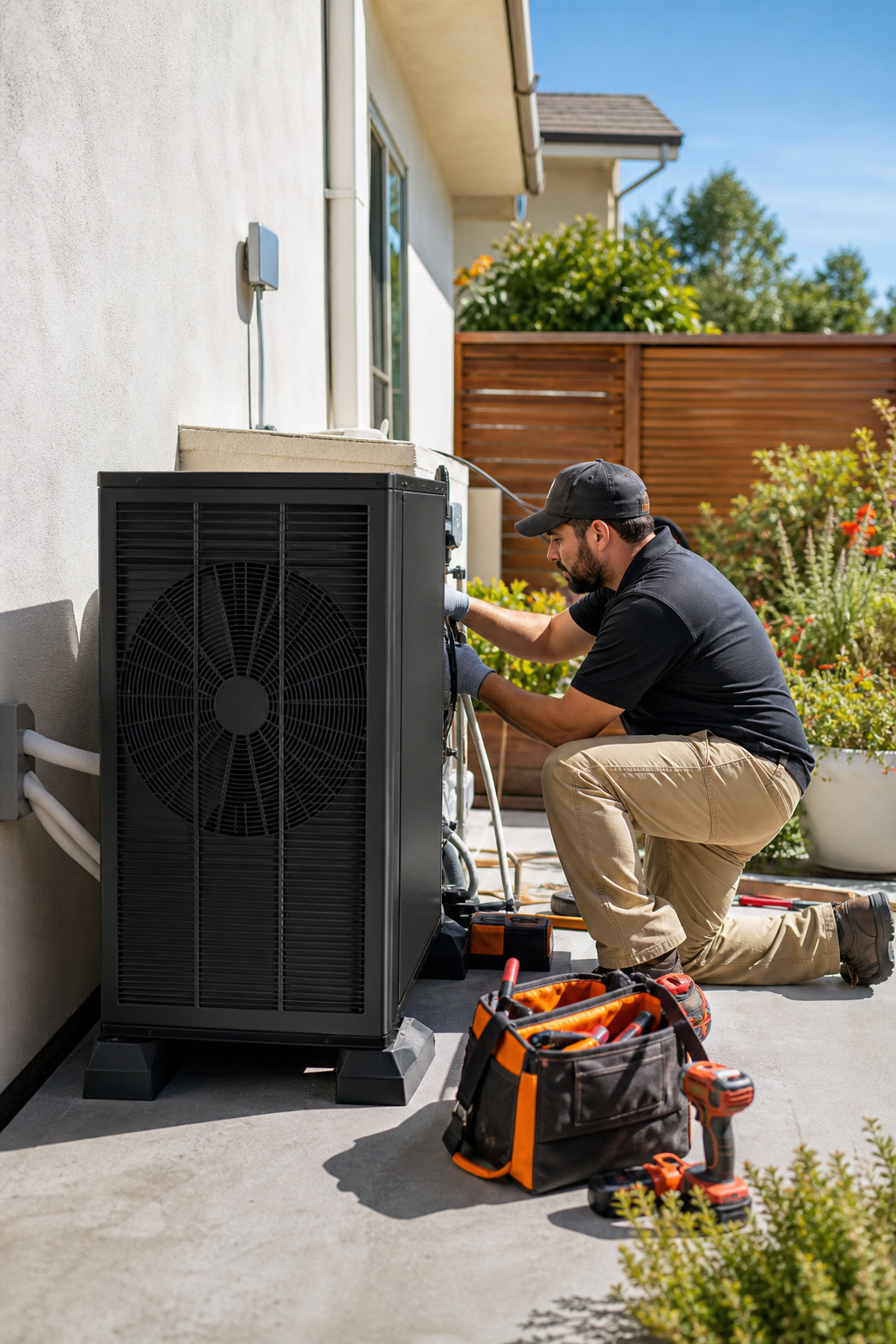
California's biggest state-level money runs through a federally funded home electrification and appliance rebate program backed by the Inflation Reduction Act. The state delivers it through TECH Clean California using specially trained contractors. This is where income-qualified homeowners can get the largest single-family rebates.
Here's how the dollars break down for single-family homes. Households earning less than 80% of area median income (AMI) can get up to $8,000 for a heat pump HVAC system that replaces an existing primary heating source. Households between 80% and 150% AMI can get up to $4,000. The rebate comes either as an instant discount on your invoice or as a reimbursement after processing.
But there's a hard reality to plan around. As of February 24, 2026, single-family rebates under this program are fully reserved statewide, and the program stopped accepting new income verification applications for single-family projects. Northern California reservations that weren't approved went to a waitlist in case more funding opens up. Multifamily projects (five or more units) can cover up to 100% of costs for low-income properties, but new Stage 1 submissions are paused while the program clears its backlog.
Across the 15 California programs we reviewed, the average maximum rebate was about $4,383, with a median of $2,750. The top caps, $8,000 for single-family heat pumps and the multifamily tiers, pull the average up, but those are exactly the buckets that are full or paused right now.
One safety note from TECH Clean California: your certified contractor only needs your income eligibility verification code or approval PDF. Don't hand over bank statements or other financial documents to an installer. If you live in our service area and want a trained team to check your status and the waitlist, our Auburn HVAC crew can walk you through it.
Utility Company Rebates: Local Providers
When state and federal funds are tapped out, utility rebates are often your most reliable savings. These come from your electric or gas provider, and most arrive as a check or bill credit after you prove the new system is installed.
Many California utilities run energy rebates and incentives for homes in their service areas. These programs often list instant coupons on energy-efficient products, plus broader home and business incentives. Because programs and amounts change through the year, check your account's eligible offers directly before you sign a contract.
Other California utilities run their own heat pump and AC programs with very different rules. In our research, some utility offers required nothing more than being a customer in good standing, while state programs demanded income proof. One municipal utility program, for example, paid by the ton of cooling capacity for heat pump upgrades, which rewards larger systems. The lesson: a homeowner two counties away may qualify for a completely different rebate than you do.
How these typically work in practice: you install a qualifying system, submit proof of installation and the equipment's efficiency ratings, then wait for approval before the payment lands. Working with a contractor who handles the paperwork can help you capture more of the clean-energy and regional utility rebates available in a given year. If you're in the Sierra foothills, our Grass Valley team tracks which local utility offers are active so you don't chase an expired program.
Pro Tip:Remember the IRS rule: if your utility pays a subsidy toward the same equipment, you must subtract that amount before calculating any federal credit. Keep every rebate confirmation for your tax records.
Qualifying Equipment: Heat Pumps, AC, Furnaces, and Smart Thermostats
Not every system earns a rebate. Programs reward efficiency, and the bar keeps rising. Heat pumps get the most money because California is pushing electric heating and cooling over single-direction air conditioners.
For the federal credit's efficiency floors, split-system air conditioners generally needed SEER2 at or above 17 and EER2 of 12 or higher. Gas furnaces needed an AFUE of 97% or better. Heat pumps had to hit a CEE Tier 1 path, with ducted and ductless mini-split systems judged differently by region. HEEHRA rebates require two-speed or variable-speed ENERGY STAR certified heat pumps for space heating and cooling.
Beyond the core system, smaller upgrades can qualify under various programs: smart thermostats, whole-house fans, pool pumps, cool roofs, and ENERGY STAR windows. To find offers near you, the ENERGY STAR rebate finder lets you search by ZIP code for tax credits and rebates on a wide range of products, not just HVAC.
Equipment | Typical rebate source | Why it qualifies (or doesn't) |
ENERGY STAR heat pump (variable speed) | HEEHRA / utility / federal 25C | Highest incentives; meets clean-electrification goals |
High-efficiency AC (SEER2 17+) | Federal 25C (up to $600) / utility | Qualifies if it meets the top CEE tier |
Gas furnace (AFUE 97%+) | Federal 25C (up to $600) | Only the highest-efficiency units; lower AFUE excluded |
Smart thermostat | Utility / ENERGY STAR finder | Often a small add-on rebate, not standalone |
Standard-efficiency AC or furnace | — | Below efficiency floors; no rebate |
The takeaway for shopping: if you buy something that's merely "new," you may still miss the rebate. The efficiency rating on the spec sheet is what programs check. We size and match systems specifically to clear those tiers, which is the difference between qualifying and getting a polite rejection letter.
Manufacturer, City, and Stacking Rebates Worth Stacking
Here's where smart homeowners build a bigger pile. City programs and manufacturer rebates stack on top of utility and state money, and they're often overlooked. In some Southern California cities, homeowners can combine a city rebate with a manufacturer rebate for meaningful savings off a new high-efficiency system. Manufacturer rebates run seasonally and can run out without notice.
City-level stacking is real and worth the effort. Combining federal, state, utility, city, and manufacturer incentives is generally allowed, as long as the total doesn't exceed the project cost. In our dataset, one city offered a core appliance rebate, a panel upgrade rebate, and an income-eligible rebate that residents combine into a layered claim.
This layered approach is also common in larger home projects, where careful sourcing across multiple vendors adds up. The principle holds: don't accept the first number you see.
One rule to respect when stacking: a utility subsidy reduces the base you can claim for the federal credit, per the IRS. So a real stack might mix a city check, a manufacturer rebate, and a utility credit, with the federal piece calculated on what's left. Read each program's fine print, because caps and timing vary by city and brand.
Eligibility, Application Steps, and Documentation Checklist
Eligibility for California rebates for energy efficient HVAC systems comes down to three filters: who you are, what you install, and when you file. Income thresholds gate the biggest state rebates. Utility customer status gates many local ones. And tight windows can void the rest.
Of the 15 programs we reviewed, 7 required income qualification and only 7 listed a clear deadline, which means more than half had no published cutoff at all. That sounds flexible, but "no deadline" usually means "open until the money runs out," which is how single-family HEEHRA filled up. Where deadlines exist, they bite: some city rebates demand filing within 90 days of inspection.
Here's a working checklist before you buy:
Confirm income status early.For income-qualified programs, homeowners verify income for all adults in the household, then get an approval code, often within a day.
Use a certified contractor.Top-value programs require TECH Clean California-certified, HEEHRA-trained installers. Federal and IRA rebates also require state-certified installers.
Match the equipment to the rating.Save the spec sheet showing SEER2, EER2, AFUE, or ENERGY STAR certification.
Keep every document.Invoices, proof of installation, the Qualified Manufacturer Identification Number for federal claims, and rebate confirmations.
Mind lead times.Efficient equipment can have long lead times, so order well before any deadline.
Across our research, the highest-value programs were also the ones with the strictest contractor and income rules, which is the hidden barrier most homeowners hit. This is why working with a team that files these regularly matters. Home Worx Heating and Cooling was the only contractor that appeared in the rebate dataset we compiled, and we handle the documentation so you're not chasing codes and deadlines alone. Homeowners upgrading older systems in nearby cities can start with our Lincoln HVAC page, where we outline how we help access rebates and incentives.
Frequently Asked Questions
How much can I get from California rebates for energy efficient HVAC systems?
Most California HVAC rebates range from a few hundred dollars to several thousand. Income-qualified single-family homeowners can get up to $8,000 through HEEHRA for a heat pump, and stacked city plus manufacturer offers can add to that total. The largest pools are currently reserved or paused.
Is the federal HVAC tax credit still available in 2026?
No, the 25C Energy Efficient Home Improvement Credit applies only to systems placed in service by December 31, 2025. If you installed and paid for a qualifying heat pump, AC, or furnace in 2025, you can still claim up to 30% with your tax return, even when filing in 2026 on an extension. New 2026 installs rely on state, utility, and local rebates.
Do I qualify for HEEHRA if I'm not low-income?
Possibly, but timing is the bigger issue right now. HEEHRA single-family rebates cover households up to 150% of area median income, $4,000 for 80 to 150% AMI and $8,000 below 80% AMI. As of February 24, 2026, single-family funds are fully reserved statewide and new income verifications are closed, with Northern California projects on a waitlist if more funding opens.
What HVAC equipment qualifies for California rebates?
ENERGY STAR certified variable-speed heat pumps qualify for the most programs. High-efficiency air conditioners (SEER2 17 and up), gas furnaces at 97% AFUE or higher, and certain smart thermostats, whole-house fans, and pool pumps can also qualify depending on the program. Standard-efficiency units that miss the rating floors do not qualify, so check the spec sheet before buying.
Can I stack multiple HVAC rebates together?
Yes, stacking is allowed and encouraged as long as the total incentives don't exceed your project cost. You can combine city, utility, manufacturer, and state rebates. One catch from the IRS: a utility subsidy must be subtracted before you calculate any federal tax credit, and each program has its own caps, so read the fine print on every offer.
Do I have to use a certified contractor to get the rebate?
For the highest-value programs, yes. HEEHRA requires TECH Clean California-certified, HEEHRA-trained installers, and federal IRA rebates require state-certified contractors. Your certified installer reserves the funds, performs the work, and processes the rebate. They should only ask for your income eligibility code or approval PDF, never your bank statements or other financial documents.
Putting It All Together
Start with a quick eligibility check this week: verify income status if you're chasing HEEHRA, then look up active utility and city offers for your address before you sign anything. With the federal credit sunset behind us and the largest state pools reserved, the realistic wins now are layered utility, city, and manufacturer rebates. If you'd rather have a HEEHRA-trained local team confirm what you qualify for and file the paperwork, reach out to Home Worx Heating and Cooling for an estimate on a qualifying high-efficiency system.