
Hidden Fees in HVAC Financing to Avoid – A Complete Guide
You’ve probably seen a low monthly payment for an HVAC system and thought you got a great deal. The surprise? A mountain of hidden fees that show up later. Below we break down where those fees hide, how to catch them, and what to do instead.
How HVAC Financing Works and the Common Hidden Fees
Most homeowners finance a new furnace or air conditioner with a personal loan, a home‑equity line of credit, or dealer‑offered credit. The lender gives you a lump sum, you repay it over two to seven years, and the interest rate is advertised as the headline number. What most people miss is the laundry list of fees that sit on top of that rate.
Administrative and processing charges dominate the hidden ‑cost landscape. In a recent review of 13 financing offers, more than half of the extra costs fell into that bucket , things like origination fees, processing surcharges, and appraisal fees. An origination fee can be as high as five percent of the loan amount, and many lenders will waive it if you ask for an itemized quote. Processing surcharges added by contractors can also reach five percent, and they’re often negotiable.
Early‑termination penalties are another surprise. Some contracts charge a fee if you pay off the loan early or miss a payment deadline. These penalties appear in roughly a quarter of the offers we examined. The trick is to look for a clear “no pre‑payment penalty” clause before you sign.
Finally, appraisal fees and annual HELOC fees can add $500 or more to the total cost. Those fees are optional in many cases, but they’re bundled into the contract unless you push back.
Home Worx Heating and Cooling keeps its financing simple , the only fee listed is the monthly payment itself. That transparency makes it easier to compare against the hidden‑fee nightmare most lenders create.
Key Takeaway:Most hidden costs are administrative, not interest. Ask for a line‑item breakdown and you’ll often see fees you can negotiate away.
Less‑Known Fees: Insurance Add‑Ons, Maintenance Contracts, and Dealer Markups
Beyond the obvious admin fees, contractors can slip in insurance add‑ons, extended‑warranty plans, and dealer markups that inflate the price.
Insurance add‑ons are marketed as “peace of mind” coverage for parts and labor. In reality, many of these policies duplicate what your homeowner’s insurance already covers, and costs can vary; request a detailed breakdown. If you already have a complete home policy, you’re likely paying twice for the same protection.
Maintenance contracts are sold as a way to keep your system running smoothly. A typical contract may have a per‑visit fee; ask for the exact amount, with a discount for an annual plan. The catch? The contract often includes services you may never need, and the price is built into the financing amount, raising your monthly payment.
Dealer markups are the most opaque. A contractor might add a “convenience fee” of 2‑5 % on top of the equipment cost. That fee is not a tax or a service charge; it’s extra profit that gets folded into the loan.
We’ve seen Home Worx list the equipment price and labor separately, with no hidden markup. That clear pricing lets you decide whether a maintenance plan is worth it, rather than assuming it’s part of the deal.
Pro Tip:Before you sign, ask the dealer to show the base equipment price, the labor cost, and any optional add‑ons as separate line items.
How to Read the Fine Print and Spot Red‑Flag Language
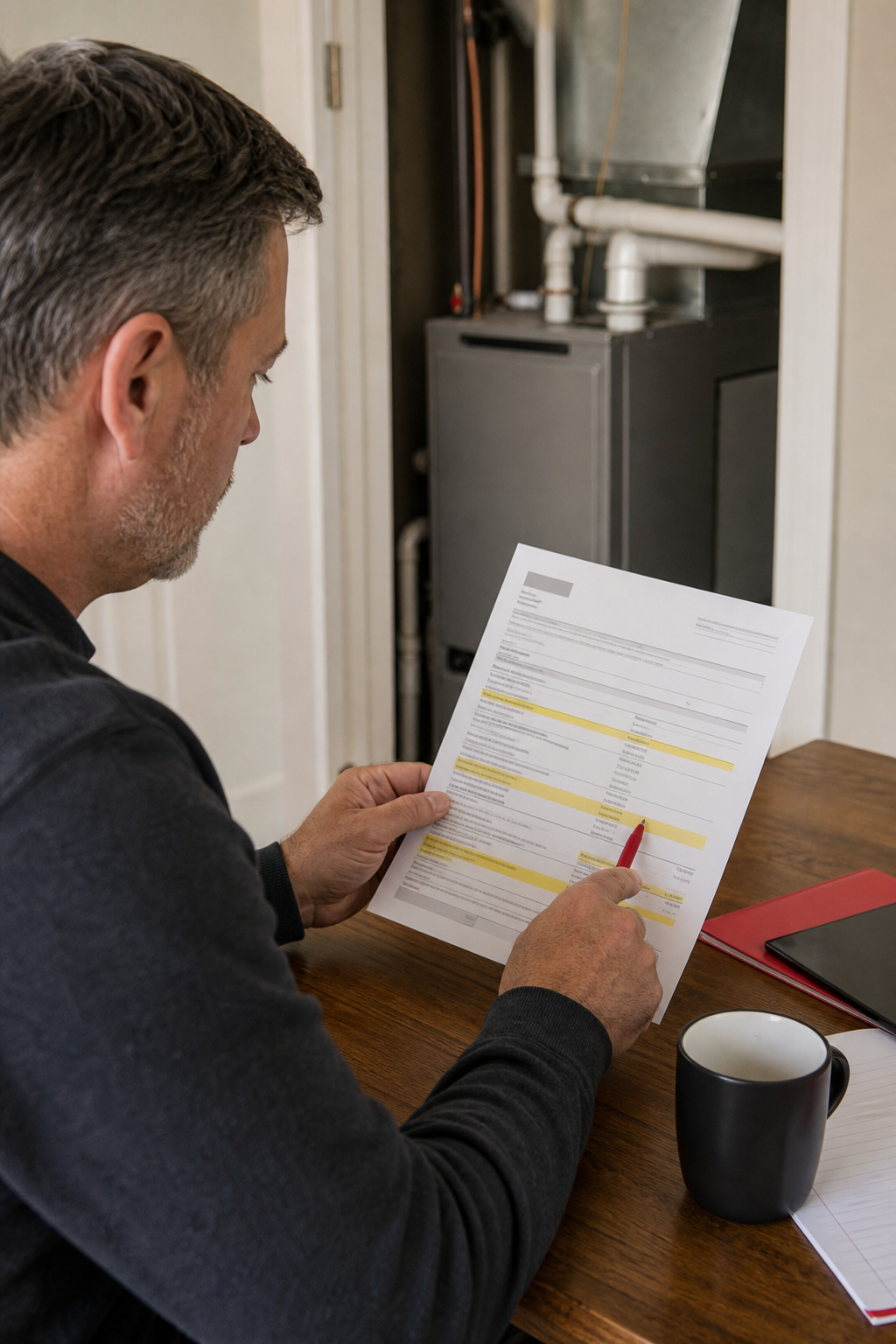
The contract is where hidden fees live. Look for phrases like “subject to change,” “additional fees may apply,” or “dealer‑added costs.” Those words are red flags that give the contractor leeway to tack on extra charges later.
First, locate the total cost section. It should list the equipment price, labor, taxes, and any fees. If the section is missing or vague, request a revised document that breaks everything down.
Second, scan the “fees” paragraph. Common language includes “processing surcharge,” “administrative fee,” or “dealer convenience fee.” If the amount isn’t specified, ask for the exact dollar value.
Third, check the pre‑payment clause. Look for “no penalty for early payoff” , that’s the language you want. Anything that mentions a “late fee” without a dollar amount is a warning sign.
Fourth, verify the interest rate. Some contracts list a “variable APR” that can rise after a promotional period. Make sure the APR is locked in for the full term or that you understand when it can change.
Key Takeaway:The fine print is your best defense. Spot vague language, demand numbers, and never sign until every fee is spelled out.
Impact of Credit Score Tiers on Hidden Fee Structures and Negotiation
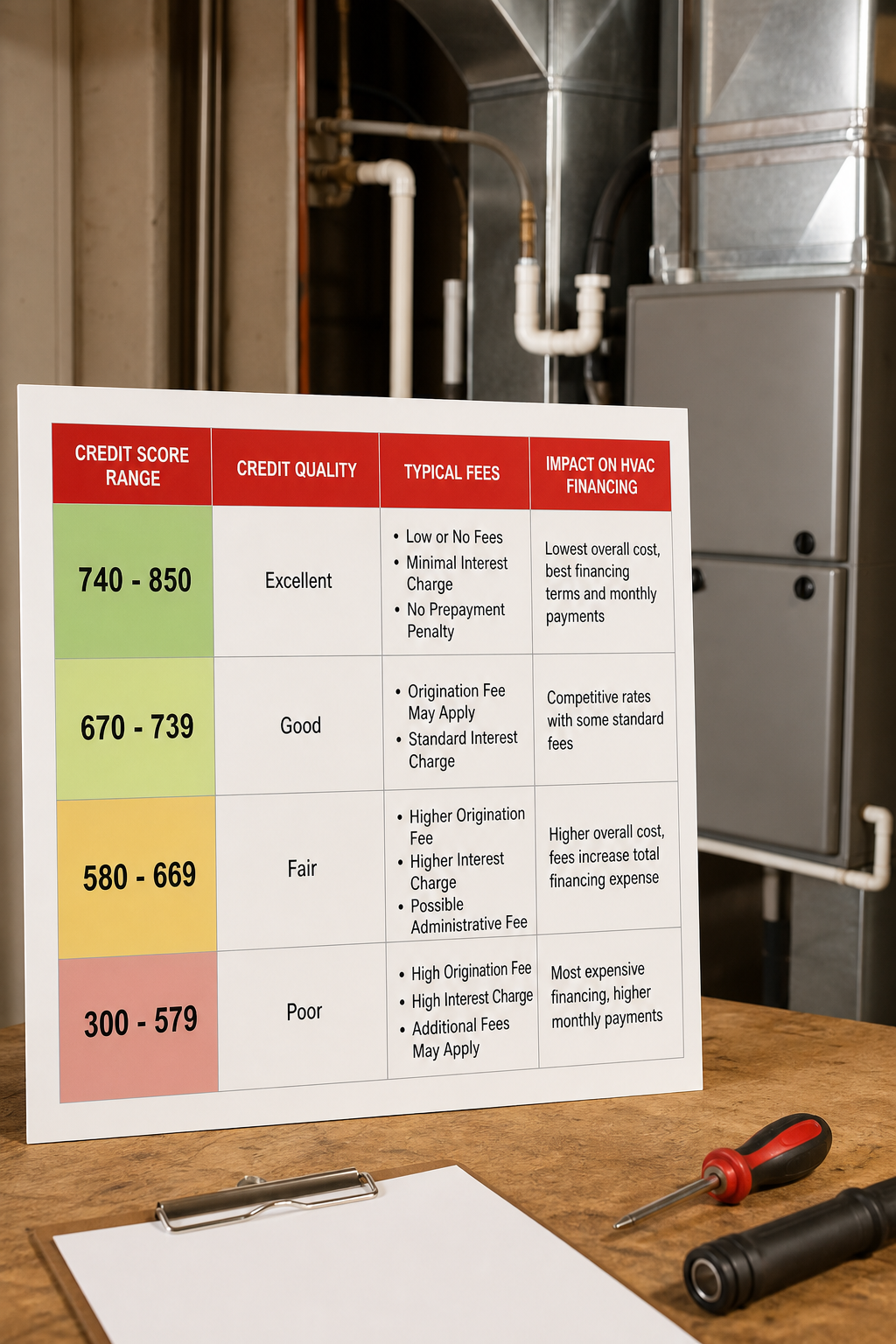
Credit score isn’t just about interest rates; it also shapes the hidden‑fee landscape. Lenders tier their fee structures, offering low‑fee packages to borrowers with excellent credit and loading extra fees onto those with lower scores.
For scores above 720, lenders often waive origination fees and give a clear APR. Between 660 and 719, you’ll see modest processing fees and a higher APR. In the 580‑659 range, fees can jump to five percent of the loan amount, and pre‑payment penalties become common.
Bad‑credit borrowers (below 580) are usually steered toward lease‑to‑own programs that have no credit check but embed high monthly fees and a higher overall cost. Those programs may not list an origination fee, but the monthly payment includes a built‑in markup that can equal 10 % of the loan amount over the term.
Negotiation works best when you know your tier. If you have a good score, ask the dealer to match the “no‑fee” offers you see from online lenders. If you’re in a lower tier, push for a written waiver of any processing surcharge , many lenders will remove it if you request it.
Some no‑credit‑check lease‑to‑own models show how fees shift when credit isn’t a factor. These programs replace an origination fee with a higher monthly rate, but they also remove the hard credit pull, which can be a win for some homeowners.
Pro Tip:Pull your credit report, spot any errors, and dispute them before you apply. Even a 20‑point boost can move you into a lower‑fee tier.
Contractor Scams: Free‑Lending Offers and What They Really Cost
“Free financing” sounds like a bargain, but the reality is often a hidden cost passed to you later. Contractors may promote a zero‑interest loan, but they receive a dealer fee from the lender , a fee that gets baked into the price of the equipment.
One common scam is the “free‑lending” promise that hides a markup on the unit itself. The contractor raises the equipment price by 5‑10 % and then claims the financing is free because there’s no interest. In the end, you pay more for the system and still owe the same monthly amount.
Another trap is a “no‑fee” loan that comes with a balloon payment at the end of the term. The monthly payment looks low, but a lump sum appears when the term ends, often catching homeowners off guard.Home Worx avoids these tricks by being upfront about its financing costs. The only charge you see is the monthly payment, and any optional fees are clearly labeled as such.
When a contractor offers a free‑lending option, ask for a written breakdown of the equipment cost, the financing fee, and any dealer markup. If they can’t provide it, walk away.
Key Takeaway:Free offers usually hide a cost somewhere. Demand full transparency before you sign.
State‑Specific Consumer Protection Laws (California Focus)
California has strong consumer‑protection rules that help shield homeowners from hidden fees. The California Finance Lenders Law requires lenders to disclose all fees in a clear, bold‑type format before the contract is signed.
Additionally, the California Home Improvement Contract Act mandates that any contractor‑financing agreement must include a separate “fees” schedule. If the schedule is missing or vague, the contractor can be fined for each violation.
The state also enforces the Truth in Lending Act (TILA), which means any APR advertised must include all mandatory fees. If a dealer advertises a 0 % rate but tacks on a 5 % dealer markup, that could be a TILA violation.
Home Worx complies with these regulations by providing a transparent fee schedule on its Lincoln HVAC page and in every contract. That practice not only builds trust but also keeps the company out of legal trouble.
For a full list of California’s consumer‑protection statutes, homeowners can consult official state resources.
FAQ
What are the most common hidden fees in HVAC financing?
The most common hidden fees are administrative fees, origination charges, processing surcharges, and early‑termination penalties. These can add up to 5‑10 % of the loan amount if not negotiated.
Can I negotiate away origination or processing fees?
Yes. Many lenders will waive an origination fee if you ask for an itemized quote. You can also request that processing surcharges be removed or reduced.
Do “no‑credit‑check” financing options have hidden costs?
They often do. Instead of an origination fee, they embed a higher monthly rate or a markup on the equipment price. Read the contract carefully for any dealer‑added fees.
How does my credit score affect hidden fees?
Higher scores usually qualify for lower‑fee packages and fee waivers. Lower scores can trigger processing fees, higher APRs, and pre‑payment penalties.
What should I look for in the fine print?
Watch for vague language like “subject to change,” unspecified fees, and missing pre‑payment clauses. Ask for exact dollar amounts for every fee before you sign.
Conclusion
If you want a financing plan that doesn’t hide costs, our top pick is Home Worx Heating and Cooling , they list only the monthly payment and give a clear fee schedule.
Next step: visit the Rocklin HVAC page to see a sample quote, then request an itemized financing breakdown before you commit.