
How to Fix a Furnace Not Blowing Hot Air
Most of the time, a furnace that won't blow hot air has a simple cause. Before you call anyone, there are a handful of checks you can do yourself in under 30 minutes that fix the problem the majority of the time. Start here, work through each step in order, and you'll know exactly what you're dealing with.
Table of Contents
Step 1: Verify Thermostat Settings
This is the first thing to check, every time. It sounds obvious, but thermostat mis-settings are the single most common reason a furnace won't deliver warm air. A thermostat accidentally left onCoolinstead ofHeat, or a fan set toOninstead ofAuto, will push room-temperature air through your vents all day long.
Here's what to look at:
Mode:Make sure it's set to Heat, not Cool or Fan Only.
Temperature:Set the target at least 5 degrees above the current room temperature so the furnace actually gets a call to run.
Fan setting:Switch it to Auto. When the fan runs on On, it circulates air even when the burner is off , so you feel airflow but no warmth.
Batteries:A blank or flickering display often means dead batteries. Swap them out and re-check your settings, since some thermostats reset to defaults after a battery change.
If you have a smart thermostat, such as a programmable or Wi‑Fi model, check the app too. Some models enter an energy-saving mode during mild weather and quietly lower the set point without telling you. A scheduled program might also be fighting your manual override , look for aHoldbutton that locks your chosen temperature.
Once you correct the settings, give the system two to three minutes to respond. You should hear the furnace kick on and feel warm air at the vents within five minutes. If nothing happens, move to the next step.
Pro Tip:After fixing the thermostat, switch the fan from Auto to On for 60 seconds. If the indoor blower starts, your thermostat and control board are communicating fine , the problem is downstream. If nothing moves, the issue is likely electrical or mechanical.
For homeowners dealing with repeat thermostat issues or an aging unit, our guide to best furnace repair services in Placer County covers what to look for when you need a licensed tech to take over.
Step 2: Check the Air Filter and Replace if Clogged
A clogged air filter is one of the most common reasons a furnace stops delivering heat. When the filter is packed with dust and debris, airflow through the system drops. The furnace overheats, the high-limit safety switch trips, and the burners shut down , even though the blower may still run. The result is air moving through your vents that never got warm.
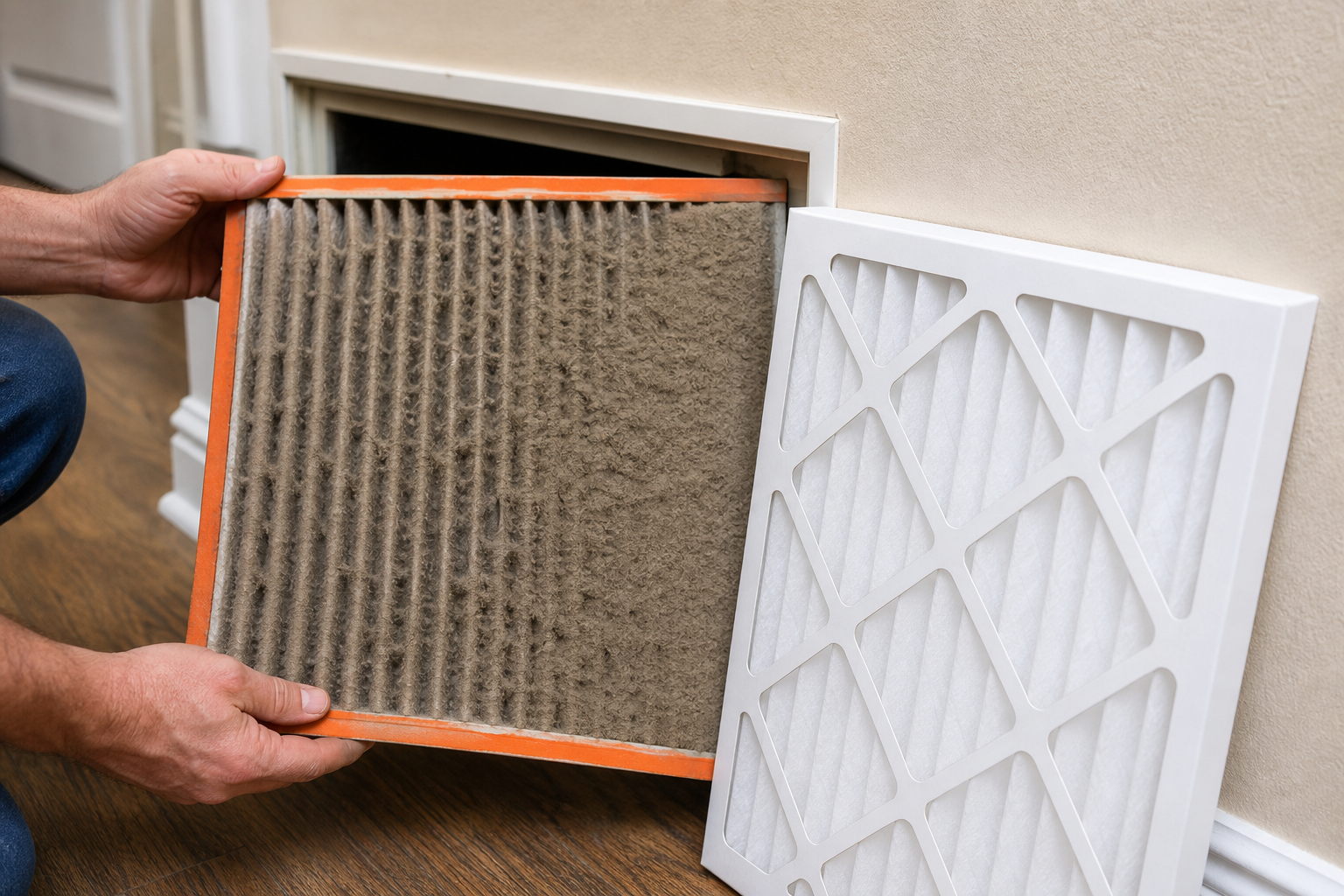
To check the filter, locate your return air grille , usually on a hallway wall or ceiling , and slide the filter out. Hold it up to a light. If you can't see light through it, it's past due for a change. A filter that's gray and matted is restricting airflow enough to cause real problems.
Restricted airflow doesn't just cut off heat. As one HVAC resource notes, the trapped heat puts excessive wear on components like the heat exchanger , and a cracked heat exchanger means you're looking at a full system replacement much sooner than you should be.
Replace the filter with the correct size for your system. Check the cardboard frame of the old filter , the dimensions are printed on it. Slide the new one in with the airflow arrow pointing toward the air handler, not away from it. Filters should be replaced regularly during the heating season, often every several weeks to a couple of months. If you're in the Sierra foothills near Colfax or Auburn, wildfire smoke and dry summer dust can clog a filter faster than the manufacturer's schedule suggests , check yours monthly during fire season.
After installing a fresh filter, run the furnace for 15 to 20 minutes before deciding whether the problem is solved. If the limit switch tripped due to overheating, the system needs a few minutes to cool down before it resets and fires the burners again.
Step 3: Inspect the Blower Motor and Fan
If the thermostat is correct and the filter is clean but you still get no warm air, the blower motor is the next place to look. The blower is the fan inside the air handler that pushes heated air through your ductwork. If it's failing, you might get no airflow at all , or weak, inconsistent airflow even when the burners are running fine.
Here's how to check it:
Go to your furnace and listen when it tries to start. You should hear the burners ignite and then, about 60 to 90 seconds later, the blower fan spin up. If you hear the burner but no fan, the blower motor or its start component has likely failed.
Look at the furnace cabinet. Most units have a small inspection window where you can see the burner flame. A steady blue flame with small yellow tips means the burners are working. No flame means the ignition system has a problem.
Listen for grinding, squealing, or rattling from the blower compartment. Those sounds usually mean a worn bearing or a loose component , both get worse fast if the system keeps running.
A common failure point is the motor's electrical component that provides the boost needed to start. If this component fails, the motor may hum but not spin. This type of repair should be performed by a licensed technician, as the component can retain a charge even when power is off and may cause serious injury if mishandled.
If you hear the blower running but the air coming out is cold, the burners aren't firing , that points to a gas supply issue, a dirty flame sensor, or a tripped safety switch (covered in Step 5). A blower that runs constantly and won't shut off usually means the limit switch is stuck open.
According to Wikipedia's overview of residential furnaces , the blower motor is one of the most mechanically stressed components in a forced-air heating system because it cycles on and off thousands of times per heating season. That wear adds up, especially on systems over 10 years old.
If the blower motor needs replacement, the cost varies depending on the motor type and your system's brand. Home Worx Heating and Cooling handles blower motor diagnostics and repairs across Placer and Nevada Counties , and if the repair cost is close to the price of a new system, they can walk you through the numbers honestly.
Step 4: Examine Ductwork for Blockages or Leaks
Even when the furnace fires perfectly, you can end up with cold rooms if the ductwork has problems. Leaky ducts dump heated air into your attic or crawlspace. Blocked ducts starve specific rooms of airflow. Both feel like a furnace failure when the real issue is the distribution system.
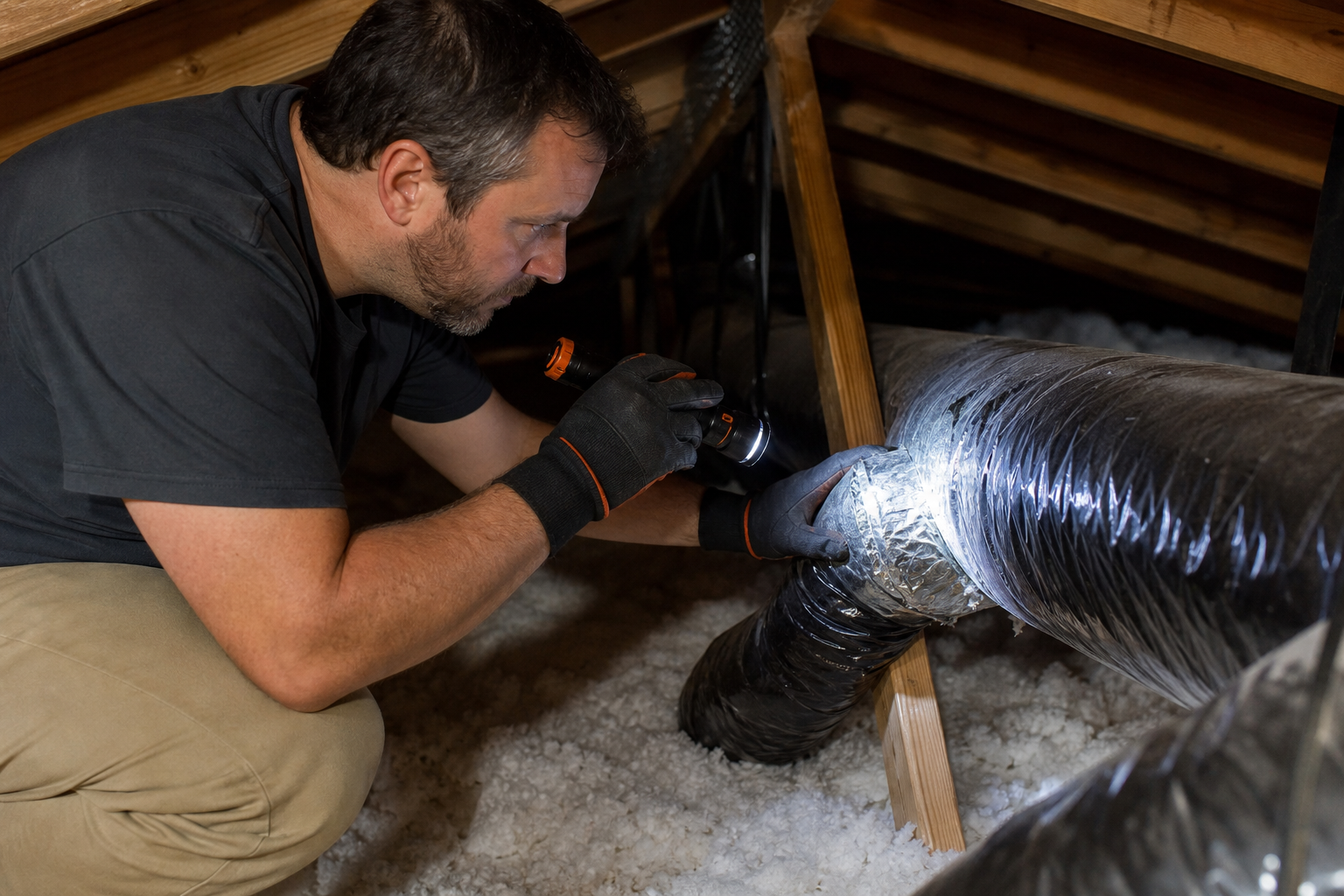
Start with a walk-through of your home. Check every supply vent , they should all be open and unobstructed. Furniture pushed against a vent, a closed damper, or a vent cover accidentally flipped shut can starve a room without triggering any error on the furnace itself. Open every vent, even in rooms you don't use much. Closing vents creates back pressure that forces the system to work harder and can damage components over time.
Next, check for duct leaks. With the furnace running, feel along any accessible duct runs in your basement, crawlspace, or attic. You're looking for air escaping at joints or connections. Torn flex duct, pulled-apart sections, and gaps at metal collars are common. Seal any gaps you find with a proper HVAC‑rated sealant; ordinary duct tape does not hold up well in attic heat.
In older homes in the Auburn and Colfax area, duct connections sometimes work loose over years of thermal expansion and contraction. A duct that's 80% disconnected in the attic can account for a huge loss of heating efficiency without showing any error code on the furnace. If your energy bills have crept up and certain rooms are always cold, leaky ducts are worth a serious look.
Key Takeaway:Duct leaks in unconditioned spaces like attics and crawlspaces can waste 20, 30% of your heated air before it ever reaches a room , fixing them is often as impactful as repairing the furnace itself.
If you find significant duct damage or can't access the runs to check them, a professional duct inspection is the right next step. The team at Home Worx Heating and Cooling's HVAC services includes duct diagnostics alongside furnace repair, so you get a complete picture of what's happening in the system.
Step 5: Test Safety Switches and Reset the Furnace
Modern furnaces have several built-in safety switches that shut the system down when something goes wrong. These are features, not bugs , they protect your home from overheating, gas buildup, and carbon monoxide. But a tripped safety switch can look exactly like a broken furnace, so it's worth knowing how to check them before calling for service.
The most important one is thehigh-limit switch. When a furnace's temperature rises to a dangerous level, the limit switch shuts off the burners and turns on the blower fan to cool things down. If the furnace short-cycles , starts, runs briefly without heating, then shuts off and repeats , the limit switch is likely tripping repeatedly. A clogged filter is the most common cause; if you already replaced the filter in Step 2 and the short-cycling continues, the switch itself may be faulty.
Safety Switch | What It Does | Symptom When Tripped | DIY Check? |
High-Limit Switch | Shuts burners off if furnace overheats | Short cycling, blower runs but no heat | Reset once; repeated trips need a tech |
Pressure Switch | Confirms proper airflow before ignition | Furnace won't ignite at all | Check for blocked flue or drain tube |
Flame Sensor | Detects whether burner is lit | Furnace lights then shuts off within seconds | Clean with fine steel wool (advanced DIY) |
Panel Switch | Cuts power if furnace access panel is open | Furnace completely dead | Confirm panel is fully closed and latched |
Rollout Switch | Trips if flames exit the combustion chamber | No ignition; manual reset required | Manual reset — but cause must be found first |
To reset the furnace, find the power switch on or near the unit , it looks like a standard light switch. Turn it off, wait 30 seconds, then turn it back on. The furnace will run through its startup sequence, which takes two to five minutes. If it fires and runs normally, a one-time lockout was the culprit.
Important:If the furnace locks out again after a single reset, stop resetting it. Repeated lockouts mean there's an underlying problem the reset isn't fixing. Continuing to reset a furnace that keeps locking out can mask a gas or heat exchanger issue that's genuinely dangerous.
Gas-related problems, such as a closed gas valve, interrupted supply, or a pilot light that won't stay lit, also fall into this category. You can check that the gas shutoff valve near the furnace is in the open position (handle parallel to the pipe). Beyond that, gas diagnostics belong with a licensed technician. Experts recommend that any suspected gas leak or carbon monoxide concern be handled by a professional immediately, evacuate first, then call.
If you've worked through all five steps and the furnace still isn't blowing hot air, the problem is mechanical or gas-related and needs a professional diagnosis. Home Worx Heating and Cooling offers 24/7 emergency repair across Placer and Nevada Counties, including Roseville, Auburn, Grass Valley, and Colfax. If the repair estimate approaches the cost of a new system, ask about their Roseville HVAC installation options , they offer financing starting around $4 a day so a full system replacement doesn't have to mean a large upfront payment.
FAQ
Why is my furnace running but blowing cold air?
The most common reasons are the fan set to On instead of Auto, a clogged air filter that caused the high-limit switch to trip, or a dirty flame sensor that shuts the burner off seconds after ignition. Start by checking the thermostat fan setting and replacing the filter. If the furnace lights and then shuts off within a few seconds, a flame sensor cleaning or replacement is likely needed.
How do I reset my furnace when it won't blow hot air?
Find the power switch on or near the furnace, it looks like a regular light switch, and turn it off. Wait 30 seconds, then turn it back on. The startup sequence takes two to five minutes. Reset the furnace only once. If it locks out again, there's an underlying problem that a reset won't fix, and you should call a licensed HVAC technician rather than keep cycling the power.
Can a dirty air filter really stop a furnace from heating?
Yes. A clogged filter restricts airflow enough to cause the furnace to overheat. When that happens, the high-limit safety switch shuts the burners down to protect the heat exchanger. The blower may keep running, pushing air through the vents, but that air never got heated. Replacing the filter and waiting 15 to 20 minutes often resolves the problem without any other repairs.
How do I know if my furnace blower motor has failed?
Listen for the burner igniting but no fan spinning up 60 to 90 seconds later. A humming sound from the blower compartment without any airflow usually points to a problem with the blower motor or its electrical components. Grinding or squealing suggests a worn bearing. Neither is a safe DIY repair, both involve electrical components that hold a charge after power is cut. Call a technician for blower motor repair.
When should I replace my furnace instead of repairing it?
If your furnace is over 15 years old and repair costs are high, replacement is usually the smarter financial move. Older systems also run at lower efficiency ratings, so a new unit often pays back part of its cost in lower energy bills. Ask your HVAC contractor to compare the repair cost against a new system's projected energy savings before deciding.
Is it safe to run my furnace if it smells like gas?
No. If you smell gas near the furnace, don't attempt any troubleshooting. Leave the house immediately, avoid using light switches or any electrical devices, and call your gas utility from outside. A gas smell is a safety emergency. Experts recommend evacuating first and calling professionals before re-entering. Never attempt to locate or fix a gas leak yourself.
For reliable furnace service in Placer and Nevada Counties, contact Home Worx Heating and Cooling.
Conclusion
Work through the steps above in order , thermostat first, then filter, then blower, then ducts, then safety switches , and you'll either fix the problem yourself or know exactly what to tell a technician. If you're in Placer or Nevada County and the furnace still isn't cooperating, contact Home Worx Heating and Cooling for same-day or emergency service. The team is family-owned, local, and ready to help you get warm again fast.