
How to Seal Air Ducts: Step-by-Step Guide
A leaking duct can send paid-for heating or cooling into an attic, crawlspace, or wall. In the Sierra foothills, that loss can show up fast during hot summers and cold winters. Learning how to seal air ducts starts with a careful inspection, then moves through cleaning, material choice, application, and testing.
This guide covers small, reachable repairs for homes in Auburn, Colfax, Rocklin, Roseville, Grass Valley, Penn Valley, and Lincoln. Stop if you find damaged insulation, a crushed flex duct, mold, or a leak you can't reach safely.
Five published duct-sealing guides rank for this topic: HVAC.com, Attainable Home, GREAT STUFF, NADCA, and Aristotle Air. Only 3 of the 5 include a step to retest the ducts after the sealant dries. Just 2 of the 5 state a specific mastic cure time, 24 to 48 hours. None of the 5 name conditions such as mold, a crushed duct, or a combustion-air leak as reasons to call a professional.
We reviewed 5 published duct-sealing guides from HVAC.com, Attainable Home, GREAT STUFF, NADCA, and Aristotle Air. Only 3 of the 5 include a step to retest the ducts after the sealant dries. Just 2 of the 5 state a specific mastic cure time, 24 to 48 hours. None of the 5 name conditions such as mold, a crushed duct, or a combustion-air leak as reasons to call a professional.
Table of Contents
Step 1: Inspect Air Ducts in Auburn and Colfax Homes
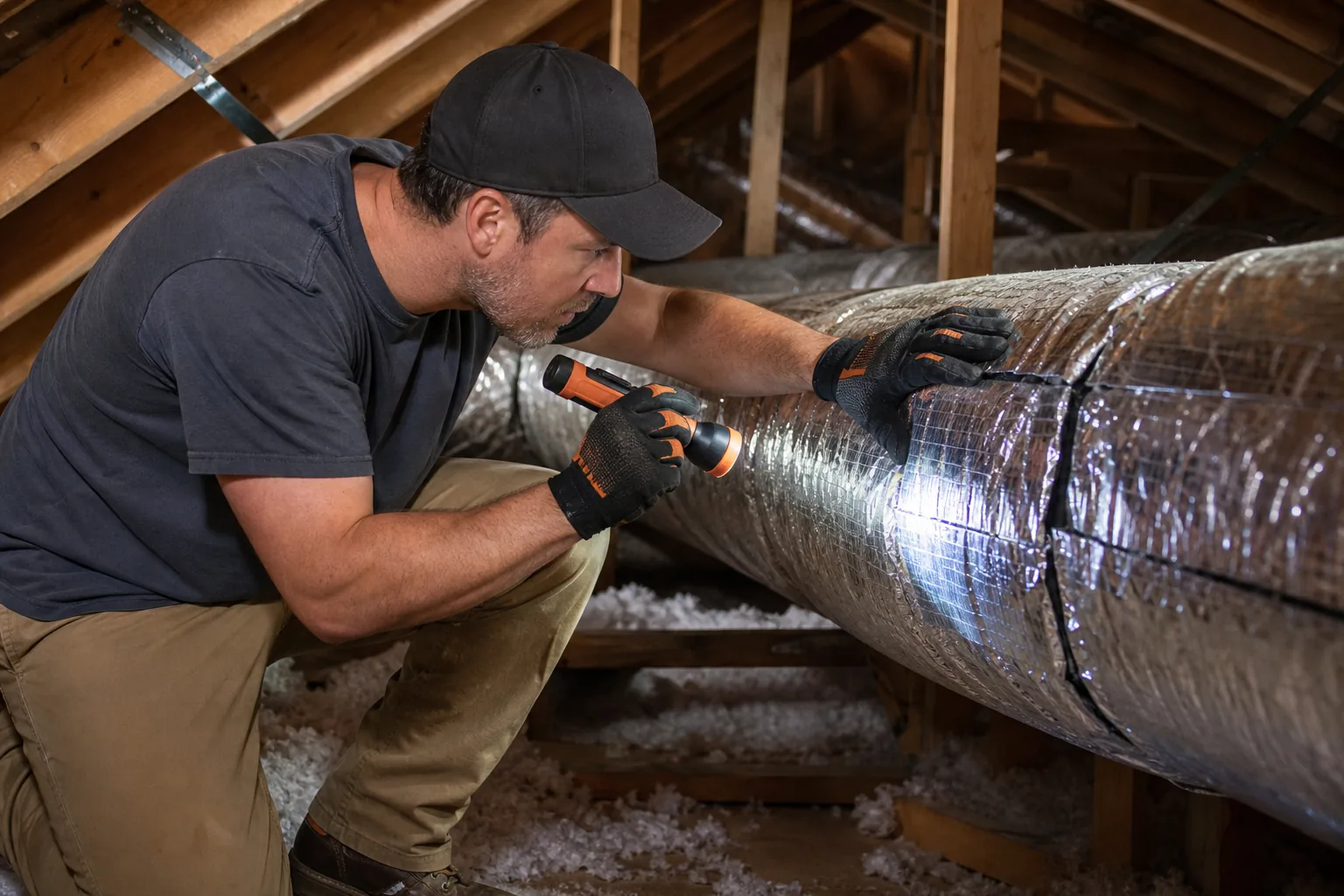
The first step in learning how to seal air ducts is finding every leak you can reach. Turn off the furnace or air conditioner at the thermostat. For added safety, switch off power to the indoor unit before opening panels.
Look at the seams near the furnace or air handler. Check where branch ducts meet the main trunk. Inspect takeoffs, register boots, access panels, and any spot where old tape has lifted. Pay close attention to attic runs in Colfax and Auburn homes, and use the same care in Rocklin and Roseville. Heat, dust, and repeated temperature changes can weaken old adhesive in Grass Valley, Penn Valley, and Lincoln homes.
Run your hand near a joint while the blower operates. You may feel a cool or warm stream of air. A smoke pencil can show movement more clearly, but keep smoke away from flames and sensitive equipment. Don't use an open flame to find a duct leak.
Take photos before you remove anything. Mark each leak so you don't lose track of it. A simple inspection list helps:
Loose or missing screws at metal joints
Cracks around duct takeoffs
Gaps wider than a hairline
Old tape with curled edges or brittle backing
Disconnected flex duct or torn insulation
Dust streaks near a seam, which can point to moving air
Foil HVAC tape is commonly used for sealing ducts. It is non-permeable, tacky, and conforms to irregular surfaces. Tape can degrade and fail more quickly than liquid mastic, especially on older or dirty ducts.
For small repairs, you can often continue. If the duct has collapsed, carries combustion air, or sits in a tight crawlspace, stop and ask Home Worx Heating and Cooling to inspect it. A patch won't fix a duct that has lost its shape.
Step 2: Clean and Prepare Duct Surfaces in Rocklin and Roseville
Clean, dry metal gives tape and mastic a fair chance to hold. Before you seal air ducts, brush away loose dust around the repair. Then wipe the surface with a clean, slightly damp cloth and let it dry fully.
Don't soak insulation or push dust into an open duct. Cover the opening if you need to clean near the air path. Remove only loose material that blocks the seal. You don't need to scrub the inside of the duct for a small outside repair.
In Rocklin and Roseville, remodel dust can collect around registers and return openings. Drywall dust also sticks to oily residue near mechanical parts. If you see heavy buildup inside the duct, pause the sealing job. Cleaning may need to come first. Our guide to cleaning air ducts safely explains which parts a homeowner can reach without opening the full system.
Use a stiff brush on bare sheet metal. A tool with a nonmetallic edge can lift old adhesive, but don't gouge the metal. For foil HVAC tape, the surface must be smooth enough for the adhesive to make full contact. For mastic, remove flaking paint, loose rust, and greasy film.
Dry the area before you measure tape. Cold metal can collect moisture, especially when a system has just been running. In a garage or attic, wait until the joint feels dry and close to room temperature.
Homeowners in Auburn, Colfax, Grass Valley, Penn Valley and Lincoln can use the same preparation steps used in Rocklin and Roseville.
Have these items ready before opening the sealant:
Foil HVAC tape
Duct mastic
Gloves and eye protection
Scissors or a utility knife
A clean cloth
Don't seal over a loose joint and hope the material holds it together. Tighten or refit the joint first. A sealant closes the air path. It doesn't replace mechanical support.
Pro Tip:Take a photo after cleaning and before sealing. It gives you a clear record of the surface condition if the repair needs a later check.
Step 3: Choose Foil Tape or Mastic for Grass Valley Conditions
The right material depends on the leak size, surface, temperature, and access. Foil HVAC tape works well for a clean seam or small crack. Mastic is better when the surface is uneven or the gap needs a paste that can bridge it.
Repair situation | Better first choice | What to watch |
Clean metal seam with a narrow gap | Foil HVAC tape | Press every inch firmly and follow the product temperature range |
Uneven joint or small irregular opening | Liquid mastic | Spread it across the joint without pushing it inside the duct |
Outdoor or exposed section | Mastic tape | Check the surface temperature and weather before applying |
Large gap or disconnected duct | Mechanical repair plus mastic | Don't rely on tape alone |
Hidden leaks behind walls | Specialized leak-sealing service | These repairs aren't a normal DIY task |
Foil HVAC tape is non-permeable, tacky, and able to conform to some uneven surfaces. It bonds quickly, which makes it useful when you need a clean repair without a long cure period. Press it firmly across the tape. Rubbing it lightly with your fingers is often not enough.
Mastic is a thick sealant that you spread over the joint with a brush or gloved hand. It can cover small irregular gaps and remains flexible after it dries. Some mastic tape products bond at once and resist weather and ultraviolet light. Liquid mastic needs drying time, so protect the repair from disturbance while it cures.
Grass Valley attics can run very hot in summer, while winter work may start on cold metal. Homes in Auburn and Colfax face the same seasonal swings, and Rocklin and Roseville homeowners should also read the tape or mastic label before applying it. If the surface falls outside the listed range, adhesion may suffer.
Choose HVAC tape rather than a general-purpose tape just because it feels sticky. Research from the Severn Group notes that foil tape can fail sooner than liquid mastic on older or dirty ducts. The best choice is the one that matches the surface after you clean it, not the one already sitting in a drawer.
Specialized duct sealing is different. It sends sealant through the duct system to find hidden leaks. That requires equipment and system controls, so leave it to an HVAC contractor. Home Worx Heating and Cooling can help homeowners in Penn Valley and Lincoln when the leak is inside a wall, behind finished ceilings, or spread across many branches.
Step 4: Seal Joints, Cracks, and Gaps in Penn Valley
To seal air ducts at a reachable joint, work from the sound metal outward. Start with the seam itself, then cover the nearby surface so the repair has room to hold.
Using foil HVAC tape
Cut a piece long enough to extend past the damaged area on both sides. Don't stretch the tape as you place it. Lay it over the seam, then press from the center toward the edges. Use a smooth, firm tool to remove air pockets.
Overlap pieces when one strip isn't long enough. Keep the overlap on clean tape or clean metal. Fold the tape around corners instead of leaving a lifted flap. Run a finger along every edge when you're done. This approach works the same way in Auburn and Colfax homes.
Using liquid mastic
Stir the mastic if the label calls for it. Use a paintbrush to spread a continuous coat across the seam. Cover the joint and extend onto the surrounding metal. A thin missed spot can leave a path for air.
For a gap around one-quarter inch or larger, mastic may need additional support. Don't force a large opening shut with paste. First bring the duct pieces together with proper support, then seal the remaining seam.
Keep mastic out of the duct interior. It belongs on the outside of the joint. Wipe away any material that pushes through before it dries, while following the product safety directions.
Work in short sections in a Penn Valley attic or crawlspace. That makes it easier to keep the surface clean and lets you check each edge before moving on. If a section is wet, oily, badly rusted, or too hot to touch safely, stop there. Homeowners in Rocklin, Roseville, Grass Valley, and Lincoln can use the same inspection steps.
California energy rules can affect larger duct changes, insulation work, or permitted HVAC alterations. Review the applicable California requirements , and check local permit needs based on the scope of work. Home Worx Heating and Cooling can tell you when a repair needs more than a simple seal.
Key Takeaway:Seal the outside of a sound joint with approved material. Repair, support, or replace damaged duct sections before applying tape or mastic.
For help sealing ductwork in Auburn, Colfax, Rocklin, Roseville, Grass Valley, Penn Valley, or Lincoln, contact Home Worx Heating and Cooling for local service.
Step 5: Test the Repair and Know When to Call in Lincoln
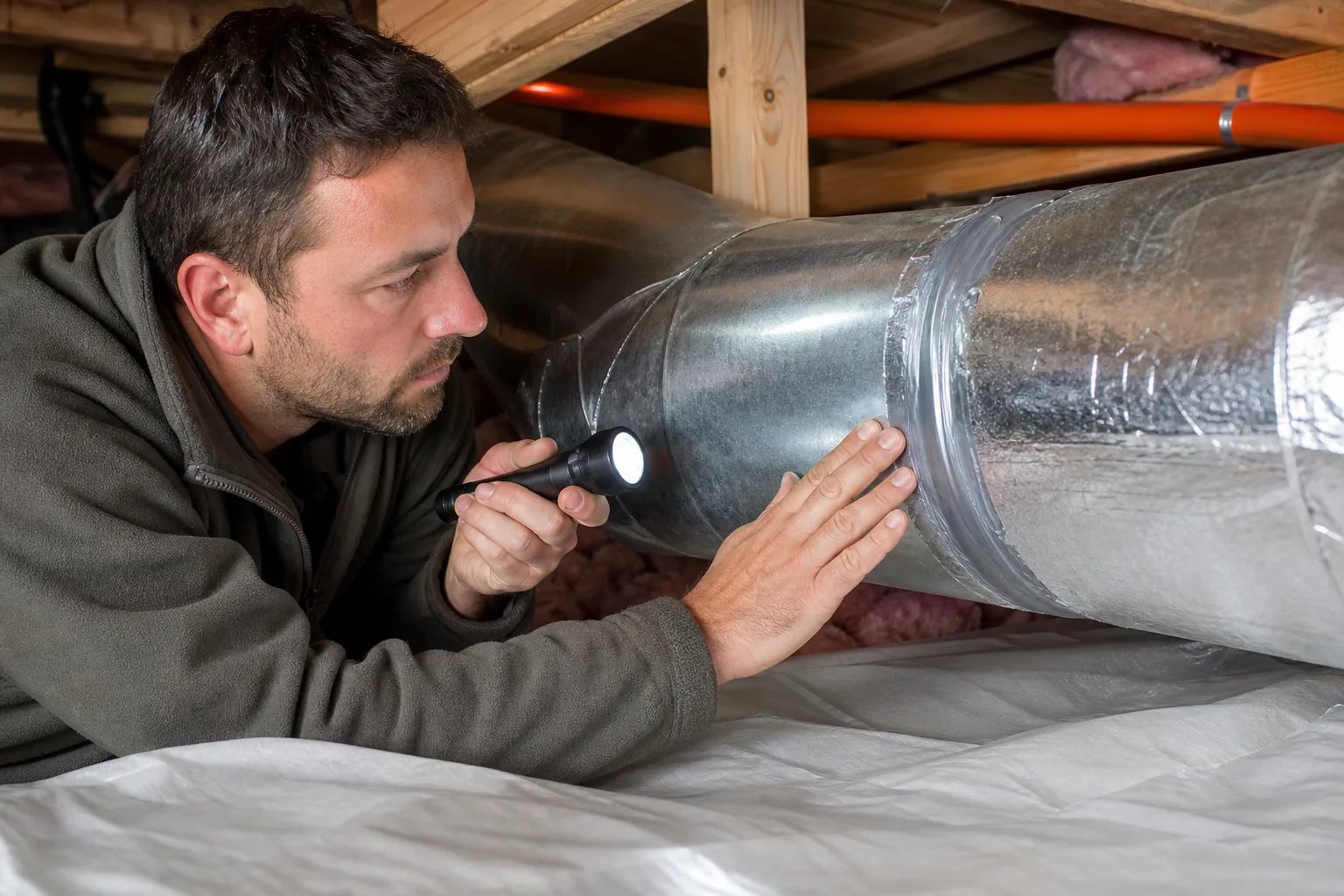
Testing shows whether the new seal stayed in place. Wait for liquid mastic to dry according to its label. Then turn the system on and check each repaired section while the blower runs.
Feel around the edges with your hand. You should not feel a steady stream of air. Look for tape lifting, mastic cracking, or a joint shifting under pressure. Listen for a new whistle. It may point to a missed gap.
Check the rooms served by that duct. A repair won't fix every airflow problem, but the register should not suddenly lose air after sealing. If one room remains weak, the problem may be farther down the branch, inside a wall, or related to a blocked filter or damper.
Don't judge the repair by utility use after one day. Weather changes can hide the result. Instead, note the thermostat setting, room comfort, and system run time over several normal heating or cooling cycles.
Energy Star estimates that homes may lose 20% to 30% of conditioned air through duct leaks. That lost air can heat an attic or crawlspace instead of the rooms you occupy. The figure is a reminder to inspect the full system when several rooms have comfort issues, not proof that one small patch will cut a bill by the same amount.
Call Home Worx Heating and Cooling for help in Lincoln when:
You can't reach the leak without removing finished walls or ceilings
The flex duct is torn, crushed, or disconnected
You find mold, standing water, or damaged insulation
The repair involves a furnace flue or combustion-air path
Several rooms have weak airflow at the same time
The seal fails again after a careful repair
We can inspect the duct system and separate a sealing problem from a sizing, filter, blower, or equipment issue. For broader comfort concerns, our air duct cleaning cost guide explains why cleaning and sealing are different services.
When the repair is large or time-sensitive, professional service is often the safer choice. Home Worx Heating and Cooling serves homeowners and small businesses across Placer and Nevada County, including Lincoln, with HVAC repair, maintenance, installation, and air-quality help.
FAQ: Sealing Air Ducts
What is the best way to seal air ducts?
The best method depends on the joint and surface. Use foil HVAC tape for a clean, narrow seam. Use mastic for uneven joints or small gaps. Clean and dry the metal first, then press tape firmly or spread mastic across the full seam. Large or damaged duct sections need repair before sealing.
Can I use regular duct tape on air ducts?
Cloth-based tape is a poor long-term choice for air ducts. Heat and temperature cycling can weaken its adhesive. Use foil HVAC tape or duct mastic instead. If old cloth tape is already peeling, remove it and clean the surface before applying a material made for duct sealing.
How long does mastic take to dry?
Liquid mastic often needs about 24 hours to dry, but the product label controls the timing. Keep the joint clean and undisturbed during that period. Mastic tape is different because it bonds at once and doesn't need the same dry time. Don't run the system against the label's instructions.
Can I seal ducts from inside a wall?
You usually can't seal a hidden duct well without access or professional equipment. An HVAC technician can use pressure testing or specialized sealing equipment when the leak sits behind a wall or ceiling. Opening a small access point may be safer than guessing and spreading sealant where it doesn't belong.
When should I call an HVAC professional?
Call a professional when ducts are damaged, inaccessible, contaminated, or tied to combustion equipment. You should also ask for help when several rooms have poor airflow or a DIY patch fails. Contact Home Worx Heating and Cooling for local service across Auburn, Colfax, Rocklin, Roseville, Grass Valley, Penn Valley, and Lincoln.
Conclusion
For a small, reachable leak, clean the joint and use foil HVAC tape or mastic made for ductwork. Skip regular duct tape and don't patch over damaged duct sections. Whether you're in Auburn, Colfax, Rocklin, Roseville, Grass Valley, Penn Valley or Lincoln, if the leak is hidden, widespread, or unsafe to reach, contact Home Worx Heating and Cooling for a local inspection and a clear repair plan.