
Is a Smart Thermostat Worth It? Local Guide
Updated: Sep 15
A smart thermostat can cost less than a service visit, but that doesn't mean every model will pay for itself. Across 14 models, prices run from $75 to $130, while reported savings vary widely. For homeowners in Placer and Nevada counties, the right choice depends on your HVAC system, daily routine, and installation needs.
Use these five steps to decide if the comfort and possible savings make sense for your home.
We pulled the official compatibility pages for five widely sold smart thermostats: Nest, Ecobee, Wyze, Honeywell T9, and Emerson Sensi. All five flag a C-wire requirement for some systems, and four require a C-wire or adapter specifically for heat pump setups. Staging limits vary too: Ecobee's Essential line covers only 1-stage heat pumps, while Emerson Sensi caps multi-stage support at 1H/2C or 2H/1C. Wiring and heat pump staging, not sticker price, decide whether any of these five models fits a given home in Auburn or Colfax.
Table of Contents
Step 1: Check Your Current HVAC System in Auburn or Colfax
Before asking if a smart thermostat is worth it, confirm what your heating and cooling system can support. A thermostat can't fix poor airflow, a failing heat pump, or wiring that doesn't match the new control.
Start at the wall. Turn off power to the HVAC system at the breaker, then remove the thermostat cover. Take a clear photo of the wire terminals before touching anything. Look for labels such as R, C, W, Y, G, O, or B. The C wire supplies steady power to many smart thermostats, though some models can work without one.
Next, identify the equipment. Is it a gas furnace with central air? A heat pump? A ductless mini-split? A multi-stage system? Write down the model numbers from the indoor and outdoor units. A thermostat that works with a basic single-stage furnace may not support a more complex setup.
Compatibility details are often thin. That makes a wiring check more useful than a quick price comparison.
Use a simple goal for this first check: record the system type, wire labels, thermostat age, and any comfort problem you already have. A goal-setting approach uses specific and measurable goals, and that same habit helps you avoid a vague thermostat upgrade.
If the thermostat screen is blank, the breaker trips, or the system short-cycles, stop the upgrade plan. Those signs call for HVAC diagnosis first. Contact Home Worx Heating and Cooling to check the system in Auburn or Colfax before you spend money on a new control, with service also available for homeowners in Rocklin, Roseville, Grass Valley, Penn Valley, and Lincoln.
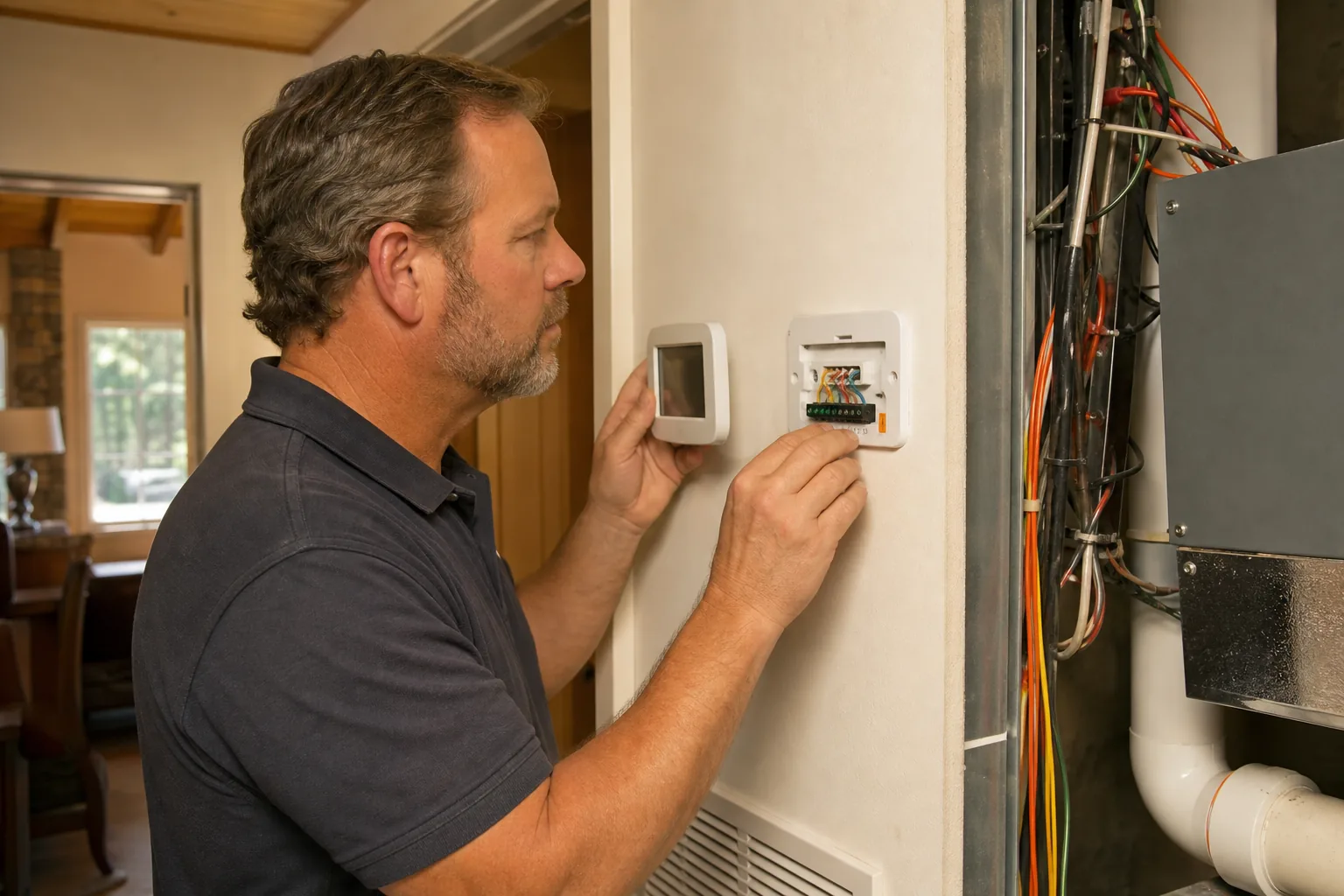
By now you should havea photo of the wiring, the HVAC system type, and a clear list of problems the new thermostat must not hide.
Step 2: Estimate Potential Savings for Homes in Rocklin and Roseville
To judge whether a smart thermostat is worth it, compare likely savings with the full cost of the change. Start with your actual heating and cooling bills, not a broad promise on a product page.
Pull 12 months of PG&E bills if you have them. Add the electric and gas charges tied to home energy use, then mark the months when heating or cooling drove demand. You won't be able to isolate HVAC use perfectly, but the pattern still gives you a useful baseline.
Now ask how your home runs today. A thermostat may help more when the system runs while nobody is home, the schedule changes often, or household members disagree about the setpoint. If someone is home all day and already adjusts the temperature with care, the gain may be smaller.
Only half of the models reviewed published a savings estimate. The average claim among models that did report one was about 21%, but that figure is pulled upward by higher claims. It isn't a promise for every home.
For a local example, a 10% reduction on $300 in annual heating and cooling costs equals about $30. Comparable savings on higher annual costs would be larger. Those amounts can make a $75 to $130 thermostat worthwhile, especially when you plan to stay in the home and install it without a large labor charge.
Price alone doesn't settle the question. Nest was listed at a $100 starting price, while Wyze began at $75. Ecobee began at $130. A cheaper thermostat may fit your needs if it handles your system and gives you the schedule control you will actually use.
Homeowners in Auburn and Colfax may face long, hot summer cooling periods, while Grass Valley and Penn Valley bring cold winter nights. Rocklin, Roseville, and Lincoln homeowners should look at both seasons before estimating payback. For a deeper cost worksheet, the thermostat installation cost guide can help you separate equipment cost from labor.
Key Takeaway:Treat savings claims as a range, then compare them with your own annual HVAC spend and expected installation cost. Contact Home Worx Heating and Cooling for local service in the Sierra foothills.
Step 3: Match Features to Your Routine in Grass Valley or Penn Valley
A smart thermostat is worth more when its features solve a daily problem. Don't pay for controls you'll never use.
List the moments when your current thermostat causes trouble. Do you forget to turn down the heat before leaving? Do you return to a cold house after a weekend away? Does one room stay warmer than the rest? Does your household use Google Home, Alexa, or another smart-home setup?
Then match the problem to one feature. Geofencing can adjust the setting when household phones leave an area. Scheduling can change the temperature at set times. Vacation mode can hold a different setting while you're away. Remote sensors can help when the thermostat sits in a hall but the bedroom stays uncomfortable.
App control sounds useful, but it only saves energy when you act on it. If you rarely check apps, a clear schedule may matter more. A large screen may help someone who struggles to read small text. A simple interface may beat a long list of settings.
Integration also matters. Pick the system already used in your home instead of adding another app and voice assistant.
For a home in Grass Valley or Penn Valley, and in nearby Auburn, Colfax, Rocklin, Roseville, or Lincoln, think about the transition between cool mornings and warm afternoons. A schedule that changes too sharply may leave the house uncomfortable. Set modest changes first. Watch how the system responds for a week, then adjust.
Set a clear, practical goal: aim to reduce run time during vacant hours while keeping the rooms you use comfortable.
We recommend writing down three must-have features before you shop. If a model misses one of them, remove it from the list. Home Worx Heating and Cooling can also help match the control to your equipment and routine, rather than pushing the most expensive model.
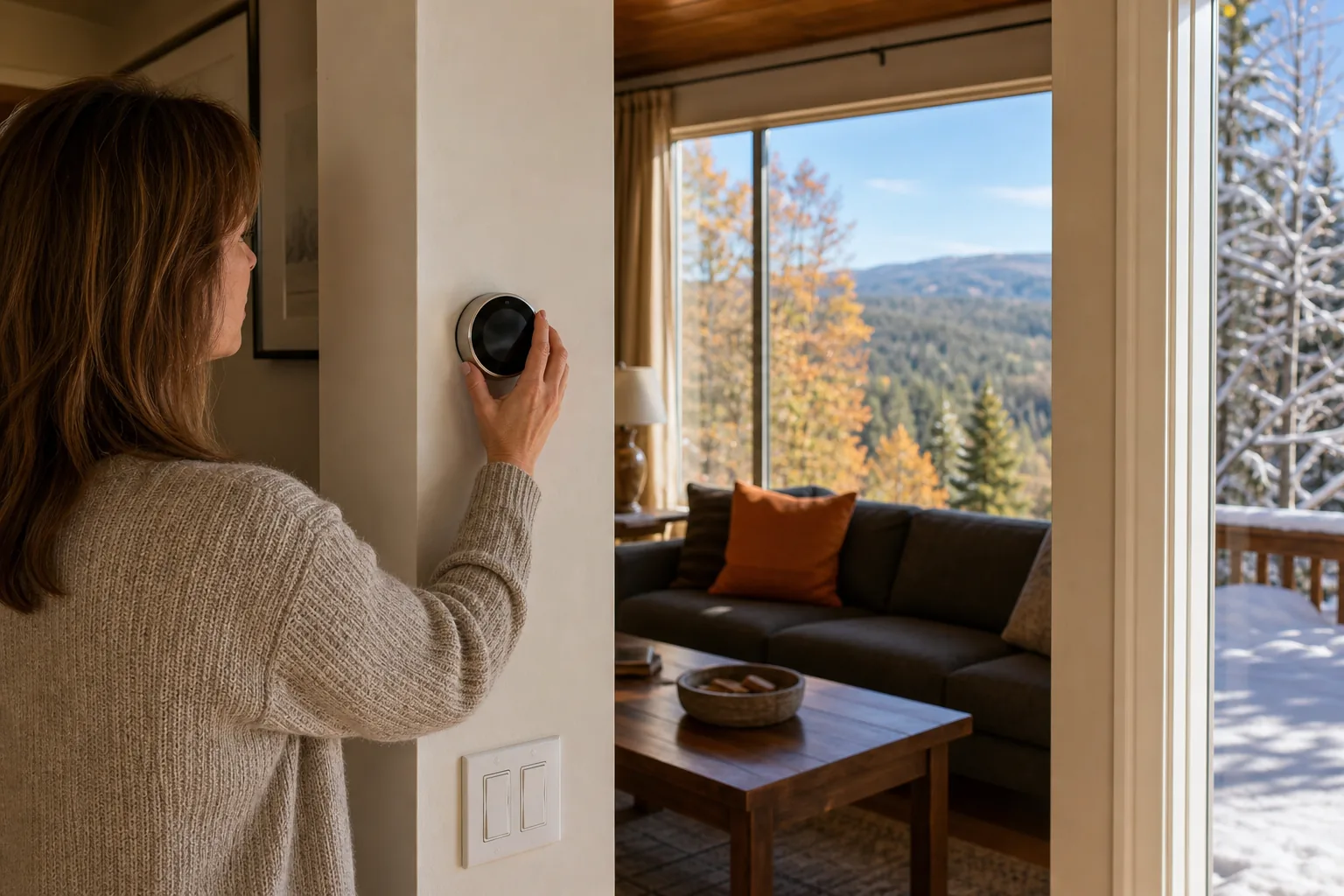
By now you should havea short feature list tied to real habits, not a catalog of features that look good on a box.
Step 4: Compare Installation Costs, Rebates, and Payback in Lincoln
The purchase price is only one part of the answer. To decide if a smart thermostat is worth it, compare the equipment cost, installation work, permit needs, and any available incentive.
Use this decision table before you buy:
Situation | Likely effect on value | What to check |
Compatible wiring is already in place | Improves payback | Confirm terminal labels and system type |
No C wire or unclear wiring | May add labor or parts | Ask whether an adapter or new wire is needed |
Single-stage furnace and air conditioner | Often allows a simpler choice | Check heating and cooling compatibility |
Heat pump or multi-stage equipment | Raises the need for correct setup | Confirm staging and auxiliary heat controls |
Rebate or utility incentive applies | Shortens payback | Check current PG&E and California program rules |
Don't assume every rebate covers every thermostat. Program rules can depend on the model, utility account, home type, or installation date. Check the current PG&E and state energy program pages before counting an incentive in your budget.
For homes in Lincoln, also ask whether local permit rules apply to the work. A basic thermostat swap may be simple, but changes tied to larger HVAC work can have different requirements. A licensed HVAC contractor can tell you what applies to your system.
The best value often comes from choosing the right system match. A $75 thermostat that cannot control your equipment is a poor deal. A $130 model may be sensible if its multi-stage support or sensors solve a clear problem.
Our smart thermostat installation cost options page gives another way to compare equipment and labor before you request an estimate. Ask for the total installed price in writing, including any parts needed for wiring.
Pro Tip:Calculate payback with the amount you will actually pay after eligible rebates, not the shelf price alone.
Step 5: Decide Whether DIY Setup or Professional Installation Makes Sense
DIY setup can make a smart thermostat worthwhile when the system is simple and the wiring is clear. Professional installation is the safer choice when the system type or wiring is uncertain.
You may be a good DIY candidate if the old thermostat works, the wire labels are clear, the replacement model lists your HVAC type, and you can shut off power at the breaker. Keep the old thermostat until the new one works. Take photos before disconnecting anything. Never rely on wire color alone.
After installation, test each mode one at a time. Run heat, then cooling, then the fan. Check that the outdoor unit responds when cooling starts. If you have a heat pump, confirm that the system does not switch into auxiliary or emergency heat without a clear reason.
Stop and get help if you see damaged wires, no C wire, multiple zones, electric heat, a heat pump, or a multi-stage system. Stop too if the thermostat turns on but the HVAC equipment does not respond. A wiring mistake can damage controls or leave you without heat during a cold night.
Professional setup has another benefit: the technician can spot a problem the thermostat would only hide. Poor airflow, a dirty filter, weak duct insulation, and short cycling won't be fixed by an app. Home Worx Heating and Cooling provides installation and system checks for homeowners across the local service area.
We suggest one simple decision rule. If you can explain the system and each wire terminal without guessing, DIY may be reasonable. If you are guessing, pay for a proper install. The small labor cost can protect a much larger HVAC repair bill.
FAQ: Is a Smart Thermostat Worth It?
Is a smart thermostat worth it for every home?
No, a smart thermostat isn't worth it for every home. It makes the most sense when your schedule changes, the home sits empty for part of the day, or you want remote control. If your existing thermostat already follows a good schedule and your HVAC system is near replacement, wait and ask whether the new system will include a control.
How much can a smart thermostat save?
A smart thermostat may reduce heating and cooling costs, but savings vary by home. Your result depends on current settings, occupancy, insulation, equipment condition, and how often you use scheduling.
Do smart thermostats work with heat pumps?
Some smart thermostats work with heat pumps, but compatibility must be checked before purchase. Heat pumps may use auxiliary or emergency heat, which requires the right terminals and settings. Don't install a generic model based on wire color alone. Have an HVAC professional confirm the system when the wiring or equipment type is unclear.
Is a smart thermostat worth it without a C wire?
It can be worth it without a C wire, but the answer depends on the model and HVAC system. Some thermostats support setups without a C wire, while others need an adapter or added wiring. Check the installation guide first. If the current wiring is unclear, Home Worx Heating and Cooling can test it before you buy.
Is DIY setup appropriate for a smart thermostat?
You can install one yourself when the system is simple, the power is off, and the wiring matches the manufacturer's diagram. Professional installation is better for heat pumps, multi-stage equipment, zones, or damaged wiring. Test heat, cooling, and fan operation after setup. If any mode fails, turn the system off and get help.
Conclusion
For many homeowners in Auburn, Colfax, Rocklin, Roseville, Grass Valley, Penn Valley, and Lincoln, a smart thermostat is worth considering when it matches the HVAC system and supports a real scheduling need. Check your wiring first, estimate savings from your own bills, then compare the full installed cost. Home Worx Heating and Cooling can help you choose and install the right control for your home.