
What Size HVAC System Do I Need for My House?
Getting the right HVAC size can feel like guesswork, but you don’t have to wing it. Below we break down the pieces that decide the perfect system for your home and show you how to avoid costly oversizing.
Understanding Home Heat Load
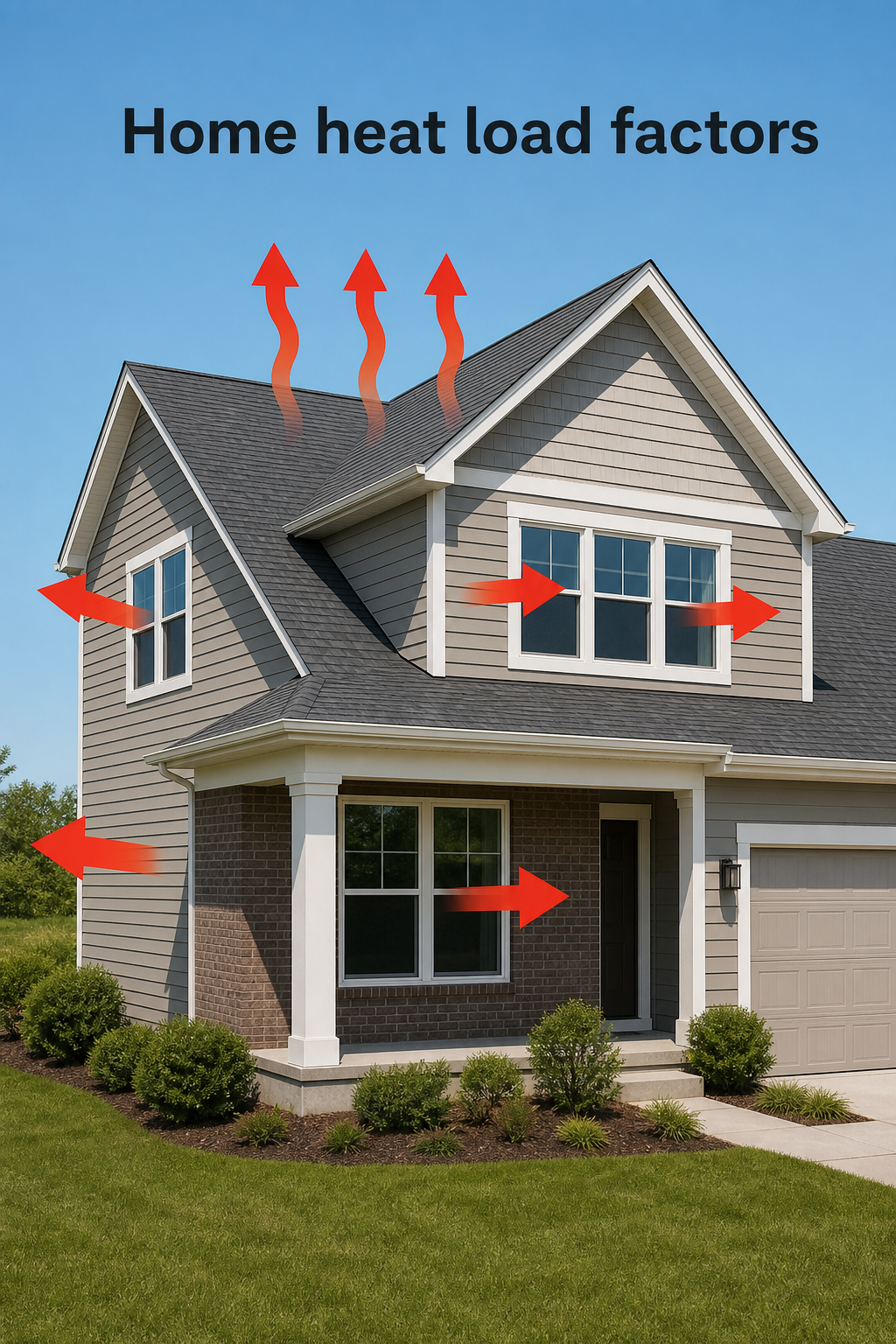
Heat load is the amount of energy a house needs to stay comfy when the sun is blazing or the night is frosty. It depends on how much heat leaks in and out, the size of each room, and the way your home is built. A higher load means you need a bigger unit, while a lower load lets you pick a smaller, more efficient system.
We start by looking at the biggest heat‑gain sources: windows, walls, roofs, and appliances. Then we factor in cooling losses through poor insulation or gaps in the envelope. The result is a number in British Thermal Units (BTU) that tells us the cooling power required.
Home Worx Heating and Cooling runs a full load analysis for every job. We combine square‑footage data with your home’s layout, insulation level, and even your comfort preferences. That extra step keeps us from the 8‑12 % accuracy shortfall that many AI calculators miss.
For a technical definition of BTU, see Wikipedia’s BTU entry . The ASHRAE Handbook explains how heat‑load calculations are performed in professional settings ASHRAE Handbook .
We use those standards to make sure the numbers we give you line up with industry best practice.
How Square Footage Impacts HVAC Sizing
Square footage is the starting point most people hear about, and for good reason. Bigger homes need more cooling capacity, but the rule‑of‑thumb (500 sf per ton) is outdated for modern, well‑insulated houses.
We multiply the total finished area by a factor that reflects ceiling height, window area, and local climate. In a typical California home with 8‑foot ceilings, the factor drops to about 600 sf per ton when the house is well sealed. That means a 2,400‑sq‑ft home usually needs a 4‑ton unit, not a 5‑ton one.
Here’s a quick example: a 1,800‑sq‑ft house with average insulation and a sunny west‑facing façade ends up needing roughly 3.5 tons. If you’d simply used the old 500 sf rule, you’d pick a 4‑ton unit and pay more on energy bills.
Our team runs a custom calculator that adds lifestyle inputs , like how many people are home during the day , to fine‑tune the number.
Key Takeaway:Square footage matters, but adjust the base factor for ceiling height, window exposure, and insulation quality.
The Role of Climate Zone and Insulation
California spans several climate zones, from hot‑dry valleys to marine‑influenced coasts. Each zone stresses HVAC equipment in different ways.
In a hot‑dry climate like the Sierra Nevada foothills, cooling demand spikes in the summer while heating needs stay modest. Systems that can ramp up quickly, such as variable‑speed heat pumps, excel here. In marine zones, humidity control becomes a bigger concern, so a unit with built‑in dehumidification helps keep indoor air comfortable.
Insulation is the silent partner that can shrink or grow your load. A home with R‑30 walls and R‑49 attic insulation may need up to 25 % less capacity than a similar house with older, thinner insulation. That’s why we always ask for R‑value details before recommending a size.
Home Worx adds a budget‑aware step to the mix. If a homeowner wants a smaller upfront cost, we can suggest a slightly lower tonnage paired with a programmable thermostat to keep comfort high without overspending.
For more on how climate zones affect system choice, see a general climate‑zone guide. It walks through hot‑dry, hot‑humid, and marine scenarios in plain language.
When you’re ready to see a local example, a case study of a home where upgraded insulation cut the required tonnage by a full ton can illustrate the impact.
Calculating BTU Requirements for Your Home
BTU is the unit that measures cooling power. One ton of air‑conditioning equals 12,000 BTU per hour. To figure out the right BTU, you start with the square‑footage load and then add adjustments for sun exposure, occupants, and appliances.
Here’s a step‑by‑step you can follow with a pen and calculator:
Multiply the room’s length by its width to get area in square feet.
Take the ceiling height and multiply by the area, then divide by 1,000 to get a base BTU number.
Add 10 % for each large window that faces the sun.
Add 600 BTU for every adult who regularly occupies the space.
Subtract 5 % if you have high‑efficiency insulation (R‑30 or better).
After the math, you’ll have a total BTU figure. Divide that by 12,000 to get the tonnage. If the result lands between two sizes, choose the higher one to avoid short‑cycling.
Our own sizing method mirrors the industry’s Manual J calculation but trims out the paperwork. That’s why we avoid the “one‑size‑fits‑all” online calculators that often over‑size units.
Pro Tip:When you see a calculator that only asks for square footage, add a 10‑15 % bump for climate and occupancy to get a more realistic number.
For a deeper look at BTU basics, see a detailed BTU guide.
Choosing the Right System Type for Your Home
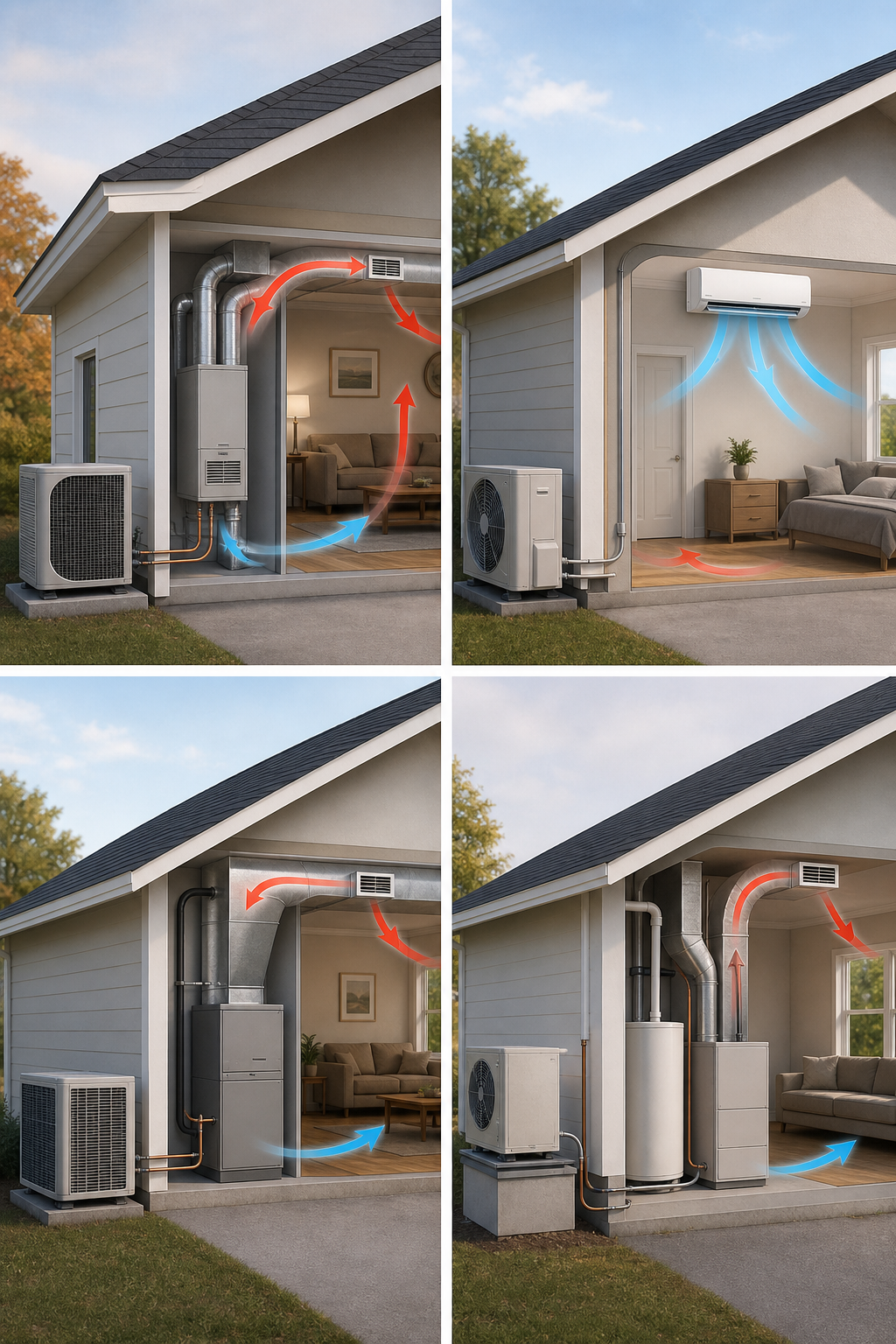
Once you know the tonnage, the next decision is the system style: central air, heat pump, ductless mini‑split, or a hybrid combo. Each type has strengths that match different house layouts and climate needs.
Heat pumps move heat rather than generate it, making them very efficient in moderate climates. In a hot‑dry California valley, a standard air‑source heat pump provides strong cooling and enough heat for mild winters.
Ductless mini‑splits shine in homes with limited ductwork or multi‑story layouts. They let you zone‑control rooms individually, which cuts energy use when only part of the house is occupied.
Traditional split systems pair a furnace with a central air conditioner. They work everywhere but can be oversized for milder winters, leading to higher fuel bills.
Hybrid systems combine a heat pump with a gas furnace, switching to gas when outdoor temps dip too low for the pump to run efficiently. They’re a premium choice for homeowners who want the best of both worlds.
Our team at Home Worx Heating and Cooling evaluates your home’s layout, climate, and budget to recommend the system that will give you comfort without waste.
For a quick look at the options, our resources explain why a heat pump often wins for homes like yours.
FAQ
What size HVAC system do I need for a 2,000 sq ft home?
A 2,000‑sq‑ft home typically requires a 3‑to‑4‑ton system, but the exact size depends on ceiling height, insulation, and climate. A professional load calculation will give you the precise number.
Can I size my HVAC system myself?
You can estimate size with online tools, but those calculators often miss factors like window orientation and duct losses, leading to oversizing. A Manual J‑based analysis by a qualified contractor is more reliable.
Why is oversizing a problem?
An oversized unit cycles on and off quickly, never runs long enough to dehumidify the air. That creates a clammy feel and spikes your energy bill.
How does insulation affect HVAC size?
Better insulation reduces heat gain in summer and heat loss in winter, which can lower the required tonnage by up to 25 %. Upgrading to R‑30 walls or higher often lets you choose a smaller, more efficient unit.
Do heat pumps work in cold winters?
Modern air‑source heat pumps work efficiently down to about 20 °F. In colder pockets of California they can still meet heating demand, especially when paired with a backup furnace in a hybrid setup.
What maintenance keeps my system running right?
Regular filter changes, annual coil cleaning, and a yearly professional tune‑up keep airflow optimal and prevent wear. Home Worx offers a maintenance plan that includes all those tasks.
Conclusion
Start with a proper load calculation , that’s the foundation for any good HVAC size. Then let Home Worx Heating and Cooling match the tonnage to the system type that fits your climate, home layout, and budget. Explore our Sacramento HVAC guide to schedule a free home assessment and get the exact size you need.