
AC Capacitor Replacement Cost: What to Expect
A bad capacitor is one of the most common reasons an AC stops working on a hot day. The good news is that replacing one is usually one of the cheaper HVAC repairs you'll face. Most homeowners in Placer County pay a competitive rate for the full job, though the final number depends on a few key factors we'll walk through below.
What Does an AC Capacitor Actually Do?
Think of a capacitor as the jump-starter for your AC's motors. It stores an electrical charge and releases it in a quick burst to get the compressor and fan motors spinning. Without that burst, those motors can't start on their own.
Your system actually has two types. Astart capacitorgives the motor an initial kick to get it going. Arun capacitorkeeps the motor running smoothly once it's moving. Many units combine both into a single dual-run capacitor , which is the most common part that fails.
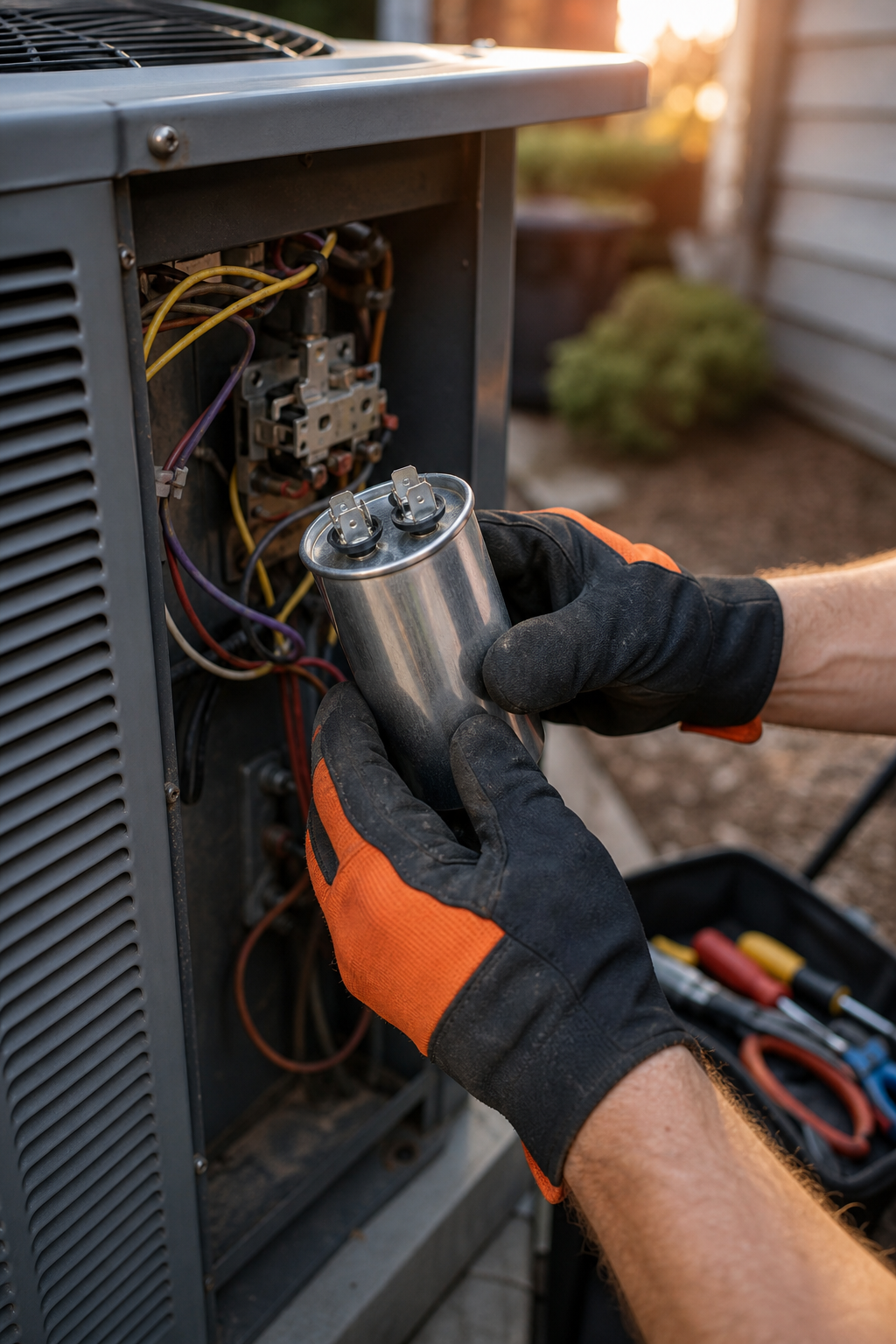
Capacitors degrade over time. Heat is the main culprit. In places like Colfax and Auburn where summer temperatures regularly push past 100°F, capacitors wear out faster than they would in a milder climate. Electrolytic capacitors are especially vulnerable to heat stress, which shortens their operational lifespan.
A failing capacitor puts extra strain on the motors it serves. The motor tries to compensate by drawing more current, which drives up your electric bill and can eventually burn out the motor itself. A capacitor replacement ignored long enough can turn into a costly compressor replacement. That's a hard lesson to learn in July.
Key Takeaway:A capacitor's job is simple but essential: no working capacitor means no running AC, and a slow-failing one quietly damages the motors around it.
If you're curious how capacitor replacement fits into the bigger picture of cooling system repairs, our breakdown of heat pump repair costs explained covers related components and what each one typically runs.
Signs Your AC Capacitor Needs Replacing
Capacitors rarely fail without warning. The signs tend to show up gradually, which gives you a window to act before your system quits entirely on the hottest day of the year.
The most obvious sign is an AC thatwon't turn on at all. You hear a hum from the unit, but nothing starts spinning. That hum is the motor trying to run without the capacitor's starting charge. It's not going anywhere.
A second clue is the system starting butshutting off quicklybefore your home cools down. This happens when a weakened run capacitor can't sustain the motor through a full cycle. The unit runs for a minute or two, then trips a safety cutoff.
Watch for these other signals too:
- The outdoor fan spins slowly or wobbles instead of running at full speed
- Your energy bills climb even though your usage hasn't changed
- You hear a clicking or ticking noise from the outdoor unit at startup
- The unit blows warm air despite the thermostat being set low
One field test a technician will do is a simple capacitance reading with a multimeter. A healthy capacitor reads within about 6% of its rated microfarad (µF) value. When it drifts beyond that, it's time for a replacement. Keeping components within spec is one of the most direct ways to protect system efficiency.
If your unit is more than 10 years old and showing any of these symptoms, don't wait. A proactive swap during a maintenance visit is much easier to schedule than an emergency call when the system dies at 3 p.m. on a Friday.
How Much Does AC Capacitor Replacement Cost?
The total you pay comes from two pieces: the part itself and the labor to install it. Those two numbers vary based on the type of capacitor and the contractor you hire.
Part Costs
A standard single-run or start capacitor typically costs$10 to $50for the part alone. A dual-run capacitor, which is more common in modern systems, runs$20 to $90depending on voltage rating and microfarad value. High-voltage or specialty capacitors for commercial units can push past the cost of a standard residential part.
Labor Costs
Labor is where most of the bill comes from. A standard capacitor swap is a relatively quick job, often under an hour, but HVAC contractors charge a service or diagnostic fee just to show up. In the Placer County and Auburn area, service call fees and total installed costs vary by contractor and season — pricing is generally available on request. Total installed costs for a straightforward residential replacement depend on the contractor and scope of work.
Cost at a Glance
Scenario | Typical Cost Range | Notes |
Single-run capacitor, standard unit | Pricing varies | Most common repair |
Dual-run capacitor, residential unit | Pricing varies | Single part, replaces two functions |
High-voltage or commercial capacitor | $250 – $500+ | Specialty part, longer labor |
Emergency/after-hours service | After-hours surcharge applies | After-hours surcharge on top of base price |
DIY part only (no labor) | $15 – $90 | Risk: electrical hazard, no warranty |
One thing that rarely gets mentioned: some contractors mark up parts significantly over wholesale. That markup is factored into their labor model, but it's worth asking whether the quote separates parts from labor so you can compare apples to apples.
If you're dealing with a tight month financially, it helps to know that Home Worx Heating and Cooling offers financing for AC repairs. Many area contractors simply don't disclose payment options upfront, which leaves homeowners guessing. Having a financing path available means the repair doesn't have to wait while the problem gets worse. Our guide to furnace repair financing options for homeowners walks through how contractor-direct financing typically works and what to look for in a payment plan.
Pro Tip:Always ask your HVAC contractor for a written quote that separates the part cost from the labor fee. It takes 30 seconds to ask and gives you a real basis for comparison.
Factors That Affect the Final Price
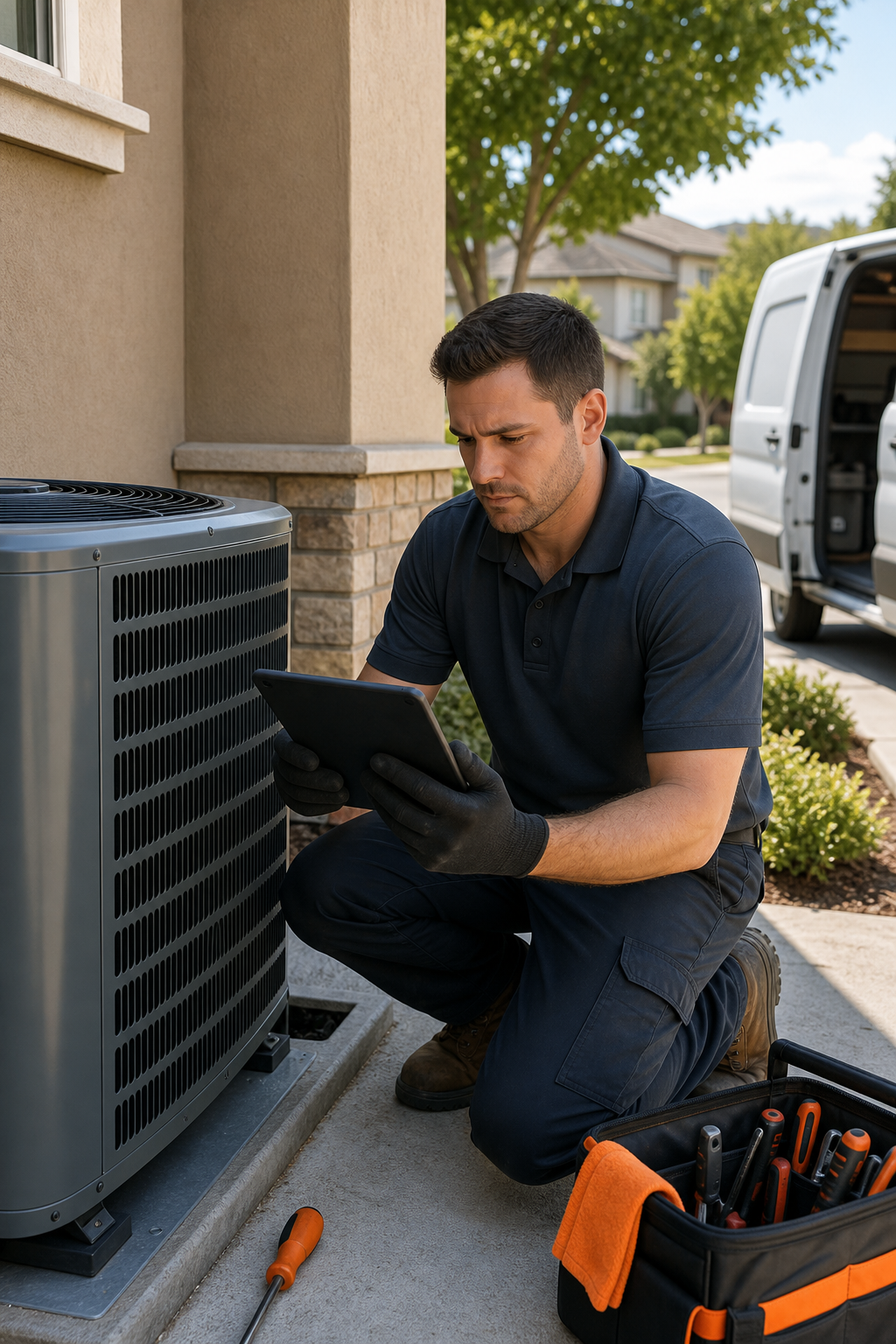
Pricing varies depending on several variables, and knowing them helps you avoid sticker shock.
Type of Capacitor
Dual-run capacitors cost more than single capacitors because they handle two functions in one housing. If your system uses a high-capacity commercial-grade capacitor, the part alone can cost two to three times what a standard residential capacitor runs.
Age and Brand of Your System
Older units sometimes need capacitors that are harder to source. If a technician has to order a specialty part, you may wait a day or two and pay a premium. Newer systems with common specs are easier and cheaper to service.
Time of Service
Calling at 2 p.m. on a Tuesday is cheaper than calling at 7 p.m. on a Saturday. After-hours and weekend service typically adds a surcharge. Our page on emergency AC repair services in Placer and Nevada County breaks down what to expect from after-hours pricing and what questions to ask before you book.
Local Labor Market
Labor rates in Placer County and the Auburn/Colfax corridor reflect California wages and the regional cost of doing business. Rates here run higher than in rural inland markets, which is worth keeping in mind if you're comparing quotes you s.
Whether Additional Repairs Are Needed
A technician may find that the capacitor failure stressed the contactor or caused early wear on the fan motor. If those parts need attention at the same visit, labor costs are shared but part costs stack. That's not padding the bill , it's catching a problem before it becomes a second emergency call.
When every HVAC contractor in your area keeps pricing behind a phone call, comparison shopping gets hard fast. That opacity is a real problem for homeowners trying to budget. One usable workaround: ask each contractor to email a written estimate with line items before you commit. Most reputable contractors will do it without pushback.
DIY vs. Hiring a Professional: What's Safer?
You can find capacitor replacement videos online, and the part itself is not expensive. So it's fair to ask whether this is something a homeowner can handle.
The honest answer is: technically yes, but the risk is real. Capacitors store a high-voltage electrical charge even after the system is powered off. A standard HVAC run capacitor can hold a charge of 370 to 440 volts. Touching the terminals without discharging the capacitor first can cause a serious shock. This is not a theoretical hazard , it happens to experienced technicians who skip a step.
Beyond the safety issue, there's a diagnostic problem. A failed capacitor is often a symptom, not the root cause. A technician checks why the capacitor failed. Did the compressor draw too much current? Is the refrigerant level low? Is there a wiring issue? If you swap the part without answering those questions, the new capacitor may fail again in weeks.
There's also the warranty question. Most HVAC manufacturers require licensed installation for warranty coverage to stay valid. A DIY repair on a system still under warranty could void it entirely.
If cost is the concern, a better move than DIY is asking your contractor about an HVAC maintenance plan. A good maintenance contract often includes discounts on parts and labor, which can make a professional repair cost-competitive with the risk of doing it yourself. It also means a technician sees your system regularly and catches a weakening capacitor before it dies completely.
The math usually favors hiring a pro. The part savings from DIY rarely justify the electrical risk, the diagnostic gap, or the warranty exposure.
How Home Worx Heating and Cooling Handles Capacitor Replacements
Home Worx Heating and Cooling is a family-owned HVAC contractor serving Colfax, Auburn, and the wider Placer and Nevada County area. We've built our business on showing up when it matters and being straight with homeowners about what's wrong and what it costs.
When we get a call about an AC that won't start, we do a full diagnostic before quoting any repair. That means we check the capacitor, test the contactor, measure refrigerant pressure, and verify that the motors are drawing appropriate current. We won't sell you a capacitor replacement if something else is causing the problem.
One thing we're upfront about that many competitors in this market aren't: we offer financing for AC repairs. If a repair comes at a bad time financially, you shouldn't have to sit through a California summer without air conditioning while you figure out the money. Our financing options let you get the repair done and pay it back on a schedule that works for your budget.
We also provide 24/7 emergency service. Capacitors don't fail on a schedule, and we know a dead AC at 6 p.m. in August is just as urgent as one at noon. Our team covers the Placer County and Nevada County region with technicians who carry the most common capacitor sizes on the truck, which means most replacements happen on the first visit.
Transparency about pricing and service terms is something we think every HVAC contractor in this region should practice. It's what we'd want as homeowners, and it's what we deliver.
Frequently Asked Questions
How much does it cost to replace an AC capacitor?
Most homeowners pay a variable amount for a complete AC capacitor replacement, including parts and labor. The part itself typically costs $15 to $90 depending on type. The rest is the technician's service fee and labor. After-hours or emergency calls add a surcharge on top of the base quote.
How long does an AC capacitor last?
A capacitor typically lasts 10 to 20 years under normal conditions, but heat dramatically shortens that lifespan. In hot climates like Placer County, where summer temperatures regularly exceed 100°F, 8 to 12 years is a more realistic range. Systems that run long hours without maintenance tend to see capacitor failure on the earlier end.
Can I replace an AC capacitor myself?
You can, but there's meaningful risk. Capacitors store a charge of 370 to 440 volts even after the power is off. Without proper discharge, touching the terminals causes serious electrical shock. There's also the risk of missing an underlying cause. A licensed technician handles the safety, the full diagnostic, and protects your system warranty, which DIY work can void.
What happens if you don't replace a bad capacitor?
A failing capacitor makes the connected motors work harder than they should. Over time, that extra strain burns out the fan motor or compressor, both of which cost far more to replace than a capacitor. A repair ignored long enough can turn into a significantly more expensive replacement. The AC will also run less efficiently, raising your monthly energy bill in the meantime.
Does my home warranty cover AC capacitor replacement?
Many home warranty plans cover capacitors as a standard component, but coverage varies by provider and plan tier. Check your contract for exclusions related to "wear and tear" or parts under a certain dollar amount. Some plans require you to use their approved contractor list, so call your warranty company before scheduling a repair independently.
Is a capacitor replacement covered by my HVAC warranty?
If your AC system is still under the manufacturer's equipment warranty, capacitor replacement may be covered for parts but not always labor. The key condition: the repair usually must be performed by a licensed HVAC technician. DIY replacement will likely void the warranty. Check the documentation that came with your unit or call the manufacturer directly.
Conclusion
A capacitor replacement is one of the more manageable AC repairs you'll run into, and acting on it early keeps a small problem from becoming a big one. If your system is struggling to start, running hot, or cycling off too quickly, don't wait through another heat wave. Reach out to Home Worx Heating and Cooling for a diagnostic, a straight quote, and financing options if you need them. We serve Placer and Nevada Counties and are available around the clock when your AC can't wait.