
AC Not Cold Enough? Safe Checks and When to Call a Pro
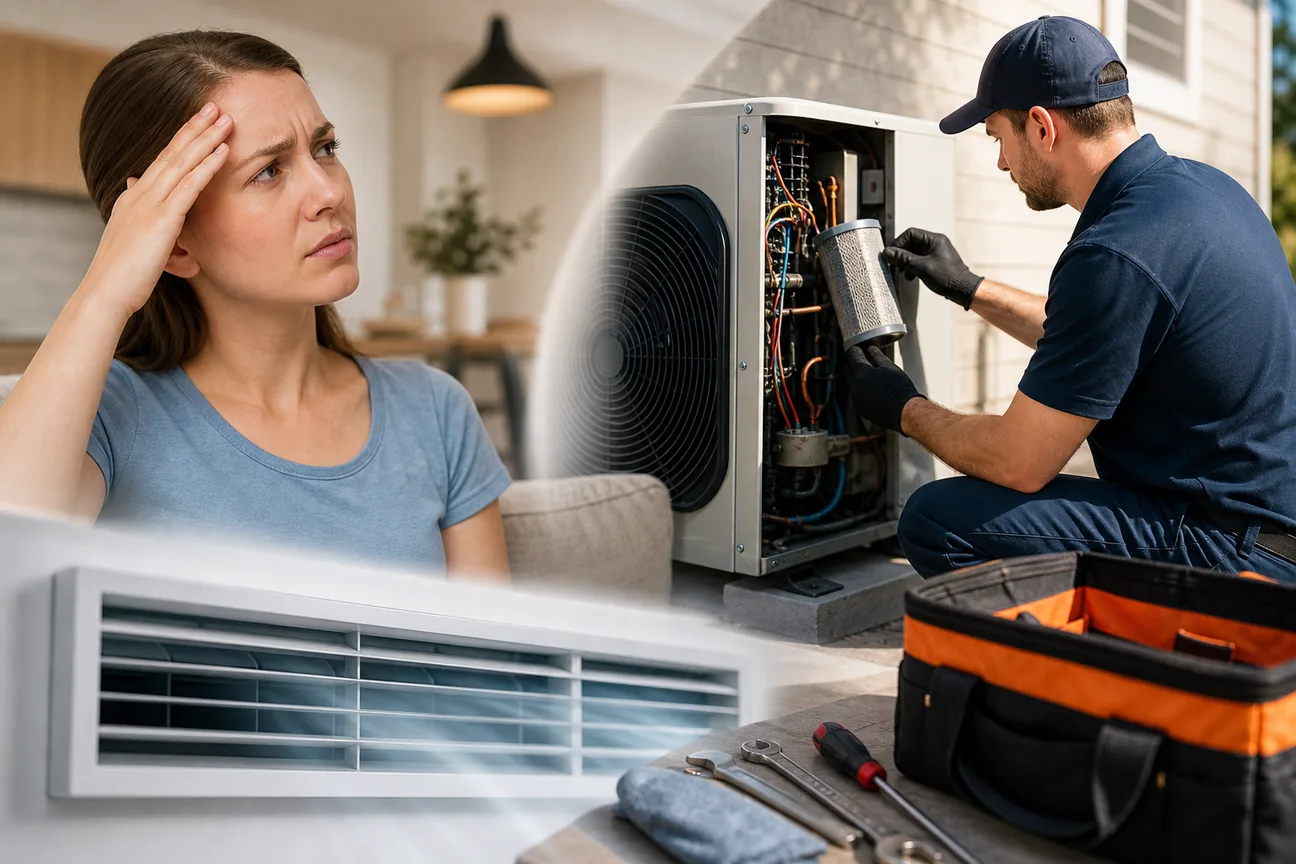
When your AC is not cold enough, a wrong thermostat setting or dirty filter may be all that’s standing between you and cooler rooms. But ice on the refrigerant line, a silent outdoor unit, or a compressor that won’t start calls for a trained HVAC technician. Here are the safe checks to try first, and the signs that mean it is time to call a technician.
We analyzed 62 comments and questions from YouTube, Reddit and Quora about air conditioners that aren't cold enough and found that 27% mentioned dirty air filters.
Table of Contents
Try the easy checks first
Start with the easy checks while you decide what kind of help you need. Set the thermostat to Cool and the fan to Auto. Check that the filter isn’t clogged, then make sure supply vents and return grilles are open. A dirty filter can restrict airflow across the indoor coil. That may leave rooms warm or contribute to ice forming on the coil.
If those checks don’t help, note what you see and hear. Is the indoor fan moving air while the outdoor unit stays quiet? Is there ice on the indoor coil or a refrigerant line? Does one room feel warm while the others cool? These details help frame the issue for a technician. An AC that runs without cooling can have common causes such as airflow problems or a failed compressor .
In Auburn or Roseville, a fan running indoors doesn’t prove the outdoor cooling system is working. The indoor blower can move air even when the outdoor unit isn’t running. A compressor problem may also leave the outdoor fan running without restoring cooling. Don’t remove panels or handle wiring to check. Those parts can carry dangerous voltage.
Refrigerant is another reason to bring in a professional. Low refrigerant often points to a leak that needs to be found and repaired. Refrigerant work is best left to a qualified professional. Don’t try a do-it-yourself recharge.
Is it an airflow problem or a system fault?
Before arranging service, check whether the problem seems limited to airflow or points to a system fault. A clogged filter or blocked vent is a sensible first check. If the filter is clean and the vents are open but the home still won’t cool, look for signs such as ice on a refrigerant line or an outdoor unit that isn’t operating. Don’t open electrical compartments to investigate a suspected capacitor or compressor problem.
It’s also useful to note whether the issue affects one room or the whole house. A warm bedroom with normal airflow elsewhere may call for a different inspection than weak airflow throughout the home. If a duct connection is visibly pulled apart in an accessible area, mention it when you arrange service rather than reaching into equipment or making changes you can’t safely assess.
If you’re in Auburn during a stretch of hot, dry weather, don’t keep running a system that has visible ice or very weak airflow. Turn cooling off and arrange an inspection. Ice can point to restricted airflow or a refrigerant issue, and running the system may not restore comfort.
Separate a control issue from an equipment fault
Next, separate a simple control issue from a possible equipment fault. Check that the thermostat is set to Cool, not Fan. Set the target below the current room temperature, then give the system time to respond. Turning the thermostat far lower won’t make the air coming from the vents colder; it only asks the system to keep running until it reaches the new setting.
A filter check can help too. If the filter is packed with dust, replace it with the right size and fit it in the direction shown by its airflow arrow. Open supply vents and move furniture away from return grilles. If the AC still struggles, note whether the outdoor fan runs and whether any ice is visible. These observations can help focus a later system assessment.
For a repair concern, share clear symptoms rather than guessing at the cause. Mention weak airflow, warm air, a frozen line, or an outdoor unit that won’t start. A technician can then assess whether the problem comes from restricted airflow, refrigerant, or a component such as the compressor.
Check the thermostat settings
A thermostat is worth checking when the AC seems to run but the house stays warm. Confirm the mode says Cool and the fan setting says Auto. Then check the target temperature and schedule. If the display is blank or weak, consult the thermostat’s instructions about power or batteries before assuming the AC itself has failed.
A schedule or mode setting can affect when the system runs, but it can’t repair a clogged filter, frozen coil, refrigerant leak, or failed compressor.
Use this quick check to decide whether a thermostat is a likely part of the problem:
What you notice | What to check | What it suggests |
Air moves, but it isn’t cool | Mode is Cool; fan is Auto | A Fan setting may circulate air without cooling |
Cooling starts and stops at an odd time | Schedule and target temperature | A programmed setting may be affecting the run time |
One room stays less comfortable | Sensor placement and room airflow | A room-level comfort concern may need a closer look |
Ice or very weak airflow appears | Turn off cooling and inspect the filter | A system issue needs attention beyond thermostat controls |
Thermostat controls can’t clear debris from an outdoor coil or fix a refrigerant leak. If the AC still doesn’t cool after the settings check, look beyond the thermostat.
When to call Home Worx Heating and Cooling
Home Worx Heating and Cooling is a family-owned HVAC contractor based in Colfax. We serve homeowners and small businesses across Placer and Nevada counties, with 24/7 emergency repair, installations, maintenance, and air-quality services. If basic checks haven’t fixed the problem, a professional diagnosis can help sort out an airflow issue from a fault in the cooling system.
We offer competitive pricing and a satisfaction guarantee on repair services, and we are open 24 hours a day, seven days a week. For a new HVAC system, financing starts as low as $120 per month (terms and conditions apply). That offer is for a new system, not a stated price for AC repair.
Our service area includes Colfax and nearby communities such as Rocklin, Grass Valley, Penn Valley, and Lincoln. The right next step depends on the signs your system is showing, not on lowering the thermostat again and hoping for the best.
Home Worx Heating and Cooling also handles installations and repairs in the region. Our AC troubleshooting tips for air that isn’t cold can help you review safe checks before choosing the next step.
Frequently Asked Questions
Why is my AC running but not cooling the house?
An AC can run without cooling because of a thermostat setting, restricted airflow, a dirty coil, low refrigerant, or a failing component. First confirm the thermostat is set to Cool and Auto. Then check the filter and open vents. If you see ice or the outdoor unit isn’t running, stop guessing and arrange a professional assessment.
Should I turn off my AC if I see ice?
Yes, turn off cooling if you see ice on the indoor coil or refrigerant line. Ice can restrict airflow and may point to a clogged filter or another system fault. Don’t chip or scrape it away. Let the ice thaw, check the filter, and arrange service if it returns or the AC still won’t cool.
Can I add refrigerant to my AC myself?
Don’t recharge a home AC yourself. Low refrigerant often means there’s a leak that needs to be located and repaired. A qualified technician can assess the leak and the system instead of simply adding refrigerant and leaving the cause in place.
Will lowering my thermostat make the air colder?
No. Lowering the set temperature tells the AC to run longer; it doesn’t make the air from the vents colder. Check that the mode is Cool and the fan is Auto. If airflow is weak or the room stays warm after those settings are right, check the filter and vents before arranging service.
Conclusion
Check the thermostat, filter, and vents first. If the system still can’t cool, or you spot ice or suspect a compressor or refrigerant problem, contact Home Worx Heating and Cooling for local service in Auburn, Colfax, Rocklin, Roseville, Grass Valley, Penn Valley, or Lincoln.