
AC Tune-Up Checklist for California Homeowners
A fresh filter helps, but it can’t catch every issue hiding inside an air conditioner. Use this AC tune-up checklist to see what you can check at home and what’s safer to leave to a trained technician before Sierra foothill heat sets in.
We compared 5 published AC tune-up checklists. We checked each for five professional-only steps: capacitor testing, refrigerant leak detection, temperature split or static pressure measurement, duct leak inspection, and thermostat calibration. Capacitor testing, refrigerant leak detection, and thermostat calibration each appeared on 3 of 5 pages, and duct leak inspection appeared on just 1 of 5. No page covered all five checks, and skipping even one before Sierra foothill heat arrives can leave a real AC problem undetected.
Table of Contents
At-a-Glance AC Tune-Up Checklist for Homeowners
This checklist starts with simple checks you can do without opening electrical panels. A full yearly tune-up goes further: it checks system parts that aren’t easy or safe to test without the right tools.
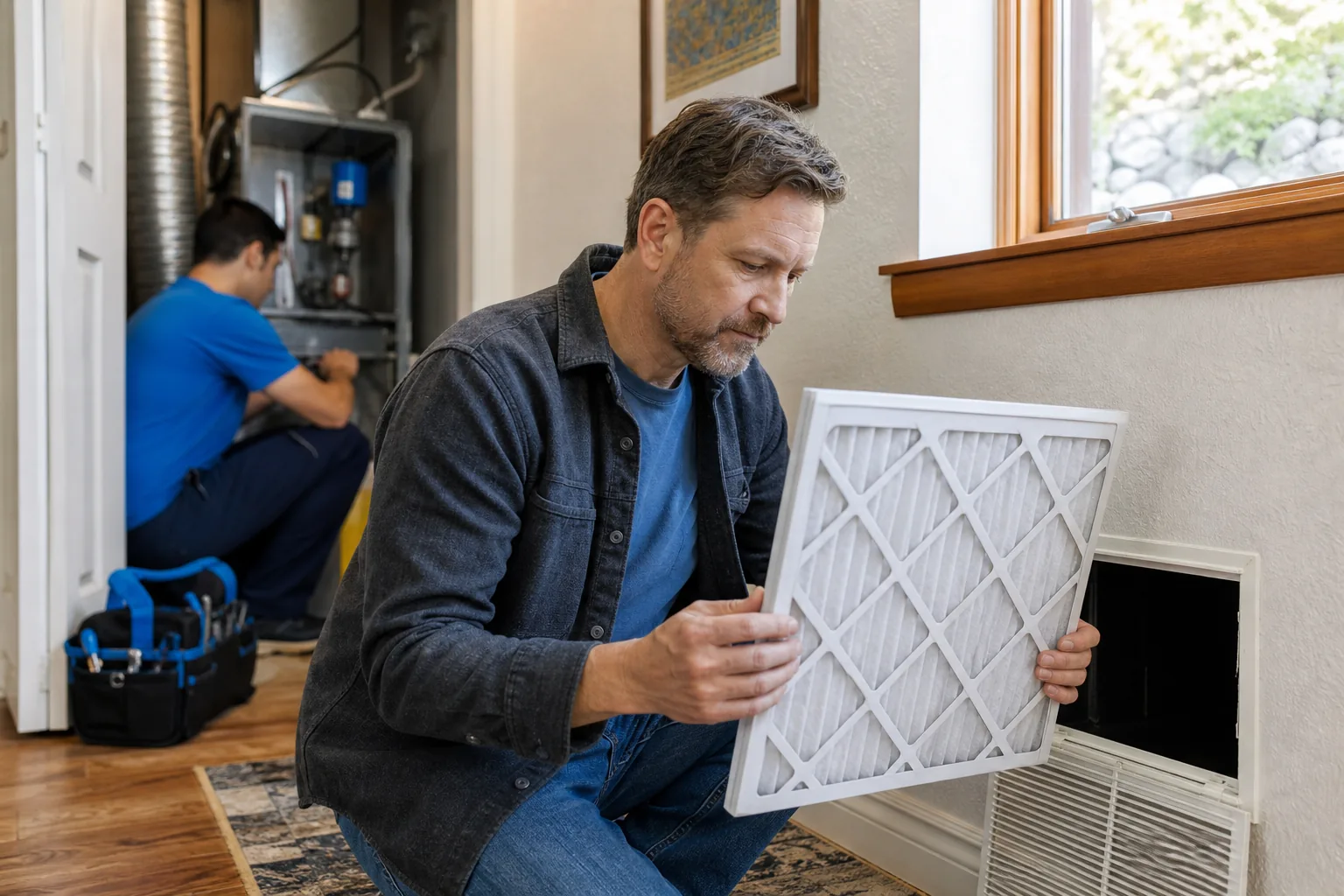
Check the air filter every month during heavy cooling use. Replace it when it looks dirty, and make sure its airflow arrow points toward the equipment.
Look at supply and return vents. Keep them open and clear of furniture or rugs.
Clear leaves and loose debris around the outdoor unit. Keep the coil free of visible buildup, but don’t bend its thin fins.
Look for water in or around the indoor drain pan. A wet pan or a musty smell can point to a blocked drain.
Set the thermostat to cooling and check that the system starts and stops as expected.
Book a technician to inspect refrigerant, electrical parts, airflow, and system performance.
Homeowners in Auburn and Colfax can use these checks between service visits. For broader seasonal tasks, our summer HVAC maintenance checklist covers filter care and other homeowner-safe upkeep.
A once-a-year cooling tune-up is a useful starting point. Home Worx Heating and Cooling offers seasonal maintenance for local homes and businesses, with a professional inspection beyond routine filter changes.
Pro Tip:Write down new sounds, uneven cooling, or water near the indoor unit before the appointment. That gives the technician a clear place to start.
Keep the checklist handy, but don’t remove equipment covers or touch wiring. If you see damaged parts or standing water, switch the system off at the thermostat and ask a technician what to do next.
Indoor and Outdoor Equipment: Coils, Drain, and Visible Condition
A useful AC tune-up checklist includes both the indoor coil and the outdoor condenser. Coils move heat out of your home. Dust or debris on them can make that job harder, while a clogged drain can let water back up near the indoor unit.
At the outdoor unit, clear leaves and loose debris from around the cabinet. Check that plants or stored items aren’t blocking airflow. A gentle rinse may remove surface dirt, but don’t use a pressure washer. Its force can bend the coil fins and make airflow worse.
Some coils need special care. Micro-channel coils have a different build than traditional fin-and-tube coils, so a technician should follow the equipment maker’s cleaning guidance. Avoid spraying unknown cleaners near pets or plants, and don’t remove the top or side panels to reach hidden dirt.
Carrier’s AC tune-up guidance includes coil cleaning and clearing the condensate drain as technician maintenance tasks. That drain carries water produced as the system cools indoor air.
From inside, look for water in the drain pan and check for a visible drip near the indoor unit. Don’t push tools into the drain line or take apart a trap. If water pools, the line may need a proper flush, and the cause may be farther inside than you can see.
Home Worx Heating and Cooling can inspect the drain path and coils as part of seasonal service. This can help Rocklin and Roseville property owners address a small concern before it becomes a leak or a cooling complaint.
Also look at the insulation on the larger refrigerant line where it’s visible. Cracked or missing insulation can cause condensation on the pipe. Leave any refrigerant work or equipment-panel checks to a qualified technician.
Professional Tune-Up Checks: Electrical Connections and Refrigerant
Some of the most important checklist items aren’t DIY tasks. Capacitors store electrical charge, and refrigerant systems need proper tools to test. Don’t open the outdoor electrical panel or try to measure pressure or add refrigerant yourself.
A technician can inspect wiring and connections for wear or signs of heat. They can test the capacitor, which helps start or run a motor, and examine the contactor, a switch that sends power to key parts of the system. A damaged or worn component may not be obvious from outside.
Technicians may also test motor operation and compressor windings with specialized meters. These readings can help show whether a motor is drawing too much current or has an electrical fault. They’ll also check safety controls and inspect visible refrigerant lines for signs of a leak.
A proper visit should include checks suited to your system, not just a quick look at the outdoor unit.
Refrigerant charge is not a simple “top it off” item. A technician needs to check system conditions and look for a leak if the charge is low. A low reading can have more than one cause, so ask what the test found before approving added work.
Home Worx Heating and Cooling serves residential and small-business systems in the foothills. Ask for a written summary of the checks, the readings taken, and any repairs the technician recommends. That record helps you compare future visits and spot changes.
System Performance, Thermostat Calibration, and Ductwork
A complete AC tune-up checklist checks what the equipment does while it runs. A system can look clean and still cool unevenly, cycle too often, or struggle to move air through the home.
Start with a simple thermostat check. Confirm it’s set to cooling, then lower the set point enough to call for cooling. Note whether the indoor blower and outdoor unit start. If the screen is blank or the system doesn’t respond, check the thermostat’s basic settings and batteries if it uses them. Don’t open the unit to inspect wiring.
A technician can test calibration, which means checking whether the temperature reading matches the room. They can also measure the temperature of air returning to the system and air coming out of the supply vents. The difference, often called the temperature split, helps assess cooling performance. It isn’t a stand-alone pass-or-fail number because system type and conditions matter.
Airflow checks matter too. A technician may measure static pressure, or the resistance air meets as it moves through the system. High resistance can point to a dirty filter, blocked coil, or duct issue. They can also inspect the blower and fan motor for signs of strain.
Walk past the vents and note rooms that feel warmer than the rest. Look at accessible duct sections for loose joints, crushed areas, or damaged insulation. Don’t seal ducts with household tape. A technician can assess hidden leaks and recommend a repair that suits the duct material.
These notes help when a room in Grass Valley stays warm even after the thermostat reaches its setting. Share which rooms feel off and when you notice it; that gives the technician a useful starting point for airflow testing.

A short written report should explain what was tested and flag any limits. If a reading needs follow-up, ask what the next test will confirm before making a repair decision.
Seasonal and Local AC Maintenance Notes for the Sierra Foothills
Timing matters in the Sierra foothills. Hot, dry summer weather can push an AC system to run for long stretches. A spring tune-up gives a technician time to find concerns before peak demand, rather than waiting until the system stops cooling.
For cooling, plan service before the first sustained hot spell. In Auburn, Colfax, and Lincoln, clear winter debris from around the outdoor unit as spring arrives. Check the filter monthly during heavy use. Homes near dusty roads or with pets may need more frequent checks, since a filter can load up sooner.
Don’t forget the other season. Colder weather puts heating equipment to work, especially in Grass Valley and Penn Valley. If your home has a heat pump, ask about service that checks its heating and cooling modes. A separate heating visit can also inspect the furnace before cold nights arrive.
Use the schedule that fits your equipment and home. Our local guide to HVAC service frequency explains common service timing and how heavy use or system type can change it.
For a small business or rental property in Rocklin or Roseville, note how long the system runs and which rooms draw complaints. A technician can use those details when checking airflow and controls. Keep service records with the equipment model and filter size so the next visit starts with useful information.
Home Worx Heating and Cooling is a family-owned contractor based in Colfax, serving Placer and Nevada County communities. Contact our team to ask about seasonal service for your home or business. A clear inspection scope and written findings make it easier to plan the next step.
AC Tune-Up Checklist FAQ
How often should I schedule an AC tune-up?
Most homes should have the cooling system professionally checked once a year. Schedule before the hot season if possible. Check the filter monthly while the AC runs often, since filter needs vary with dust, pets, and use. Heat pumps or systems with comfort problems may need a different schedule, so ask a technician about your equipment.
What can I safely do myself?
You can check and replace the filter, keep vents clear, and remove loose debris around the outdoor unit. You can also note unusual noise or water near the indoor equipment. Don’t open electrical panels, test a capacitor, or handle refrigerant. This checklist separates simple upkeep from work that needs professional tools.
Does an AC tune-up include refrigerant?
A technician may check refrigerant charge and inspect for signs of leaks during a tune-up. Adding refrigerant without finding why the level is low may not fix the issue. Ask what was measured and whether the technician found a leak. Refrigerant checks belong on the professional side of an AC maintenance checklist.
When should I book AC maintenance in the Sierra foothills?
Book before the first long stretch of summer heat, when possible. That gives you time to address problems before the AC faces heavy use. Keep checking the filter through the cooling season, then plan heating service before cold weather if your system needs it. The right timing depends on the equipment and how often it runs.
Conclusion
Use this checklist for safe visual checks, then schedule a yearly professional tune-up for electrical tests, refrigerant checks, and performance readings. Contact Home Worx Heating and Cooling to arrange seasonal service in the Sierra foothills and discuss what your system needs.