
Best BTU Calculator for House: 3 Picks
Updated: Oct 1

A BTU estimate can help you compare heating or cooling needs, but square footage alone can miss what makes one home different from another. Here are three BTU calculator options, plus the factors to check before you choose equipment. For a home-size overview, start with our guide to HVAC system sizing .
Table of Contents
1. BTU Calculator by Calculator.net: a quick starting estimate
A BTU, or British thermal unit, measures heat energy. For air conditioning, BTUs per hour describe how much heat a system can remove. For heating, they describe how much heat it can add. The British thermal unit is also used to measure energy in other settings.
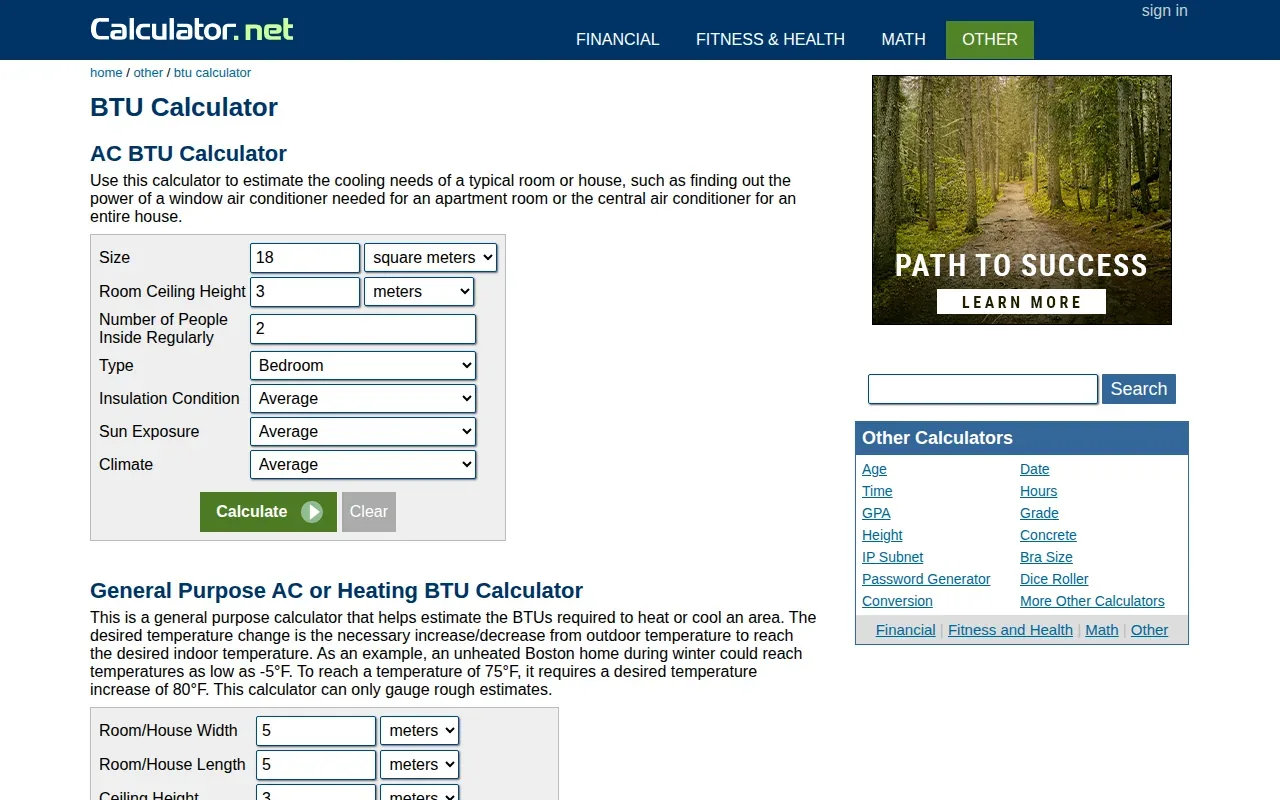
Use square footage as a rough first check for cooling. A common starting estimate is 20 BTUs per square foot. For example, a 10-by-12-foot room is 120 square feet, so the rough estimate is 2,400 BTUs. That math does not account for the room’s windows, insulation, ceiling height, or sun exposure.
Check the calculator’s actual inputs before treating its result as tailored to your home. If it asks only for floor area, treat the output as a starting number rather than a unit size to buy.
That matters in foothill homes. A shaded room in Roseville can have a different cooling load from a sunny room of the same size in Rocklin. Windows and doors matter too, especially when older glazing or air leaks let heat move in or out.
When you compare an estimate with a contractor’s recommendation, ask which details changed the number. Our room BTU calculation guide explains why floor area is only one part of the estimate.
Homeowners in Auburn, Colfax, Grass Valley, Penn Valley and Lincoln can contact Home Worx Heating and Cooling for local service.
2. Heater Size BTU Calculator by Heat Wagon: for heating estimates
Heater Size BTU Calculator by Heat Wagon is the heating-focused option in this shortlist. It may suit someone who wants to check a heater-size estimate, rather than use a room-heating calculator built around fireplace products. Check what it asks before relying on the result.
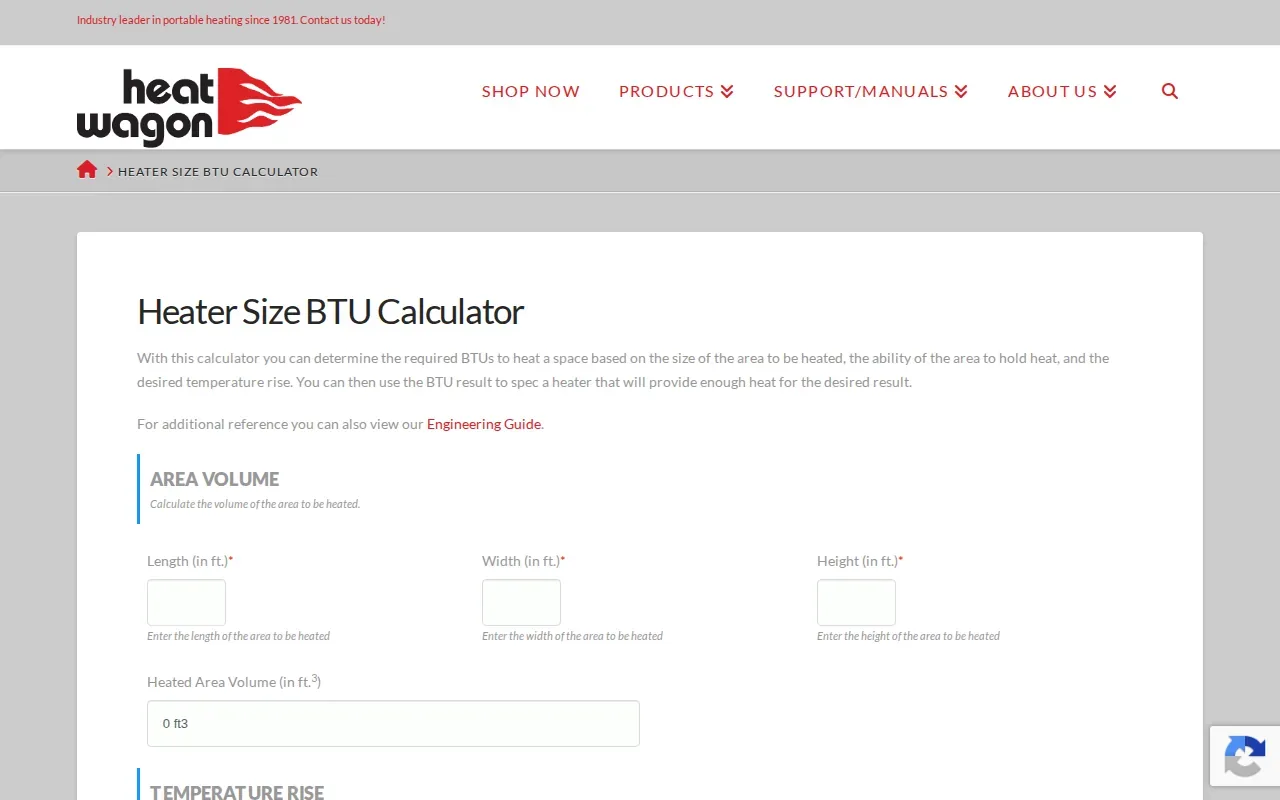
Heating needs don’t always match cooling needs. The same room may lose heat through its walls and windows in winter, while summer cooling load depends on sun, glass, and outdoor heat. A 20-BTU-per-square-foot rule can give a rough cooling estimate, but it isn’t a complete heating calculation.
For a heating estimate, note the room’s length, width, and ceiling height. Also keep track of window and door count, glass type, and whether the room has outside walls. If the room has an odd shape, split it into rectangles, estimate each part, then add the areas. This gives you a better starting area than guessing from the room’s widest points.
Insulation changes the result. A drafty older room may need more heat than a newer, well-sealed room with the same floor area. Room use can matter as well. A kitchen gains heat while cooking, while a bathroom may need quick warmth at certain times. Those details should inform the estimate, but don’t add made-up BTUs for each feature.
For Auburn or Colfax homes, local weather and the home’s site can affect heating needs. A foothill home can face different conditions from a home at a lower elevation. We recommend treating any online number as a screening estimate, not a final equipment choice.
Pro Tip:Keep the calculator result and your room notes together. Ask an HVAC contractor to explain which home details could change the final load.
A professional load calculation can account for more than the room’s footprint. Home Worx Heating and Cooling serves local homeowners and describes its services on its official website . If your estimate looks far from the size already in your home, ask for a review before replacing equipment.
Key Takeaway:A heater calculator can help you check a number, but the home’s heat loss still needs to be part of the decision.
3. BTU Calculator by We Love Fire: a room-heating option
BTU Calculator by We Love Fire is aimed at sizing a wood-burning, pellet, or gas fireplace, insert, or stove. It’s a better fit when you’re considering a hearth appliance than when you’re sizing central HVAC. The tool includes climate choices and asks for the highest point of a cathedral ceiling when one is present.
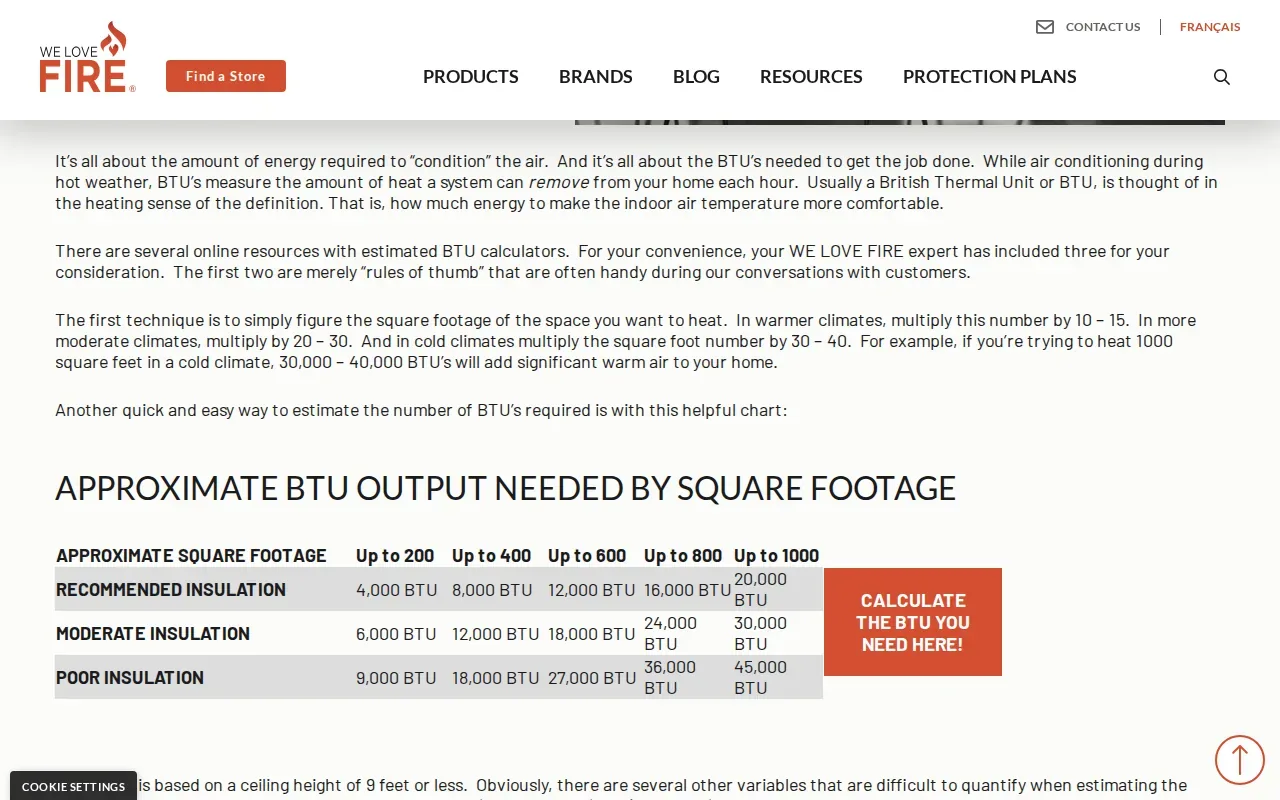
That focus is useful. A stove or fireplace may heat one room or provide extra heat in a zone, while a central system is meant to serve the home or a larger set of rooms. Don’t use a hearth-product result as the required capacity for a central air conditioner or furnace.
A simple floor-area estimate can miss factors such as window count, climate, building age, orientation, insulation, and construction. For a more detailed room check, note whether windows are single- or double-glazed. Include external doors and walls, since they can affect how quickly a room loses heat.
In the Sierra foothills, a house in Grass Valley may face different conditions from a similar-sized house in Roseville. Shading, elevation, and construction can all change the load.
There’s also a limit to what any room tool can tell you. If you’re choosing a window, portable, or ductless unit, make sure the estimate is for that room and type of equipment. Central HVAC needs a whole-home view. A contractor can check the building and duct system instead of relying on floor area alone.
If you’re weighing a ductless system, remember that each zone needs its own load estimate. One room’s answer shouldn’t be copied across the rest of the house. For local HVAC guidance in Auburn, Colfax, Rocklin, Penn Valley, and Lincoln, contact Home Worx Heating and Cooling.
Frequently Asked Questions
How many BTUs do I need for my house?
A rough cooling estimate starts near 20 BTUs per square foot, but that figure can’t size a whole HVAC system by itself. Insulation, climate, ceiling height, windows, and sun exposure affect the load. A BTU calculator for house planning can help you get a first number, while a professional load calculation is better for equipment selection.
Is heating BTU the same as cooling BTU?
BTUs measure heat energy in both cases, but heating and cooling loads are different. Heating equipment adds heat to a home, while an air conditioner removes heat. Winter heat loss and summer heat gain depend on different conditions, so don’t assume one calculator result can size both systems.
What details should I enter in a BTU calculator?
Start with the room’s length and width, then note its ceiling height. Include window and door details if the calculator asks for them. Also record insulation quality, room use, and sun exposure. If the room has an unusual shape, break it into smaller rectangles and add their areas before entering the total.
Can I size central HVAC with a room BTU calculator?
A room calculator is useful for a rough check, but it can’t replace a whole-home load calculation. Central HVAC sizing depends on the house’s rooms and construction, not only the total square footage. If a tool doesn’t ask about windows, insulation, or climate, don’t use its result as the final unit size.
What happens if my HVAC system is too big or too small?
An undersized system may struggle to keep rooms comfortable during demanding weather. An oversized system may cycle on and off more than needed. Either problem can affect comfort and operation. If your estimate seems off, compare the assumptions in the calculator with your home’s conditions and ask an HVAC professional to review the load.
Conclusion
Use Calculator.net for an initial look, Heat Wagon for a heating-focused check, and We Love Fire for a room-heating estimate. For central HVAC, we recommend getting a professional load calculation before choosing equipment. Home Worx Heating and Cooling serves Auburn, Colfax, Rocklin, Roseville, Grass Valley, Penn Valley, and Lincoln. Contact our local team to discuss your home’s sizing needs.