
Best Energy Efficient HVAC System Options
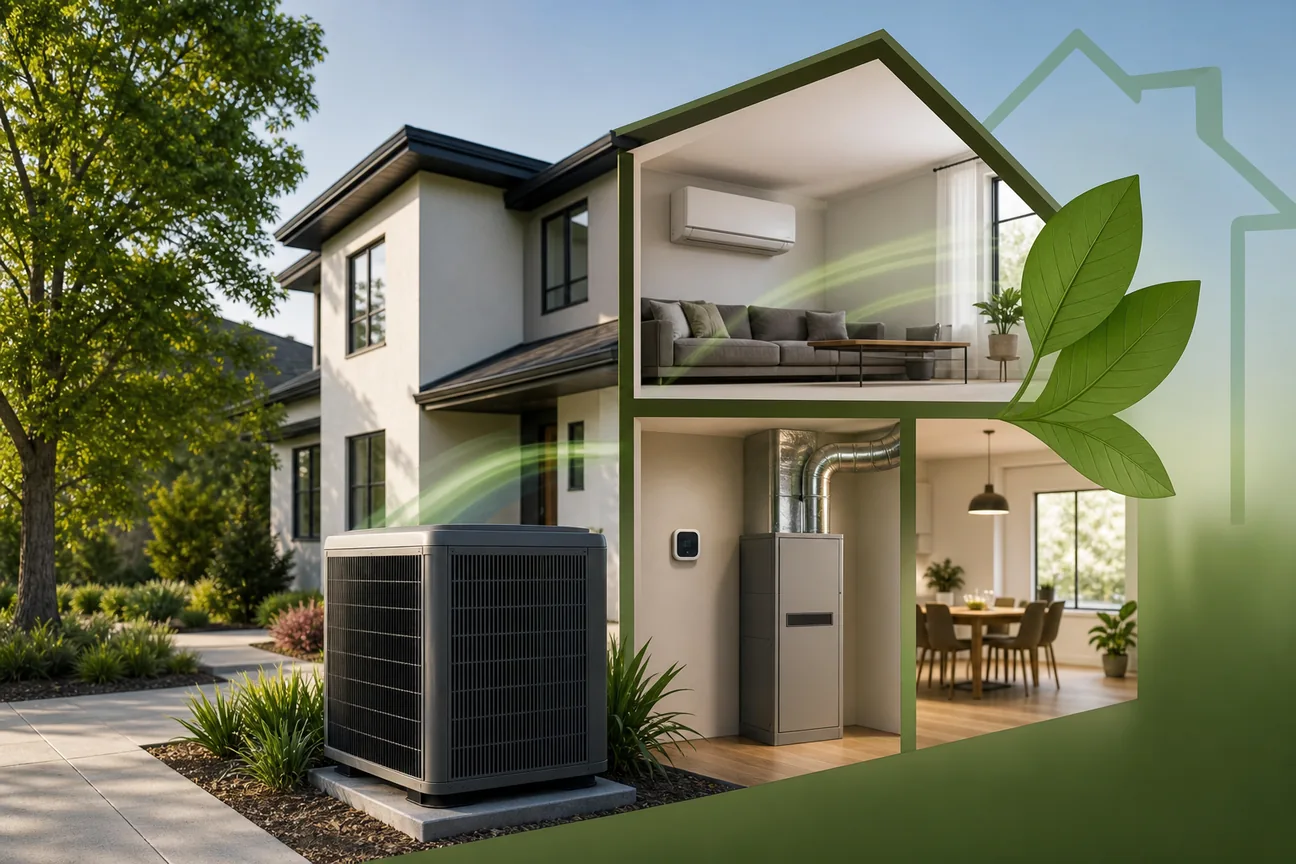
A high-efficiency HVAC system can cut wasted energy, but the most expensive equipment isn't always the best fit. We compared heat pumps , furnaces, inverter systems, efficiency ratings, installation needs, and local factors for Northern California homes. Here are the strongest options, with Home Worx Heating and Cooling at the top for Placer and Nevada County homeowners.
Table of Contents
2. Mitsubishi Hyper-Heating, Cold-Weather Heat Pump Performance
5. Trane XV20i, Variable-Speed Comfort for Residential Homes
8. InverterCool, California-Friendly Inverter Heat Pump Entry Point
10. 17.5 SEER2 Heat Pump (R32), Variable Output for Larger Homes
Frequently Asked Questions About Energy Efficient HVAC Systems
1. Home Worx Heating and Cooling (Our Top Pick)
Home Worx Heating and Cooling is our top local pick for homeowners who want an energy efficient HVAC system with help beyond the equipment sale. The family-owned team serves Placer County and Nevada County, including Auburn, Colfax, Rocklin, Roseville, Grass Valley, Penn Valley, and Lincoln.
This choice fits homeowners who want one local team to assess the home, compare heat pump and furnace options, handle installation, and provide ongoing service. Home Worx installs and services major brands of ducted and ductless heat pumps. The team also handles air conditioning, maintenance, indoor air quality work, and emergency repairs.
That local fit matters in the foothills. A home in Colfax may face colder winter nights than a home in Roseville. A house in Auburn may have older ducts that leak into a crawlspace. A newer home in Lincoln may need better zoning rather than a larger unit. The right design starts with the building, not a sticker on the outdoor cabinet.
Financing options are available, which helps address one of the largest gaps in HVAC shopping. Equipment comparisons often list SEER2 or AFUE but say little about how a homeowner will pay for the work. Home Worx can discuss system choices and available payment paths during the estimate.
We also look beyond the unit. A well-sized system can run more evenly. Sealed ducts help keep conditioned air inside the home. A smart thermostat can reduce needless heating or cooling when the house is empty. For local service details, our HVAC installation and maintenance services page explains the types of work we handle.
The caveat is simple: no contractor can promise one system will suit every home without checking the load, ducts, electrical service, fuel setup, and comfort goals. Ask for those details in writing. That is how you compare a full installation instead of comparing boxes.
2. Mitsubishi Hyper-Heating, Cold-Weather Heat Pump Performance
Mitsubishi Hyper-Heating is a cold-climate heat pump for homes that need dependable heat during colder weather. It is best for homeowners who want electric heating and cooling in one system, especially where winter temperatures can challenge a standard heat pump.
Heat pumps move heat rather than make heat through combustion. In cooling mode, they move heat out of the home. In heating mode, they reverse that process. You can read a plain-language definition of the technology in Wikipedia's explanation of heat pumps .
The Hyper-Heating line is listed with an HSPF range of 9 to 10 in the source data. HSPF measures seasonal heating performance. It is different from SEER2, which measures seasonal cooling performance. Look at both when a system provides both jobs.
This option makes sense for a well-insulated home in Grass Valley or Penn Valley where winter heating demand is meaningful. It can also suit a home owner who wants to reduce reliance on gas. A ductless layout may help when an older house has no usable duct system, while a ducted layout can provide whole-home distribution when the duct design is sound.
Installation quality still decides much of the result. The contractor must size the system for the home's heat loss. Oversizing can cause short cycles and uneven comfort. Poor airflow can make a high-rated unit work harder than expected.
The limitation is cost and design complexity. A cold-climate heat pump may need careful backup planning for unusual cold snaps. It may also require electrical work or a compatible air handler. Get a full load calculation and ask what happens if the outdoor temperature drops below the system's rated operating range.
3. Daikin Aurora, Efficient Heating for Colder Conditions
Daikin Aurora is another cold-climate heat pump option for homes that face colder winter conditions. It suits homeowners who want electric heating with cooling in the same equipment family.
The available research identifies Daikin Aurora as a cold-climate heat pump. That tells you its main selling point, but it does not give enough verified data here for us to state a price, SEER2 rating, or exact low-temperature capacity. Ask the installer for the matched system's certificate and performance sheet rather than relying on the model name alone.
Aurora may fit a foothill home where a mild-weather heat pump would struggle during long cold spells. In Auburn, for example, the system should be matched to the home's insulation and duct layout before anyone discusses capacity. A smaller, well-sealed home may need a very different setup from an older house with high heat loss.
Proper installation includes more than connecting refrigerant lines. The crew should verify airflow, refrigerant charge, thermostat setup, defrost operation, and temperature split. Those checks are part of commissioning. They show whether the installed system performs as designed.
Fresh air also deserves attention in a tightly sealed home. An HRV exchanges stale indoor air for outdoor air while transferring heat. An ERV also considers humidity. Neither replaces filtration, but both can support indoor air quality when the home needs controlled ventilation.
One documented California installation involved removing an old system, recycling it, and installing the replacement according to building standards. That example supports a useful rule: replacement work should include safe removal and a clear check that the new system fits the home's current design.
Daikin Aurora is less useful as a standalone shopping decision than as a candidate for a local load review. The final choice depends on matched indoor equipment, controls, duct condition, and the home's winter load.
4. Bosch IDS, Flexible Inverter Heat Pump Operation
Bosch IDS is a cold-climate heat pump option for homeowners who want inverter operation. An inverter can change compressor output as demand changes instead of running at one fixed level each time.
That matters during shoulder weather. On a cool fall day, the system may need only a modest amount of heat. A fixed-output system may turn on at full capacity and then shut off soon after. An inverter system can run at a lower output for longer periods, which may reduce temperature swings and improve comfort when the system is correctly matched.
The source data places Bosch IDS in the cold-climate heat pump category. It does not provide a verified price for a Northern California installation, so any online equipment figure should be treated as incomplete. Labor, electrical changes, duct repairs, permits, and the indoor unit can change the final proposal.
Inverter systems need compatible controls and careful setup. A thermostat that cannot communicate with the equipment may limit the system's control range. The contractor should also check whether the existing ductwork can carry the required airflow without high static pressure.
Bosch IDS may be worth a look for a home where quieter, steadier output matters. It is less attractive when the ducts are badly undersized or the electrical panel has no room for the required equipment. Fixing those constraints may matter more than moving up one efficiency tier.
5. Trane XV20i, Variable-Speed Comfort for Residential Homes
Trane XV20i is a variable-speed ducted heat pump listed for residential homes in climate zones 3 through 5. Its stated efficiency rating is SEER 21, which places it near the high end of the ratings in this shortlist.
This system is best for a homeowner who wants ducted, all-electric heating and cooling with steady output. Variable-speed equipment can adjust capacity as the load changes. That can help during mild weather when the home needs less cooling than it does during a hot afternoon in Roseville.
SEER and SEER2 are cooling ratings. They should not be compared directly with AFUE, which is a furnace heating rating. A furnace with AFUE 98.5% and a heat pump with SEER 21 may both look impressive, but the numbers measure different jobs.
High ratings do not erase duct problems. If supply ducts leak in a hot attic or return air is restricted, the system loses part of its advantage. A contractor should inspect duct joints, insulation, filter size, registers, and return paths before finalizing the equipment size.
Trane's newer product information also discusses lower-GWP refrigerants and smart thermostat pairing. Lower-GWP refrigerants reduce the climate impact tied to the refrigerant itself, while controls can reduce needless run time. Those benefits depend on the actual matched system and setup.
The drawback is that variable-speed equipment may cost more to install and may need more specific controls. It is a strong candidate for a comfort-focused home, but not automatically the best financial choice for a property with poor insulation or a short ownership horizon.
6. Carrier Infinity 98, High-AFUE Gas Furnace Capability
Carrier Infinity 98 is a modulating gas furnace listed with an AFUE rating of 98.5%. It is best for very cold homes or properties where the electrical panel makes a full heat pump conversion difficult.
AFUE means annual fuel utilization efficiency. A 98.5% rating indicates that most of the fuel energy is turned into useful heat under the rating test. It does not mean the home will use 1.5% of its current energy bill. Bills also depend on thermostat settings, insulation, duct loss, gas rates, and the home's heat load.
A modulating furnace can adjust its output in smaller increments than a basic single-stage furnace. That can support steadier indoor temperatures when the system is sized and controlled correctly. It also needs a suitable venting path and condensate management because a high-efficiency furnace produces exhaust condensation.
Carrier describes its Infinity system as a connected heating and cooling setup designed to reduce temperature swings. The company also lists a limited-time 2026 rebate and financing promotion for qualifying equipment, but eligibility, dates, approved credit, and dealer requirements apply. Treat any promotion as a question for the installing dealer, not as a guaranteed discount.
This furnace may make sense in a colder Colfax home that already has a reliable gas line and limited electrical capacity. It may also work as part of a dual-fuel setup, where a heat pump handles milder weather and the furnace provides backup heat.
The tradeoff is continued gas use. If your goal is all-electric heating, a furnace does not meet it. Compare fuel prices, panel capacity, emissions goals, and expected years in the home before choosing high AFUE alone.
7. Goodman GMSS96, Budget-Conscious High-Efficiency Furnace
Goodman GMSS96 is a single-stage condensing gas furnace listed with an AFUE rating of 96%. It is best for budget-conscious installations and older homes with high heat loss.
A single-stage furnace has a simpler operating pattern. It is generally on at its rated output or off. That can make the equipment easier to understand and may keep the purchase price below a more complex modulating system. The tradeoff is less adjustment during mild weather and potentially wider temperature swings.
Older homes in Penn Valley or Grass Valley may need more than a new furnace. If the building loses heat through thin insulation, leaky windows, or open duct seams, the furnace will run often regardless of its rating. Sealing the return side can be especially important because restricted return air can hurt airflow and comfort.
Goodman provides product, warranty, dealer, and energy calculator resources. Warranty terms depend on the specific product and registration rules. Ask the installer which parts are covered, who handles service, and what labor coverage applies.
GMSS96 is a reasonable candidate when the budget is tight and the home needs a straightforward gas replacement. It is not the best match when quiet low-output operation or precise room-by-room control is the main goal. In that case, a two-stage or variable-capacity design may justify its higher starting cost.
8. InverterCool, California-Friendly Inverter Heat Pump Entry Point
InverterCool is an inverter heat pump option listed for moderate or coastal climates, including California. Its stated efficiency rating is SEER 16 or higher.
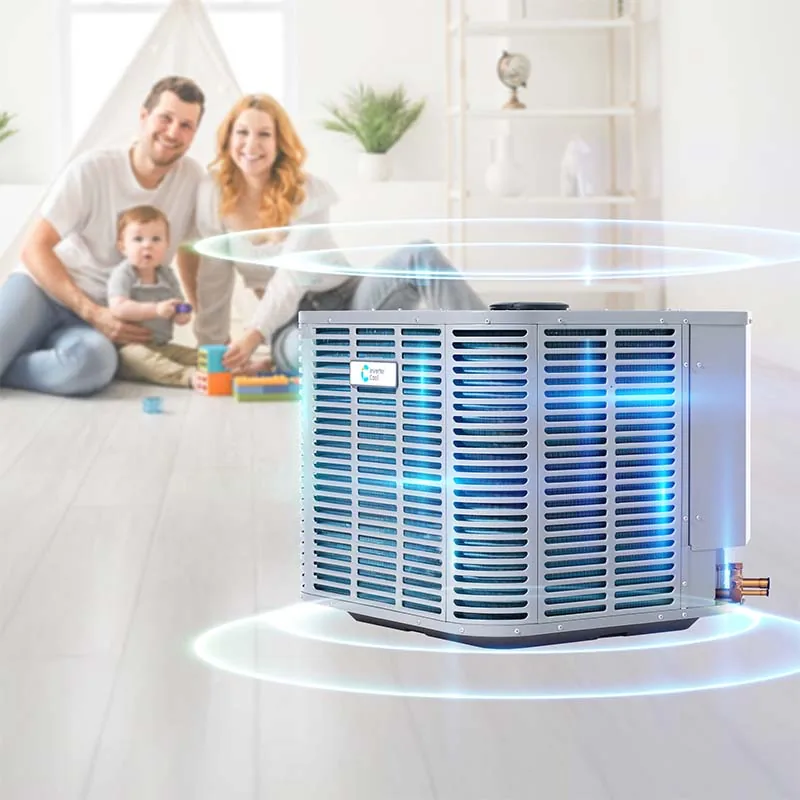
This system may suit a homeowner who wants an entry point into heat pump heating and cooling without starting with the highest rating on the market. Inverter output can help the unit match changing demand. That is useful during California weather, where a warm afternoon can shift into a cool night.
The research also lists financing options that include a $2,000 tax credit or local utility rebates. Those amounts and programs need verification before purchase. A tax credit is not the same as an instant discount, and utility programs can require approved equipment, paperwork, or a participating contractor.
InverterCool's product materials stress that equipment alone does not determine comfort. The contractor relationship matters too. That point holds across every system on this list. A high-rated unit with poor duct airflow can perform worse than a lower-rated unit that was sized, sealed, and commissioned well.
InverterCool may be a fit for a moderate climate or a home with a sound duct system. For colder Sierra foothill properties, ask for low-temperature capacity and backup heat details. SEER 16 or higher describes cooling efficiency, not the full winter story.
9. 17 SEER2 Heat Pump (R454B), Efficient Heating to 5°F
The 17 SEER2 Heat Pump (R454B) is listed for homes of about 1,200 to 1,500 square feet and heating operation to 5°F and beyond. It is best for a smaller or mid-size home that wants a balanced efficiency target.
SEER2 measures seasonal cooling efficiency. R454B is a lower-GWP refrigerant choice discussed in current equipment changes. The refrigerant can matter for future service and environmental impact, but it does not tell you whether the unit is correctly sized for your home.
This option may work well for a compact home in Auburn or Lincoln with moderate heat loss. The same nominal capacity could perform poorly in a larger older home with drafty rooms. Square footage is only a starting point. Window area, insulation, ceiling height, solar gain, and duct layout also affect the load.
Source data lists this model as heating to 5°F and beyond. That is useful when comparing cold-weather options, but ask how much capacity remains at the temperatures your home actually sees. A system may keep running below its rated point while producing less heat.
R454B also makes installation rules and technician training important. Refrigerant work should be handled by qualified personnel who follow the equipment instructions. The installer should leave the homeowner with model numbers, efficiency certificates, warranty information, and commissioning results.
The main appeal is balance. You get a clear SEER2 target and a cold-weather use case without jumping to the highest rating. For a small home, that may be enough. For a larger property, compare it with a variable-output system before deciding.
10. 16.7 SEER2 Heat Pump (R454B), Cold-Climate Certified
The 16.7 SEER2 Heat Pump using R454B is cold-climate certified and heats to -22°F. It is one of the more cold-resilient options for a home that needs dependable winter performance.
A 19 SEER2 Heat Pump using R454B is ideal for smaller homes or additions and can provide 80% capacity at -22°F. For homeowners in Auburn, Colfax, Rocklin, Roseville, Grass Valley, Penn Valley, and Lincoln, the right choice still depends on the home's load and duct design.
Refrigerant choice should be viewed alongside safety rules, service access, equipment availability, and the full matched system. Do not choose a system based on refrigerant name alone.
Decision point | 16.7 SEER2 R454B | 19 SEER2 R454B |
Listed home fit | Cold-climate certified | Smaller homes or additions |
Listed heating use | Heats to -22°F | 80% capacity at -22°F |
Cooling rating | SEER2 16.7 | SEER2 19 |
Best decision question | Does the home's winter load require a cold-resilient option? | Does the home or addition fit the listed application? |
Main caution | Cold-climate capability does not replace proper sizing | Square footage alone cannot size the system |
A home-size label does not remove the need for a load calculation. A smaller home with high heat loss may need different equipment than a well-sealed addition. Duct condition, insulation, and zoning can also change the design. A two-story home may need separate temperature control so the upstairs does not overheat while the downstairs stays cold.
Consider these options when cold-weather performance matters more than the lowest purchase price. Then ask for a side-by-side proposal that shows equipment, labor, duct work, controls, permits, warranty terms, and any rebate assumptions. Homeowners in Nevada County and Placer County can contact Home Worx Heating and Cooling for local guidance.
How to Compare Energy Efficient HVAC Systems
The best energy efficient HVAC system is the one that matches the home and gets installed correctly. Brand rankings help narrow the field, but they cannot replace a load calculation and duct inspection.
Read the ratings correctly
SEER2 covers seasonal cooling. HSPF2 covers seasonal heat pump performance. AFUE applies to furnaces. Compare like with like. A higher number in one rating category does not automatically beat a different system with a lower number in another category.
Also ask whether the rating applies to the exact matched system. Outdoor units, indoor coils, air handlers, furnaces, and controls can affect the certified result. The equipment proposal should identify the combination being installed.
Put installation ahead of the badge
Proper design starts with the home's heating and cooling load. The installer should check airflow and static pressure. Duct leaks need attention, especially in unconditioned spaces. The system should be commissioned after installation, not merely switched on.
Maintenance protects the investment. Replace filters on the schedule that fits the home's dust level and filter type. Arrange a yearly tune-up. Keep outdoor coils clear. Have ducts checked when rooms remain uneven or the system runs far longer than expected.
Use controls with a purpose
A smart thermostat can support schedules and remote changes, but it cannot fix a bad system design. Zoning can help when rooms have different loads. It needs dampers, control logic, and enough return airflow to work well.
Fresh-air systems deserve a separate discussion. An HRV transfers heat between incoming and outgoing air. An ERV also transfers some moisture. In a tight home, controlled ventilation can help remove stale air created by cooking, bathing, and cleaning.
Check rebates before signing
Rebate rules change. Some programs require certain efficiency ratings, approved equipment, income verification, or certified installers. For current California program details, review our California HVAC rebates and incentive guide before choosing equipment.
Do not count a rebate until you confirm that the program is open and the exact system qualifies. In 2026, some large statewide pools are reserved or paused, so a quote that assumes a rebate needs careful review.
Key Takeaway:Ask for the matched efficiency rating, load calculation, duct plan, commissioning checklist, warranty terms, and rebate conditions in the same proposal.
Energy Costs and Local Fit
Price depends on the equipment, home size, access, duct condition, electrical work, permits, and controls. Local rates are available on request, and your estimate may differ. Treat any local reference as a guide, not a promise.
Heat pumps may combine heating and cooling in one system. A furnace may be easier when the home already has gas service and the electrical panel is tight. Dual-fuel systems can split those jobs, but they add equipment and controls.
For a home in Roseville, summer cooling demand may dominate. In Colfax, winter capacity may matter more. Rocklin and Lincoln homes can vary widely by age and insulation. Grass Valley and Penn Valley properties may need a closer look at cold-weather output. Auburn homes often show the same mix of older ducts and newer upgrades.
Environmental impact also depends on how much energy the home uses, the fuel source, refrigerant choice, and equipment life. A well-maintained system that lasts longer can be a better choice than a poorly installed unit with a higher label rating.
Home Worx Heating and Cooling is the strongest fit in this shortlist for homeowners who want local service plus financing options. The team can compare heat pumps, furnaces, ductwork, controls, and indoor air quality needs instead of treating the equipment choice as a one-number contest. Contact Home Worx Heating and Cooling for local service in Placer County and Nevada County.
Pro Tip:Before approving a replacement, ask the contractor to show where the old system lost energy. The answer may point to duct sealing, insulation, airflow, or sizing work that matters more than a small rating increase.
Frequently Asked Questions About Energy Efficient HVAC Systems
What is the most energy efficient HVAC system for a home?
The most energy efficient HVAC system depends on the home's load, ducts, climate, fuel setup, and controls. Heat pumps often combine heating and cooling in one system, while high-AFUE furnaces can suit homes with gas service and heavy winter demand. A load calculation and matched equipment rating matter more than brand alone for homes in Auburn, Colfax, or Rocklin.
Are heat pumps a good choice for Northern California?
Heat pumps can be a good choice for Northern California homes when the system is rated for the local winter load. Cold-climate models suit foothill areas better than equipment designed only for mild weather. Ask about low-temperature capacity, backup heat, duct condition, electrical needs, and the expected operating cost in Roseville, Grass Valley, Penn Valley, or Lincoln.
Is SEER2 the same as AFUE?
SEER2 and AFUE measure different things. SEER2 measures seasonal cooling efficiency for air conditioners and heat pumps. AFUE measures how much fuel a gas furnace turns into useful heat over a year. Compare SEER2 with SEER2 and AFUE with AFUE. Do not average the numbers into one score.
How much does an energy efficient HVAC system cost?
An energy efficient HVAC system has no single price because installation needs vary. Local rates are available on request, while duct repair, electrical work, zoning, access, and permits can change the quote. Ask for an itemized proposal and confirm rebates before counting them.
How often should HVAC maintenance be done?
Most homeowners should plan at least one professional HVAC check each year and replace filters based on the filter type and indoor conditions. A tune-up can catch airflow, coil, drain, electrical, or refrigerant issues. Homes with dust, pets, wildfire smoke, or heavy use may need more frequent filter checks.
For local guidance in Northern California, contact Home Worx Heating and Cooling for service in Auburn, Colfax, Rocklin, Roseville, Grass Valley, Penn Valley, and Lincoln.
Conclusion
For homeowners in Auburn, Colfax, Rocklin, Roseville, Grass Valley, Penn Valley, and Lincoln, Home Worx Heating and Cooling is the clearest first call because it combines local installation knowledge with financing options and ongoing service. Request an assessment that covers system size, ducts, controls, rebates, and total installed cost before choosing your equipment.