
Best MERV Rating: What Do I Need?
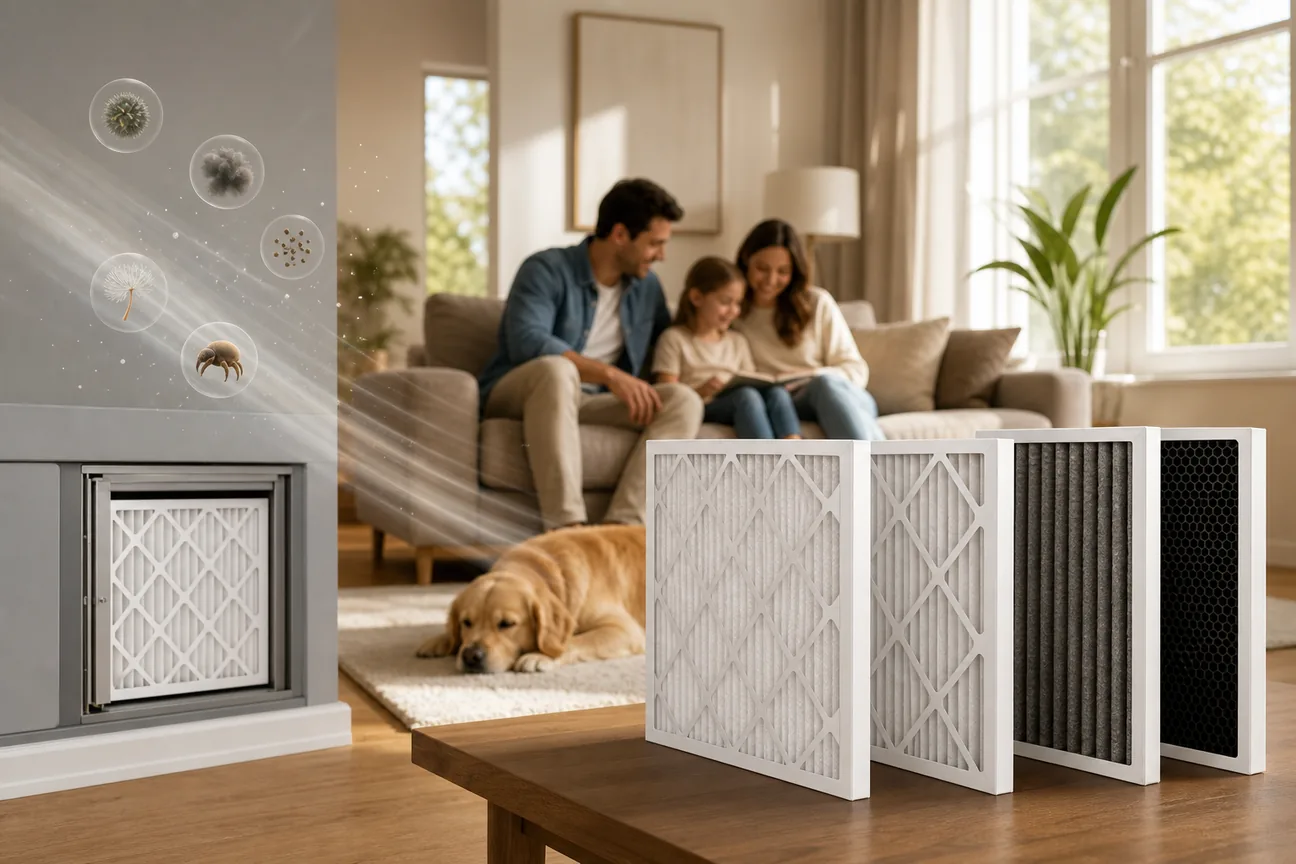
The right MERV rating is a balance, not a race to the highest number. For most homes, MERV 8 works well. MERV 11 helps with pets and allergies, while MERV 13 or higher needs a system built to handle added airflow resistance. Here are the main choices, plus the local HVAC check that keeps your filter from hurting system performance.
Table of Contents
1. Home Worx Heating and Cooling
Home Worx Heating and Cooling is the best first stop when you need help matching a MERV filter to your HVAC system in Northern California. We inspect the equipment, check airflow needs, and help you choose a rating that fits the home instead of guessing from the package.
That matters in homes across Auburn, Colfax, Rocklin, Roseville, Grass Valley, Penn Valley, and Lincoln. Sierra foothill homes deal with hot, dry summers, cold winters, seasonal pollen, dust, and at times smoke from regional wildfires. A filter that works well in one house may restrict airflow in another, especially when the system has a narrow one-inch filter slot or an older PSC blower motor .
We can also look at the wider air-quality setup. A standard filter may be enough for a healthy household using a MERV 8 filter. A home with pets or mild allergies may do better with MERV 11. Someone with asthma, COPD, or smoke concerns may need MERV 13, but only after the HVAC system passes a compatibility check.
Whole-home systems can use thicker media filters with more surface area. That design can make higher filtration easier for the blower than forcing a dense filter into a small slot. The exact filter type still has to match the installed equipment.
Home Worx Heating and Cooling also provides HVAC installation, maintenance, emergency repair, and air-quality service across the local service area. Financing options are available, including a stated $120 monthly HVAC installation option, with terms subject to approval and project details.
The limitation is simple: no contractor can name the right MERV level from health needs alone. The filter size, blower, duct design, and system condition matter too. If you're unsure, contact Home Worx Heating and Cooling for an equipment check rather than a trial-and-error filter swap.
2. MERV 8 - The everyday range for most homes
If you're asking what MERV rating you need for a typical home, MERV 8 is the sensible starting point. It gives useful control of dust, pollen, mold spores, and larger household particles without the airflow burden that comes with denser filters.
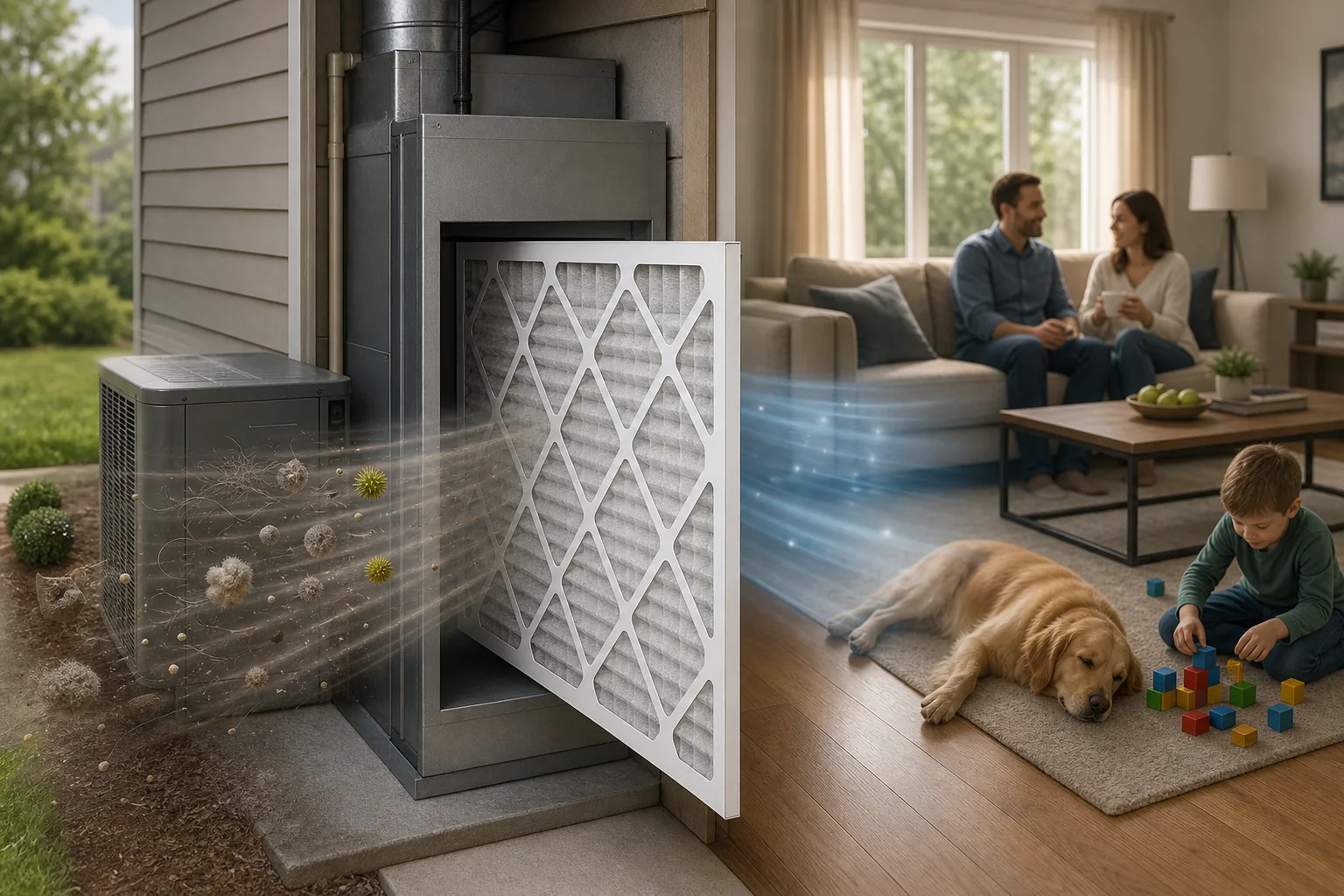
MERV 8 filters have low airflow impact and are compatible with all residential HVAC systems, including older models and those with standard PSC blower motors. That doesn't mean every MERV 8 filter has the same resistance. Pleat depth, filter thickness, size, and how dirty the filter is all change the result.
Household situation | Good starting point | What to watch |
Vacation home or workshop | MERV 1-4 | Basic equipment protection only |
Healthy household with no pets | MERV 8 | Change it before dust loads the filter |
Older HVAC system | MERV 8 | Confirm the filter fits without gaps |
Light pollen or dust concern | MERV 8 | Check airflow after installation |
The low end of the scale creates a strange result. MERV 1-4 filters' main role is equipment protection in places such as storage buildings, workshops, or vacation homes.
For a lived-in home, MERV 8 is usually a better floor. Its airflow impact is low, but a clogged MERV 8 filter can reduce airflow more than a clean higher-rated filter, so replacement timing matters. Our guide to how often to change a furnace filter explains how pets, runtime, filter size, and local conditions affect that schedule.
Choose MERV 8 when your main goal is steady system operation with basic particle control. It is the right fit for many homes in Lincoln, Roseville, Rocklin, Auburn, Colfax, Grass Valley, and Penn Valley. Contact Home Worx Heating and Cooling for local service.
Key Takeaway:MERV 8 is the best default for most homes when the system has no special air-quality demand.
3. MERV 9-12 - Better filtration for allergies, pets, and local dust
MERV 9-12 is the range to consider when MERV 8 is not enough. It is often the best answer for pet dander, seasonal pollen, fine household dust, or a home near a busy road or dusty work area.
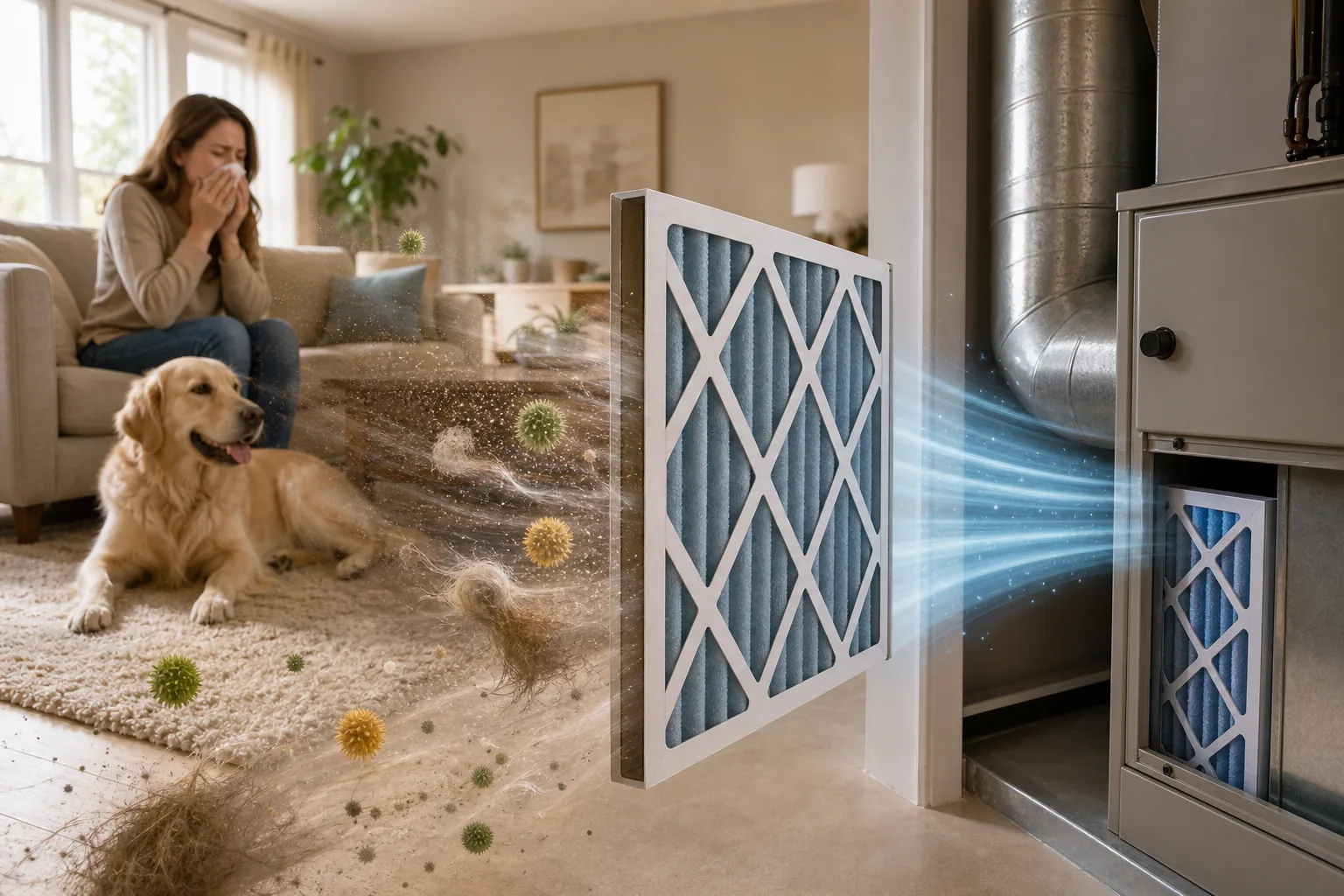
MERV 11 is a strong middle choice. It captures smaller particles than MERV 8 while staying less demanding than MERV 13 in many residential setups. That makes it useful for a family with a shedding dog, a cat, or mild allergy symptoms. It is also a reasonable choice for an office or small shop that needs more filtration than basic residential service.
Homes in Auburn, Colfax, Rocklin, and Lincoln may see a mix of foothill dust and pollen. Grass Valley and Penn Valley homes can face similar seasonal loads, especially when windows stay open during mild weather. A higher rating may help, but it cannot fix moisture, a dirty coil, leaky ducts, or a source of dust inside the home.
The airflow impact rises into the moderate range as the MERV rating goes up. Watch for weak airflow at the vents, rooms that feel stuffy, frequent cycling, or a system that runs much longer after a filter change. Those signs don't prove the filter is wrong, but they do justify a check.
Filter depth matters here. A thick media cabinet gives the air more surface area to pass through. A dense one-inch filter has less room, so it may create more resistance at the same rating. In an older Roseville home, we would want to verify the blower and filter cabinet before moving from MERV 8 to MERV 11 or 12.
Some allergy sufferers need more than the HVAC filter can provide. An additional air-cleaning device may help in a bedroom or living room, while the central filter protects the system and lowers the overall particle load. If symptoms are serious, follow medical advice rather than treating a filter as a health device.
MERV 11 is often the smart compromise. It gives allergy and pet households a meaningful step up without automatically pushing the system into the high-resistance range.
4. MERV 11 - A higher rating that needs a system check
MERV 11 can be a practical choice when you want more filtration than a lower-rated filter, but it is not automatically right for every HVAC system. MERV 11 is often considered the upper limit of what PSC systems should handle safely.
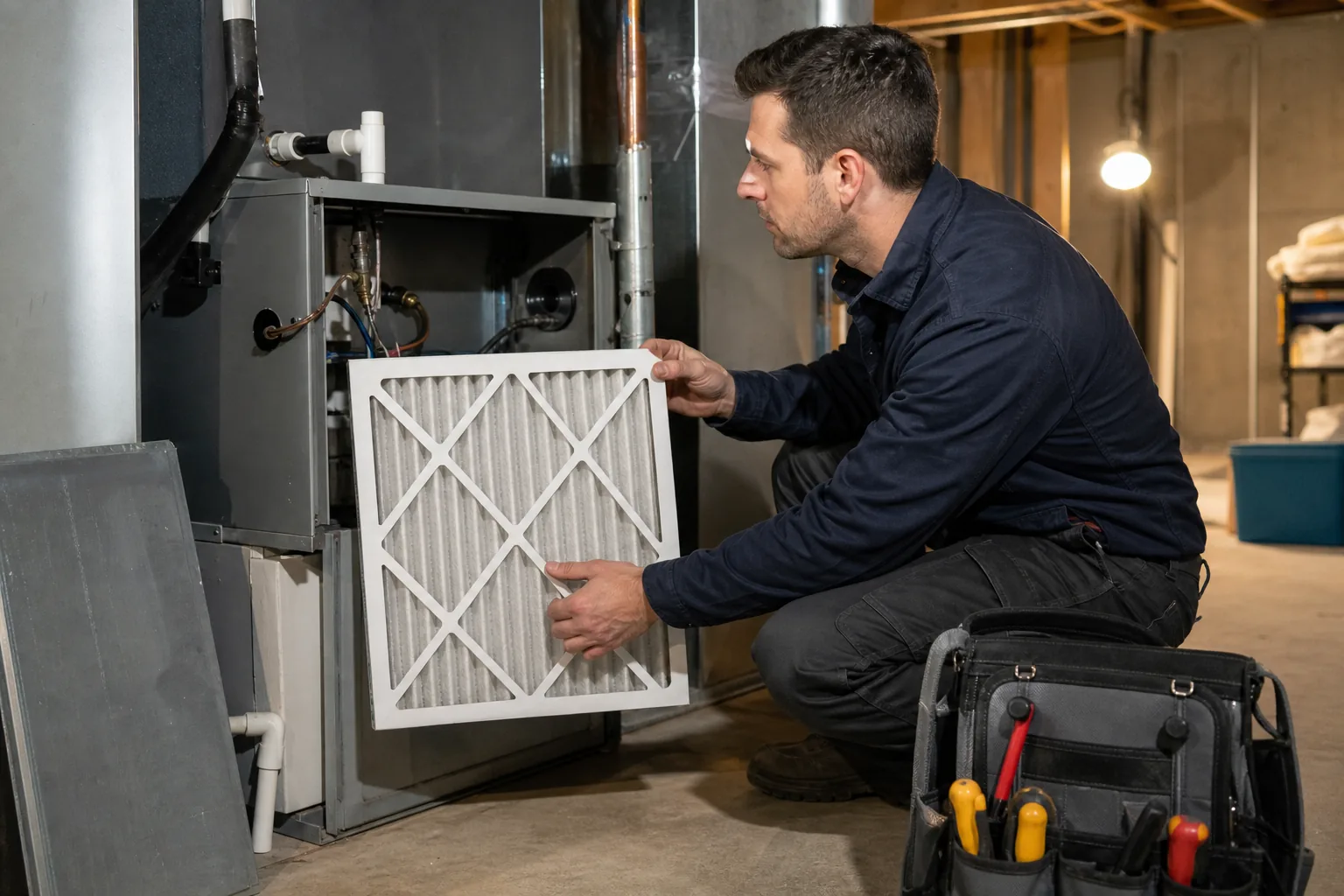
MERV 9-11 generally work with most residential systems, with moderate airflow impact. Even so, higher ratings can increase resistance and affect airflow, so the filter should match the equipment and filter cabinet.
Before choosing MERV 11, check the HVAC manual or have a technician measure system performance. A professional can inspect the filter cabinet, blower, coil, and duct path. This is especially useful in homes around Roseville, Auburn, or Colfax where equipment may have been replaced in stages.
For homeowners in Rocklin, Grass Valley, Penn Valley, and Lincoln, the right choice also depends on the home's filter size and the HVAC system's operating requirements. A MERV 11 filter may work for many residential systems, but MERV 12 may be too restrictive for standard PSC motors, so verify system specifications before installing higher filtration.
Do not choose a filter by rating alone. Check the filter regularly and pay attention to vent airflow, system runtime, and unusual cycling after installation. These observations can help identify whether the filter is affecting system operation.
In Northern California Sierra foothill communities, including Placer County and Nevada County, a system check is a sensible step before changing filter ratings. When in doubt, have Home Worx Heating and Cooling evaluate the equipment and filter fit for your home.
Contact Home Worx Heating and Cooling for local HVAC service in Auburn, Colfax, Rocklin, Roseville, Grass Valley, Penn Valley, and Lincoln.
Pro Tip:If you move to MERV 11, check the filter after the first month and pay attention to vent airflow, system runtime, and unusual cycling.
5. MERV 8-13 - The usable decision range for most occupied buildings
For most occupied homes and small buildings, MERV 8-13 covers the useful decision range. Your answer depends on the people in the building, the particles you need to control, and the filter rating your system can support.

Use this quick match:
Choose MERV 8for basic dust and pollen control in a healthy household.
Choose MERV 11for pets, mild allergies, or more fine dust.
Choose MERV 13for severe allergies, asthma-related concerns, smoke, or high outdoor particle loads, if the system supports it.
Do not ignore filter fit. Air can slip around a filter that is too small, which reduces the value of the rating. Confirm the size printed on the old filter, then check the airflow arrow before installing the replacement.
Replacement timing matters just as much. A dirty filter raises resistance and can erase the airflow benefit of choosing a lower rating. Homes with pets or heavy use may need more frequent checks than a quiet home with low dust.
System sizing also affects the choice. An oversized or poorly matched HVAC system may already cycle in a way that makes comfort uneven. If your home needs a new system, our guide to choosing the right HVAC size explains why load calculations matter before installation.
In a small business, the same rule applies. A MERV 8 filter may work for a low-dust office. A retail space near traffic may need MERV 11 or 13, but only if the unit can maintain airflow. Home Worx Heating and Cooling can assess that balance for businesses and homes across Placer and Nevada counties.
If you still cannot decide, start with the rating listed by the equipment maker. Then move up only when there is a clear air-quality reason and enough airflow capacity to support it.
FAQ
What MERV rating do I need for a normal house?
Most normal houses can use MERV 8. It can help with dust, pollen, and allergens while keeping airflow resistance low on many residential systems. MERV 11 is worth considering for allergy concerns. In Auburn, Colfax, and Rocklin, check the HVAC manual before moving higher, especially if the system is older or uses a narrow one-inch filter slot.
Is MERV 11 better than MERV 8?
MERV 11 filters smaller particles than MERV 8, so it can help more with fine dust and allergies. MERV 8 may still be the better fit for an older system with limited airflow. The best choice is the highest rating your equipment can support without weak airflow or longer, strained run cycles. Homeowners in Roseville and Grass Valley should verify system specifications before choosing MERV 11.
Can I use a MERV 13 filter in my HVAC system?
You can use MERV 13 only if your HVAC system supports its high airflow resistance. These filters require an ECM or variable-speed blower; using MERV 13+ with a standard PSC motor risks frozen evaporator coils, motor burnout, and costly system failure. Check the manufacturer's specifications or have an HVAC technician inspect the blower, filter cabinet, and airflow before making the change, including in Penn Valley.
What MERV rating is best for allergies and pets?
MERV 11 is often a good starting point for allergies, while MERV 13 may be appropriate only when the system supports its airflow requirements. The filter must fit the system and be changed before it becomes loaded with dust. A filter alone also cannot fix moisture, mold growth, or a source of indoor pollution. This applies to homes in Lincoln as well as throughout the area.
Is MERV 16 too high for a home?
MERV 16 requires an ECM or variable-speed blower motor and is not compatible with a standard PSC motor. For most homes, MERV 8-13 can provide effective filtration for dust, pollen, and allergens, but higher ratings can increase resistance and affect airflow. Contact Home Worx Heating and Cooling for local MERV guidance and HVAC service in Auburn, Colfax, Rocklin, Roseville, Grass Valley, Penn Valley, or Lincoln.
Conclusion
For most homes in Auburn, Colfax, Rocklin, Roseville, Grass Valley, Penn Valley, and Lincoln, start with MERV 8. Move to MERV 11 for pets or allergies, and consider MERV 13 only after an airflow check. Contact Home Worx Heating and Cooling for a local filter and HVAC assessment that protects both your indoor air and your equipment.