
Electrostatic Air Filter vs. HEPA: Fit, Cost & Capture
An electrostatic air filter can capture very small particles too, so HEPA isn’t the only option for fine-particle filtration. In this electrostatic air filter vs. HEPA comparison, we’ll look at how each works, what fits a home HVAC system, and what upkeep means for Sierra foothill households.
We analyzed 75 comments from YouTube and Reddit about Electrostatic air filters versus HEPA and found that 36% mentioned restricted airflow and maintenance challenges.
Table of Contents
Particle Capture: Electrostatic Air Filters vs. HEPA
Electrostatic filters use an electric charge to help catch particles. In passive versions, air moving through the filter media creates the charge. Some electrostatic designs use an electrical field to charge particles before collection. These designs differ, so the word “electrostatic” alone doesn’t tell you how well a filter performs.
HEPA filters capture particles as air passes through a dense fiber mat. The fibers trap particles through several physical effects, including interception and diffusion. A HEPA rating describes a tested level of particle removal, while an electrostatic filter’s results depend on its design and rating.
For context, HEPA filtration is a distinct filter category. Specific HEPA products may state different figures under their own test conditions, so check the product’s rating and test details rather than assuming every filter has the same claim.
Electrostatic products also vary. Some carry high MERV ratings, while others are rated much lower. Those examples show why a rating and system fit matter more than the filter category alone.
For a central system, MERV can help you compare HVAC filters, but it isn’t interchangeable with a HEPA rating. Our HEPA filter options for HVAC systems page covers the difference between a dedicated HEPA setup and a standard filter slot.
Homeowners in Auburn, Colfax, Rocklin, Roseville, Grass Valley, Penn Valley and Lincoln can contact Home Worx Heating and Cooling for local help.
HVAC Compatibility, Airflow, and Installation
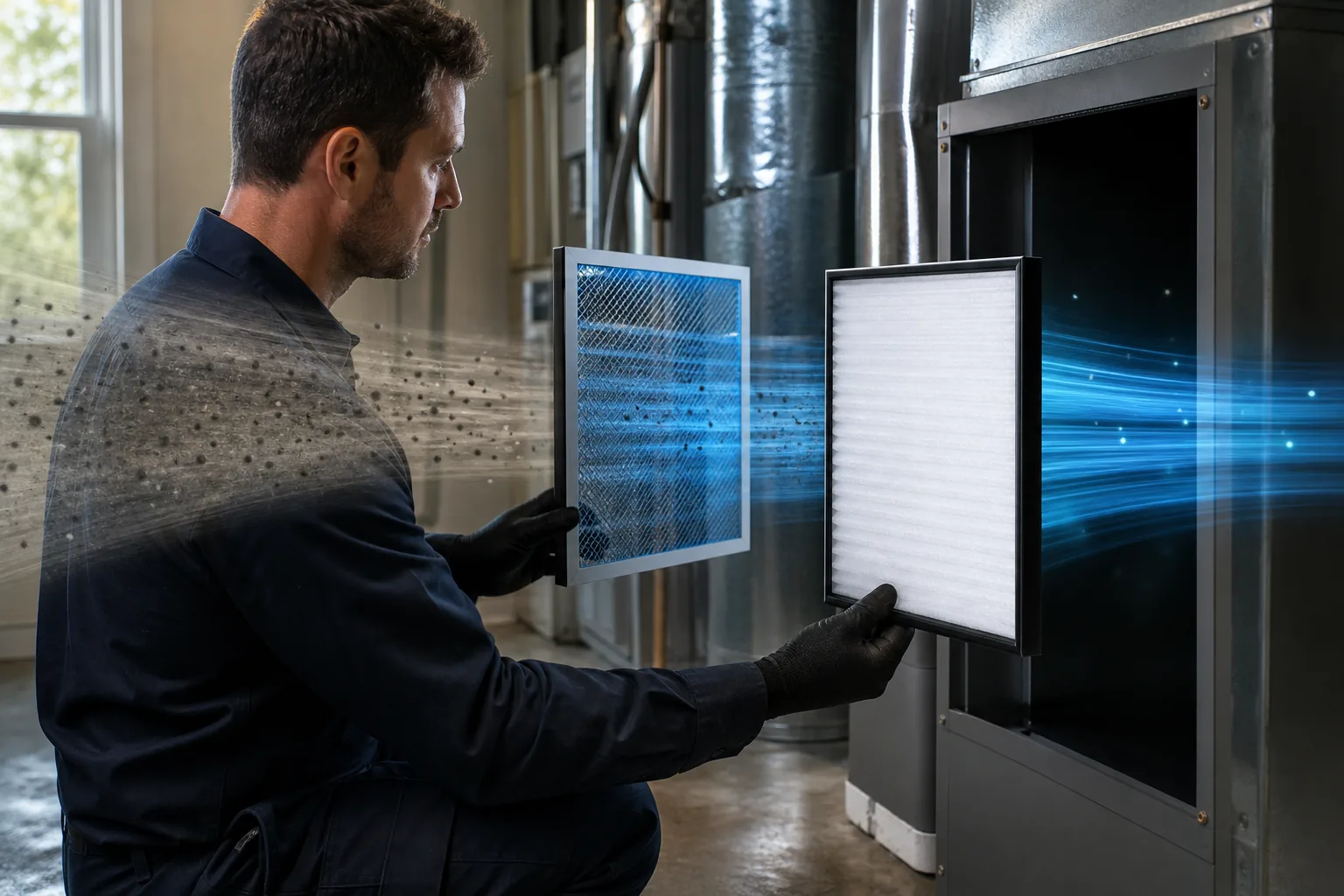
A filter that captures more particles can still be the wrong choice if your furnace or heat pump can’t move enough air through it. HEPA media is dense, so it may need a dedicated cabinet or a separate filtration setup. It usually isn’t a drop-in swap for a basic one-inch filter slot.
Electrostatic HVAC filters come in different sizes and designs. A filter designed for repeated use needs a slot that holds it securely, while a powered filtration unit needs the space and electrical setup its manufacturer calls for. Confirm the filter depth and the allowed pressure drop for your equipment before making a change.
Filter size and depth affect airflow. A filter with more resistance than the system can handle may raise energy use and stress equipment. For additional information, review this filter installation guide .
Decision point | Electrostatic filter | HEPA filter |
Typical HVAC fit | Some models fit standard filter slots; check dimensions and rating. | Often needs a dedicated cabinet or separate filtration setup. |
Airflow concern | Varies by model. Some models are designed for low airflow resistance. | Dense media can add resistance; the system must be designed for it. |
Installation check | Confirm the slot size and whether the filter is washable or powered. | Confirm that the cabinet or room unit seals air through the filter. |
Best next check | Look at the MERV rating and equipment guidance. | Check the system design before adding HEPA filtration. |
In Auburn or Rocklin, where a home may rely on cooling through hot, dry summers, airflow is part of comfort as well as filtration. In colder months around Colfax, a restrictive filter can also affect how the heating system runs. We recommend checking the equipment manual or having an HVAC technician confirm compatibility before upgrading.
If you’re comparing ratings for a central system, our plain-language MERV rating guide explains what the number can and can’t tell you. A high rating is useful only when the equipment can handle the filter. For local compatibility help in Roseville, Grass Valley, Penn Valley, and Lincoln, contact Home Worx Heating and Cooling.
Maintenance, Cleaning, and Long-Term Cost
Filter care instructions vary by design. Dust buildup can affect airflow, so follow the cleaning and replacement instructions for the specific filter.
Some filters are disposable, while others are designed for cleaning. Lifespan varies by product, and a cleaning label doesn’t mean maintenance-free. Some designs have internal layers that can be difficult to reach during cleaning.
HEPA filters also need replacement when they reach the end of their service life. Replacement intervals vary by equipment and filter instructions, so follow the instructions for your specific filter.
For a fair cost comparison, count the filter itself, replacement frequency, and any cleaning time or service. Compare the care requirements for filters designed for cleaning with the recurring purchase cost of disposable filters. HEPA costs depend on the unit and replacement filter, so there’s no universal price advantage for either type.
Cleanliness matters to energy use too. A clogged filter can reduce airflow and make the HVAC system work harder. Check it on a regular schedule, especially during dusty weather or heavy system use, and replace or clean it when needed. In the foothills, hot, dry summers and cold winters make regular checks worthwhile. Contact Home Worx Heating and Cooling for local service.
Pro Tip:Before buying, write down your filter’s size and current replacement schedule. Then compare the new filter’s care instructions with the routine you can keep up with.
Health Considerations, Risks, and Operational Performance
For allergy or asthma concerns, steady particle capture matters. A room air cleaner with a stated filtration rating can be a clear choice for a room, provided the unit moves enough air for that space. A compatible electrostatic filter can also capture fine particles, but results vary more across products and may depend on cleaning.
Some active air-cleaning devices use electrical charge, and some designs can produce ozone as a byproduct. That isn’t the same as a passive electrostatic filter that relies on charged media. If someone in your home has sensitive airways, ask about the specific device and its emissions information before choosing an active unit.
Neither a filter rating nor a label tells you exactly how much cleaner a room will get. Airflow, how long the system runs, and whether air bypasses the filter all affect results. For portable units, a clean-air delivery measure can help compare how much filtered air a unit supplies. For central HVAC, check that the filter fits and seals well.
A filter’s noise usually comes from the fan or HVAC system, not from the filter media itself. A room purifier may be audible as its fan runs. A central filter has no separate fan, though a restrictive filter can change how hard the system has to work. Compare the complete unit and its fan settings if noise is a concern.
Environmental impact depends on how often a filter is replaced and what materials can be reused or recycled. A reusable filter may reduce discarded filter media, but it takes repeated cleaning. Single-use filters create more waste over time. Don’t assume a filter can go in curbside recycling; check local rules and manufacturer guidance.
For households in Roseville or Lincoln dealing with seasonal pollen, an appropriate filter can help capture airborne particles that pass through the HVAC system. It won’t remove dust or allergens already settled on floors and furniture. Our air filter guide for allergy concerns compares filtration choices for different home setups. Contact Home Worx Heating and Cooling for local service.
When an Electrostatic Filter or HEPA Is the Better Choice
Choose an electrostatic filter when your HVAC system supports the model, you want a washable option, and you’re willing to clean it on schedule. It may also suit you if you want a filter that fits an existing system without adding a separate room purifier. Check its MERV rating and any airflow data first.
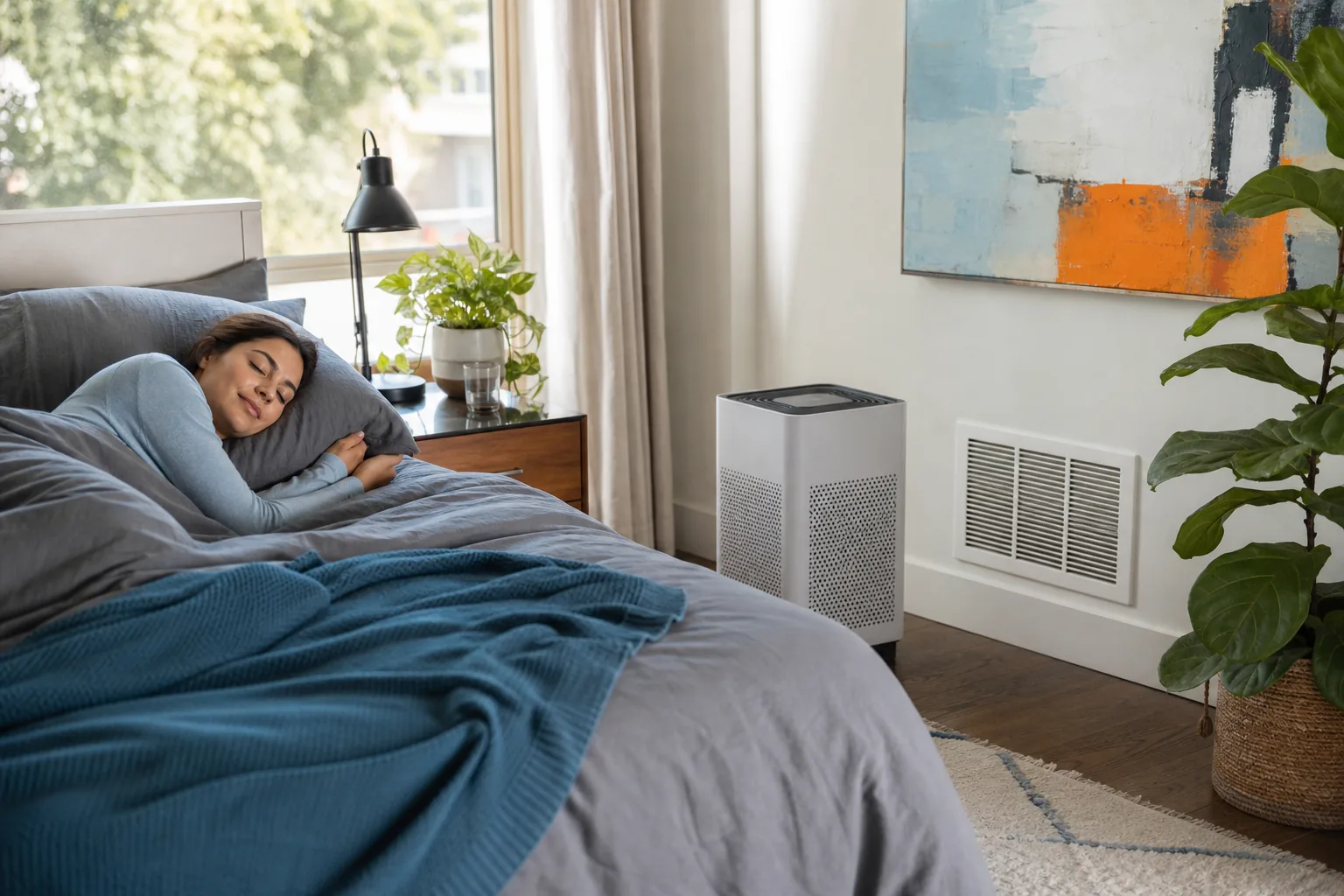
Choose HEPA when you need a defined high-efficiency rating for a room or a system built to use HEPA media. It can make sense when consistent fine-particle capture is the priority, especially in a bedroom or another space used for long stretches. Make sure the unit is sized for the room and that air passes through the filter without leaks.
There’s no single winner for every home. In Grass Valley or Penn Valley, a local HVAC assessment can help match filter depth and airflow to the equipment. Home Worx Heating and Cooling serves these communities and can help homeowners compare filtration options alongside their system’s needs.
Key Takeaway:Choose by verified performance and HVAC compatibility first, then weigh cleaning habits and replacement costs.
Frequently Asked Questions
Is an electrostatic air filter as good as HEPA?
Some electrostatic filters capture fine particles at high rates, but the category varies widely. HEPA has a defined performance standard, while electrostatic results depend on the model and its rating. Compare test claims, check MERV where relevant, and confirm the filter works with your HVAC system. A high-performing electrostatic model can be useful, but don’t assume every electrostatic filter matches HEPA.
Can I put a HEPA filter in my furnace?
Only if the furnace or air handler is designed to use that filter or has a suitable cabinet. HEPA media can restrict airflow in a standard filter slot. Before switching, check the equipment instructions or ask an HVAC technician to review the filter size and allowable resistance. A standalone room purifier may be a better fit for one room.
Are filters that require regular cleaning worth it?
They may be worth it if you’ll clean them as often as the maker requires and the filter fits your system. Reusing a filter can cut replacement purchases, but cleaning takes time and performance can fall when dust builds up. Compare the upfront cost with the care routine and the lifespan stated for that specific filter.
Which filter is better for allergies?
HEPA is a strong choice when you want a defined filtration rating in a room purifier or a HEPA-ready HVAC system. A compatible electrostatic filter may also capture allergens, but its performance depends on the model and upkeep. The fan or HVAC system must move enough air through the filter. Filtration won’t remove allergens that have already settled on surfaces.
Do electrostatic filters use more energy?
It depends on the design. Passive electrostatic media doesn’t need its own power source, while some designs use one. Airflow resistance also matters: a restrictive filter can make an HVAC system work harder. Check the manufacturer’s guidance and confirm compatibility instead of assuming one filter type always uses less energy. For a filter compatibility check, contact Home Worx Heating and Cooling for local service.
Conclusion
Choose HEPA when you need a defined high-efficiency option and your setup can support it; choose electrostatic when the model fits your system and its cleaning routine suits you. Home Worx Heating and Cooling can help homeowners in Auburn, Colfax, Rocklin, Roseville, Grass Valley, Penn Valley, and Lincoln check fit and compare local options. Contact Home Worx Heating and Cooling to discuss your home’s filtration needs.