
Furnace Exhaust Smell in the House: Causes and Safety
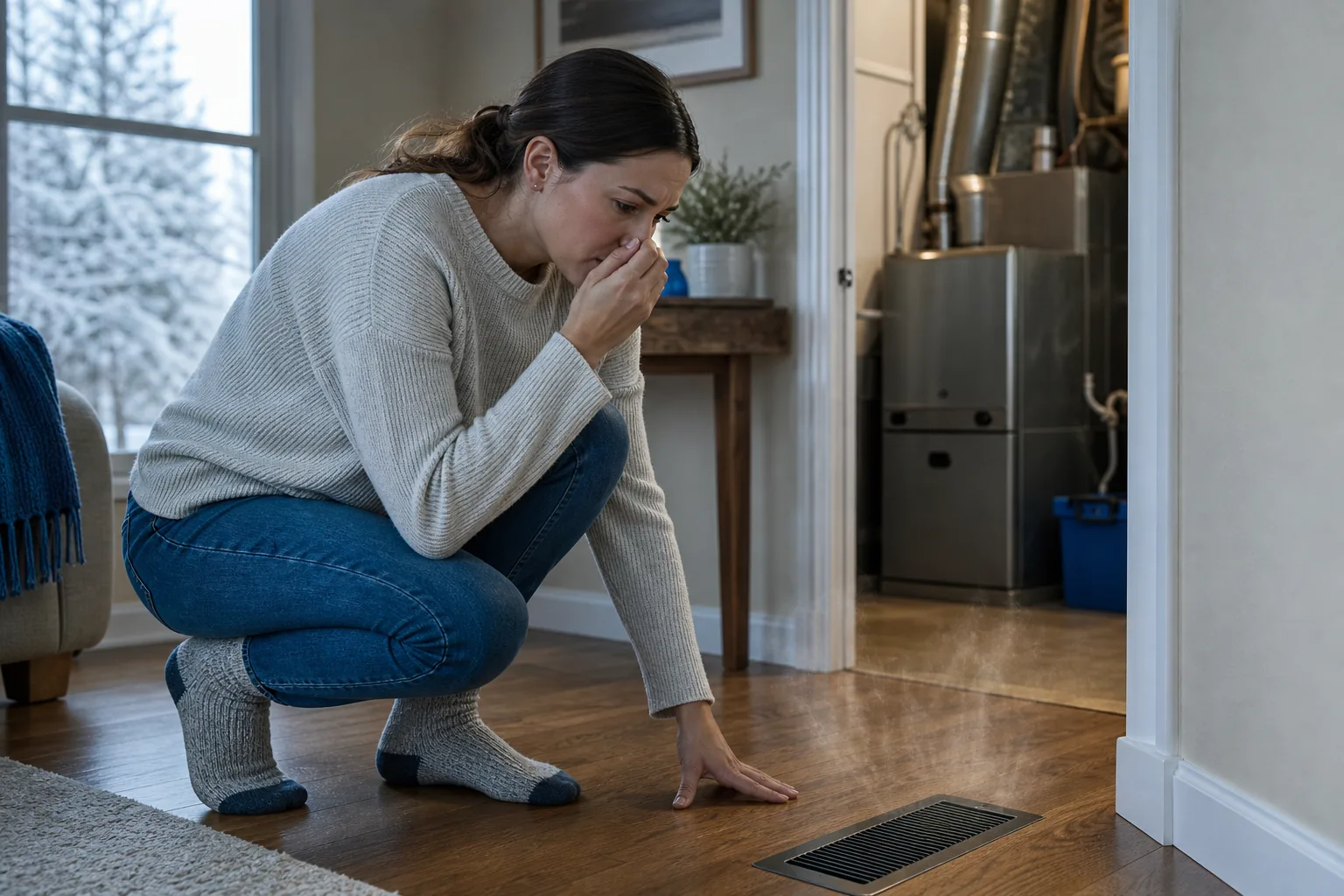
A furnace exhaust smell in the house can be a brief dust odor, but it can also point to unsafe combustion or a venting fault. The smell alone can’t confirm the cause, and carbon monoxide has no smell at all. Learn what different odors may mean, what you can safely check, and when to leave the home.
Table of Contents
What Furnace Exhaust Smells Like and How It Can Enter a Home
A gas furnace burns fuel to heat air. A heat exchanger transfers that heat to the air moving through your ducts, while the flue carries combustion gases outdoors. The household air and exhaust should stay separate. If a vent is blocked or damaged, or a furnace has a combustion problem, exhaust may not leave the home as intended.
That can create a smell near the furnace or at a supply vent. It may resemble car exhaust, a sharp chemical odor, or something oily. But smell is only a clue, not a safety test. Carbon monoxide (CO), a gas made during fuel burning, is colorless and odorless. A furnace can pose a CO risk without producing a noticeable exhaust smell.
Air pressure in the home can affect how air moves through a vent. Exhaust may spill back indoors if the venting system isn’t working as designed. A blocked or disconnected flue is one possible cause. Learn how a furnace heats and moves air in our homeowner’s guide to how a furnace works .
In Colfax and Grass Valley, cold winter weather means furnaces may run for long stretches. If you notice a new exhaust odor, don’t assume the smell is seasonal. Turn the system off if it’s safe, then arrange an inspection. Home Worx Heating and Cooling serves homeowners across the foothills, including those communities.
Common Furnace Odors: Dust, Gas, and Combustion Exhaust
The odor’s character and how long it lasts can help you decide what to do. They can’t prove the source. Pay attention to whether it starts with the furnace, grows stronger, or comes with smoke, unusual sounds, or symptoms.
Warm dust or a mild musty smell
A faint dusty odor when you first run the heat after a long break may come from dust warming on furnace parts. It should fade as the system runs. This first-use smell usually fades within a few hours. If it persists, gets stronger, or returns during later cycles, stop treating it as ordinary dust.
Rotten eggs or sulfur
A rotten-egg smell near a gas furnace can signal a gas leak. Treat it as an emergency, not a smell to monitor. Leave the home. Don’t use switches or devices inside, and contact the gas utility or emergency services once you’re well away. Don’t go back in until responders say it’s safe.
Burning plastic, electrical, or oily odors
A sharp plastic or electrical smell may point to an overheating blower motor, damaged wiring, or another mechanical fault. Turn the system off if you can do so safely. If there’s smoke or a strong burning odor, leave and seek urgent help. An oily smell may also come from a furnace component or another appliance, so don’t assume the furnace is the source.
Tailpipe, metallic, or sewer-like smells
A tailpipe-like odor may be related to combustion or exhaust venting. A metallic smell can come from hot equipment or an electrical fault. A sewer odor may have a separate plumbing cause, such as a dry drain trap. These smells can overlap, so avoid diagnosing by scent alone. A CO alarm or symptoms like dizziness or nausea call for immediate evacuation, even if you smell nothing.
Telling temporary dust burn-off apart from plastic, electrical, oily, and sulfur smells can help you choose a safe next move, but it can’t replace a system check.
Key Takeaway:A brief dusty smell may fade, but gas, electrical, smoke, or lasting exhaust odors need prompt action.
Why a Furnace Can Produce an Exhaust Odor Indoors
A venting fault is one reason exhaust-related smells may enter a home. Debris or damage can affect the flue, which is the pipe that carries combustion gases outside. A blocked vent can also interfere with how the furnace drafts. Don’t climb onto a roof or take apart vent pipes to investigate.
A cracked heat exchanger is another serious concern. This part separates combustion gases from the air heated for the home. Damage may compromise that separation, but a homeowner can’t confirm a crack by looking at the cabinet or smelling the air. Leave testing and repair decisions to a qualified HVAC professional.
Airflow problems can add stress to the system. A very dirty filter may restrict airflow and contribute to overheating. Check the filter only if you can reach it without removing furnace panels. Replace it with the correct size if it’s dirty, following the equipment maker’s guidance. A clean filter doesn’t rule out a vent or combustion problem.
High-efficiency furnaces also produce condensate, or water from the heating process. A blocked drain can cause water to collect near the unit. Water alone doesn’t explain an exhaust odor, but it’s worth reporting during service, especially if it’s close to electrical parts.
Home pressure and recent changes can matter, too. A new exhaust fan or other home work may change how air moves indoors. Weather can affect venting conditions as well. A burning odor that lasts or points to an electrical or mechanical issue calls for a professional inspection. A recurring exhaust smell deserves the same cautious approach: keep the furnace off until it’s checked.
For homeowners in Auburn or Rocklin, the safe DIY check is limited: look at the outside of the vent from the ground for obvious blockage or damage, and check the accessible filter. Don’t perform a pressure test or use a handheld gas detector to decide whether the home is safe. Those checks can miss hazards and don’t replace professional testing.
Warning Signs That Call for Immediate Action
Some signs mean stop troubleshooting and get everyone out. If you smell rotten eggs or sulfur, suspect a gas leak, or hear a CO alarm, leave the home. Don’t switch lights or appliances on or off near a suspected gas leak. Once outside and away from the odor, contact the gas utility or emergency services.
Leave right away if anyone has a headache, dizziness, nausea, confusion, or unusual weakness while the furnace is running. These symptoms can have many causes, but they can also signal exposure to CO. Don’t wait for the smell to change. CO can’t be detected by smell, so a lack of odor offers no reassurance.
Smoke, sparks, a strong electrical odor, or scorched material near the furnace also call for urgent action. Turn off the system only if you can do so without approaching smoke, damaged wiring, or a suspected gas leak. Otherwise, get out and seek emergency help.
If you’re unsure whether an odor is gas, treat it as a possible leak. Our steps for a gas smell near a furnace explain why you should leave first rather than search for the source indoors. In Lincoln and Penn Valley, as elsewhere, don’t re-enter until the gas utility or emergency responders clear the home.
Keep working CO alarms in the home and follow their instructions. An alarm is a warning device, not a substitute for furnace service. If it sounds, leave and follow emergency guidance even if the furnace seems to run normally.
What an HVAC Professional Checks and Local Considerations
A technician starts by asking when the odor began, where it’s strongest, and whether it changes when the furnace starts. Share any new sounds, water near the unit, alarms, or symptoms. These details help narrow the inspection, but the technician still needs to check the equipment itself.
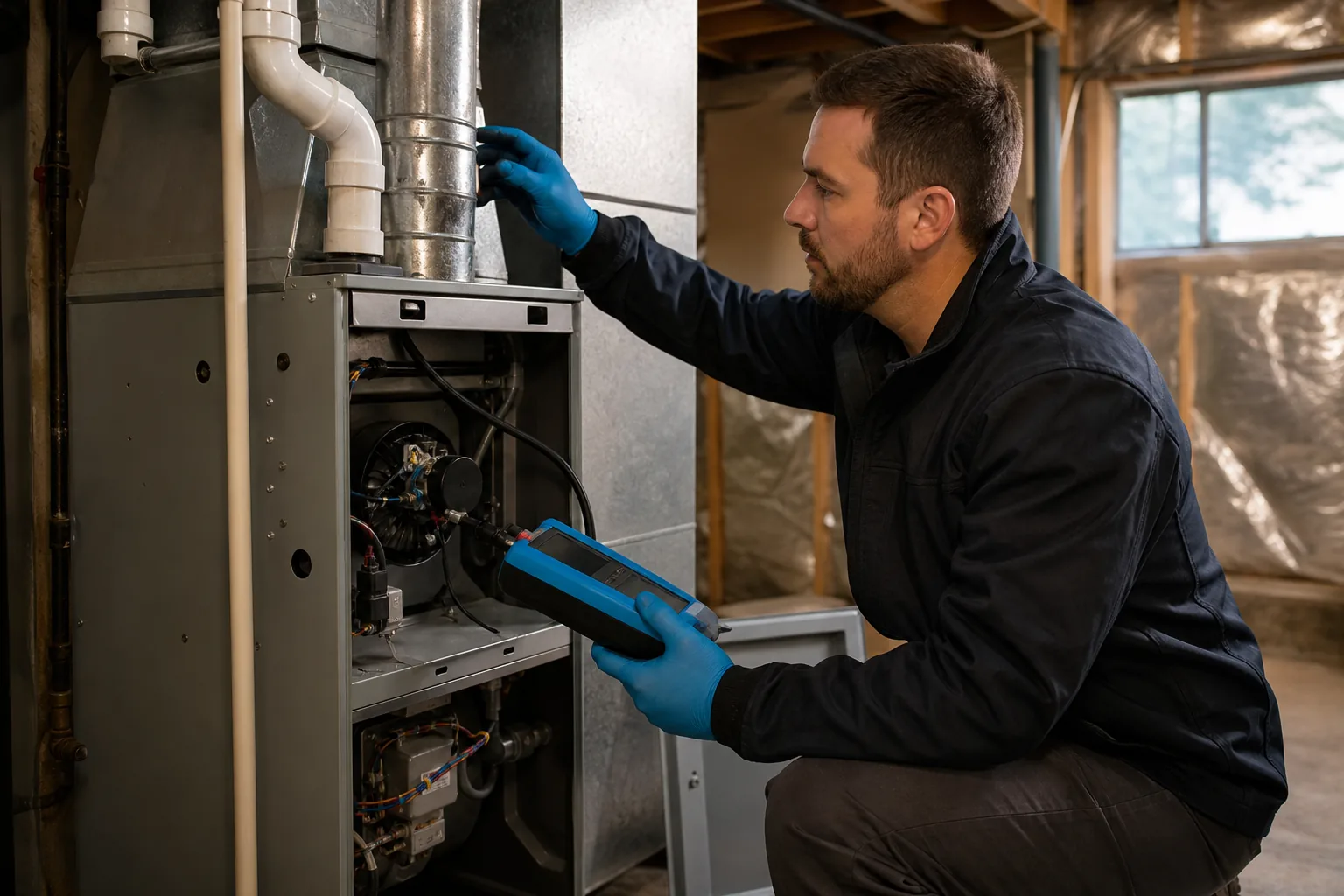
The inspection may include the accessible venting system, heat exchanger, burners, blower, wiring, filter, and condensate drain. The exact checks depend on the furnace and the reported signs. A technician can use test equipment to assess combustion and check for CO. A visual look alone can’t confirm that exhaust stays out of the home.
Depending on what they find, a professional may use a combustion analyzer, a temperature check, or a smoke test to assess system performance or airflow. Thermal imaging can help identify temperature patterns, but it doesn’t prove a heat exchanger is safe by itself. Ask the technician to explain the finding, the safety concern, and the proposed fix before work begins.
Repair choices depend on the failed part and the furnace’s condition. A filter change or a repair to a damaged vent differs greatly from a major combustion or heat-exchanger problem. Don’t judge a repair against replacement by odor alone. Ask for the diagnosis and written estimate, then compare the cost and expected condition of the system.
Routine service can help catch wear or airflow issues before the heating season. Home Worx Heating and Cooling provides heating repair and maintenance in the region. Its service area includes Roseville and the wider Placer and Nevada County area. For routine upkeep, see our guide to how often to schedule HVAC service .
Home conditions vary, and local building requirements can depend on the work being done. Ask your contractor whether the repair or installation needs a permit and who will handle that step. If a smell appears during a cold spell, keep safety first and arrange an inspection rather than restarting the furnace to test it.
Frequently Asked Questions
Is it normal for a furnace to smell dusty when first turned on?
A light dusty smell at the first heating cycle can be normal and should fade. Dust may have settled on warm furnace parts while the system sat unused. If the odor lasts for hours, gets stronger, or returns on later cycles, turn the furnace off and arrange a professional check.
Can I smell carbon monoxide from my furnace?
No, carbon monoxide has no smell. A strange odor may point to a separate furnace or vent problem, but it can’t confirm or rule out CO. If a CO alarm sounds or someone feels ill, leave the home and seek emergency help. Keep working CO alarms installed as directed.
Should I run the furnace if I smell exhaust?
No, don’t keep running a furnace with a new or persistent exhaust odor. Turn it off if you can do so safely, then arrange professional service. If you smell rotten eggs, hear a CO alarm, see smoke, or feel unwell, leave the home and contact emergency help from outside.
Can a dirty furnace filter cause a burning smell?
A clogged filter can restrict airflow and may contribute to overheating, but it doesn’t prove the filter caused the odor. If there’s no gas smell, smoke, or alarm, you can check an accessible filter without opening the furnace cabinet. A lasting or sharp odor still needs professional diagnosis.
Conclusion
Don’t use smell alone to decide that a furnace is safe. Leave immediately for a gas odor, CO alarm, smoke, or symptoms; otherwise, turn off the system if safe and arrange an inspection for a lasting exhaust smell. For local service in the Sierra foothills, contact Home Worx Heating and Cooling to discuss the next step.