
How Does a Furnace Work? A Homeowner's Guide
A furnace turns fuel into heat, but the process depends on a careful chain of parts. The burner creates heat, the heat exchanger transfers it, and the blower sends warm air through your home without mixing indoor air with combustion gas.
That basic cycle matters in Auburn, Colfax, Rocklin, Roseville, Grass Valley, Penn Valley, and Lincoln, where winters can turn cold fast. Here's how the system works, what affects efficiency, and when Home Worx Heating and Cooling should inspect it.
Table of Contents
The Basic Furnace Cycle: From Thermostat Call to Warm Air
When you ask how does a furnace work, start with the thermostat. It measures the room temperature. Once the temperature falls below your setting, it sends a call for heat to the furnace control board.
The furnace then checks its safety controls. In some systems, a sail switch confirms that the blower or airflow path is ready. A pressure switch checks that the vent system has the right pressure. The induced draft fan starts first so the furnace can prove that combustion gases can leave the building.
Once the vent check passes, the gas valve opens. Natural gas or propane moves to the burner assembly. The hot surface igniter heats up and lights the gas and air mix. A flame sensor then checks for a steady flame. If the sensor doesn't detect one, the controls shut off the gas rather than let it flow without ignition.
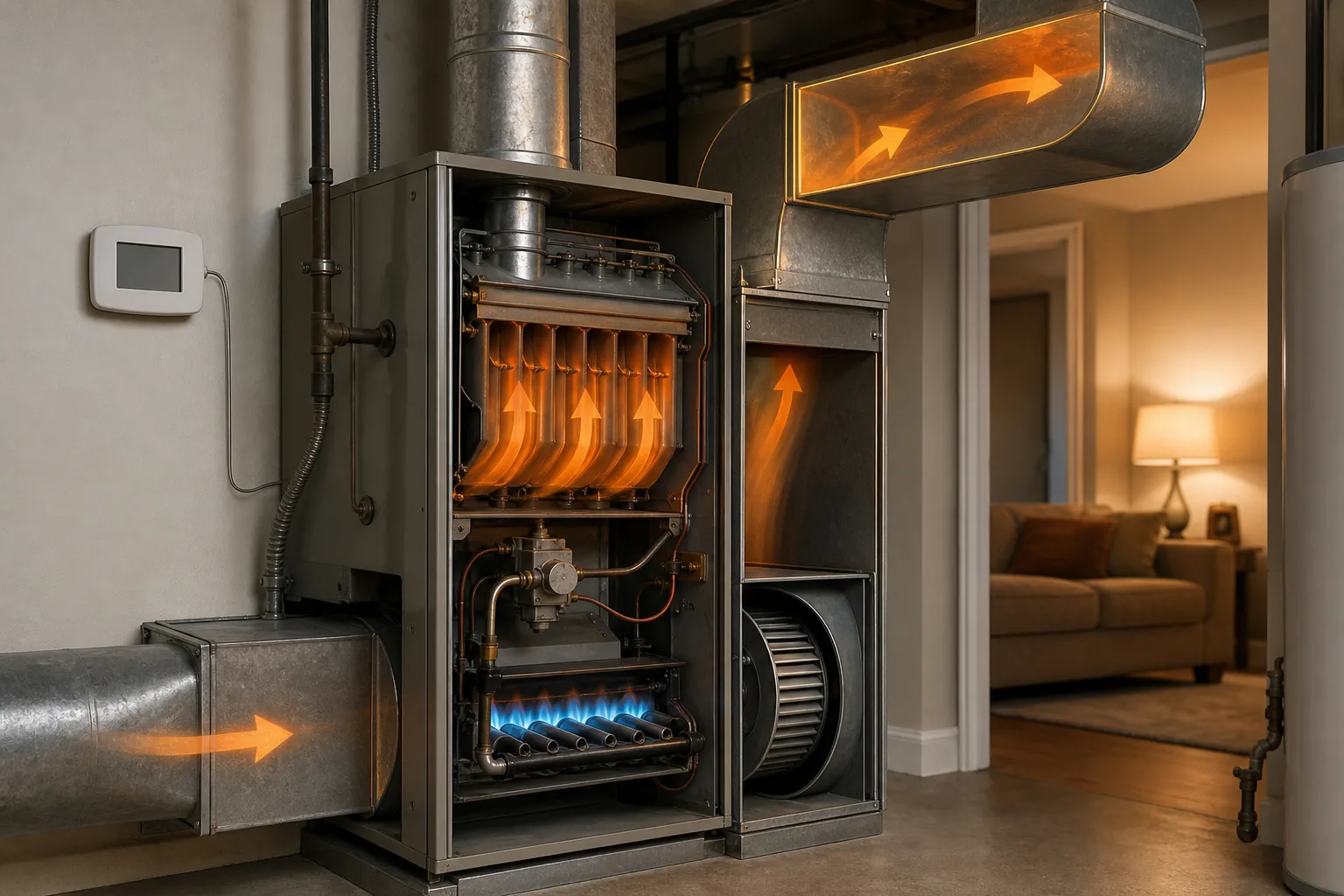
The flame heats the metal heat exchanger . At the same time, the blower pulls cooler return air from the home. That air passes over the outside of the heat exchanger, picks up warmth, and moves into the supply ducts. A furnace blower explanation from Trane describes this same path, including the blower's short run after a cycle ends to spread leftover heat.
The blower may continue for a few minutes after the burners stop. This clears useful heat from the exchanger and helps reduce hot and cold pockets. If your thermostat fan setting is set to On instead of Auto, the blower can run even when the furnace isn't heating.
In a Roseville home, a blocked return grille can make this cycle look like a burner problem. The furnace may ignite, then overheat because it can't move enough air. Start with the thermostat, filter, and visible vents. Leave gas controls and internal safety tests to a trained technician.
What Each Major Furnace Component Does
Each component in a furnace has one job in the sequence. If one part fails, the system may stop before it produces warm air.
Thermostat and control board
The thermostat starts the heating request. The control board acts like the furnace's traffic manager. It starts parts in order and watches for safe signals before allowing the next step.
Ignition and flame parts
The hot surface igniter lights the gas. The gas valve controls fuel flow. The burner assembly creates the flame. The flame sensor confirms that ignition worked.
A dirty flame sensor can make a furnace light briefly and then shut down. That pattern often feels confusing because the furnace does ignite. The sensor is telling the control board that the flame signal is not strong enough.
Air movement parts
The blower motor turns the blower wheel. The wheel pulls return air across the heat exchanger and pushes warm air into the ductwork. Airflow affects comfort because a weak or restricted stream may leave some rooms cold.
The air filter protects the furnace from dust. A loaded filter restricts airflow and can raise the heat exchanger temperature. If you aren't sure which way the filter arrow should point, Home Worx's guide to furnace filter direction explains the airflow path.
Safety and exhaust parts
The high-limit switch shuts the furnace down if it gets too hot. The flue pipe carries combustion gases outdoors. The pressure switch checks vent pressure before and during operation.
High-limit trips can happen when a filter is clogged, vents are blocked, or the furnace is oversized. Repeated trips aren't a reset-and-forget issue. They point to a condition that needs diagnosis.
Condensing furnaces add a secondary heat exchanger and a condensate trap. The trap drains water formed when the furnace pulls extra heat from exhaust gas. A blocked trap can cause pressure-switch faults and stop the furnace from running.
Key Takeaway:The furnace only works as a chain. Ignition, airflow, heat transfer, drainage, and venting must all stay within safe limits.
How a Furnace Transfers Heat Without Mixing Combustion Gas With Indoor Air
How does a furnace keep exhaust gas out of the rooms it heats? The heat exchanger creates the barrier. It is made of metal passages that hold hot combustion gas on one side while indoor air moves across the outside.
Fuel burns inside the burner area. The hot gas then travels through the primary heat exchanger. The metal absorbs heat. Return air flows over the other side, so it warms without entering the combustion path.
A high-efficiency condensing furnace adds a secondary heat exchanger. This second stage pulls more heat from the exhaust before the flue pipe sends it outside. Water vapor in the exhaust can condense during this process, which is why the system needs a working condensate drain and trap.
The heat exchanger transfers heat from combustion gases to the supply air stream. A crack can allow carbon monoxide and other gases into the air stream. That is a safety problem, not a routine maintenance task.
Heat exchangers expand when they heat and contract when they cool. Repeated overheating can add stress. Poor airflow can cause that overheating. An oversized furnace may also short-cycle, which means it starts and stops too often for the home and duct system.
Home Worx Heating and Cooling is a family-owned HVAC contractor based in Colfax, serving Auburn, Rocklin, Roseville, Grass Valley, Penn Valley, Lincoln, Placer County and Nevada County. The company can inspect the exchanger for corrosion or damage during a furnace visit. A technician may also use combustion testing or a visual inspection to check safe operation. Never try to patch or repair a cracked exchanger yourself.
What Changes Furnace Efficiency and Comfort?
Furnace efficiency depends on more than the rating on the cabinet. The installed system must move air well, transfer heat fully, and drain condensate correctly.
The secondary heat exchanger
Condensing furnaces use a secondary heat exchanger to capture more heat from exhaust gas. This design can support an AFUE rating of 95% or higher when the unit is sized, installed, and maintained correctly.
AFUE means annual fuel utilization efficiency. It estimates how much fuel becomes useful heat over a heating season. It doesn't tell you how well a system performs if ducts leak or the filter blocks airflow.
The condensate trap
The condensate trap may look like a small drain part, but it supports the high-efficiency cycle. If it clogs, water backs up. The pressure switch may then stop the furnace because the vent system no longer reads correctly.
This is the counterintuitive part: cleaning a drain can protect the furnace's ability to reach its rated efficiency. The secondary exchanger can't do its job if condensate can't leave.
Airflow and the blower
The blower needs enough air to carry heat away from the exchanger. A dirty filter reduces airflow. Closed registers and blocked return vents can do the same. The result may be uneven rooms, longer cycles, or a high-limit shutdown.
Installed performance also depends on duct design. In Lincoln and Auburn, a home with long duct runs may need a different airflow check than a compact house in Colfax. Similar checks help homes in Rocklin and Roseville, while Grass Valley and Penn Valley homes may have different duct layouts. A technician should measure the system instead of guessing from the thermostat setting.
The gap between equipment ratings and installed operation matters when comparing a new unit with an older one. The equipment must work as a complete system, not as a label on a brochure.
Pro Tip:Replace a dirty filter before heating season, then ask for an airflow and condensate check during annual service.
For local furnace service, contact Home Worx Heating and Cooling.
Common Furnace Problems and When to Call a Professional
Many furnace problems show up as no heat, short cycling, weak airflow, or odd sounds. The visible symptom doesn't always point to the failed part.
The furnace runs but won't ignite
A failed hot surface igniter can stop the ignition sequence. A dirty flame sensor can let the burner light, then shut it down seconds later. The control board may also stop the cycle if a pressure or vent safety check fails.
You can confirm that the thermostat is set to Heat and that the filter isn't packed with dust. Don't test the gas valve or bypass a safety switch. Those checks require the right instruments and training.
The furnace starts and stops too often
Short cycling can come from restricted airflow, an oversized furnace, a dirty flame sensor, or a high-limit switch trip. It can also keep the home from reaching an even temperature. Repeated short cycles put extra stress on the heat exchanger.
Check that return grilles and supply registers aren't covered by furniture. If the issue continues, arrange a diagnostic visit. The fix may involve airflow measurement rather than a new thermostat.
The blower runs but the air feels cool
First check whether the thermostat fan is set to On. That setting runs the blower without a heating call. A dirty filter can also make the air feel weak or cool because the system can't move enough warmed air.
If the blower motor is failing, the furnace may produce heat but struggle to deliver it. Homeowners in Rocklin can review the factors behind furnace blower motor replacement before deciding whether repair or replacement makes sense.
There is a gas smell, water leak, or carbon monoxide concern
Leave the building if you smell gas or suspect carbon monoxide. Don't operate switches or keep testing the furnace. Contact the appropriate emergency service from a safe location, then arrange HVAC inspection before using the system again.
Water near a high-efficiency furnace may come from a clogged condensate trap or drain. A cracked heat exchanger is less common, but it carries a serious risk. A technician should inspect the exchanger, flue, burners, pressure readings, and drain path.
In Grass Valley or Penn Valley, cold weather can turn a small fault into a no-heat problem quickly. Home Worx Heating and Cooling handles furnace repair, installation, maintenance, and indoor-air-quality work for homes across the foothills. We can also help compare repair with replacement when a system has reached the later part of its service life.
FAQ
How does a furnace work in simple terms?
A furnace burns fuel to heat a heat exchanger, then uses a blower to move indoor air across that exchanger. The warmed air travels through supply ducts. Safety controls check ignition, flame, airflow, and venting before the furnace keeps running.
How does a gas furnace keep carbon monoxide out of my home?
A gas furnace keeps combustion gas separate from indoor air through the heat exchanger and flue system. The exchanger transfers heat through metal walls while the flue sends exhaust outdoors. A crack, blocked vent, or failed safety control needs prompt professional inspection.
Why does my furnace turn on and off every few minutes?
A furnace that cycles every few minutes may have restricted airflow, an oversized unit, a dirty flame sensor, or a high-limit switch problem. Check the filter and open visible vents first. If cycling continues, stop repeated resets and schedule a diagnostic visit.
Does a dirty filter make a furnace less efficient?
Yes, a dirty filter can reduce airflow and make the furnace work harder to move heat. Low airflow can also raise the heat exchanger temperature and trigger a safety shutdown. Replace the filter based on its condition and the manufacturer's guidance.
How often should a furnace be serviced?
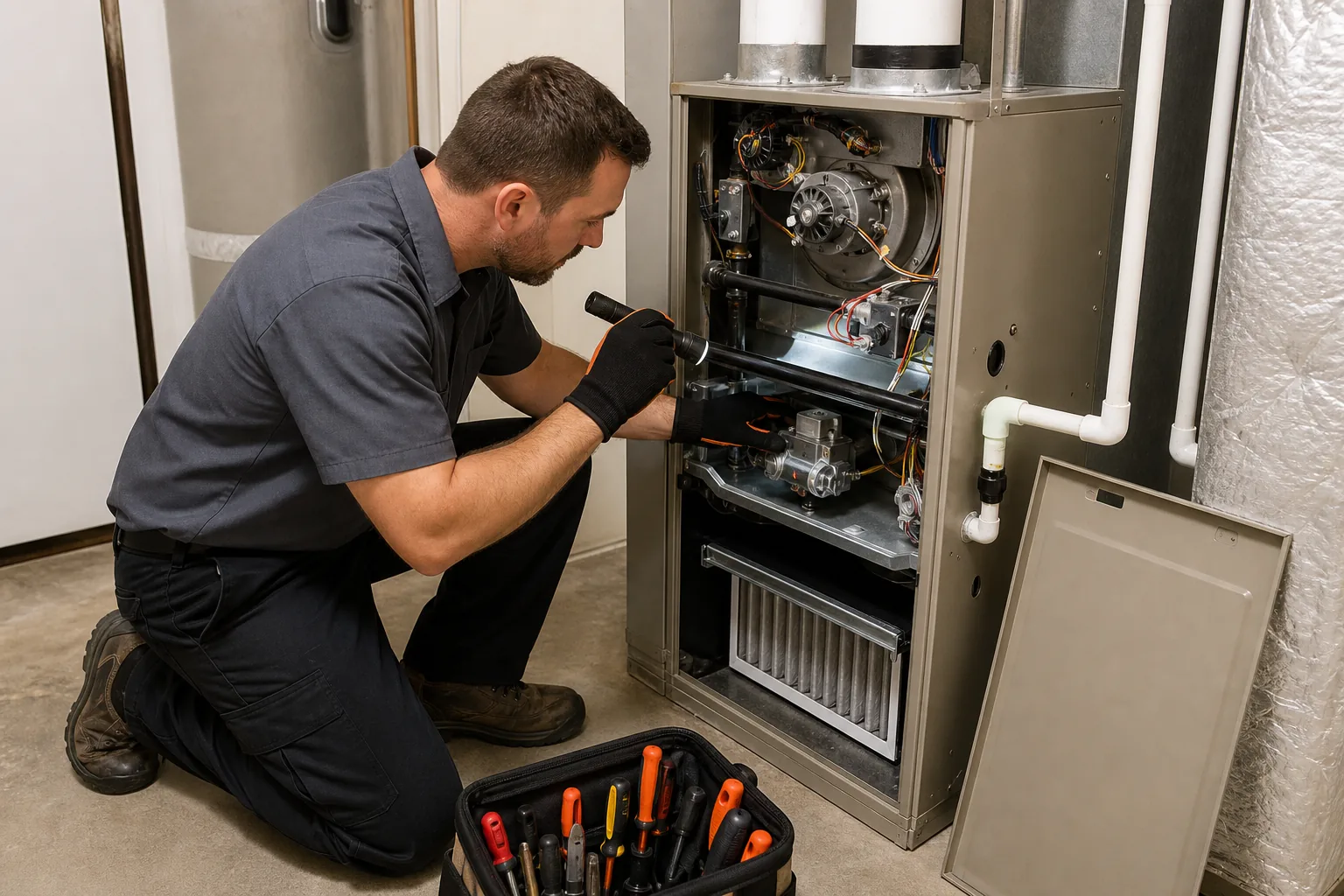
Most homeowners should arrange a furnace inspection before the main heating season. Service can include checking the heat exchanger, flame, blower, filter, venting, electrical parts, and condensate path. Homes in colder foothill areas may benefit from planning this before the first cold snap.
Conclusion
A furnace works safely when fuel, ignition, heat transfer, airflow, drainage, and venting stay in balance. Keep the filter clear and never ignore short cycling, gas odors, or repeated safety shutdowns. For local furnace repair, maintenance, or installation in Auburn, Colfax, Rocklin, Roseville, Grass Valley, Penn Valley, or Lincoln, contact Home Worx Heating and Cooling for a system check and clear next steps.