
Furnace Not Igniting? Safe DIY Fixes
Updated: Sep 18
A furnace that won't light may have a simple cause, such as a dead thermostat battery or a dirty filter. It may also be locked out after several failed starts. Work through these safe checks in order, then stop before touching gas controls or electrical parts you can't test safely.
These steps fit homes in Auburn, Colfax, Rocklin, Roseville, Grass Valley, Penn Valley, and Lincoln. In the Sierra foothills, cold winter nights make a quick diagnosis useful, but safety comes first.
Table of Contents
Step 1: Check the Thermostat, Power, and Circuit Breaker
When a furnace isn't igniting, start with the controls that tell it to run. This check takes a few minutes and doesn't require opening the furnace cabinet.
Confirm the thermostat is asking for heat
Set the thermostat toHeat. Raise the set point several degrees above the room temperature. If the display uses batteries, replace them. Check that a schedule, vacation mode, or hold setting isn't keeping the heat off.
If you recently installed a smart thermostat, wiring may be the problem. Some systems need a compatible setup, and a loose wire can stop the furnace from receiving the heat signal. Turn off the furnace breaker before checking any thermostat wire. If you're unsure which wire goes where, stop there.
A thermostat in direct sun can also read the room as warmer than it is. That won't usually cause a total ignition failure, but it can make the furnace seem unresponsive.
Check the electrical supply
Gas furnaces still need electricity. The control board, inducer motor, igniter, blower, and safety switches all depend on power.
Find the furnace breaker. If it has tripped, move it fully to Off, then back to On once.
Look for the nearby furnace switch. It often looks like a normal wall light switch.
Check that the furnace access panel is seated. Many units won't run if the panel safety switch is open.
Don't keep resetting a breaker that trips again. Repeated trips point to an electrical fault, a failing motor, or another issue that needs testing. Bryant's furnace troubleshooting guidance also lists thermostat settings, power loss, and a clogged filter among common reasons a furnace won't start. Bryant's furnace troubleshooting guide explains the same first checks.
Homeowners in Colfax or Auburn may notice this after storage work near the furnace. A box or stored item can bump the power switch without anyone noticing. If the display is blank after these checks, don't remove the cabinet cover. Arrange service instead.
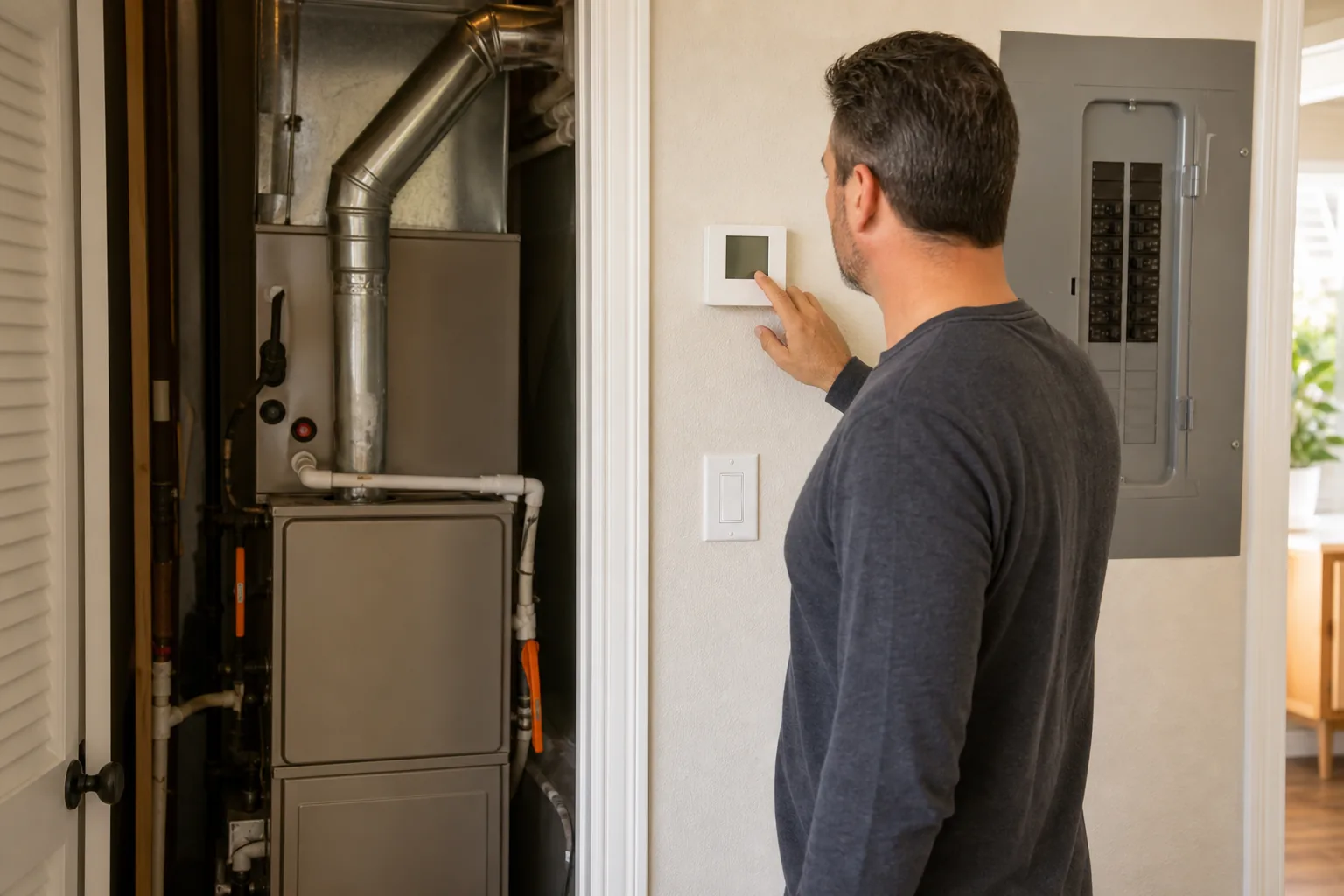
Key Takeaway:Check the thermostat, breaker, furnace switch, and access panel before investigating ignition parts.
Step 2: Replace the Filter and Check Airflow
A dirty filter can make a furnace stop before ignition or shut down soon after the burners light. Restricted airflow raises internal heat, so a safety limit switch may stop the cycle.
Change the filter the right way
Find the filter near the return duct, blower compartment, or filter cabinet. Slide it out and hold it toward a light. If dust blocks most of the filter surface, replace it with the same size.
Look for the arrow on the filter frame. It should point toward the furnace, in the direction of airflow. A filter installed backward can still restrict air and may strain the system.
Filter life depends on the filter type and home conditions. A one-inch filter may need more frequent changes than a thicker filter. Pets, dust, construction work, and long heating cycles can shorten the interval. In dry foothill communities such as Rocklin and Roseville, check the filter during the heating season instead of relying only on a calendar.
Open the air path
Walk through the house and check supply registers. Move rugs, furniture, and storage bins away from them. Then check return grilles. A blocked return starves the furnace of air even when every supply vent is open.
Look outside only if the furnace has an accessible exhaust or intake pipe and you can inspect it without climbing or taking anything apart. Snow is uncommon in lower areas, but leaves, nests, or debris can still block a vent in some homes.
A furnace that runs for a few minutes, stops, then tries again may be short cycling . Trane describes a normal heating cycle as generally lasting at least seven minutes, while repeated short cycles can point to airflow, thermostat, limit-switch, or sizing problems. Trane's short-cycling guidance explains why a dirty filter deserves attention first.
If a new filter restores heat, keep the old one. It can help a technician judge how much dust the system was handling. If the furnace still won't ignite, don't keep changing filters and hoping for a different result. Move to observation.
Step 3: Observe the Startup Sequence Without Touching Gas Components
Watching the startup sequence can show where the furnace stops. You don't need to touch the gas valve, burner assembly, control board, or wiring.
Reset only once, then watch
After checking the thermostat, power, and filter, turn the furnace off at its switch. Wait several minutes, then turn it back on. Set the thermostat above room temperature and stand near the unit.
Listen for the order of events:
The thermostat should send a call for heat.
A small draft motor may start first.
You may hear a click or see an igniter glow.
The burners may light.
The blower should start after a short delay.
Don't confuse the blower fan with ignition. A fan can run while the burners stay off. That points toward an ignition, gas supply, pressure switch, or control problem rather than a simple airflow complaint.
If the furnace tries to light and fails, let the sequence finish. Repeatedly switching power off after the first failed attempt can interrupt the lockout process. Follow your owner's manual rather than forcing another start.
Write down what you see. “Inducer runs, no click” gives a technician more to work with than “it doesn't work.” Also note blinking lights or an error code. Take a photo of the code without opening the cabinet.
Older furnaces may use a pilot light. If yours has printed relighting instructions and you smell no gas, follow the manual exactly. Don't improvise with a match near an unfamiliar burner assembly.
For a broader set of safe first checks, homeowners can also use Furnace Won't Turn On? 7 Safe Checks to Try. The key decision is simple: observe the sequence, record the symptom, and avoid turning a diagnosis into a risky repair.
Step 4: Inspect the Flame Sensor and Igniter Only If the Manual Allows It
A dirty flame sensor can let the burner light briefly, then shut the gas off. The sensor checks for flame. If it cannot detect the flame signal, the furnace closes the gas valve as a safety response.
Know the symptom
The usual pattern is clear: the furnace starts, the burner lights for a few seconds, and then the flame goes out. The blower may run afterward. A dirty sensor is one possible cause, but a weak flame, bad wiring, control fault, or gas problem can look similar.
A dirty flame sensor is a common cause of this pattern, but it is not behind every furnace failure. Online repair lists often make one cause sound universal.
Only clean it when the manual permits
Check your owner's manual first. If it allows homeowner cleaning, turn off electrical power at the breaker and wait for the unit to cool. Close the gas supply only if the manual gives clear instructions and you know the correct valve. Never work by guesswork.
Remove only the access panel described in the manual. A flame sensor is usually a narrow metal rod near the burner flame. Don't confuse it with a hot-surface igniter. Igniters are fragile ceramic parts and can crack from a light touch.
If approved by the manual, a fine-grit emery cloth may remove light carbon from the sensor. Use a gentle touch. Don't bend the rod, scrape the ceramic base, or spray cleaner inside the burner area.
Put every panel back before restoring power. If the furnace still shuts down, stop. Sensor replacement and electrical tests belong with a trained technician. The same applies when the igniter is cracked, dark, or visibly damaged.
Home Worx Heating and Cooling can diagnose this kind of intermittent ignition fault for homes in Grass Valley, Penn Valley, and nearby communities. We prefer a measured test over replacing parts based on one symptom.
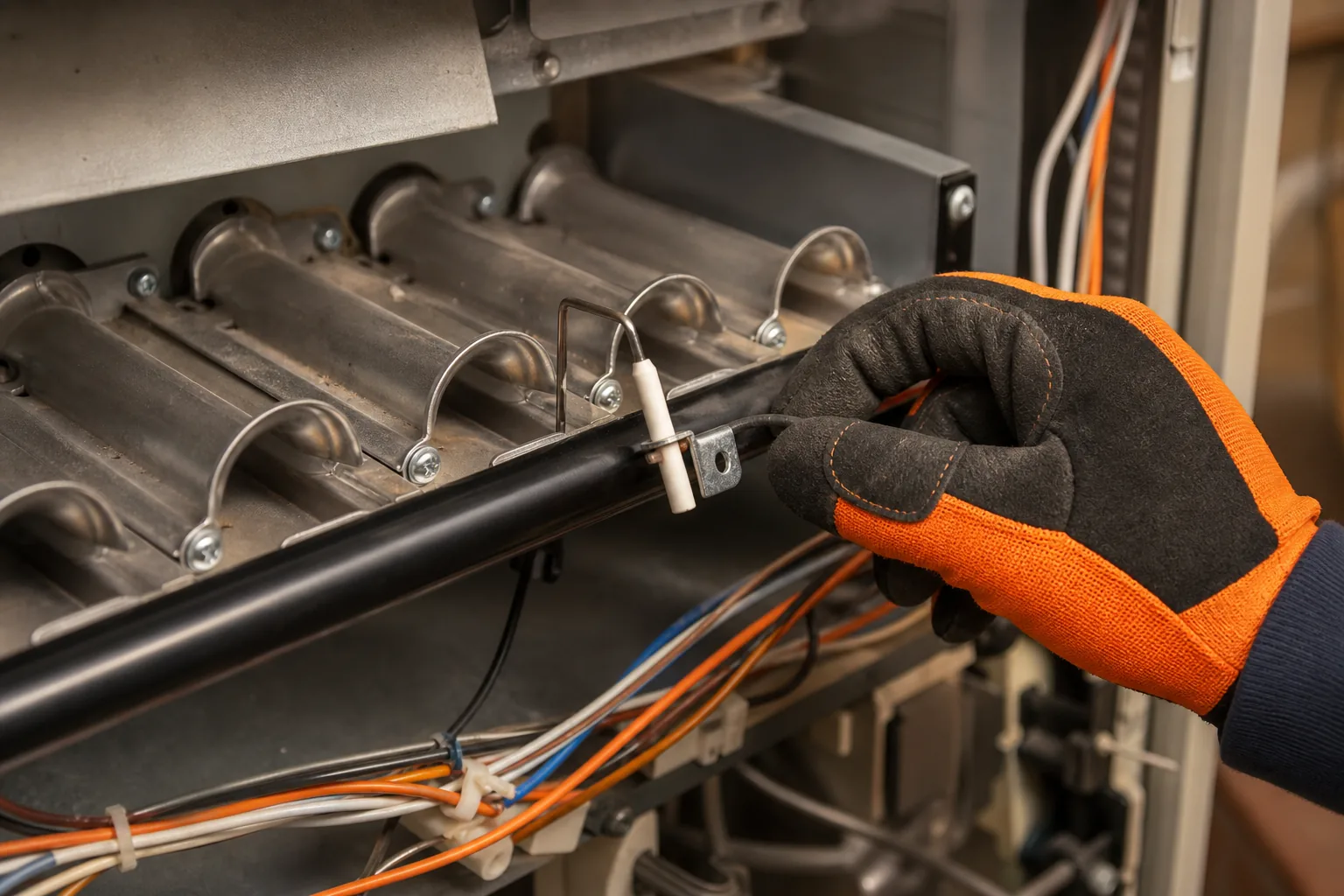
If you want a more detailed cleaning reference before deciding whether your model allows it, see Furnace Flame Sensor Cleaning: A Step-by-Step Guide . Skip the task if the manual is missing or the part is hard to identify.
Step 5: Know When to Stop Troubleshooting and Call an HVAC Professional
Stop DIY work as soon as the problem involves gas, repeated electrical faults, combustion, or a part you can't identify with confidence. A furnace isn't a good place to learn by trial and error.
Leave the home for a gas smell
If you smell rotten eggs or another strong gas odor, don't relight the furnace. Don't operate switches inside the home. Leave and contact the gas utility or emergency services from a safe location. Home Worx Heating and Cooling also has guidance on what to do when you smell gas, but an active leak needs immediate emergency help.
Leave at once if a carbon monoxide alarm sounds. Carbon monoxide has no reliable smell. Do not return until the proper authority says it is safe.
Call for these furnace symptoms
The breaker trips again after one reset.
The furnace makes a boom, bang, or scraping sound.
The burner lights but goes out again and again.
The igniter is cracked or the control board shows a fault.
You see soot, scorch marks, melted wiring, or unusual corrosion.
A rollout switch or other safety switch has tripped.
The exhaust or intake vent may be blocked.
Cost information online is often incomplete. Ask for the diagnostic charge, the failed part, labor, and any permit or installation work before approving a major repair.
Home Worx Heating and Cooling serves Auburn, Colfax, Rocklin, Roseville, Grass Valley, Penn Valley, and Lincoln. We can assess whether repair makes sense or whether replacement is the better long-term choice. For a new system, ask about available financing, California permit needs, and current PG&E or state rebate rules. Eligibility can change by equipment and program.
Pro Tip:Give the technician your sequence notes, error-code photo, filter size, and the exact point where the furnace stops. This can reduce repeat testing.
Even a new furnace can refuse to light when setup, airflow, wiring, or service is wrong. A professional check often finds the cause faster than repeated resets, especially during a cold night in Lincoln or Roseville.
FAQ: Furnace Not Igniting
Why is my furnace not igniting but the fan is running?
A running fan with no burner flame usually points to an ignition, gas supply, pressure switch, or control problem. Check the thermostat, filter, and power first. Then observe whether the inducer runs or the igniter clicks. Don't open the gas section. If the furnace keeps trying without lighting, arrange professional service.
Can a dirty filter stop a furnace from igniting?
Yes, a dirty filter can restrict airflow enough to trigger a safety shutdown. Replace it with the correct size and point the airflow arrow toward the furnace. Check blocked return grilles too. If the system still won't light, the filter wasn't the only fault.
How do I reset a furnace that won't light?
Reset it once by turning off the furnace switch or breaker, waiting several minutes, then restoring power. Follow the owner's manual after that. Don't keep resetting a furnace that trips the breaker, smells like gas, or fails through repeated ignition attempts. Those signs need a technician.
Can I clean a furnace flame sensor myself?
You may be able to clean a flame sensor if your owner's manual allows it and you can identify the part safely. Turn off power first and let the furnace cool. Never bend the sensor or touch a hot-surface igniter. If the burner still shuts off, stop and schedule service.
When should I stop troubleshooting a furnace?
Stop when you smell gas, hear a boom, see soot, face repeated breaker trips, or find damaged wiring. Also stop if the furnace needs a gas-valve test or part replacement. Home Worx Heating and Cooling serves Northern California foothill homes and can inspect the system safely.
Start with the thermostat, power, filter, and visible airflow. If the furnace still won't light, don't keep cycling it. Contact Home Worx Heating and Cooling for local service in the seven communities listed above, and ask about repair, replacement, and available financing options.