
Furnace Not Working? 7 Safe Checks to Try
- Bryn Fortmuller
- Aug 3
- 8 min read
A furnace that stops working can leave your home cold fast, especially during a Sierra foothills winter. Start with these seven safe checks before you reach for tools, then stop as soon as you see signs of gas, electrical, or combustion trouble .
Table of Contents
Step 1: Check for Safety Hazards Before Troubleshooting
Before you troubleshoot a furnace not working, rule out danger. A cold room is frustrating. A gas leak or carbon monoxide problem needs immediate action.
Leave the house at once if you smell rotten eggs or sulfur near the furnace. That smell may point to a natural gas leak. Don't switch lights on or off, use a phone indoors, or try to find the source. Move outside, then contact your gas utility and emergency services.
If a carbon monoxide alarm sounds, get everyone outdoors. Carbon monoxide has no color or smell, so don't wait to see if the alarm stops. Re-enter only when emergency responders say it's safe.
Also stop troubleshooting if you see smoke, sparks, scorched wires, or water near electrical parts. Turn the system off only if you can do so safely without touching damaged wiring. Never remove furnace panels to inspect burners, wiring, or the heat exchanger.
Some warning signs may not be an immediate emergency, but they still need a trained technician:
A yellow or orange burner flame on a gas furnace.
Loud scraping, banging, or screeching sounds.
A furnace that starts and stops every few minutes.
A complete loss of heat during freezing weather.
These symptoms can point to combustion trouble, a failing motor, restricted airflow, or a safety control that has shut the unit down. A licensed HVAC contractor can test those parts without putting you at risk.
For homeowners in Colfax, Auburn, and nearby foothill communities, Home Worx Heating and Cooling provides 24/7 emergency repair. The safe choice is simple: handle only visible, low-risk checks yourself.
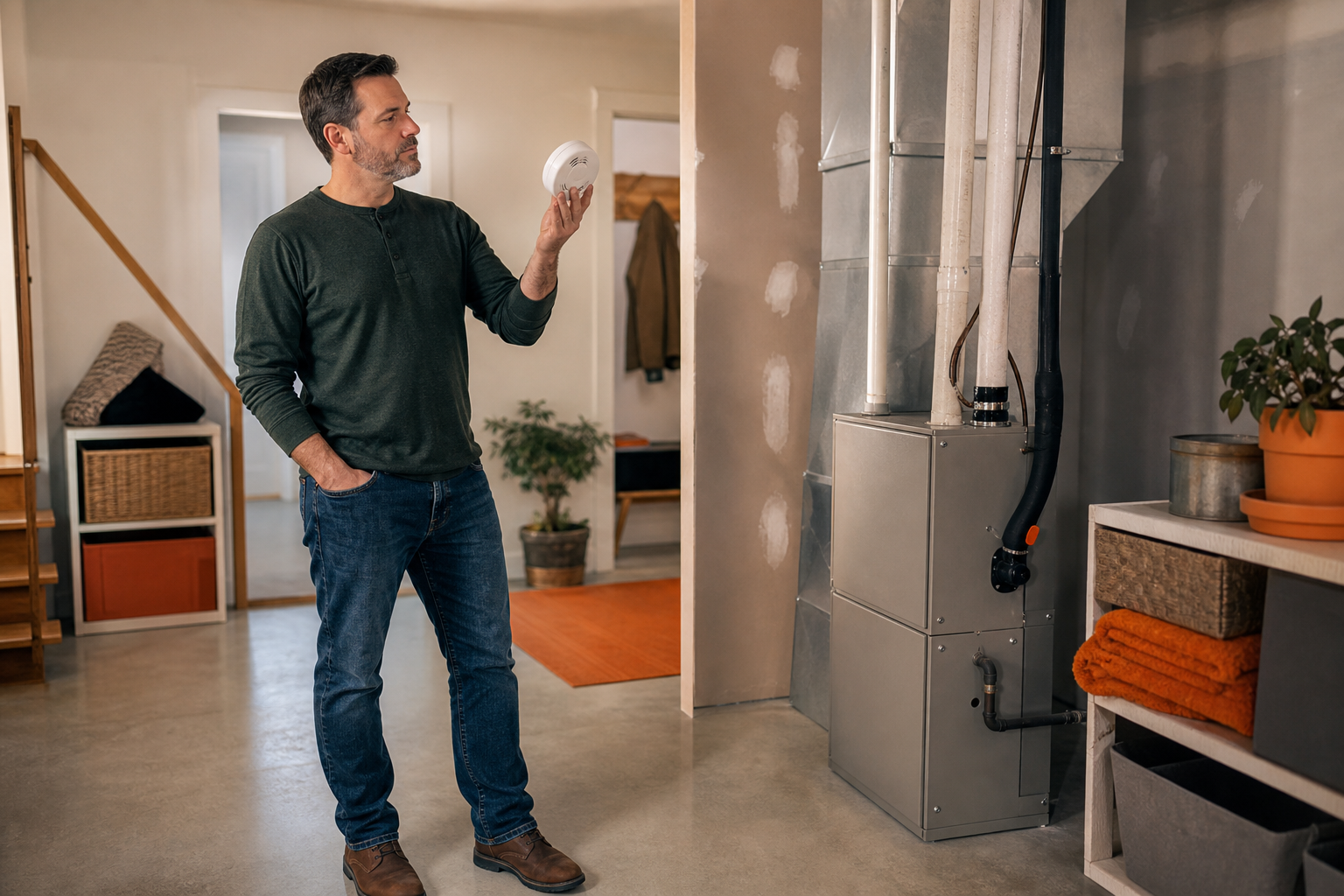
Key Takeaway:Leave immediately for a gas smell or carbon monoxide alarm. Don't troubleshoot those problems indoors.
Step 2: Verify the Thermostat Settings and Heating Call
A thermostat error is one of the simplest reasons a furnace won't start. Check the control before you inspect the furnace itself.
Set the mode toHeat. Then raise the set temperature several degrees above the current room temperature. If the room is 68°F, set the thermostat to 72°F for the test. Give the system a few minutes to respond.
Check the fan setting too.Autotells the blower to run during a heating cycle. If the fan is set to On, it may blow cool room air even when the furnace isn't heating. That can make a small control issue seem worse.
Replace the batteries if your thermostat uses them. A screen can still show a reading when the batteries are too weak to send a proper heating signal. After installing fresh batteries, set the clock and review the schedule.
Programmable thermostats can also follow a setback schedule when you expect heat. Use the temporary hold function, if available, and watch for a message such as “Heat On,” “Waiting,” or “Low Battery.” A delay message may be normal for a short time, but it shouldn't continue indefinitely.
Don't remove the thermostat from the wall or touch its wiring. Loose or damaged wires can stop communication with the furnace. Electrical work at the thermostat is best left to a qualified HVAC technician.
Thermostats measure indoor temperature and send a signal to the heating equipment. If the display works but the furnace stays silent, the fault may be in the wiring, control board, ignition sequence, or furnace power supply. Dead batteries, incorrect settings, a dirty filter, and equipment faults can all contribute to a “heat on” complaint.
By now you should know whether the thermostat is making a clear call for heat. If the display is blank, the setting won't hold, or the message never changes, write down what you see before requesting service.
Step 3: Check Power, the Furnace Switch, and the Air Filter
When a furnace is not working, a tripped breaker, switched-off disconnect, or clogged filter can stop normal operation. These checks don't require you to open the furnace cabinet.
First, find the electrical panel. Look for the breaker labeled furnace, heater, or HVAC. A tripped breaker may sit between the On and Off positions. Push it fully to Off, then back to On once.
If it trips again right away, stop. Don't keep resetting it. Repeated trips can point to a short, failed motor, damaged wiring, or another electrical fault.
Next, look for the furnace switch. It often resembles a wall light switch near the unit. Someone may have turned it off during storage work, cleaning, or a move. Set it to On if it is clearly accessible and undamaged.
Now inspect the air filter. Turn the furnace off at the thermostat before pulling the filter out. Hold it toward a light. If the filter is packed with dust or looks bowed inward, replace it with the same size and the type approved for your system.
A blocked filter makes the blower work harder. It can also restrict heat removal from the furnace and trigger an overheating safety shutdown. A tripped breaker, wrong thermostat setting, dirty filter, or furnace switch in the Off position can keep a furnace from turning on. Ignition and flame-sensing faults need professional service.
Don't press a red rollout switch or remove a burner door to force a reset. Those parts protect against unsafe combustion. If a safety switch has tripped, the cause needs to be found rather than bypassed.
After restoring power or changing the filter, set the thermostat to Heat again. Listen for the start sequence. A brief click or fan sound may be normal. A repeated clicking sound with no ignition, a gas smell, or a breaker trip means you should stop.
Pro Tip:Write down what happened after each check. “Breaker tripped once,” “blower runs,” or “no response” gives a technician better clues than “it just stopped.”
Step 4: Inspect Vents, Airflow, and Visible Furnace Indicators
Weak airflow can make a working furnace feel broken. Check the vents and returns before assuming the furnace has failed.
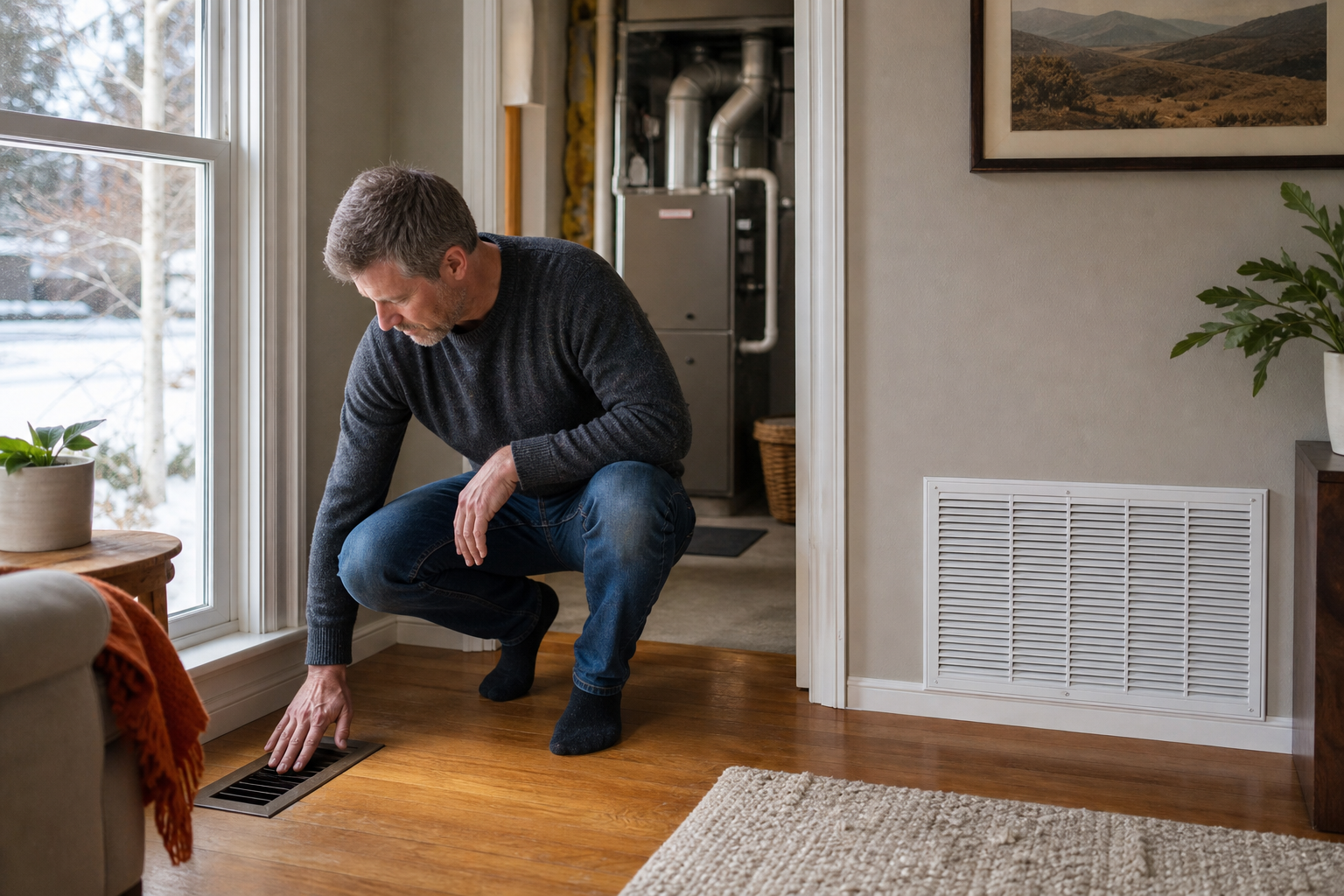
Walk through the home and open each supply register. Move rugs, boxes, curtains, and furniture away from the openings. Then check the return-air grilles. A large return blocked by a sofa or shelf can starve the system of air.
Don't close many vents in unused rooms. That raises resistance in the duct system and can reduce airflow across the home. One closed register usually isn't a crisis, but several blocked openings can make the furnace run poorly.
Pay attention to the pattern:
If every room has weak airflow, check the filter, main return, blower, or central duct.
If one room is weak, look for a closed damper, crushed flex duct, or blocked register.
If airflow starts well and fades, overheating or a blower problem may be involved.
If the blower runs but no warm air arrives, ignition or flame-sensing trouble is possible.
Compare a nearby register with one farther away. You can also listen for a new hiss at the return grille or a blower that hums, surges, or sounds slower than normal. Don't open the blower compartment to inspect the motor or capacitor.
Look only at visible indicators through the normal viewing area. A blinking light may show a fault code, but the meaning depends on the furnace model. Take a photo of the code without removing any panel. Keep the model and serial number nearby for the service visit.
It helps to know what each major part does. The thermostat sends the call for heat. The furnace produces heat. The blower moves air through the filter and ductwork. This overview of HVAC system parts can help you describe the symptom without guessing at the repair.
Airflow should improve after you uncover returns, open registers, or replace a loaded filter. If the whole home remains weak, or the system overheats and shuts off, the issue is beyond a vent check.
Step 5: Decide When to Stop Troubleshooting and Call an HVAC Professional
Stop DIY checks when the safe basics don't restore heat or when the symptoms point inside the furnace. At that stage, more testing can make the fault worse or expose you to gas, high voltage, or combustion hazards.
Request professional service if:
The thermostat calls for heat but the furnace never responds.
The breaker trips again after one reset.
The blower runs but the burners don't light.
The furnace lights, then shuts down within a short time.
You hear grinding, scraping, loud banging, or repeated buzzing.
The filter is clean but airflow remains weak throughout the home.
You see a fault code you can't identify.
You smell gas or a carbon monoxide alarm has sounded.
A technician may test the igniter, flame sensor, pressure switch, limit switch, blower motor, control board, or gas valve. Those tests require proper meters and safety steps. Don't clean a flame sensor, adjust a gas valve, bypass a limit switch, or relight a pilot unless your equipment manual specifically allows it and there is no sign of danger.
Ask the technician to explain the failed part, the repair choice, and the condition of the rest of the system. You should receive a clear estimate before work begins. Public information on local HVAC providers often leaves out both typical repair costs and customer ratings, so written details matter when you compare options.
Replacement may make sense when a furnace is old, needs frequent repairs, or has a serious heat exchanger problem. But age alone doesn't prove that replacement is the right answer. A sound system with a small repair may have plenty of useful life left.
Home Worx Heating and Cooling serves homeowners across Placer and Nevada County, including Auburn, Rocklin, Roseville, Grass Valley, and Penn Valley. The family-owned team handles emergency repair, maintenance, installations, and indoor air-quality work. Financing options may also help when a major repair or replacement cannot wait.
If you need to compare local service standards before booking, look for a California license, proof of insurance, a clear response window, and a written scope of work. Our guide to furnace repair services in Placer County covers those checks in more detail.
Choose emergency service when the home is unsafe or the weather puts pipes at risk. For a minor issue with safe backup heat, you may be able to schedule a standard visit. Either way, give the technician your notes, filter size, furnace model, visible code, and the exact sound you heard.
FAQ: Furnace Not Working
Why is my furnace not turning on?
A furnace may not turn on because of a thermostat setting, dead batteries, a tripped breaker, an off furnace switch, or a blocked filter. Set the thermostat to Heat, raise the temperature, check power once, and inspect the filter. If the system still stays silent, stop resetting it and arrange HVAC service.
Why is my furnace blowing cold air?
A furnace blowing cold air may be in the start-up delay, have an airflow restriction, or fail during ignition. Check that the thermostat fan is set to Auto and inspect the filter. If the blower runs while the burners never light, don't open the furnace. A technician should test the ignition and safety controls.
Can a dirty filter make a furnace stop working?
Yes, a dirty filter can restrict airflow enough to make a furnace overheat and shut down. Turn the system off, replace a visibly loaded filter with the correct size, then try one heating cycle. If the furnace still short-cycles or airflow remains weak, the problem may involve the blower, ductwork, or a safety control.
Should I reset my furnace if it stops working?
You can reset a furnace's breaker or nearby power switch once, but don't keep resetting it. If the breaker trips again, or the unit stops after a short run, a fault may be present. Never press an internal rollout switch or bypass a safety control without professional guidance.
When should I call an HVAC technician for a furnace problem?
Call an HVAC technician when basic thermostat, power, filter, and vent checks fail. Get emergency help for a gas smell, carbon monoxide alarm, smoke, sparks, or a yellow burner flame. A professional should also inspect repeated short-cycling, loud mechanical sounds, and a breaker that trips again.
Conclusion
Start with the thermostat, power switch, breaker, filter, and visible airflow. Stop when you see a safety warning or an internal fault. For furnace repair in the Placer or Nevada County area, contact Home Worx Heating and Cooling for local help and a clear next step.