
Parts of an HVAC System Explained
Updated: Sep 24
Your HVAC system has more moving parts than most homeowners realize. Understanding what each one does makes it far easier to spot problems early, talk to a technician with confidence, and keep your home comfortable through Sierra-foothill summers and cold mountain winters.
Table of Contents
What Is an HVAC System?
HVAC stands for Heating, Ventilation, and Air Conditioning. It's the network of equipment that controls your home's temperature, humidity, and air quality year-round. A furnace keeps you warm in January. An air conditioner pulls heat out of your home in July. The ventilation side moves air through the building and filters out dust, pollen, and other particles before they cycle back into the rooms you live in.
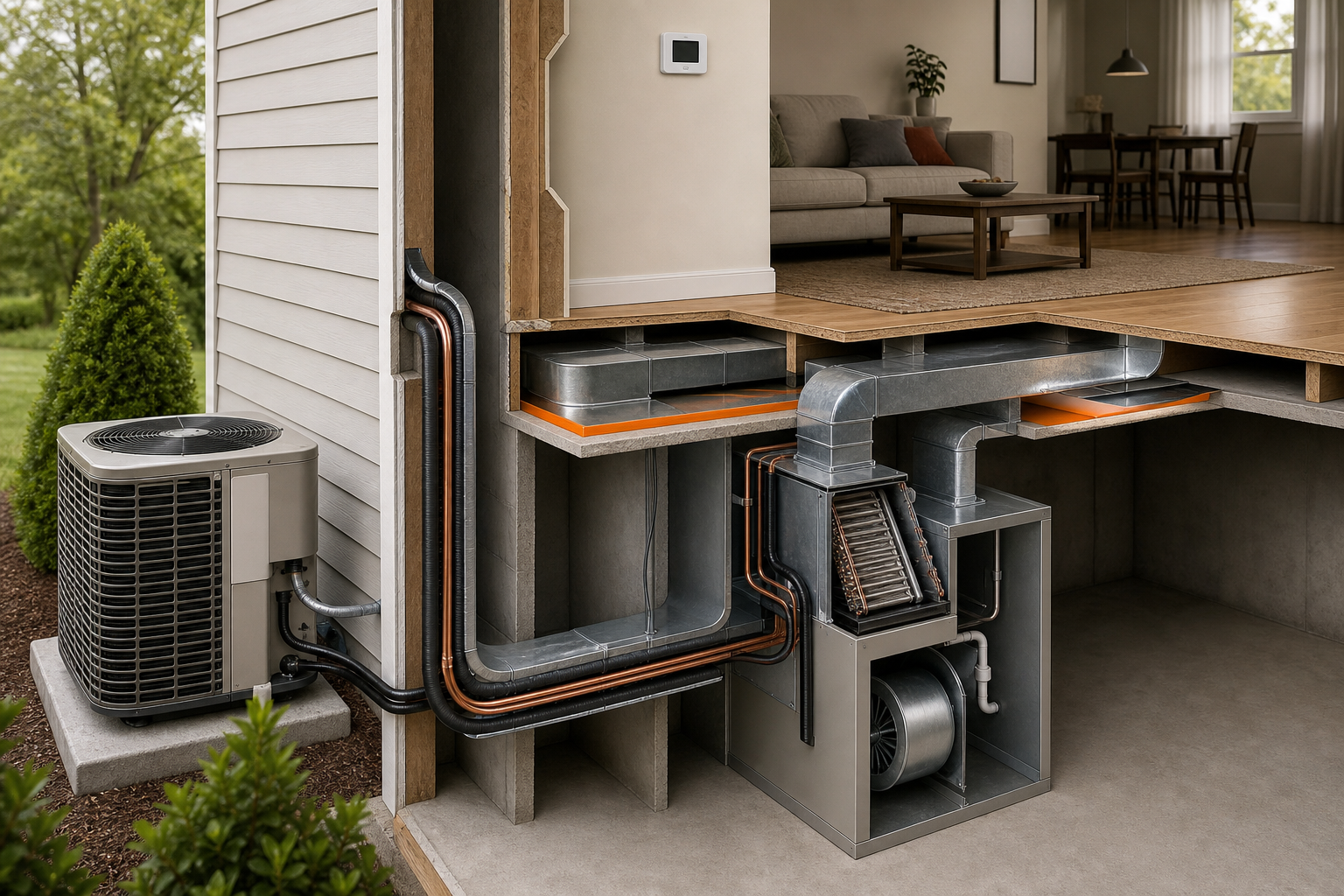
Most homes in Placer County and Nevada County use asplit system, which splits the equipment between an indoor unit (the furnace or air handler) and an outdoor unit (the condenser). Copper refrigerant lines connect the two. Some newer builds use aself‑contained unit, where all components are housed together outdoors. Heat pumps are a third option, and they've grown popular in California because they handle both heating and cooling without burning gas.
A complete HVAC system involves over a dozen distinct components that work together in sequence. Missing one can affect overall performance, so understanding each part is important.
One thing worth noting: refrigerant work is not a DIY task. Technicians handling refrigerants must be certified to ensure safe handling and proper disposal. Any reputable HVAC company you hire should hold that certification.
Key Components of an HVAC System
A typical split system has about a dozen core parts. Here's what each one does and where it lives.
Thermostat
The thermostat is the brain of the system. It sends 24-volt control signals to the HVAC control board, telling the system when to heat, cool, or circulate air. Modern smart thermostats can learn your schedule and help cut energy bills. A thermostat that's reading temperature inaccurately is one of the most common causes of comfort complaints.
Furnace or Air Handler
The indoor unit is either a furnace (gas or electric) or an air handler. A gas furnace burns fuel to generate heat, passing warm air over a heat exchanger so combustion gases never mix with your indoor air. An air handler pairs with a heat pump and moves conditioned air without burning anything. Both units house the blower motor and the filter.
Blower Motor
The blower motor powers the fan inside the air handler or furnace. It pushes conditioned air through the ductwork and into every room. Without a working blower, the system can produce warm or cool air but has no way to move it anywhere.
Evaporator Coil
The evaporator coil sits inside the air handler or on top of the furnace. Cold refrigerant flows through it, and as warm household air passes over the coil, the refrigerant absorbs the heat. The air cools down and gets pushed back into the house. The refrigerant, now carrying that heat, travels outside to the condenser. A dirty or frozen evaporator coil can cause the compressor to work harder than it should, which shortens its life.
Compressor
The compressor is in the outdoor unit, and it's often called the heart of the system. It pressurizes the refrigerant gas, raising its temperature so the condenser can shed that heat into the outdoor air. Compressor failure stops the entire cooling cycle. It's also one of the most expensive repairs on the system, which is why regular maintenance matters so much.
Condenser Coil and Fan
Once the compressor raises the refrigerant's pressure and temperature, the condenser coil releases that heat to the outside air. The condenser fan pulls air across the coil to speed up that process. Dirty condenser coils trap heat inside the system and force the compressor to work harder. Keeping two feet of clearance around the outdoor unit is the simplest way to protect this part.
Metering Device
Between the condenser and the evaporator sits the metering device, which is usually a thermostatic expansion valve (TXV) or an electronic expansion valve (EEV). It drops the refrigerant's pressure so it can absorb heat efficiently in the evaporator. A failing TXV is a common cause of poor cooling and iced-over coils.
Refrigerant Lines
Two copper lines run between the indoor and outdoor units. The suction line carries low-pressure refrigerant gas back to the compressor. The liquid line carries high-pressure liquid refrigerant to the metering device. Cracks or holes in these lines cause refrigerant to leak out, reducing cooling capacity and eventually damaging the compressor.
Air Filter
The filter sits in a rack inside the air handler or at a return-air grille. It cleans incoming air before it passes over the evaporator coil. A clogged filter restricts airflow, makes the system run longer, and can cause the evaporator coil to freeze. It's the one component every homeowner can maintain themselves.
Ductwork and Vents
The duct system carries conditioned air from the air handler to every room and returns stale air back to the unit. Leaky or poorly insulated ducts can waste 20 percent or more of the conditioned air before it reaches the rooms you're trying to heat or cool. Supply vents push air in; return vents pull it back.
Key Takeaway:Every part of a split HVAC system depends on the others , a dirty filter strains the blower, which stresses the evaporator coil, which overworks the compressor. One neglected component ripples through the whole system.
How the Components Work Together
Understanding each part is one thing. Seeing how they hand off work to each other is where it gets useful.
On a hot August afternoon in Auburn, here's what happens when you drop the thermostat to 72°F. The thermostat senses the gap between the room temperature and your target. It sends a signal to the control board, which starts the blower motor and the outdoor condenser unit at the same time.
The blower pulls warm room air through the return ducts and pushes it across the evaporator coil. The cold refrigerant inside the coil absorbs that heat. The air drops in temperature and flows back through the supply ducts into your rooms.
Meanwhile, the refrigerant, now a warm gas carrying the heat it just absorbed, travels through the suction line to the compressor outside. The compressor squeezes it into a hot, high-pressure gas and forces it into the condenser coil. The condenser fan pulls outdoor air across the coil, stripping the heat away. The refrigerant cools back into a liquid, passes through the metering device to drop its pressure, and cycles back to the evaporator coil to start again.
That loop runs continuously until the thermostat reads 72°F. Then it shuts everything down and waits.
Component | Location | What It Does | What Breaks It |
Thermostat | Indoor wall | Sends control signals to start/stop the system | Dead batteries, inaccurate calibration |
Blower motor | Air handler/furnace | Moves conditioned air through ductwork | Worn bearings, clogged filter restricting airflow |
Evaporator coil | Indoor air handler | Absorbs heat from indoor air | Dirty coil, low refrigerant charge, failed TXV |
Compressor | Outdoor unit | Pressurizes refrigerant to move heat outside | Dirty condenser coil, electrical faults, low refrigerant |
Condenser coil | Outdoor unit | Releases heat from refrigerant to outdoor air | Debris buildup, blocked clearance around unit |
Metering device (TXV/EEV) | Between liquid line and evaporator | Drops refrigerant pressure before evaporator | Stuck valve, contamination |
Air filter | Air handler/return grille | Cleans return air before it reaches the coil | Neglected replacement schedule |
Ductwork | Throughout home | Carries conditioned air to rooms and back | Leaks, poor insulation, disconnected joints |
Heat pumps add one more piece to this picture: thereversing valve. In cooling mode, it works exactly like the cycle above. Flip to heating mode, and the reversing valve redirects refrigerant flow so the outdoor coil absorbs heat from the outside air and the indoor coil releases it into your home. That's why a heat pump can heat your house even on a cold day, as long as there's some heat energy in the outdoor air to collect.
If you want to understand what heat pump repairs actually cost when individual components fail, the price varies quite a bit depending on which part gives out first.
Common Issues and Maintenance Tips for Each Part
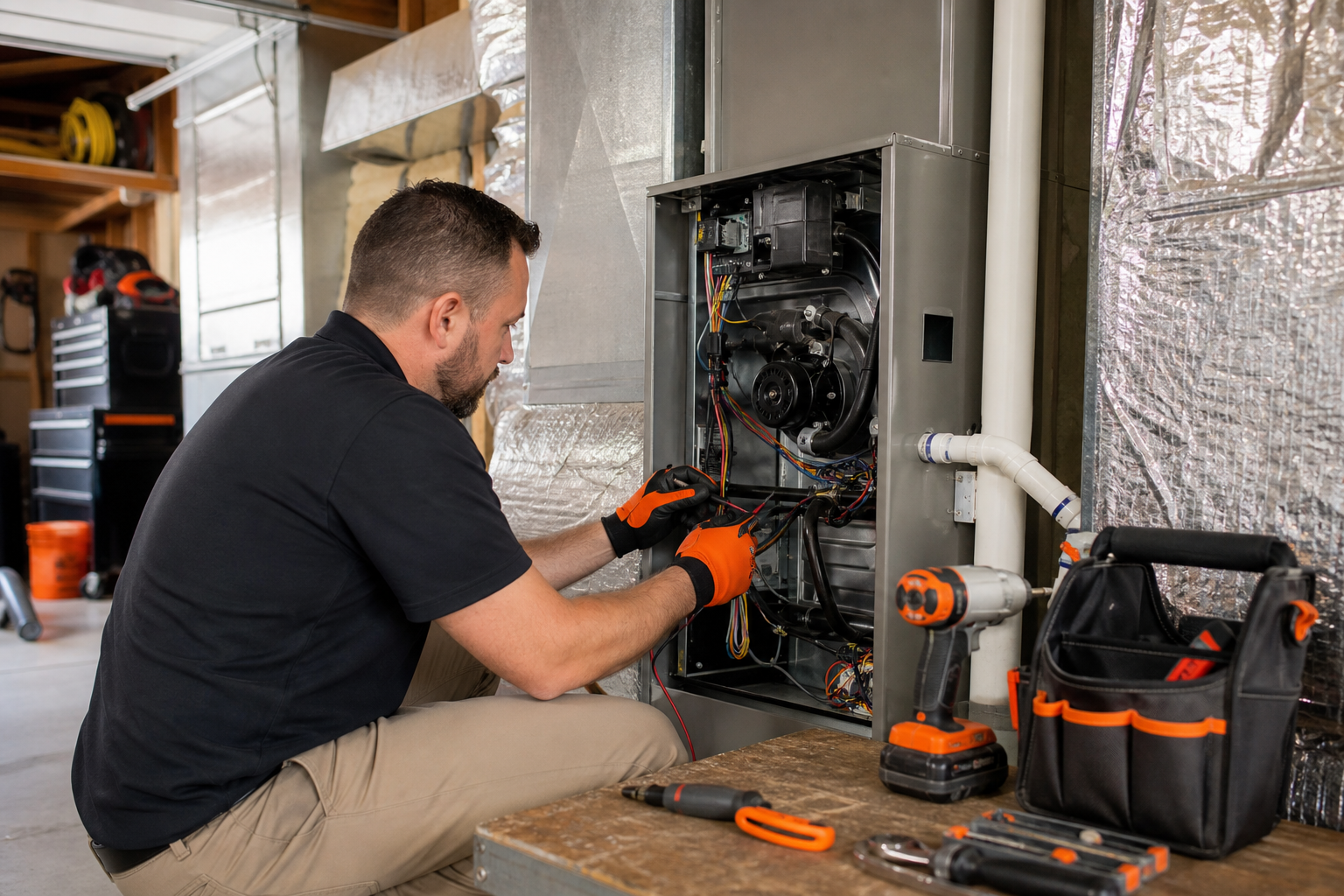
Most HVAC failures trace back to a small number of neglected parts. Here's where problems show up most often and what you can do about them.
Air Filter: Change It More Often Than You Think
A clogged filter forces the furnace or AC to work against restricted airflow. That extra strain shows up as higher energy bills, uneven temperatures, and eventually a frozen evaporator coil. For standard 1-inch filters, plan on a swap every 30 to 90 days. If you have pets, allergies, or run the system heavily during Grass Valley's wildfire smoke season, lean toward the 30-day end. MERV ratings tell you how fine a filter's mesh is. Most residential systems handle MERV 8 to 13 well. Going higher than your system is designed for adds airflow resistance that can hurt performance.
Replacing filters is one of the most important ways to service your HVAC system and one of the few tasks that doesn't require a technician.
Evaporator and Condenser Coils: Keep Them Clean
Dust on the evaporator coil acts like insulation, blocking heat transfer. The system runs longer to hit the target temperature, and over time the coil can ice over completely. A frozen coil blocks airflow entirely and can damage the compressor. Condenser coils collect outdoor debris, including leaves, cottonwood fluff, and the fine dust that comes with dry Sierra-foothill summers. That buildup traps heat inside the outdoor unit and overworks the compressor. Both coils should be cleaned at least once a year, ideally before the cooling season starts.
Compressor: The Expensive One to Ignore
Compressor failure is often the end result of other neglected problems. A dirty condenser coil causes the compressor to overheat. Low refrigerant from a slow leak makes it work harder. Electrical faults can destroy it outright. Warning signs include warm air from the outdoor unit's fan, strange noises from the outdoor cabinet, or the system running but not cooling. Compressor replacement costs can vary; homeowners should consult a qualified technician for an estimate. That's a strong argument for annual maintenance.
Pro Tip:Keep at least two feet of clearance around your outdoor unit at all times. Local codes often require it, and it's the single easiest thing you can do to protect the condenser coil and compressor from heat buildup.
Thermostat: Small Part, Big Impact
A thermostat that reads temperature incorrectly causes the system to short-cycle (turn on and off too quickly) or run longer than needed. Testing thermostat accuracy is part of a professional tune-up. If you have an older mechanical thermostat, swapping it for a programmable or smart model is one of the cheapest upgrades that actually pays back in energy savings.
Reversing Valve (Heat Pumps Only)
If your heat pump blows cold air in heating mode or warm air in cooling mode, the reversing valve may be stuck. It can stick in either position. Repair typically involves part and labor costs, so professional service is recommended. It's not a DIY fix, but catching it early prevents the compressor from being damaged while running in the wrong mode.
Ductwork: The Silent Energy Waster
Leaky ducts are common in older homes across Colfax, Auburn, and Rocklin. Air escapes into attics and crawl spaces before it reaches the rooms you're paying to condition. Signs of duct problems include rooms that never reach the right temperature, higher-than-expected bills, and excessive dust. A duct inspection and seal can make a noticeable difference in both comfort and energy costs.
Choosing the Right HVAC System for Northern California Homes
The Sierra-foothill climate around Placer County and Nevada County is harder on HVAC systems than most homeowners expect. Summers in Auburn and Rocklin regularly push past 100°F, while winter nights in Colfax and Grass Valley can drop below freezing. That wide temperature swing means you need a system sized and configured for both extremes, not just one.
Sizing Matters More Than Brand
An undersized system runs constantly and still can't keep up on the hottest days. An oversized system short‑cycles, which means it turns on and off too quickly to properly dehumidify the air. The result is a home that feels clammy even when the temperature is right. A proper load calculation, which considers your home's size, ceiling height, insulation, window placement, and local climate data, is essential. General guidelines can provide a starting point, but actual calculations vary by home.
Heat Pump vs. Dual Fuel
Modern heat pumps work well in most Northern California conditions. They're efficient, may qualify for state incentives, and they handle both heating and cooling from one system. For homes at higher elevations where temperatures regularly drop below 25°F, a dual‑fuel system pairs a heat pump with a gas furnace backup. The heat pump handles the bulk of the heating season efficiently. When temperatures fall below the heat pump's efficient range, the furnace takes over. That combination covers the full range of Sierra‑foothill weather without sacrificing efficiency.
Ductless Mini-Splits for Additions and Older Homes
Many older homes in Grass Valley and Nevada City have limited duct infrastructure or rooms that were added after the original system was installed. A ductless mini‑split solves that without tearing into walls. One outdoor unit connects to one or more indoor wall‑mounted heads. Each head conditions its zone independently, which means you're not heating or cooling rooms that aren't being used.
When you're ready to choose, working with a contractor who performs a proper load calculation is the most important step. When hiring, look for someone who carries the right licenses and will walk you through the sizing process before recommending equipment.
At Home Worx Heating and Cooling , we work with homeowners across Placer and Nevada County every day on exactly these decisions. We know the local climate, we're familiar with local rebate programs, and we can size a system to fit both your home and your budget. If your system is aging or you're not sure whether a repair or replacement makes more sense, we're happy to take a look.
Frequently Asked Questions
What are the main parts of an HVAC system?
The main parts are the thermostat, furnace or air handler, blower motor, evaporator coil, compressor, condenser coil, metering device, refrigerant lines, air filter, and ductwork. In a heat pump system, add the reversing valve to that list. Each part handles one step in the process of moving heat into or out of your home.
How often should I replace my HVAC air filter?
Replace a standard 1-inch filter every 30 to 90 days. During heavy use periods, like summer heat waves or wildfire smoke events common in Northern California, lean toward every 30 days. Thicker high-efficiency filters can last up to six months. A clogged filter is one of the most common causes of HVAC problems, so it's worth setting a calendar reminder.
What causes a compressor to fail?
Compressor failure usually results from accumulated stress over time. Dirty condenser coils trap heat and force the compressor to overwork. Refrigerant leaks reduce the charge and cause overheating. Electrical faults can destroy it quickly. Regular maintenance, including coil cleaning and refrigerant checks, is the best way to extend compressor life. A well-maintained compressor can last 15 years or more.
What is a reversing valve and do I need one?
A reversing valve is a component found only in heat pump systems. It redirects refrigerant flow to switch the system between heating and cooling modes. If you have a heat pump, you have one. If your system is a traditional split system with a separate furnace and AC, you don't. A stuck reversing valve causes the heat pump to stay locked in one mode.
How do I know if my HVAC system is the right size for my home?
The most reliable method is a professional load calculation performed by a licensed HVAC contractor. Signs of an undersized system include the unit running constantly without reaching your target temperature. Signs of an oversized system include short cycling, uneven temperatures, and excess humidity. Both problems lead to higher energy bills and faster wear on components.
What HVAC system works best for Northern California's climate?
For most homes in Placer and Nevada County, a high-efficiency heat pump or a dual-fuel system (heat pump with gas furnace backup) handles the region's hot summers and cold winters well. Homes at higher elevations benefit from the dual-fuel option. Ductless mini-splits work well for older homes or room additions without existing ductwork. Rebates are currently available for high-efficiency systems, which can offset installation costs.
Conclusion
Every part of your HVAC system has a job, and when one falls behind, the others pick up the slack until something breaks. The best thing you can do is stay ahead of it: change filters regularly, keep the outdoor unit clear, and schedule a professional tune-up before each season. If you're in Placer County, Nevada County, or the surrounding area and want a local team to inspect your system or help you choose a replacement, contact Home Worx Heating and Cooling. We're a family-owned shop that knows this climate, and we're here when you need us.