
Furnace Won't Turn On? 7 Safe Checks to Try
A furnace that won't turn on can leave a Sierra foothill home cold fast. Start with the safe checks below before you assume the system needs a major repair. In most cases, you can inspect the thermostat, power, filter, vents, and gas supply without opening the furnace cabinet.
Table of Contents
Step 1: Check the Thermostat Settings and Batteries
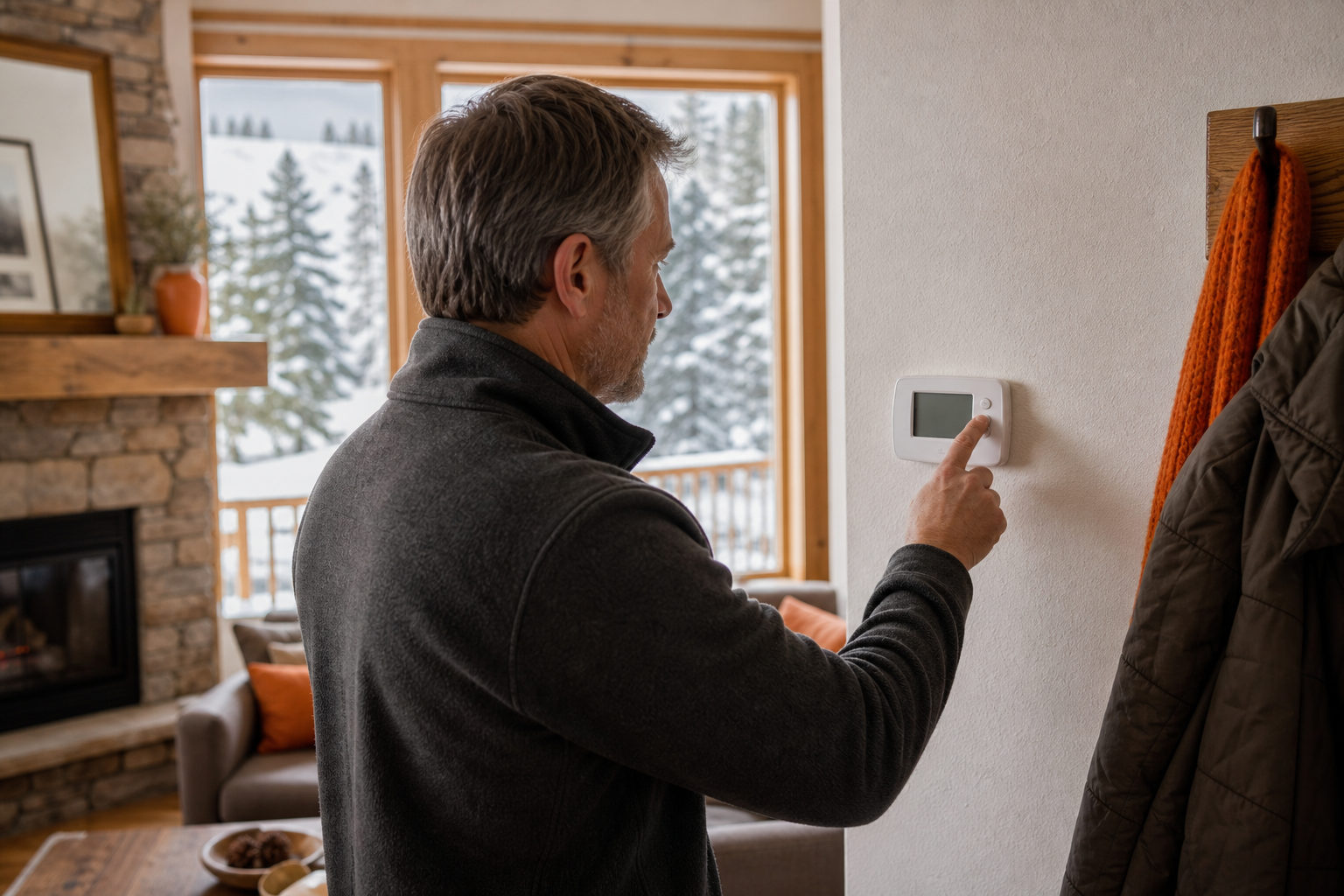
If your furnace won't turn on, start at the thermostat. The goal is to confirm that the furnace is receiving a clear request for heat.
Set the mode toHeat. Then raise the set temperature several degrees above the current room temperature. A furnace has no reason to start if the room is already warmer than the selected setting.
If you have a programmable thermostat, check its schedule. An overnight setting or vacation hold may still be active. Press the Hold button, if your thermostat has one, and set a temporary temperature above the room reading.
Next, replace the batteries if the thermostat uses them. A weak battery can leave the display on while stopping the thermostat from sending a reliable signal. If the screen is blank, fresh batteries are the first low-risk test.
Watch what happens after you raise the setpoint. You may hear a click at the thermostat, followed by the furnace starting its sequence. A short delay is normal on some systems. Give it a few minutes before moving to the next check.
Don't remove the thermostat from its wall plate or touch the wiring. Loose or damaged wires can stop communication with the furnace, but electrical testing belongs with a trained technician. Thermostat settings, batteries, wiring, and equipment faults can all stop a call for heat.
For a related thermostat question, our guide to emergency heat settings can help you tell a heat pump backup mode from a standard furnace call.
By now, you should know whether the thermostat is awake, set to Heat, and asking for a higher temperature. If the furnace stays silent, check its power next.
Step 2: Confirm the Furnace Has Power
A gas furnace still needs electricity to run its controls, inducer motor, ignition system, and blower. If the furnace won't turn on at all, check the power path before touching anything inside the unit.
Find the furnace switch first. It often looks like a normal light switch on the furnace cabinet, a nearby wall, or a ceiling joist. Make sure it is set toOn. Someone may have switched it off during cleaning or other work in the utility area.
Then check your home's electrical panel. Look for a breaker labeled furnace, HVAC, or air handler. A tripped breaker may sit between the On and Off positions, so don't judge it by sight alone. Push it fully to Off, then move it back to On once.
Stop if the breaker trips again. Repeated trips point to an electrical fault or a failing component. Resetting it over and over can damage the system and may create a shock or fire risk.
Some older furnaces have an internal fuse. Don't open the cabinet to inspect it unless you're trained to work on HVAC equipment. The same rule applies to loose wires, control boards, capacitors, and motors.
What you notice | Safe check | When to stop |
Thermostat is blank | Replace batteries if it uses them | Stop if the display stays blank or wiring looks damaged |
Furnace is completely silent | Check the furnace switch and breaker once | Stop if the breaker trips again |
Blower runs but no heat starts | Move to the filter and vent check | Stop if you hear grinding, buzzing, or repeated clicking |
Water is near the furnace | Leave the unit off | Arrange professional service before restarting it |
Don't pull panels, bypass a door switch, or test live voltage. Those steps expose you to electrical parts and moving equipment. Home Worx Heating and Cooling can inspect the power side when a simple breaker reset doesn't restore heat.
Power confirmed? Move on. Airflow problems can make a working furnace shut itself down.
Step 3: Inspect the Air Filter and Vents
A dirty filter can make a furnace act as if it won't turn on. Restricted airflow can cause the heat exchanger to get too hot , which may trigger a safety switch and stop the burners.
Find the filter at the return grille or near the furnace. Slide it out and hold it toward a light. If the surface looks gray, matted, or packed with dust, replace it with the correct size for your system. Follow the arrow on the filter frame. It should point toward the furnace or air handler.
Don't guess at a filter size. Read the dimensions printed on the old frame or check the equipment manual. A filter that fits poorly can let dust around its edges or restrict air more than the system allows.
Now walk through each room. Make sure supply registers are open. Move rugs, boxes, curtains, and furniture away from them. Check the larger return grilles too, since a blocked return can starve the furnace of air.
Pay attention to the pattern. If the furnace starts, runs for several minutes, then blows cool air while the fan keeps running, overheating from poor airflow may be involved. A new filter may help, but repeated shutdowns need a technician.
High-efficiency furnaces also produce water through condensation. A blocked drain can trigger a float switch that prevents startup. You can look for standing water near the furnace, but don't open panels or clear hidden tubing unless the owner's manual gives clear instructions.
Bryant lists clogged filters and blocked vents among common reasons a furnace safety control may stop the system. The safe homeowner check is simple: replace a dirty filter and clear visible obstructions. Leave flame sensors, limit switches, and control boards alone.
After installing the filter, restore the thermostat setting and wait several minutes. If the furnace starts and keeps running, watch it through one full heating cycle. If it stops again, don't keep forcing it to restart.
Step 4: Check the Gas Supply and Ignition Warning Signs
If the furnace has power but won't produce heat, the fuel supply or ignition sequence may be the issue. This step needs more care because gas and combustion problems are unsafe to diagnose by trial and error.
First, check for a gas odor. Natural gas is often described as smelling like rotten eggs. If you smell gas, leave the home at once. Don't turn lights or appliances on or off. Don't use a phone inside. Once you're outside and away from the odor, contact the gas utility or emergency services.
Don't try to find the leak with a match or lighter. Don't restart the furnace after a strong gas smell. The correct next step is a safety check by the gas utility, followed by HVAC service when the area is cleared.
If there is no gas odor, look at other gas appliances only from a safe distance. If a gas range or water heater also fails to work, the problem may affect the home's gas supply. A utility interruption or a closed supply valve won't be fixed by changing the furnace filter.
You may also see signs of an ignition fault. A furnace that clicks but never lights may have a problem with its igniter, pilot, gas valve, or control signal. A furnace that lights for a few seconds and then shuts down may be losing its flame signal.
Don't clean a flame sensor, relight a pilot, or remove an access panel unless your owner's manual gives a clear procedure and you fully understand the safety steps. Modern electronic ignition systems can include high voltage and gas controls. A small mistake can create a much larger problem.
Look through the inspection window only if your furnace has one. A steady blue flame is generally expected on a gas burner. An unusual flame color, soot, scorch marks, or a persistent burning smell means you should turn the system off and arrange service. A brief dusty smell at first startup can happen, but a chemical or metallic odor should not continue.
Carbon monoxide has no smell. A working carbon monoxide alarm near sleeping areas and on each level is an important safety layer. If an alarm sounds, or anyone feels dizzy, sick, or confused, leave the home and seek emergency help.
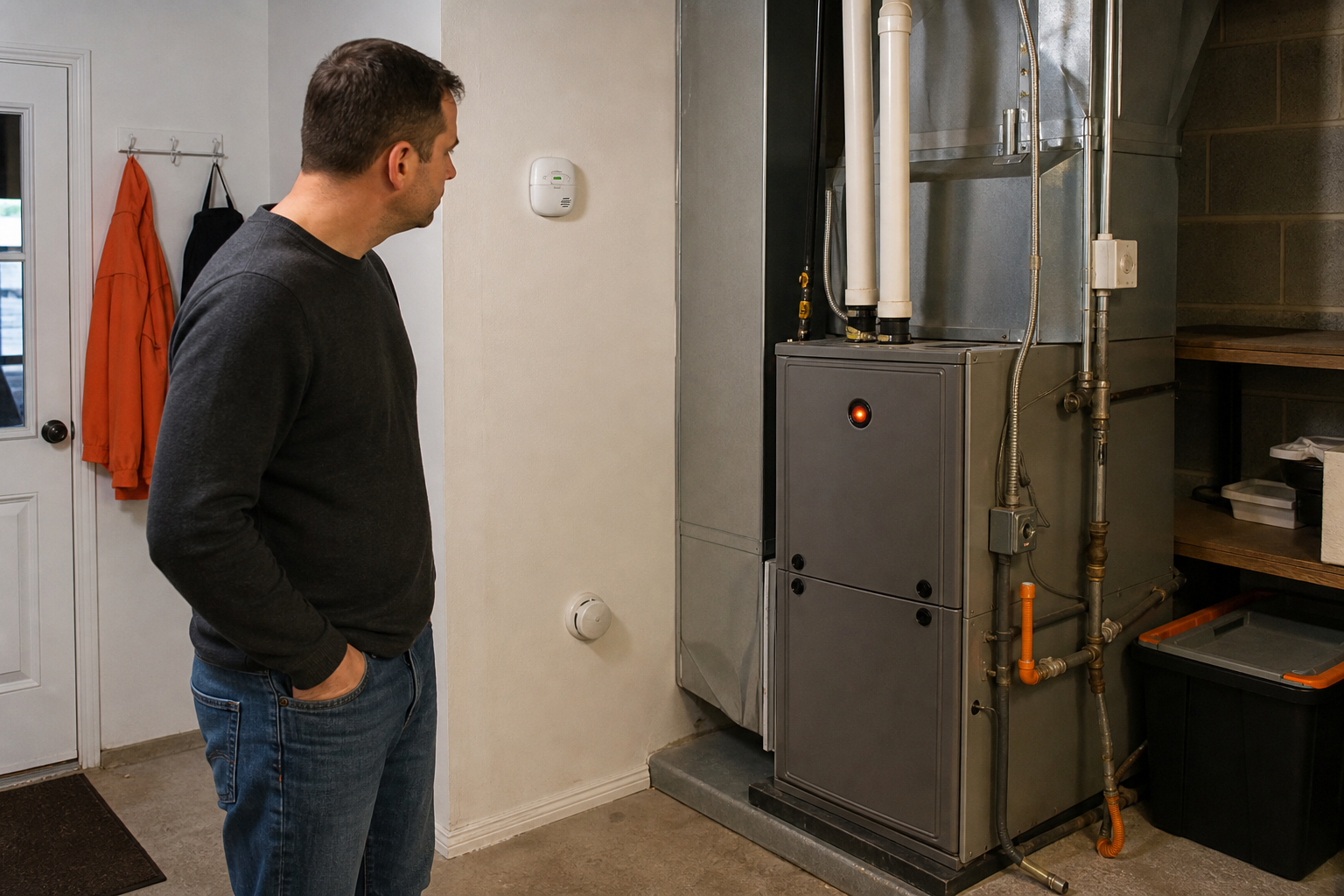
At this point, the decision is clear. A clean filter and working thermostat are homeowner checks. Gas valves, flames, ignition parts, exhaust vents, and combustion readings belong with a qualified HVAC professional.
Step 5: Know When to Stop Troubleshooting and Call an HVAC Professional
Call an HVAC professional when the furnace still won't turn on after the thermostat, power, filter, and visible vent checks pass. A technician can test the system without guessing at the failed part.
Stop troubleshooting right away if you notice any of these signs:
A gas smell or a carbon monoxide alarm
A breaker that trips again after one reset
Smoke, scorch marks, or a strong burning odor
Water pooling around the furnace
A rollout switch or other safety switch that has tripped
Repeated clicking with no ignition
A furnace that starts, then shuts down again and again
Grinding, scraping, or loud humming from the cabinet
Write down what you see before service arrives. Note whether the thermostat is blank, whether the blower runs, and how long the furnace operates before stopping. Take a photo of any visible error code, but don't open the cabinet to reach it.
A clear symptom record helps the technician choose the right tests. It also avoids a common mistake: replacing a thermostat when the actual fault is airflow, ignition, drainage, or a safety control.
For homeowners in Colfax, Auburn, Rocklin, Roseville, Lincoln, Grass Valley, or Penn Valley, Home Worx Heating and Cooling provides local furnace repair across the Placer and Nevada County area. The company also lists 24/7 emergency repair and financing options, which can matter when a cold-weather failure happens outside normal hours.
Our review of local contractor listings found that emergency availability and financing were rarely stated clearly. That makes it smart to ask about response times, license status, written estimates, and payment choices before work begins. Our local furnace repair service guide for Placer County covers those questions in more detail.
Professional help is appropriate when thermostat settings, batteries, and basic checks don't solve the problem.
Don't keep resetting a furnace that is showing a safety fault. A trained technician should find the cause before the system runs again. For local service in the Placer and Nevada County area, contact Home Worx Heating and Cooling.
Frequently Asked Questions About a Furnace That Won't Turn On
What is the first thing to check when the furnace won't turn on?
Check that the thermostat is set to Heat and that its temperature is above the room temperature. Replace the batteries if the thermostat uses them. Then wait a few minutes for the furnace to respond. If the display stays blank or the system remains silent, check the furnace switch and breaker once before moving on.
Can a dirty filter stop a furnace from working?
Yes, a dirty filter can stop a furnace from heating by cutting airflow and triggering an overheating safety control. Replace a filter that looks gray or packed with dust. If the furnace still shuts down after the change, stop using it and arrange service. The cause may involve the blower, limit switch, ductwork, or another part.
Why does my furnace click but not turn on?
A clicking furnace may be trying to ignite without establishing a flame. Possible causes include an ignition fault, a gas supply problem, or a flame-sensing issue. Don't keep cycling the system or open the burner compartment. If there is any gas odor, leave the home first. Otherwise, schedule a technician to test the ignition sequence.
Should I reset the furnace if it won't start?
You can reset a furnace breaker once if it has tripped, but don't keep resetting it. A second trip points to an electrical or equipment fault that needs service. You can also turn the thermostat off briefly, then restore Heat. If the furnace remains dead, leave it off until a professional checks the system.
When should I call an HVAC technician for a furnace problem?
Call an HVAC technician when basic thermostat, power, filter, and vent checks don't restore heat. Call sooner for gas odors, carbon monoxide alarms, smoke, water near the furnace, repeated breaker trips, or strange mechanical noise. Home Worx Heating and Cooling offers emergency repair for homeowners in the Placer and Nevada County area.
Conclusion
Start with the thermostat, then check power, airflow, and visible warning signs. Stop before touching gas or internal electrical parts. If your furnace still won't turn on, contact Home Worx Heating and Cooling for local service in the Placer and Nevada County area.