
What Is Emergency Heat on a Thermostat? Explained
If you've spotted "EM Heat" or "Emergency Heat" lit up on your thermostat, your first instinct might be to panic. Don't. Emergency heat is a built-in backup feature that keeps your home warm when your heat pump can't do the job on its own. Here's exactly what it means, how it works, and when you should actually use it.
What Emergency Heat Means and Why It Exists
A heat pump works by pulling warmth from the outdoor air and moving it inside. It's efficient and quiet under normal conditions. But when temperatures drop low enough, that outdoor air doesn't have much heat left to give. The heat pump struggles. That's where backup heating comes in.
Most heat pump systems have two backup heating stages. The first is auxiliary heat, or "AUX heat." It runs automatically alongside the heat pump when there's a gap between your set temperature and the actual indoor temperature. The heat pump stays on. AUX heat just gives it a boost.
Emergency heat is different. When you switch to emergency heat, the thermostat sends a signal that shuts off the outdoor heat pump unit entirely. Your system then runs only on the backup heat source, whether that's electric resistance strips inside your air handler or a gas furnace in a dual-fuel setup. According to Wikipedia's overview of heat pump systems , electric resistance heating produces one unit of heat for every unit of electricity consumed, compared to a heat pump's typical ratio of two to four units of heat per unit of electricity. That gap is why running emergency heat costs significantly more.
The backup strips are rated in kilowatts. A higher‑capacity strip package can provide sufficient heat for a well‑insulated home in moderate cold. Larger homes in colder climates may require greater strip capacity.
Emergency heat exists as a safety net. If your outdoor unit freezes solid, takes physical damage, or stops working mid-winter, you need a way to stay warm while you wait for a repair. That's the one job emergency heat is designed to do.
Key Takeaway:Emergency heat shuts off the heat pump entirely and runs only the backup system. It's a short-term safety net, not a heating strategy.
Thermostat Models That Support Emergency Heat (and How They Differ)
Not every thermostat handles emergency heat the same way. Some require you to dig into settings menus. Others can switch automatically. And a few give you no on-screen warning at all when emergency heat is running, which is a real problem if you're watching your energy bill.
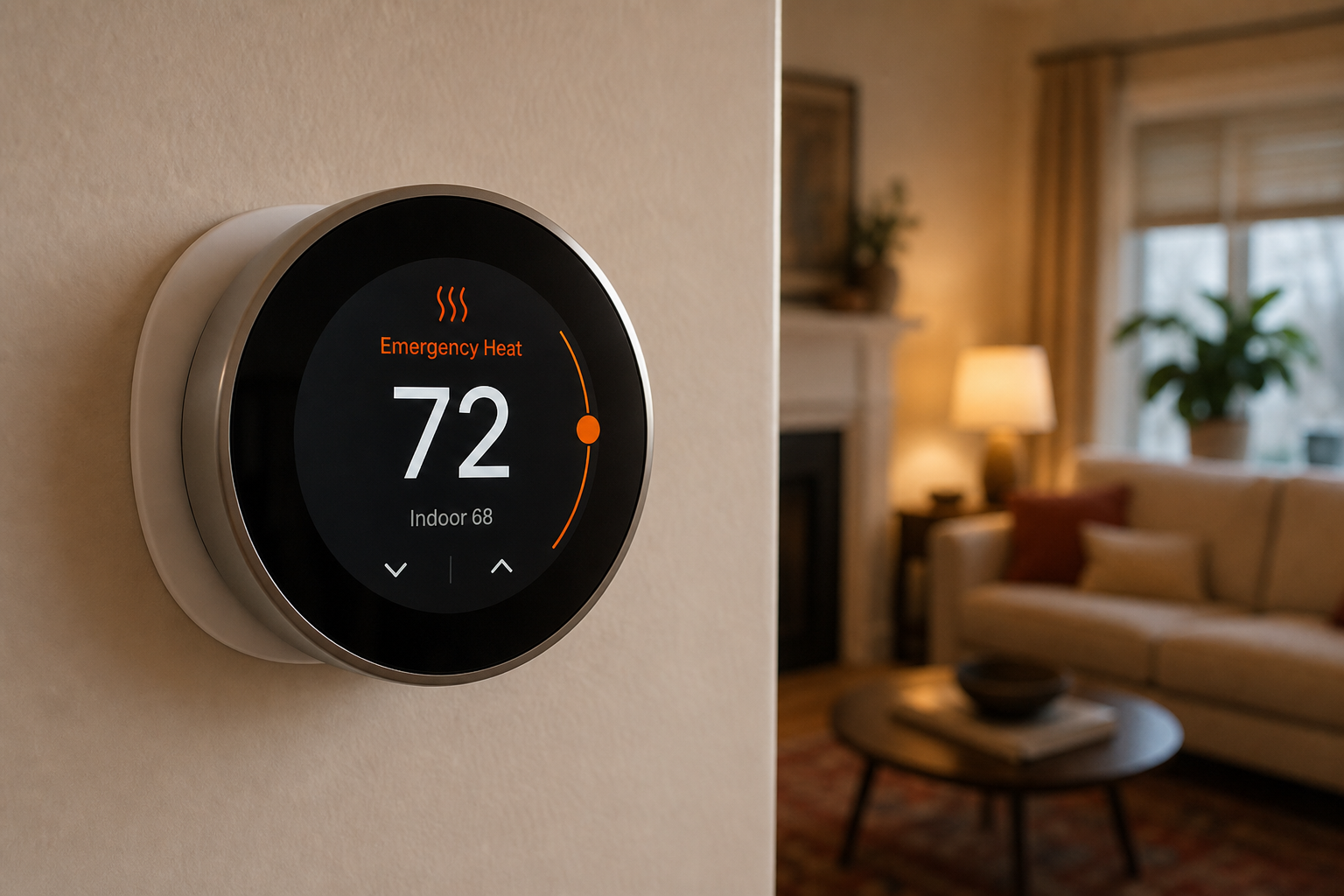
Here's how the most common models compare based on their documented behavior:
Thermostat | Activation Method | Auto-Switch? | On-Screen Indicator? |
Nest Learning Thermostat | Enable "EMER.HEAT" in Equipment Settings | Yes (cloud-based outdoor temp) | Yes — "EMERGENCY HEAT" |
Nest Thermostat | Enable "EMER.HEAT" in Equipment Settings | Yes (cloud-based outdoor temp) | Yes — "AUX. HEAT" or "EMERGENCY HEAT" |
Nest Thermostat E | Enable "EMER.HEAT" in Equipment Settings | Yes (cloud-based outdoor temp) | Yes |
Ecobee SmartSensor | Select Emergency Heat from Hold screen | No | — |
Honeywell T9 | — | No | — |
Honeywell TH9320WF | — | No | — |
Emerson Sensi Touch | — | No | — |
The Nest lineup stands apart here. All three Nest models can auto-switch to emergency heat based on outdoor temperature data pulled from the cloud. But here's the catch most homeowners miss: that automatic switching only works after you've manually enabled the "EMER.HEAT" option inside Equipment Settings. Skip that step and the auto-switch does nothing. So even the smartest thermostat on the market still needs a one-time manual enable from you.
The Ecobee SmartSensor takes a different approach. You activate emergency heat from the Hold screen, and if you tap the Heat option quickly enough, it defaults there. But there's no auto-switch and no clear on-screen warning that you're running expensive backup heat.
Honeywell and Emerson models in this comparison have no documented auto-switch capability and no on-screen indicator. That's a visibility gap worth knowing about. If your Honeywell or Emerson thermostat is running emergency heat and you don't notice, you could easily run on expensive backup heat for days without realizing it.
For homeowners in the Sierra foothills around Colfax, Auburn, and Grass Valley, cold winter nights can push temperatures well below the heat pump's efficient range. Knowing whether your specific thermostat will alert you when emergency heat kicks in matters more than most people realize.
When to Switch to Emergency Heat: Operational Scenarios
Emergency heat has a narrow, specific purpose. It's not a comfort upgrade. It's not a solution for a drafty house. Use it only when your outdoor heat pump unit cannot safely operate.
Here are the situations that actually call for it:
A branch falls on the outdoor unit during a storm and physically damages the compressor or fan
The outdoor unit ices over completely and the defrost cycle isn't clearing it
The heat pump compressor fails or trips a breaker and won't restart
A refrigerant leak causes the system to stop producing heat
In each of these cases, trying to run the heat pump would either do nothing or cause further damage. Switching to emergency heat keeps your home warm while you wait for a technician.
What doesn't qualify? Cold weather alone. Heat pumps are designed to run in cold temperatures, and modern units can operate efficiently down to around 25°F or lower. If your home just feels a little chilly on a cold night, that's a job for AUX heat, which your system handles automatically. Manually switching to emergency heat in that situation means you're paying two to three times more for heat you didn't need to buy.
The cost difference is real. A heat pump operating at a coefficient of performance (COP) of 3.0 produces three units of heat for every unit of electricity it uses. Electric resistance strips run at a COP of exactly 1.0. At typical residential electricity rates, that gap translates into noticeably higher energy costs per cold day when using emergency heat versus normal heat pump operation.
If you're unsure whether your heat pump actually has a problem, check a few things first. Look at the outdoor unit. A thin layer of frost is normal and the defrost cycle handles it. A solid block of ice that covers the coils and doesn't clear is not normal. Also check your air filter. A clogged filter can restrict airflow enough to cause performance problems that mimic a heat pump failure. If you want a full checklist of what to inspect before calling for service, our winter furnace maintenance checklist covers the key inspection points in order.
Pro Tip:If you switch to emergency heat, lower your thermostat set point by 2 to 3 degrees. Every degree of setback reduces heating cost by roughly 3% while running on backup heat, which adds up fast over a multi-day repair wait.
How to Activate Emergency Heat on Popular Thermostats
The steps vary by brand, but the general process is straightforward on most models. Here's how to do it on the thermostats homeowners ask about most.
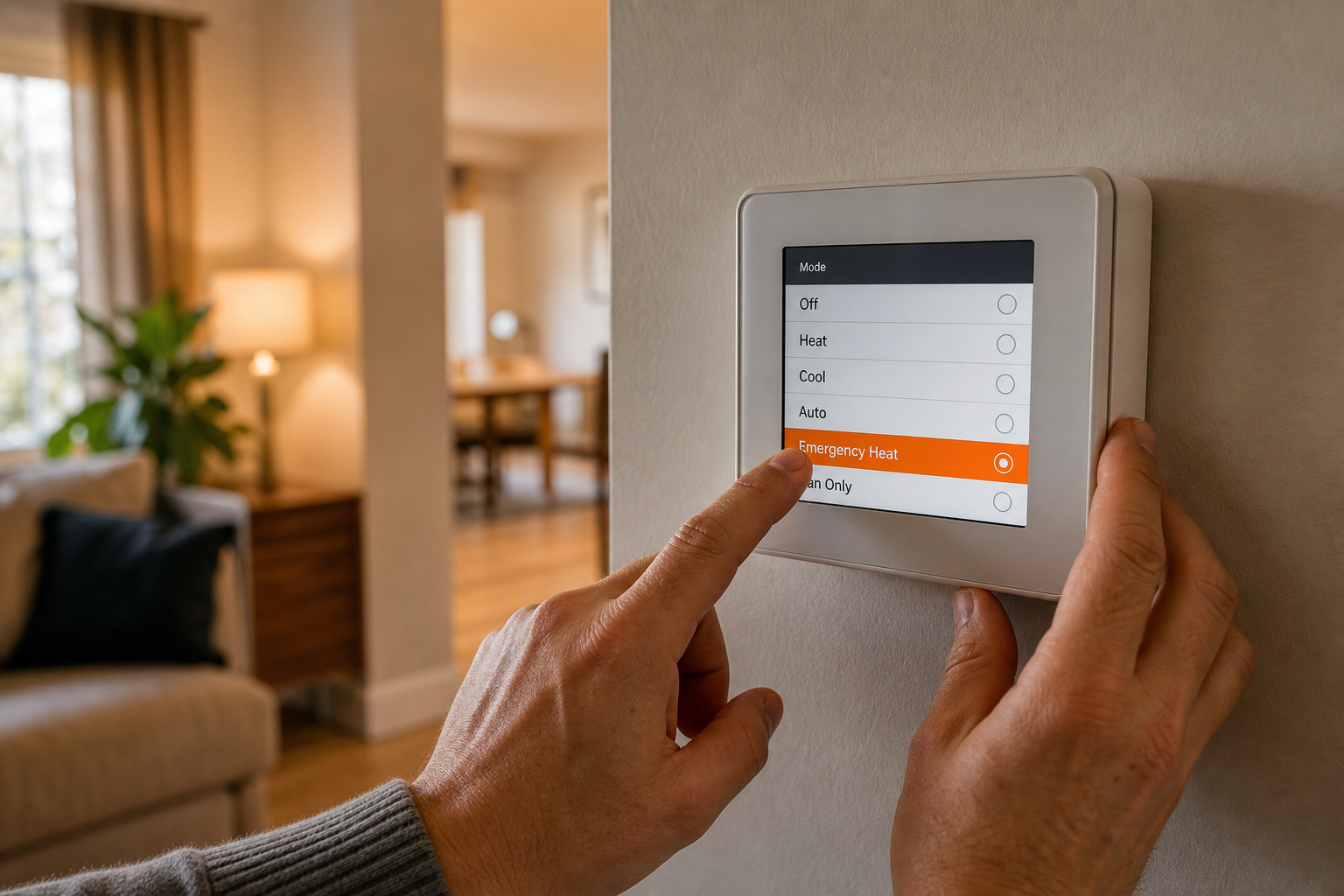
Nest Learning Thermostat, Nest Thermostat, and Nest Thermostat E
First, go into Equipment Settings on the thermostat. Find the "EMER.HEAT" option and enable it. Once that's done, you can manually switch the system mode to Emergency Heat from the main screen. You can also set an outdoor temperature lockout threshold so the Nest switches automatically when conditions warrant it. The thermostat will display "EMERGENCY HEAT" or "AUX. HEAT" on screen so you always know which mode is running.
Ecobee SmartSensor
From the main screen, tap the current mode to open the Hold screen. Select Emergency Heat from the list of options. Some users report that tapping the Heat option rapidly also defaults to emergency heat, but using the Hold screen is the more reliable method. There's no automatic switching and no on-screen indicator once the mode is active, so check back periodically.
Honeywell T9 and Honeywell TH9320WF
Honeywell models typically have an "Em Heat" or "Emergency" mode option in the main mode selector, accessible by pressing the mode button repeatedly until it cycles to that setting. The exact button sequence varies by model, so check your owner's manual for the specific steps. Neither model auto-switches or shows a persistent on-screen indicator once emergency heat is running.
Emerson Sensi Touch
On the Sensi Touch, open the main menu and look for the heating mode options. Emergency heat appears as a separate mode alongside Heat, Cool, and Auto. Select it and confirm. Like the Honeywell models, there's no automatic switching. Set a reminder to check back and switch to normal Heat mode once your heat pump is repaired.
Regardless of brand, the most important step after activating emergency heat is calling for service. If you're in Placer or Nevada County, the team at Home Worx Heating and Cooling offers 24/7 emergency repair and can diagnose heat pump problems quickly so you're not stuck on expensive backup heat any longer than necessary. You can also review what heat pump repairs typically cost so you know what to expect before the technician arrives.
Risks, Energy Impact, and Best Practices
Emergency heat works. But it comes with real costs and a few risks that homeowners often underestimate.
The Energy Cost
Running emergency heat is like running a house-sized space heater. Electric resistance strips operate at a coefficient of performance of 1.0 , meaning every kilowatt-hour in equals exactly one kilowatt-hour of heat out. Your heat pump, by contrast, moves two to four units of heat for every unit of electricity it uses. That's why your bill can double or triple when emergency heat runs for more than a day or two.
Dual-fuel systems with a gas furnace backup are less expensive to run in emergency mode because natural gas costs less per BTU than electricity at most rates. If you have a gas furnace as your backup, emergency heat is less punishing on your wallet, though still more expensive than normal heat pump operation when outdoor temps are above the heat pump's breakeven point.
Common Mistakes
The single most common mistake is forgetting to switch back. Homeowners activate emergency heat during a cold snap or repair wait, the problem gets fixed, and then the thermostat stays in emergency mode for days or weeks. Some thermostats give no visual cue that emergency heat is still running. The first sign is a utility bill that's two to three times higher than expected.
The second mistake is using emergency heat as a workaround for a heat pump that's just underperforming. If your heat pump is running but not keeping up, the right call is a service appointment, not a permanent switch to backup heat. Masking the problem delays the repair and runs up your energy bill in the meantime.
When to Call a Professional
Switch to emergency heat and call for service immediately if:
The outdoor unit has visible physical damage
The heat pump trips the breaker repeatedly
You hear grinding, banging, or hissing from the outdoor unit
The system switches back to emergency heat on its own after you've returned it to normal mode
That last point is important. If your thermostat keeps reverting to emergency heat automatically, the system is detecting a fault in the heat pump and switching to backup mode on its own. That's not a thermostat setting issue. It's a heat pump problem that needs a technician.
Home Worx Heating and Cooling serves homeowners across Placer County and Nevada County, including Auburn, Rocklin, Roseville, Lincoln, Grass Valley, and Penn Valley. If your heat pump isn't keeping up this winter, it's worth getting a professional eye on it before the problem gets bigger. For guidance on what to look for when choosing who to call, our post on what to look for when hiring an HVAC company walks through the key questions to ask.
FAQ
What does emergency heat on a thermostat actually do?
Emergency heat shuts off your outdoor heat pump unit entirely and runs only the backup heating system, usually electric resistance strips or a gas furnace. It keeps your home warm when the heat pump can't operate due to damage, ice buildup, or mechanical failure. It costs two to three times more than normal heat pump operation, so it's meant for short-term use only while you wait for a repair.
Is it okay to leave emergency heat on overnight?
Yes, it's safe to run emergency heat overnight if your heat pump is genuinely broken or iced over. The backup system is designed to handle that. The concern is cost, not safety. Electric resistance heating is much more expensive than heat pump operation, so switch back to normal mode as soon as the heat pump is repaired. Don't leave it running for days after the problem is fixed.
What's the difference between aux heat and emergency heat?
Auxiliary heat runs automatically alongside your heat pump when the indoor temperature lags behind your set point. The heat pump stays on. Emergency heat is a manual setting that shuts the heat pump off completely and runs only the backup system. AUX heat is normal and routine. Emergency heat is for situations where the outdoor unit is damaged or broken and shouldn't be running at all.
Will my Nest thermostat switch to emergency heat automatically?
Nest thermostats can auto-switch to emergency heat based on outdoor temperature data, but only after you've manually enabled the "EMER.HEAT" option inside Equipment Settings. That one-time setup step is required. Without it, the auto-switch does nothing. Honeywell, Ecobee, and Emerson models do not auto-switch at all and require manual activation every time.
How do I know if my emergency heat is still on?
Nest thermostats display an on-screen indicator when emergency heat is active. Most Honeywell and Emerson models do not show a persistent indicator, which means you may not realize emergency heat is still running. The clearest sign is an unusually high electricity bill. After any heat pump repair, go to your thermostat and confirm the mode is set back to "Heat" or "Auto," not "Emergency Heat" or "EM Heat."
Does emergency heat use more electricity?
Yes, significantly more. A heat pump typically moves two to four units of heat for every unit of electricity it consumes. Electric resistance backup strips produce exactly one unit of heat per unit of electricity. That's why running emergency heat can double or triple your monthly bill if it runs for more than a day or two. Gas furnace backup systems cost less than electric strips but are still generally more expensive than normal heat pump operation in moderate cold.
Conclusion
Emergency heat is exactly what the name says: a backup for genuine emergencies. Use it when your heat pump is broken, damaged, or iced over solid, then call for service and switch back to normal mode as soon as the repair is done. If you're in the Placer or Nevada County area and your heat pump isn't working right, contact Home Worx Heating and Cooling for 24/7 emergency repair from a team that knows these Sierra-foothill winters well.