
Heat Pump Maintenance Checklist for Homeowners
A little routine care can help your heat pump work well through hot foothill summers and cold winter nights. This checklist covers safe homeowner tasks, signs to watch for, and when to book a professional tune-up with Home Worx Heating and Cooling .
We checked the 8 highest-ranking heat pump maintenance pages, including ENERGY STAR, Bryant, and Trane, against 5 specific homeowner steps. Only 1 of the 8 told homeowners to shut off power before inspecting the outdoor unit, and only 1 tested both heat and cool modes. Only 1 covered indoor vents, thermostat mode, and the condensate drain together, and none recommended keeping a written record before booking a technician. Homeowners relying on those pages could skip the power-off step, the full indoor check, or the notes that help a technician diagnose problems faster.
Table of Contents
Step 1: Turn Off Power and Check the Outdoor Unit
Start this heat pump maintenance checklist outside, with the system off. Follow your owner’s manual to shut the equipment down before you clear loose debris or look around the cabinet. Don’t remove panels, touch wiring, or reach near the fan.
Turning the unit off before maintenance helps reduce the risk of electric shock and accidental starts.
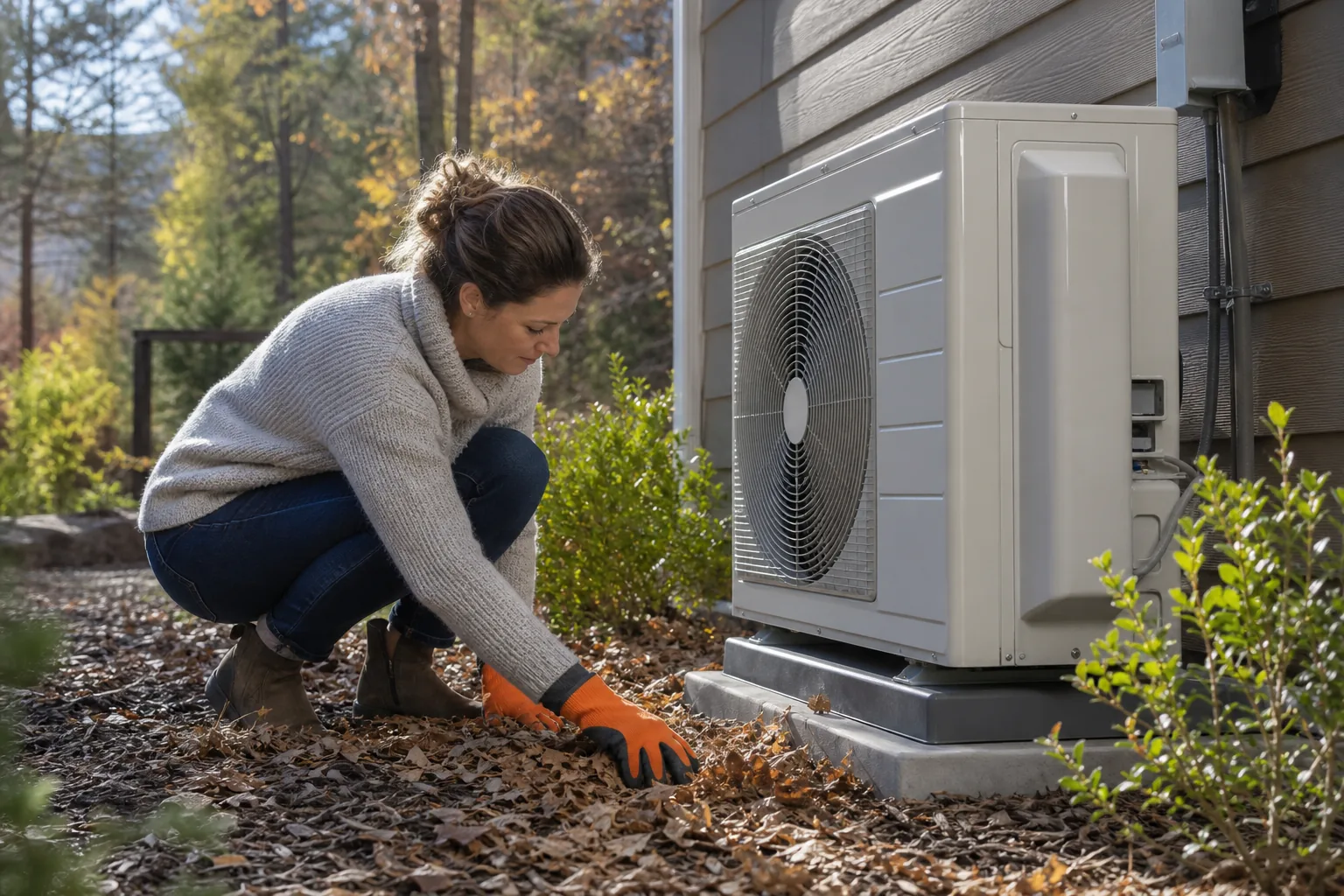
Look for leaves, pine needles, weeds, or other loose debris around the unit. Remove items you can lift away by hand. Keep the air path open, but use the clearance in your equipment manual rather than guessing at a distance. Don’t lean tools against the coil or bend its thin fins.
Seasonal debris can collect fast. After fall leaf drop in Auburn or Colfax, check around the cabinet; in Grass Valley and Penn Valley, look for pine needles after windy days. Before summer heat settles over Rocklin, Roseville, and Lincoln, make sure nearby growth hasn’t crowded the unit.
Don’t spray the coil with a pressure washer or use a chemical cleaner unless the manufacturer says to. If the coil looks packed with dirt, or if the unit is damaged, stop and ask a qualified technician. Home Worx Heating and Cooling serves local homeowners who need help with HVAC repair in Placer County .
By now:The equipment is off, loose debris is gone, and the coil and cabinet are still untouched. Contact Home Worx Heating and Cooling for local service.
Step 2: Check and Replace the Air Filter
A clean, correctly fitted filter helps air move through your heat pump. Check it as often as the equipment maker recommends. Dust, pets, smoke, and long run times can mean you need to inspect it sooner than the calendar suggests.
First, switch the system off using the normal thermostat control. Find the filter in the spot shown in your equipment instructions. It may sit in a return grille or near the indoor air handler. If you can’t find it, don’t pry open a panel to look.
Slide the filter out carefully. If it’s a disposable filter, check its size and type before buying a replacement. A filter that looks similar may not fit or may not be approved for your system. Put the new filter in with the airflow arrow pointing the way shown in the manual.
If your system has a washable filter, clean it only as the manufacturer directs. Let it dry fully before putting it back. A damp filter can create problems, and a filter that’s installed backward may limit airflow.
Look for a filter light or reminder on the thermostat, but don’t rely on it alone. A quick visual check can catch dust sooner, especially after a smoky spell or home project. If the filter gets dirty again soon after a change, note that for a technician.
ENERGY STAR recommends regular upkeep and preseason checks for heating and cooling equipment. Heat pumps provide both heating and cooling, so good airflow helps in every season; see air-source heat pump information .
For more on how upkeep relates to equipment wear, see our guide to heat pump lifespan and maintenance . If airflow stays weak after a clean, correctly sized filter is in place, leave the next check to a technician.
Step 3: Check Indoor Vents, Thermostat, and Condensate Drain
Next, check the parts you can see indoors. Blocked vents can limit airflow, while a thermostat set to the wrong mode can make a working heat pump seem faulty.
Walk through the rooms served by the system. Move rugs, furniture, or boxes away from supply vents and return grilles. Keep indoor-unit inlets and outlets clear on a ductless mini-split. Don’t close vents to try to force more air into other rooms unless your system instructions specifically allow it.
Check the thermostat’s mode and set point. For a seasonal test, select Heat or Cool as needed instead of leaving the system in Auto. A heat pump moves heat in either direction, providing heating in winter and cooling in summer. Seasonal checks can help homeowners in Auburn, Colfax, and Rocklin prepare for foothill weather.
Some thermostats show a delay after a setting change. Give the system time to respond rather than switching modes back and forth. Write down any warning message. If you’re not sure what it means, check the thermostat manual. Homeowners in Roseville and Grass Valley can also note any comfort changes.
Look only at visible parts of the condensate drain area, if your manual identifies them. In cooling mode, moisture may drain from the indoor coil. Water pooling near the air handler, an overflowing pan, a musty smell, or a ceiling stain needs attention. Don’t open electrical covers or pour a cleaner into the drain unless the manufacturer’s instructions say to. In Penn Valley and Lincoln, too, keep an eye out for these signs.
We recommend noting the room, mode, and symptom when comfort changes. Our heat pump service guidance explains what to record before arranging a visit. Persistent weak airflow, water near electrical parts, or repeated thermostat alerts are reasons to stop troubleshooting and contact a qualified HVAC technician. Contact Home Worx Heating and Cooling for local service.
Step 4: Run a Seasonal Heating and Cooling Check
Once the outdoor area and indoor airflow look clear, check how the system responds in each season. This step in your heat pump maintenance checklist is a simple observation, not a repair test.
Before the cooling season, set the thermostat to Cool and choose a comfortable setting below the current room temperature. Give the system time to start. Notice whether the indoor unit runs and whether air reaches the main rooms. Don’t judge performance by one vent alone.
Before colder weather, set the thermostat to Heat and choose a comfortable setting above the room temperature. Heat pumps may run differently from a furnace, so avoid expecting the same burst of very hot air. Note whether the system starts and whether the home begins to feel more comfortable.
Keep the setting steady during your check. ENERGY STAR advises choosing Heat or Cool rather than Auto on heat pumps, which can switch modes during a spell of unusual weather. Use the fan setting recommended for your equipment, and follow the thermostat manual if its controls differ.
In winter, a heat pump may briefly change its sound or release visible vapor during a defrost cycle. Some frost can occur. Don’t chip ice from the coil or fan. If solid ice stays in place, the fan hits ice, the system shows a fault, or heat drops away, turn the equipment off if it’s safe and arrange service.
Record what you notice during both checks. Include the date, outdoor conditions, thermostat mode, and any unusual noise or change in airflow. In Colfax, a cold spell may reveal a heating issue that didn’t show up in mild weather. In Rocklin or Lincoln, a hot day can make a cooling problem easier to spot. A clear note gives a technician a useful starting point.
Step 5: Record Findings and Schedule Professional Maintenance
A short maintenance record can help you spot changes over time. Write down the filter size and replacement date. Add any thermostat message, water near the indoor unit, persistent ice, or new sound. Keep service invoices and equipment details in the same place.
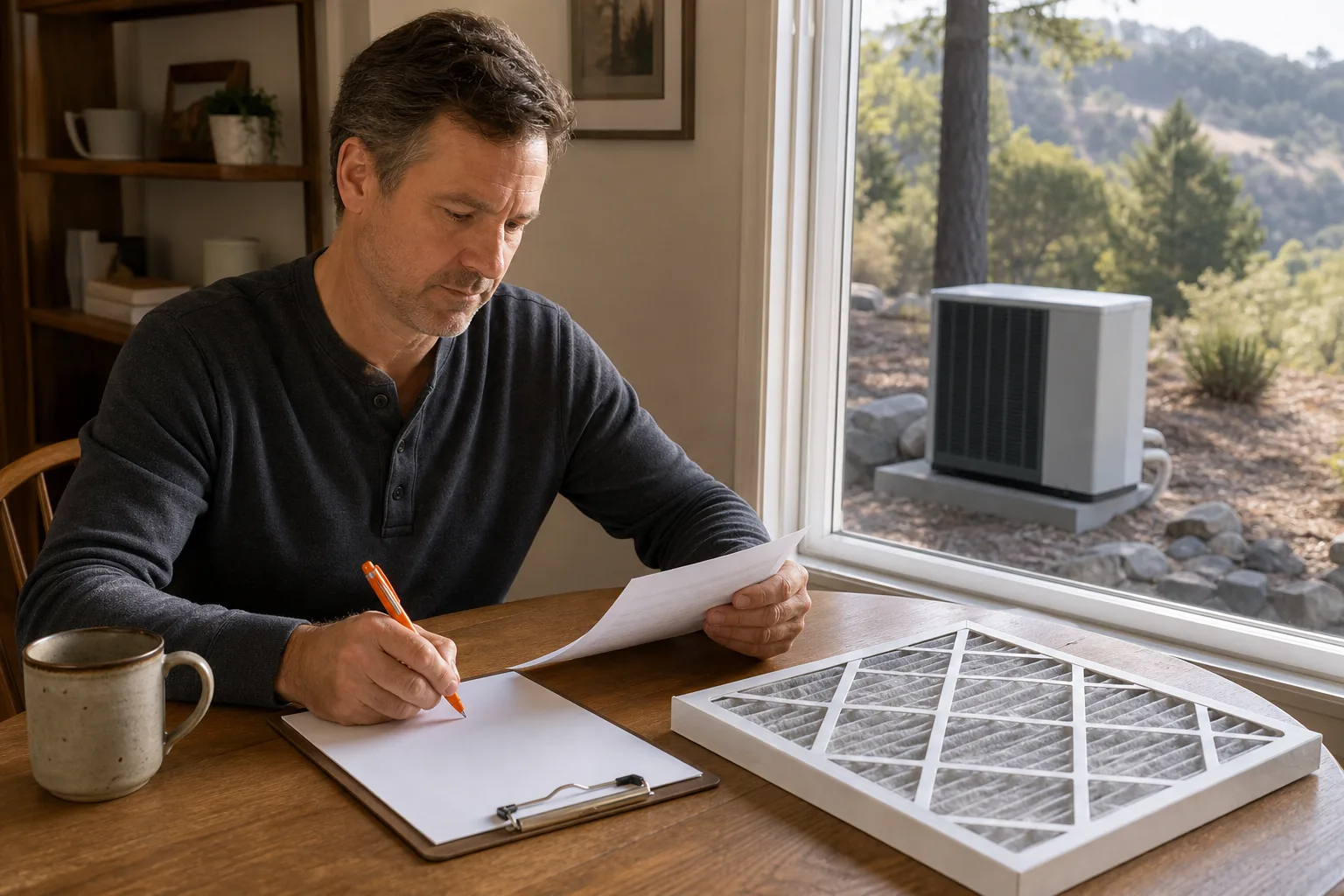
Use the notes to tell the technician what changed and when. “The back bedroom has weak airflow in Cool mode” is more useful than “the system seems off.” Mention whether the problem began after a filter change, a smoky week, or a shift to colder weather.
Homeowners can handle visual checks and filter care when the equipment instructions allow it. Refrigerant pressure, electrical parts, and internal coil cleaning belong with a qualified HVAC professional. Don’t open a sealed refrigerant circuit or try to diagnose a capacitor or compressor yourself.
Plan on at least one professional tune-up each year as a baseline, following the equipment manufacturer’s instructions. Home Worx Heating and Cooling’s Home Worx Heat Pump Maintenance Service provides a seasonal professional tune-up for local systems. Ask what the visit includes and request that the technician document findings and any work that needs follow-up.
Home Worx Heating and Cooling is family-owned and serves Auburn, Colfax, Rocklin, Roseville, Grass Valley, Penn Valley, and Lincoln, along with nearby communities. If your notes show a repeat fault or a comfort issue that didn’t clear after basic checks, arrange local service rather than waiting for the next seasonal test.
For a clear handoff, have your equipment model information and service records ready if you can access them safely. If the unit is making a strong electrical buzz, smells like something is burning, or has water near electrical parts, stop using it and seek prompt professional help.
Heat Pump Maintenance Checklist FAQ
How often should I check my heat pump filter?
Check your heat pump filter as often as the manufacturer directs, and look sooner if it’s dusty. Pets, wildfire smoke, home repairs, and heavy use can load a filter faster. Replace a disposable filter with the approved size and type. If a new filter gets dirty quickly, note the timing and ask a technician whether the system needs another check.
How often does a heat pump need professional maintenance?
A heat pump should get professional maintenance at least once a year as a baseline, subject to the manufacturer’s instructions. A seasonal visit can help a technician assess system operation and find issues that a visual home check won’t reveal. Ask what the visit covers, and keep the report with your equipment records.
Can I clean my heat pump’s outdoor coil myself?
Only use a cleaning method that the equipment maker allows. Homeowners can remove loose debris around the unit after turning it off, but shouldn’t bend coil fins, open panels, or use a pressure washer. If dirt is stuck to the coil or the unit looks damaged, leave cleaning to a qualified HVAC technician.
Is ice on a heat pump always a problem?
No. Some frost may form during heating, and the system may run a defrost cycle. Don’t chip ice away. Persistent solid ice, a fan touching ice, a fault message, or lost heat can point to a problem that needs professional diagnosis. Record what you see and when it occurs.
Conclusion
Use the checklist for safe visual checks and filter care, then leave refrigerant and electrical work to a qualified technician. Keep a brief record of changes and schedule an annual professional tune-up. If your heat pump needs attention in the Sierra foothills, contact Home Worx Heating and Cooling to discuss local service.