
How Long Do Heat Pumps Last? Lifespan Guide
Most heat pumps last about 10 to 15 years, though careful upkeep can push some systems closer to 20 years. Ductless mini-splits can last longer in the right home, while ground source heat pump s typically last 20 to 25 years. In Auburn, Colfax, Rocklin, Roseville, Grass Valley, Penn Valley, and Lincoln, installation quality, dust, heat, cold snaps, and year-round use all shape the final number.
Here’s how to judge your system’s likely lifespan, spot trouble early, and decide when repair makes more sense than replacement.
Table of Contents
How Long Different Types of Heat Pumps Typically Last
When people ask how long heat pumps last, they usually mean a standard air-source system. That type commonly runs for 10 to 15 years. A well-installed unit with steady maintenance may reach 15 to 20 years, but no lifespan range is a promise.
Heat pump lifespan depends on climate, usage, installation, and maintenance. A unit that runs hard every day in a poorly ventilated attic faces more stress than one that runs short, steady cycles in a well-sealed home.
Heat pump type | Typical lifespan | What most affects it | Best fit |
Air-source | 15 to 20 years | Outdoor exposure, airflow, filters, service | Most whole-home retrofits |
General heat pump | Varies by system | Manufacturer quality, installation quality, proper maintenance, climate, usage patterns | — |
Ductless mini-split | 10 to 30 years | Installation, cleaning, operating hours | Additions or homes without ducts |
Ground source heat pump | 20 to 25 years | Brine system stability, maintenance, installation quality, location | Properties suited to loop installation |
Hot water heat pump | 10 to 15 years | Water quality, descaling, hygiene, maintenance | — |
These figures describe equipment categories, not a guarantee for your unit. Trane reports a wide 10 to 30 year range for ductless mini-splits . That upper end can look surprising, but operating hours, indoor dust, filter care, and the quality of the original install help explain the spread.
A ground source heat pump may last 20 to 25 years. Its service life depends on brine system stability, maintenance, installation quality, and location. For homes in Auburn, Colfax, Rocklin, Roseville, Grass Valley, Penn Valley, or Lincoln, a ductless system may be the better choice if the layout makes this installation impractical.
For local installation planning, our guide to heat pump installation cost options explains why home size, ductwork, equipment rating, and access can change the project scope. Contact Home Worx Heating and Cooling for local service.
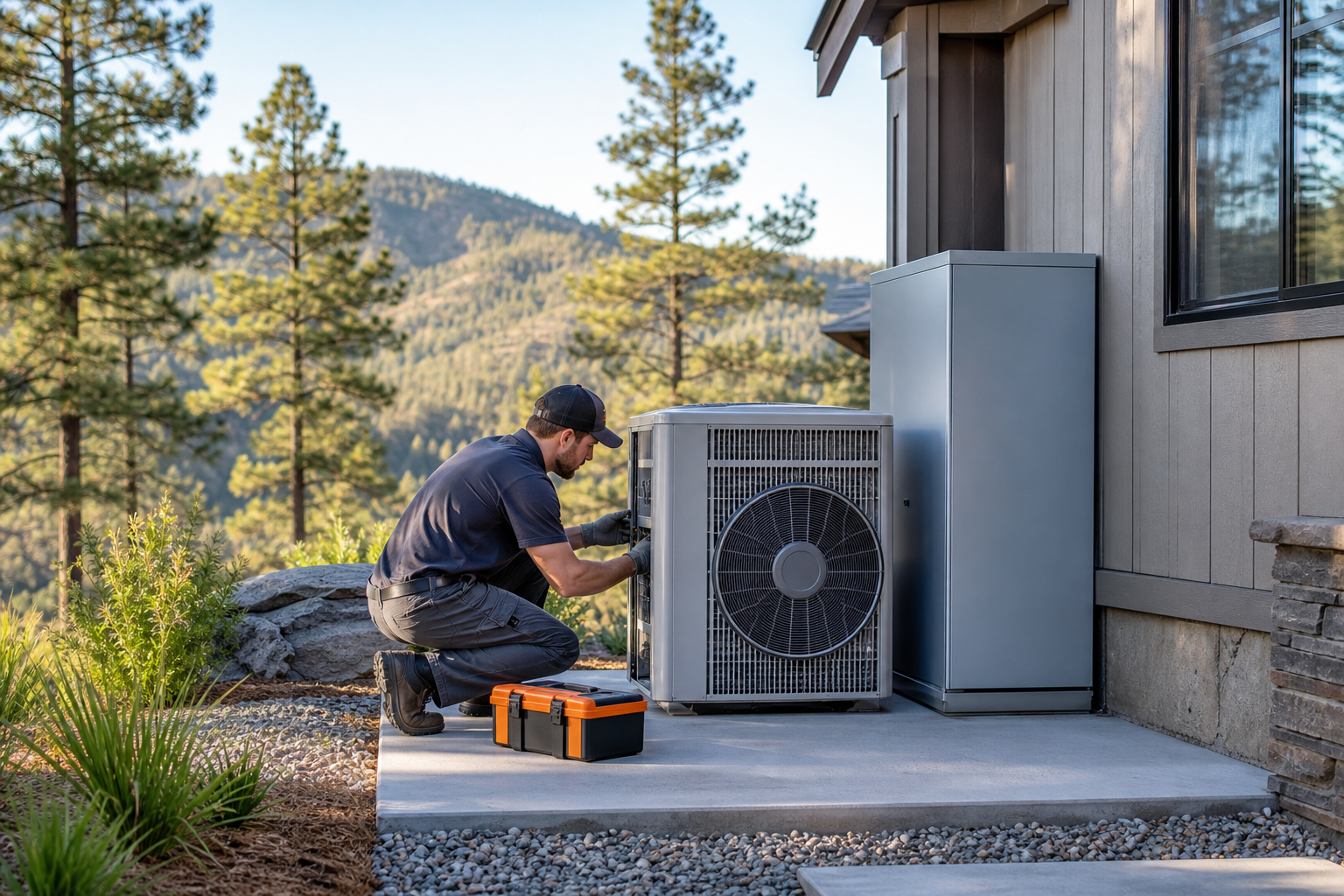
The Main Factors That Affect Heat Pump Lifespan
The answer to how long heat pumps last starts before the first day of use. A good unit can have a short life if it is badly sized or poorly installed. A mid-range unit can run well for years when airflow stays right and small faults get fixed early.
Installation and sizing
An oversized heat pump may start and stop too often. That pattern, called short cycling , adds wear and can leave rooms unevenly heated. An undersized unit may run for long stretches without reaching the set temperature.
Installation also sets the refrigerant charge, electrical connections, drain path, duct seals, and airflow. Each detail affects the compressor and blower. Home Worx Heating and Cooling checks the home and system needs before recommending a repair or new installation in Placer and Nevada County.
Maintenance and airflow
Dirty filters make the blower work harder. Blocked outdoor coils make it harder for the system to release heat. Both problems can raise run time and put extra load on the compressor.
Most homes need filter checks every one to three months. Pets, dust, wildfire smoke, and heavy use can shorten that schedule. Use the filter size and MERV rating listed by the equipment maker. A filter that is too restrictive can hurt airflow even when it looks like an upgrade.
Climate and operating hours
Heat pumps work in both heating and cooling mode, so they often run across the whole year. Long heat waves in Roseville or Lincoln can increase cooling hours. Cold winter mornings in Grass Valley or Penn Valley can increase heating demand.
Quality matters too. The research sources identify manufacturer quality, installation quality, maintenance, climate, and usage patterns in every major lifespan estimate. That is why a service plan is more useful when it includes inspection of the full system, not only a quick filter check.
Key Takeaway:The best way to protect a heat pump is to keep airflow clear, size the system correctly, and fix unusual behavior before it becomes a breakdown.
How Northern California Weather and Usage Affect Longevity
For many homes, Northern California weather helps heat pumps last because winters are milder than in colder regions. But the Sierra foothills still bring sharp changes. Summer heat can push outdoor components hard, while winter frost can trigger more defrost cycles at higher elevations.
A heat pump in Auburn may face long cooling cycles during a hot spell. A home in Colfax may see more dust, pine needles, and smoke particles around the outdoor unit. Grass Valley properties can have colder nights than lower-elevation neighborhoods, so the system may work harder before sunrise.
Keep the outdoor unit clear on every side. Leaves and needles can block the coil. Tall plants can limit air movement. Never pile mulch, firewood, or stored items against the cabinet.
Smoke season needs extra attention. Check the filter more often when the air outside is poor. If the filter looks gray or airflow feels weak, replace it rather than waiting for the normal calendar date. A professional can check the indoor coil if smoke and dust have built up inside.
Thermostat habits matter as well. Large temperature setbacks can force a long recovery run. A smaller adjustment usually puts less strain on the system. Let the heat pump run in a steady pattern instead of changing the setting every few hours.
Coastal salt air creates a different problem, but foothill homes have their own exposure risks. Dust, pollen, oak leaves, and wildfire ash all reduce airflow when they collect on coils. We inspect those local conditions when Home Worx Heating and Cooling services homes in Rocklin, Roseville, and nearby communities.
Small business owners and property managers should also track run time and comfort complaints. A system that runs all day in a shop or office may age faster than the same model in a lightly used home. A log of filter changes, service visits, and repeated faults gives a technician useful clues.
When to Repair a Heat Pump or Replace It
Age alone does not answer whether you should repair a heat pump. A 12-year-old system with one worn contactor may be worth fixing. A younger system with poor sizing, repeated refrigerant leaks, or a failing compressor needs a closer review.
Start with the symptom and the repair scope. Repair is usually the sensible first move when the system has one clear fault, the rest of the equipment is in good shape, and the repair cost is reasonable for its age.
Signs a repair may be enough
The unit has one isolated fault, such as a failed capacitor or control.
The system still heats and cools evenly after the fault is fixed.
Energy use has stayed fairly stable.
The indoor coil, outdoor coil, ductwork, and compressor remain in good condition.
The unit is still within useful warranty coverage.
Signs replacement deserves a quote
Repairs keep coming back within a short period.
The compressor or a major coil has failed.
Rooms stay too hot or too cold after basic airflow issues are fixed.
Energy bills rise without a matching change in weather or use.
The system is past 10 years and repair costs approach half the price of a new system.
Trane’s lifespan guidance notes that repairs often become more costly after a system passes the 10-year mark. That does not mean every older unit needs replacement. It means you should compare the next repair with expected future repairs, comfort, efficiency, and warranty coverage.
Ask for a written diagnosis. It should state what failed, what caused the failure, whether other parts show wear, and what the repair does not address. If replacement is suggested, ask whether the existing ductwork and electrical service can support the new system.
Home Worx Heating and Cooling can assess the equipment and explain both paths. We would rather see a sound unit repaired than push a homeowner into a new system without a clear reason.
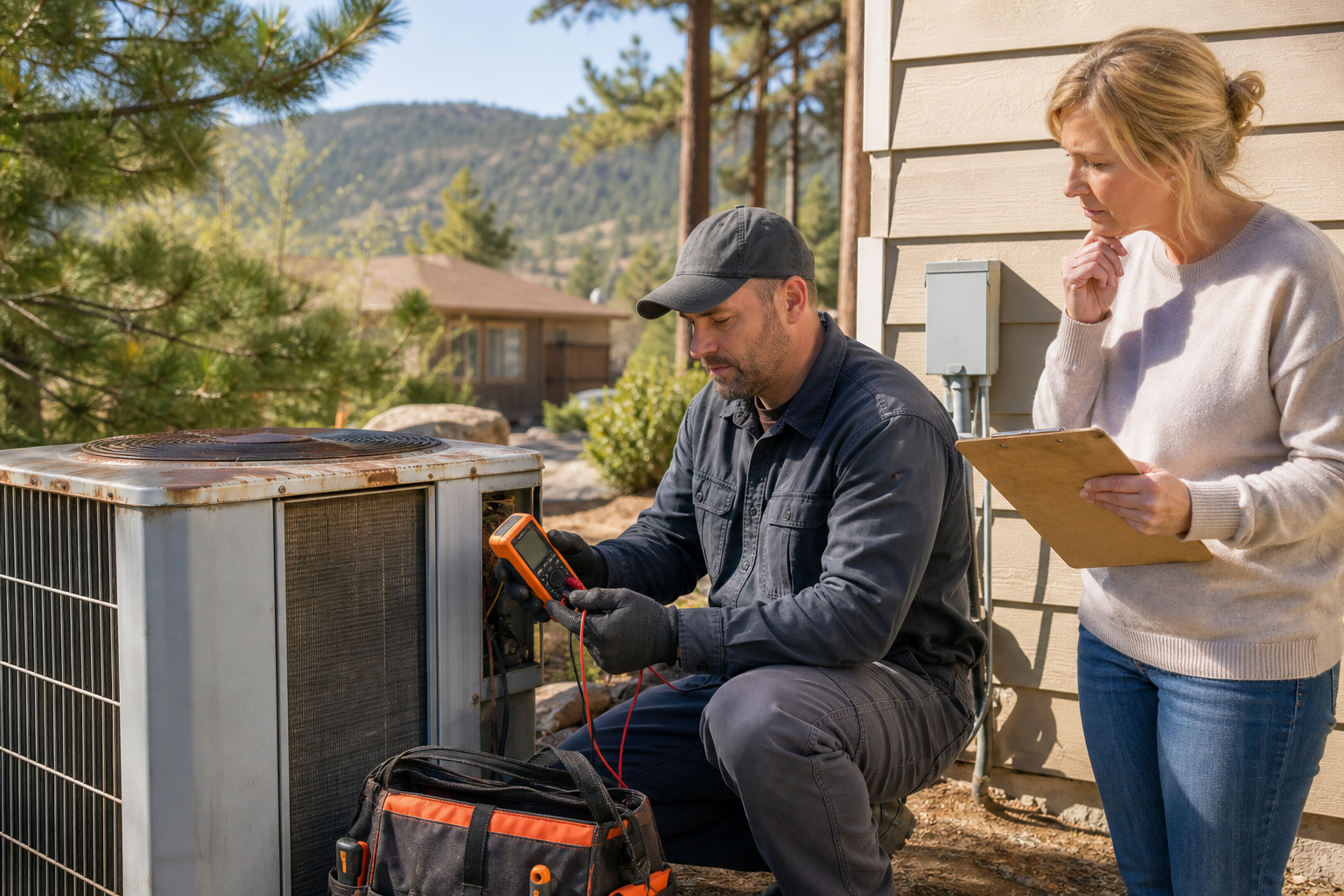
How to Extend the Life of Your Heat Pump
If you want your heat pump to last longer, build a simple care routine. Most of the work is easy to remember. The parts that need gauges, electrical testing, or refrigerant work belong with a licensed HVAC technician.
Every one to three months
Check the filter and replace it when it is dirty. Homes with pets, construction dust, or wildfire smoke may need monthly changes. Hold the filter toward a light. If dust blocks most of the surface, do not wait.
Look at the outdoor cabinet too. Remove leaves from the area after turning the system off. Keep roughly two feet of open space around the unit, and do not bend the thin coil fins with a pressure washer.
Before heating and cooling seasons
Check that supply vents are open. Make sure furniture is not blocking return grilles. Listen for new rattles, grinding, clicking, or a fan that sounds out of balance.
Ice on the outdoor coil can happen during a normal defrost cycle, but ice that stays in place signals a problem. Weak airflow, short cycling , odd odors, and poor temperature control also deserve prompt attention.
At least once each year
Schedule professional service before the season when your system will work hardest. A full visit may include airflow checks, coil cleaning, electrical inspection, refrigerant testing, thermostat checks, and a review of system controls.
Air-source heat pump maintenance costs documented by one research source range from $75 to $200 for average maintenance. Local pricing varies with access, equipment condition, and the work needed. Preventive service still costs less than ignoring a small fault until it damages a major part.
Keep service records with the equipment model and installation date. This helps when you need a warranty claim, a repair estimate, or a permit review. If you replace the system, ask about California permit requirements and current PG&E or state rebate rules before work begins. Our guide to California HVAC rebates and energy programs explains why eligibility should be checked before ordering equipment.
Pro Tip:Put the next filter change and service visit on your calendar now. A reminder is easier to follow than a repair emergency in the middle of a heat wave.
For a plain-language explanation of the blower, coil, compressor, filter, and reversing valve, our guide to the main parts of an HVAC system can help you follow a technician’s diagnosis.
Frequently Asked Questions About Heat Pump Lifespan
How long do heat pumps last in California?
Most heat pumps in California last about 10 to 20 years, depending on installation, maintenance, climate, and use. Mild weather can reduce stress, but hot summers, dust, smoke, and long run times still wear equipment. A well-maintained air-source system often reaches the upper part of its expected range.
Can a heat pump last 20 years?
Yes, a heat pump can last 20 years when it is correctly sized, well installed, and serviced on schedule. Some ductless mini-splits have reported ranges reaching 30 years, while many standard systems need replacement sooner. Age is a planning signal, not proof that the equipment has failed.
How often should a heat pump be serviced?
A heat pump should receive professional service at least once a year, with some systems benefiting from spring and fall visits. Because it heats and cools, the equipment may run through every season. Filter checks should happen more often, usually every one to three months.
Is it worth repairing a 10-year-old heat pump?
Repairing a 10-year-old heat pump can be worthwhile when the fault is small and the rest of the system performs well. Replacement deserves more thought when the compressor or coil has failed, repairs keep repeating, or the repair approaches half the cost of a new system.
What shortens a heat pump’s life?
Restricted airflow, poor sizing, weak installation work, skipped maintenance, extreme run time, and blocked outdoor coils can shorten a heat pump’s life. Smoke and dust can add to the load in Northern California. Fixing a small fault early is often easier than recovering from a major compressor failure.
Conclusion
Plan on roughly 10 to 15 years for a standard heat pump, with 15 to 20 years possible when the system gets proper care. Check the filter, keep the outdoor unit clear, and schedule an assessment when performance changes. Homeowners in Auburn, Colfax, Rocklin, Roseville, Grass Valley, Penn Valley, and Lincoln can contact Home Worx Heating and Cooling for local repair, maintenance, or replacement advice.