
Heat Pump Not Heating? 7 Safe Checks to Try
A heat pump that blows cold air isn't always badly broken. It may be stuck in a short delay mode, set to the wrong mode, or dealing with one loose thermostat wire. Start with the safe checks below before you pay for a major repair. If the issue remains, Home Worx Heating and Cooling can help homeowners across Placer and Nevada counties.
Table of Contents
Step 1: Check the Thermostat and Clear Any Delay Mode
When your heat pump isn't heating, start at the thermostat. This check takes only a few minutes and rules out several common causes. In Auburn and other Sierra foothill communities, a cold winter morning can make a normal startup delay feel especially noticeable.
Set the system mode toHeat. Don't leave it on Cool, Auto, or Fan only. Then raise the set point by at least three degrees above the current room temperature. A heat pump may run a little longer than a gas furnace, so give it five minutes before judging the air at the vent. This applies whether you are checking a system in Colfax or Rocklin.
Look at the thermostat screen. Does it say “Waiting for Equipment,” “Delay,” or something similar? That message means the thermostat is holding the signal for a short time. Honeywell describes this delay as a feature that pauses a heat or cooling call before the equipment starts.
Don't keep changing the set point while the timer runs. Each change may start the delay again. Leave the thermostat in Heat and wait for the message to clear. If your thermostat uses batteries, replace them when the display looks dim or behaves oddly. Also check whether a programmed schedule is moving the set point back down. Homeowners in Roseville should also check that the schedule has not switched to a lower overnight temperature.
Check the fan setting next.Autois usually the right choice. On causes the indoor blower to run even when the heat pump is between cycles. That can push room-temperature air through the vents and make a working system feel cold. This can be easy to mistake for a heating failure in Grass Valley.
There is one more setting to know. Emergency heat is a backup mode, not a normal fix. It shuts down the outdoor heat pump and uses the backup heat source instead. Our explanation of emergency heat on a thermostat explains when that setting makes sense. In Penn Valley, use this setting only when the heat pump cannot run safely.
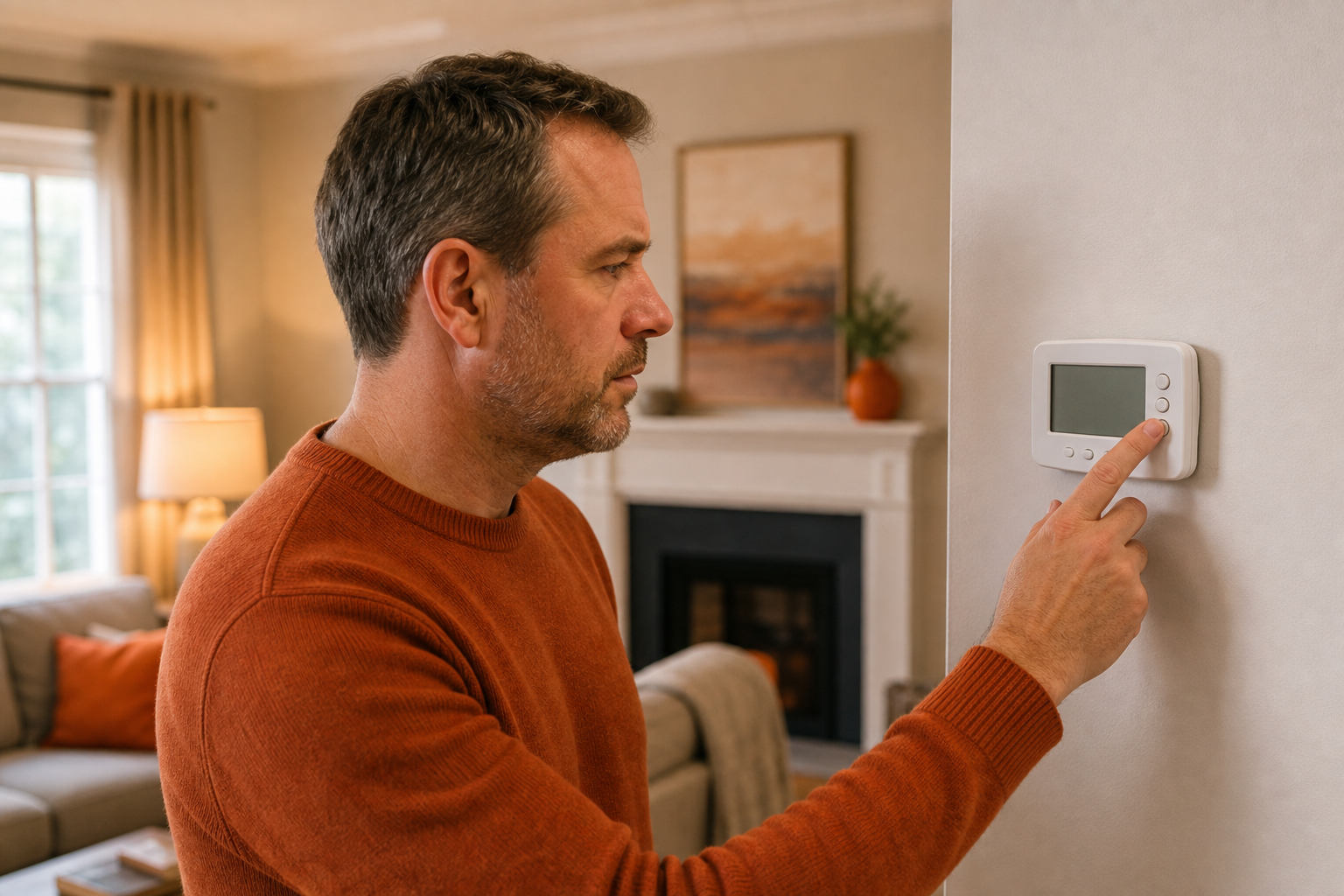
One warning: don't switch to Emergency Heat just because the air feels cool for a few minutes. Use it only when the outdoor unit is damaged, fully iced over, or unable to run safely. It can cost much more to operate than normal heat pump mode. If you are in Lincoln and the unit remains unable to heat after the delay clears, arrange a professional inspection.
Key Takeaway:Set the thermostat to Heat, clear the delay, and wait before changing more settings.
By now, you should know whether the thermostat is sending a normal heat request. If it is, move on to the air moving through the house.
For help troubleshooting a heat pump not heating in Placer County or Nevada County, contact Home Worx Heating and Cooling for local HVAC repair services in Placer County .
Step 2: Inspect Airflow, Filters, Vents, and Outdoor Obstructions
Restricted airflow can make a heat pump seem like it isn't heating. The system may run, yet too little warm air reaches the rooms.
Start with the filter. Turn the thermostat to Off before pulling it out. Hold the filter near a light. If dust covers most of the surface, replace it with the same size and type. Fit the arrow toward the air handler, not toward the room.
Homes near Colfax and Auburn often see dust, pine needles, and fine outdoor debris. If you have pets or a dusty home, inspect the filter each month during heavy use. A filter that looks clean can still be the wrong size or installed backward, so check the airflow arrow.
Walk through the house and open every supply vent. Move rugs, furniture, and storage bins away from the grilles. Check the return grille too. A blocked return starves the blower of air and can cause uneven heat.
Now inspect the outdoor unit. Keep leaves, weeds, pine needles, and stored items away from its sides. Don't cover the unit while it runs. The outdoor coil needs open air to collect heat in winter.
Some frost during a cold or damp spell can be normal. A heat pump may enter defrost mode for a short time. During defrost, the outdoor fan may stop and steam may rise from the unit. That alone doesn't mean the system has failed.
Heavy ice is different. If ice stays on the coil after the system has had time to defrost, turn the thermostat off and arrange service. Never chip ice from the coil. A screwdriver or shovel can bend the fins or damage a refrigerant line.
Check the indoor vents again after replacing the filter. Give the system 15 minutes. Warm air should reach the main rooms, though the supply air may not feel as hot as furnace air. If airflow is weak in every room, the problem may involve the blower, ductwork, or a safety control.
Home Worx Heating and Cooling works on ducted systems and ductless mini-splits. That matters in homes with additions, converted garages, or rooms that never match the rest of the house. A filter change can help, but it won't correct a duct leak or a failed blower motor.
Pro Tip:Take a photo of the dirty filter before replacing it. It gives a technician a useful clue about dust load and service timing.
By now, you should have clear vents, a clean filter, and an outdoor unit free from loose debris. If the system still blows cold air, check its power next.
Step 3: Check Power and Look for Simple Wiring Symptoms
A heat pump that won't heat may have lost power to the outdoor unit. Check the easy power points first, but stop before opening an electrical panel.
Look at the home's electrical panel. Find the breaker marked for the heat pump or HVAC system. If it sits between On and Off, push it fully to Off. Then move it once to On. Don't reset it again and again.
Check for a nearby service switch. Many indoor air handlers have a switch that looks like a light switch. It may be beside the unit, in a utility room, or near the attic access. Make sure it is On.
If the breaker trips right away, leave it off. Repeated trips can point to a short, a locked compressor, or another fault. The outdoor disconnect may also have a problem. Homeowners should not remove covers or touch fuses inside that box.
Thermostat wires can cause a similar symptom. A loose orange wire may stop the reversing valve from receiving its heat signal. A missing yellow wire can keep the outdoor contactor from pulling in, so the compressor never starts. These faults can happen after thermostat work or a loose connection.
You can look at the thermostat face and note any recent changes. Don't pull the thermostat from the wall unless you know the system wiring and have switched off the proper power sources. Low-voltage wires can still short and damage a control board.
Never test live terminals with a household voltage tester or metal tool. A multimeter test for 24 volts belongs to a trained technician unless you know how to work safely around HVAC controls. The difference between low-voltage control wiring and high-voltage equipment power is easy to miss.
Here's a useful clue. If the indoor fan runs but the outdoor unit stays silent, the thermostat may be calling for heat while the outdoor circuit has lost power. If the outdoor unit clicks but does not start, the contactor, capacitor, or compressor may need testing.
Before you reset anything, listen. A hard buzz, repeated click, or sharp electrical smell is a stop sign. Switch the system off at the thermostat. If you smell burning plastic, turn off the HVAC breaker only if you can do so safely, then arrange urgent service.
Electrical work is not a good place to experiment. Home Worx Heating and Cooling can trace the control signal and inspect the outdoor circuit without guessing from the thermostat display.
By now, you should know whether the system has stable power and whether the outdoor unit responds. If it does run but never produces heat, the fault may sit in the refrigerant circuit or heat-control parts.
Step 4: Recognize Refrigerant, Reversing-Valve, and Defrost-Control Problems
When a heat pump runs but doesn't heat, refrigerant or control parts become more likely causes. You can spot warning signs, but most repairs here are not do-it-yourself work.
Low refrigerant may cause weak heat, long run times, or ice on the indoor coil and outdoor lines. You might hear a soft hiss near the copper lines. Don't try to add refrigerant from a store-bought kit. The charge must match the system, and a leak needs to be found before the system is filled again.
A reversing valve changes the direction of refrigerant flow. In winter, that change lets the outdoor coil collect heat and the indoor coil release it. If the valve sticks in cooling mode, the unit may blow cool air while the thermostat says Heat.
A repeated click near the outdoor unit can point to a valve or its control circuit. The sound alone does not prove the valve has failed. A technician may need to test the control voltage and check whether the valve moves when the system changes modes.
The defrost board is another possible fault. It controls the short defrost cycle and helps send the signal that changes the reversing valve. If the board fails, the system may stay in cooling mode or keep switching the valve on and off.
Technicians may check for a 24-volt signal between control points such as O and C. That test requires a meter and knowledge of the unit's wiring diagram. Don't copy a test from a video without first identifying your exact model and turning off power when instructed.
Refrigerant lines also deserve a visual check. Look for damaged insulation, oil marks, crushed copper, or ice that returns after the filter and airflow are fixed. These clues help a technician plan the visit, but they don't tell you the exact charge or leak location.
The basic heat pump cycle explains why one valve or control signal can affect both heating and cooling. The same outdoor unit works in both modes, but the refrigerant path changes.
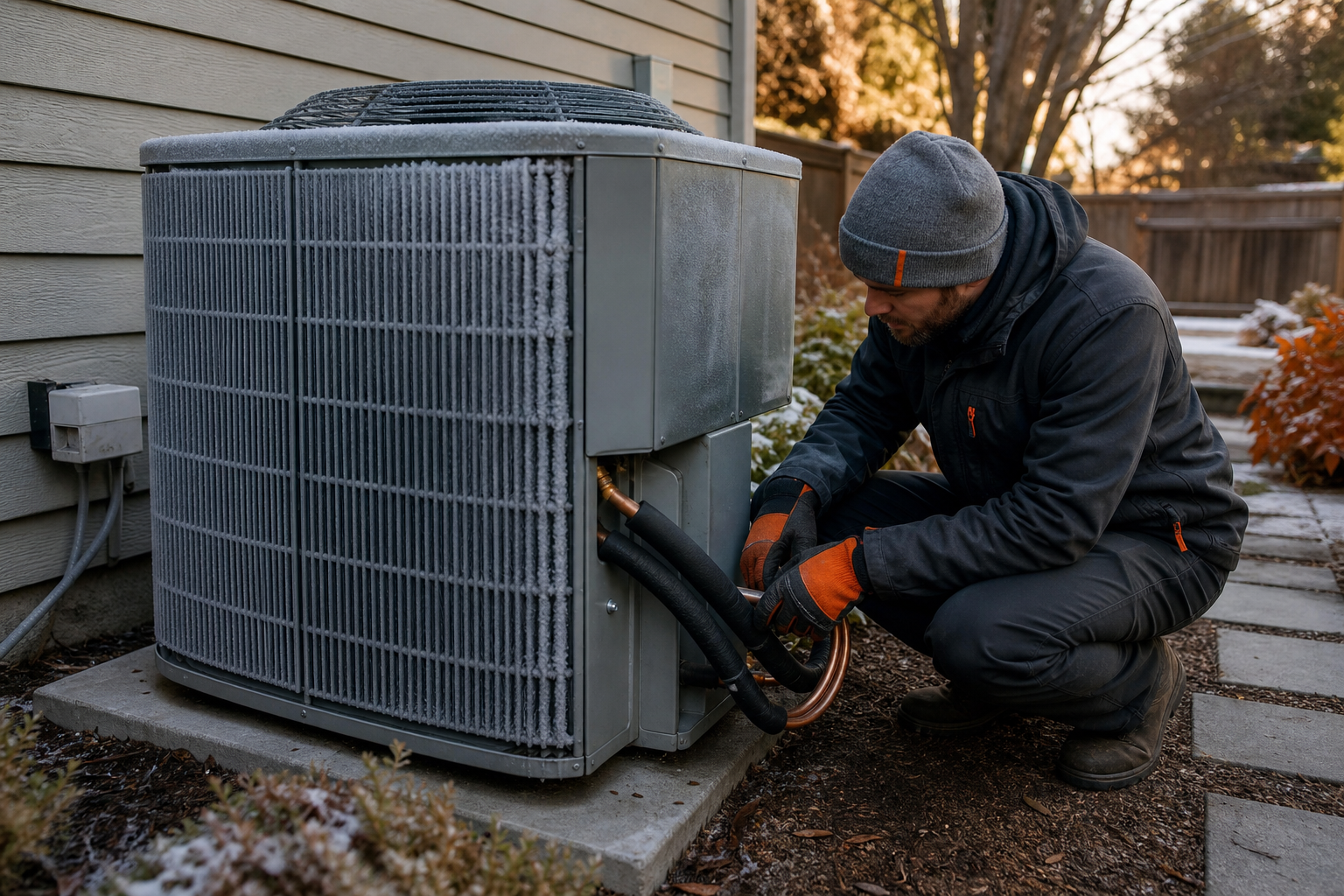
Don't remove the outdoor cabinet to look for the valve or board. The unit contains high-voltage parts, sharp metal edges, and components that may hold a charge after shutdown. A qualified technician can test the board, valve, compressor, and refrigerant circuit in the right order.
By now, you should have a short list of symptoms: weak heat, persistent ice, clicking, long run time, or a silent outdoor unit. Give that list to the technician. It can save time during diagnosis.
Step 5: Decide When to Shut the System Off and Call Home Worx Heating and Cooling
Some checks are safe. Others can damage the system or put you near live power. Shut the heat pump off and contact Home Worx Heating and Cooling when the fault goes beyond a setting, filter, or clear obstruction.
Stop using the system if you notice any of these signs:
The breaker trips again after one reset.
You smell burning insulation or see smoke.
The outdoor unit is covered in ice that won't clear.
The system makes grinding, hard buzzing, or repeated clicking sounds.
Water is leaking near the indoor air handler.
The air stays cold after the thermostat and filter checks.
The outdoor fan never starts during a heat call.
Use Emergency Heat only as a short-term backup when the outdoor system cannot run safely. Keep doors closed and protect pipes during a cold spell. If the home becomes unsafe for people or pets, move to a safe place while arranging help.
For homeowners in Rocklin, Roseville, and Lincoln, a quick service visit can prevent a small control fault from becoming a larger winter problem. In Grass Valley and Penn Valley, colder nights and longer run times can make an outdoor ice or airflow issue show up fast.
Home Worx Heating and Cooling serves Auburn, Colfax, Rocklin, Roseville, Grass Valley, Penn Valley, and Lincoln, along with nearby communities in Placer and Nevada counties. The team provides heat pump service for ducted and ductless systems, plus emergency repair, installations, and maintenance plans.
Repair prices vary because a loose wire is a very different job from a refrigerant leak or failed compressor. Home Worx Heating and Cooling lists financing options for qualifying work, including plans as low as $120 per month in its published service information. Ask for current terms before approving a repair or replacement.
Keep your notes ready when you request service. Include the thermostat message, the time the problem began, whether the outdoor fan runs, and any sound you heard. A photo of the filter or ice can help, too.
Decision rule:If the fix requires opening the outdoor unit, testing live wiring, handling refrigerant, or replacing a control part, leave it to an HVAC technician.
Seasonal maintenance can catch weak connections, dirty coils, worn parts, and airflow trouble before the first cold night. That matters in Sierra foothill homes, where one heat pump may handle both winter heat and hot, dry summer cooling.
FAQ
Why is my heat pump blowing cold air?
A heat pump may blow cold air because the thermostat is in Cool mode, stuck in a delay, or affected by a wiring fault. Check Heat mode first and wait for any “Waiting for Equipment” message to clear. If the outdoor unit runs but the air stays cold, a reversing valve, refrigerant, or defrost control problem may need service.
How long should I wait for a heat pump to start heating?
Wait about five minutes after setting the thermostat to Heat and raising the temperature. Many thermostats use a short delay to protect the equipment. If the system still produces no heat after the delay clears, check the filter and outdoor unit. A long delay that repeats after every setting change needs a technician's review.
Can a dirty filter stop a heat pump from heating?
Yes, a dirty filter can restrict airflow enough to reduce heat or trigger a safety shutdown. Turn the thermostat off, replace the filter with the correct size, and check that the arrow points toward the air handler. If weak airflow or cold air continues, the cause may involve the blower, ductwork, coil, or refrigerant circuit.
Should I turn on emergency heat?
Use Emergency Heat only when the outdoor heat pump cannot run safely, such as after damage or a severe ice problem. This mode shuts down the outdoor unit and uses backup heat, which can cost more to operate. If the system simply blows cool air during a short delay, fix the setting first instead.
Can I fix a heat pump wiring problem myself?
Only simple visual checks are safe for most homeowners. A loose orange or yellow thermostat wire can stop heating, but testing or moving wires can short the control board. Turn the system off and contact a technician if wiring appears loose, recently changed, burned, or unclear.
Conclusion
Start with the thermostat, filter, vents, and one safe breaker reset. If the system still won't heat, shut it down rather than opening the outdoor cabinet or handling refrigerant. Contact Home Worx Heating and Cooling for local service in Placer or Nevada County, including Auburn, Colfax, Rocklin, Roseville, Grass Valley, Penn Valley, and Lincoln.