
HEPA Filter vs. MERV Filter: Cost, Fit & Airflow
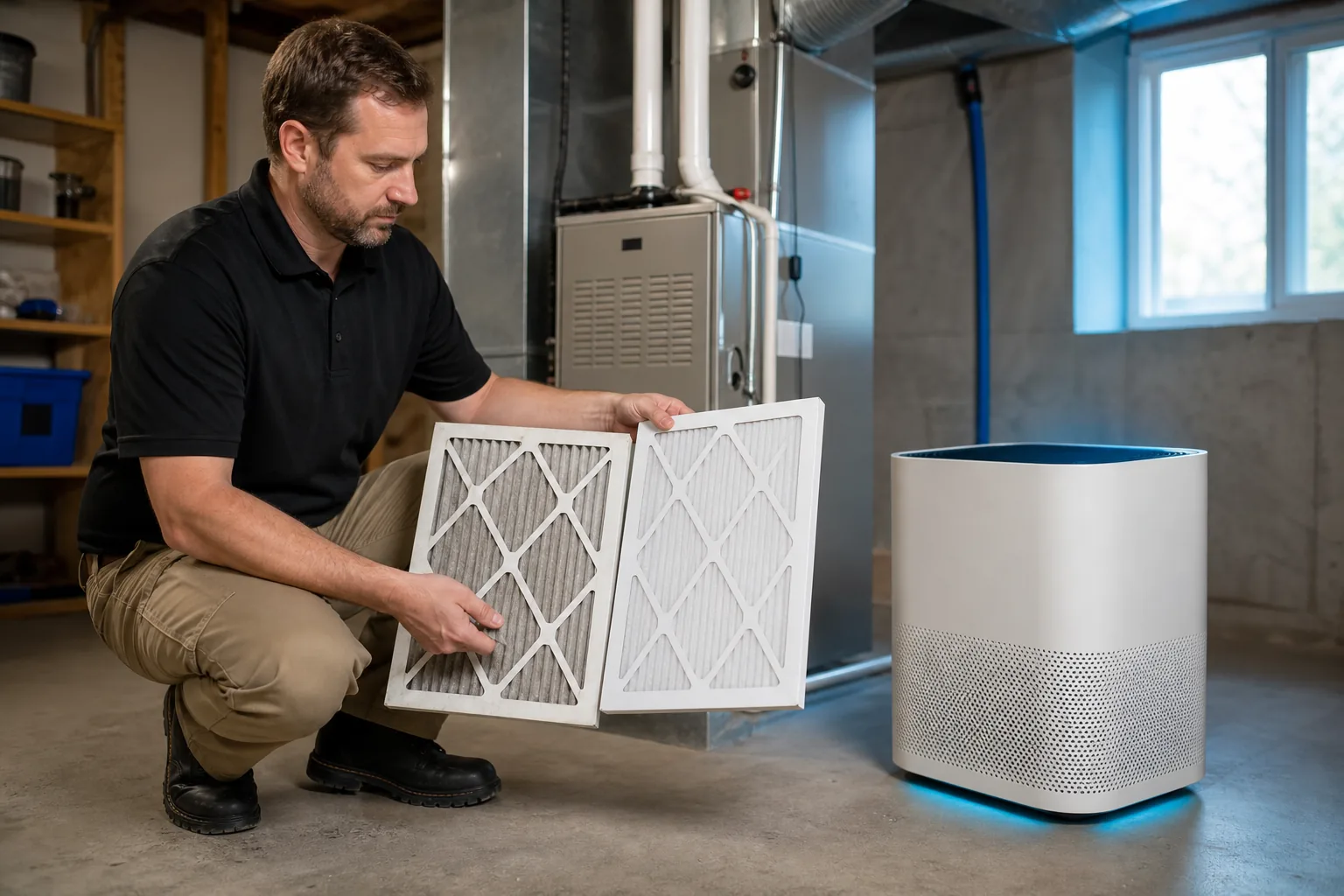
Choosing between a HEPA filter and a MERV filter comes down to more than particle capture. True HEPA filters catch at least 99.97% of particles at 0.3 microns, but many home HVAC systems can’t handle their airflow resistance. For most homes, a compatible MERV filter is the simpler whole-house choice.
We analyzed 76 comments from YouTube and Reddit about HEPA vs MERV filters and found that 39% mentioned excessive airflow restriction.
Table of Contents
Particle Capture: HEPA Filters Set a Higher Filtration Standard
Ratings and Filter Types: MERV Covers a Wider Range of HVAC Choices
Airflow and HVAC Compatibility: Check the System Before Upgrading
Cost and Upkeep: Compare Replacement Needs, Not Just Filter Price
Best Fit by Situation: When HEPA or MERV Is the Better Choice
Particle Capture: HEPA Filters Set a Higher Filtration Standard
HEPA means high-efficiency particulate air. A true HEPA filter is rated to capture at least 99.97% of particles that measure 0.3 microns. That size is used as a tough test point, not a lower limit. HEPA filters can also catch particles both larger and smaller than 0.3 microns.
MERV, or Minimum Efficiency Reporting Value , is a different rating system. It rates how well a filter captures particles across several size bands. MERV ratings cover particle-size bands, while HEPA filters aren’t rated on the MERV scale.
That difference matters when you compare the numbers. A HEPA filter’s 99.97% figure and a MERV rating don’t measure performance in the same way. A high MERV filter can capture many fine particles, but it isn’t automatically equal to a true HEPA filter.
Choice | What the rating tells you | Common use | Key fit question |
HEPA | True HEPA captures at least 99.97% of particles at 0.3 microns | Portable room purifiers and specialized filtration | Does the unit have a fan designed to move air through it? |
MERV 8 | Rated within the MERV system for tested particle sizes | Basic filtration in many homes | Does the filter match the slot and system instructions? |
Standard Fiberglass (MERV 1–4) | MERV 1–4 | Vacation homes; workshops; storage buildings; equipment protection only | Is it only for equipment protection? |
MERV 13 | Higher fine-particle capture than MERV 8 | Homes seeking more filtration, including for smoke | Has airflow been checked with this filter in place? |
MERV 13 can help capture smoke particles and some airborne viruses, but no filter rating by itself promises protection from illness. A filter only affects air that passes through it. It also needs a good seal so air doesn’t slip around the frame.
If you’re weighing MERV levels for your system, our MERV rating guide for Northern California homes explains the differences among common home filters. The key point here is that particle capture is only half the decision. The filter also has to fit the system.
Ratings and Filter Types: MERV Covers a Wider Range of HVAC Choices
The MERV scale gives homeowners more choices for a central HVAC filter. Lower ratings catch larger particles such as lint and dust. As the rating rises, the filter can capture more smaller particles, but airflow resistance often rises too.
For many homes, MERV 8 is a common starting point. A filter suited to homes with allergy sufferers or pet owners may be appropriate. MERV 13 can provide stronger fine-particle filtration when the system can support it. Higher-rated options can offer more filtration, but should suit the equipment.
HEPA isn’t simply the next MERV number. The standard MERV scale ends at 16, while HEPA is a separate classification. True HEPA filters are common in portable room purifiers, which use a dedicated fan to pull air through dense filter media.
Read labels with care. A lower-efficiency product isn’t the same assurance as a true HEPA rating. If the filter is meant to deliver true HEPA performance, check that its stated rating is at least 99.97% at 0.3 microns. For a central system, also check that the filter type is approved for that setup.
People often assume that the highest number is the safest choice. It isn’t. A high-rated filter that slows airflow too much can hurt system performance, so the best choice is the highest level the equipment can handle.
Our page on filter fit also explains why the filter’s design matters alongside its rating. Different filter types can have different resistance even when their ratings look similar.
Airflow and HVAC Compatibility: Check the System Before Upgrading
A filter sits in the air path, so its resistance affects how hard the blower must work. That resistance is often called pressure drop or static pressure. If the filter makes it too hard for the system to move air, you may notice weaker airflow at vents or less even comfort. A dirty filter can add more resistance as it collects debris.
MERV 8 filters have an airflow resistance of about 0.10 to 0.15 inches of water column. MERV 13 filters are often around 0.25 to 0.35 inches. HEPA filters can have airflow resistance of around 1.0 to 2.0 inches or more. These figures are not a pass-or-fail test for your home; filter size, design, blower, and ductwork all affect the result.
That’s why a standard furnace usually shouldn’t get a HEPA filter dropped into its existing slot. Many home systems aren’t built to push enough air through it. A portable HEPA purifier avoids that central-system issue because it has its own fan. A whole-house HEPA setup may need a separate blower or other system changes.
The type of blower matters, too. Older PSC motors and newer ECM or variable-speed motors don’t respond the same way to added resistance. Check the system’s blower compatibility before choosing a higher-efficiency filter. For a MERV 13 or HEPA change, don’t guess based on the motor label alone. A technician can check the filter cabinet and system airflow.
Home Worx Heating and Cooling provides air-quality solutions, and a qualified technician should verify blower compatibility before any HEPA or high-MERV upgrade. That’s the right order: check the equipment before choosing the filtration level.
In Auburn and Colfax, where homes can face hot, dry summers and cold winters, the HVAC system may run through long stretches of the year. We recommend checking airflow after any filter upgrade, not waiting until the next service visit. Our HEPA filter and HVAC fit advice covers the questions to raise before choosing a whole-home setup.
Filter ratings alone can’t determine whether a particular system has enough airflow capacity; the blower and duct design matter, too.
Cost and Upkeep: Compare Replacement Needs, Not Just Filter Price
A filter’s purchase price is only one part of its cost. You also need to account for replacement frequency and the work needed to keep the system moving air. A filter that costs less per unit may still be a poor fit if it loads quickly or restricts airflow.
MERV 8 filters cost about $8 to $15 each. MERV 13 filters often cost more, from about $15. Standard Fiberglass (MERV 1-4) filters cost a few dollars and are used in vacation homes, workshops, and storage buildings for equipment protection only. HEPA costs vary by device and setup, so compare the full purifier or system cost with replacement filters before deciding.
Portable HEPA purifiers need filter changes based on the unit’s instructions and how much air they process. For central HVAC filters, follow the manufacturer’s schedule, then inspect more often when the system runs heavily or the filter looks loaded. During a smoky spell, the filter can collect particles faster than it does during ordinary use.
In Rocklin or Roseville, a home with pets may need more frequent checks than a lightly used home with no pets. The same check routine can help in Auburn and Lincoln, too. In Grass Valley and Penn Valley, hot dry summers and cold winters can affect how heavily a system runs, so inspect as conditions change. Don’t wait for a calendar date if you see a visibly dirty filter or feel a drop in airflow. But don’t replace a filter with a higher rating automatically, either. A clean, compatible filter is more useful than a denser filter that the system can’t handle.
For a portable purifier, CADR means Clean Air Delivery Rate. It describes how much cleaned air the unit delivers, so it helps you judge whether the purifier can serve the room size. A high-efficiency filter doesn’t tell the whole story if the fan moves too little air. CADR measures particle-cleaning output, not odor removal.
Many purifier setups use more than one filter stage. A pre-filter catches larger material such as lint before it reaches the main filter. Activated carbon is used for some gases and odors, while HEPA or MERV media targets particles. Each layer has a different job, so replacement needs can differ across the same device.
Best Fit by Situation: When HEPA or MERV Is the Better Choice
For whole-home filtration through existing ductwork, a MERV filter is usually the more practical fit. It works with the central HVAC system when the filter size and rating match the equipment. MERV 8 can suit a household seeking basic dust control; MERV 11 or 13 may make sense when finer particle capture is a priority and airflow checks out.
A portable true HEPA purifier is a better match when you want focused filtration in one room, such as a bedroom or home office. The purifier’s own fan moves room air through its filter. Check the unit’s CADR against the room rather than choosing by HEPA wording alone.
For serious respiratory concerns or a need for high-efficiency filtration in a specific space, HEPA may be the right tool. It’s used in settings such as clean rooms and surgical suites, where specialized equipment is designed around its higher resistance. That doesn’t make it the default choice for every home.
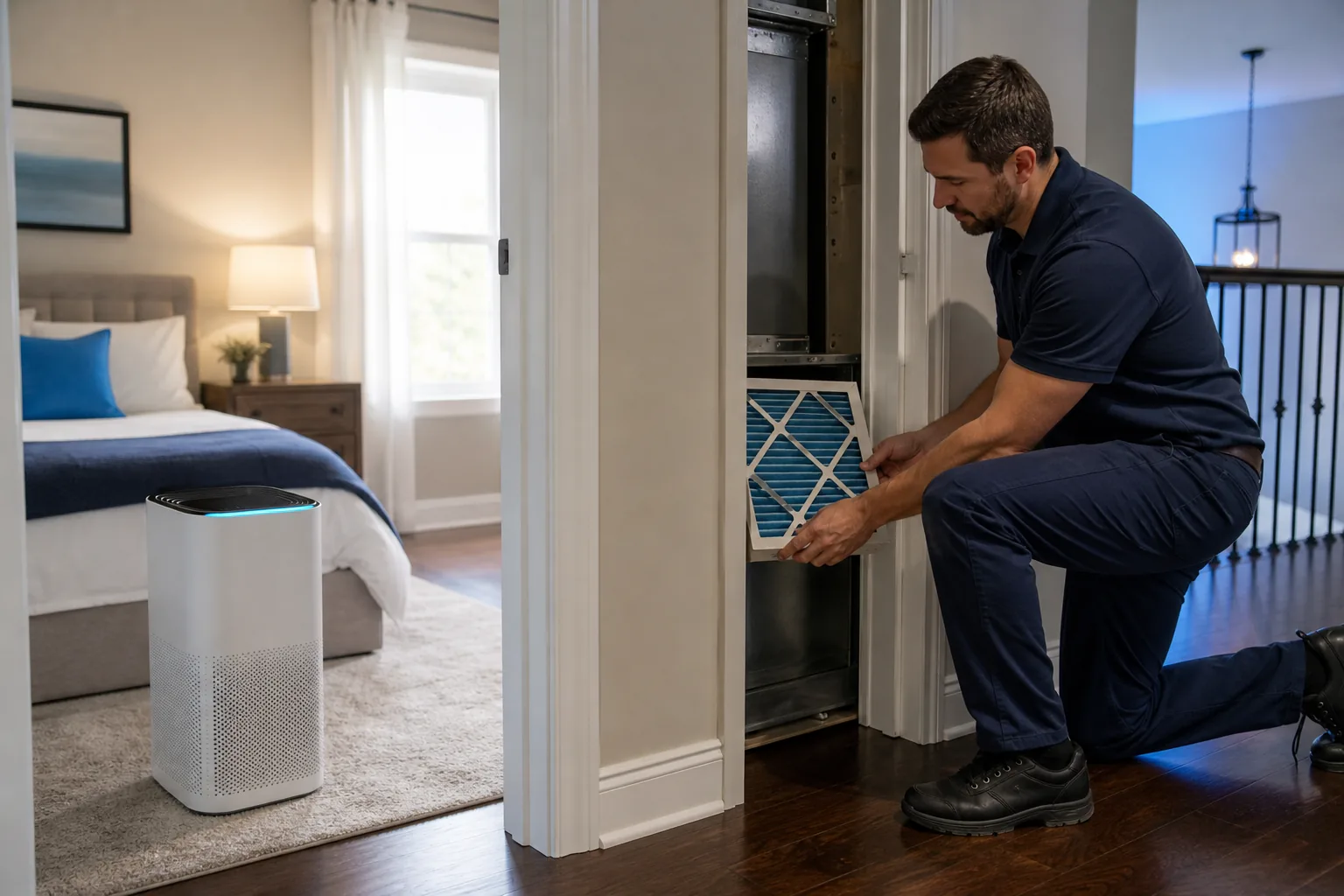
During wildfire smoke, a compatible MERV 13 filter can support whole-home filtration while the HVAC system runs. A portable HEPA purifier can add focused cleaning in the room where you spend the most time. These approaches can work together, but neither removes every pollutant or replaces safe ventilation choices.
In Grass Valley and Penn Valley, seasonal smoke can make fine-particle control a concern. That’s a reason to plan ahead, not to insert the densest filter available. Home Worx Heating and Cooling can assess the blower and filter setup before recommending a higher-efficiency option.
The verdict is simple: choose MERV for central HVAC filtration when the system supports the rating. Choose HEPA for a dedicated purifier or a system designed for HEPA resistance. If the label says HEPA-type, don’t assume it meets the true HEPA capture standard.
Frequently Asked Questions
Is HEPA better than MERV 13?
HEPA has a higher stated particle-capture standard, but isn’t automatically a better fit. True HEPA captures at least 99.97% of particles at 0.3 microns. MERV 13 can provide fine-particle filtration in central HVAC systems if the blower and filter slot handle added resistance.
Can I put a HEPA filter in my furnace?
Usually, don’t place a HEPA filter in a standard furnace slot without checking compatibility. HEPA media can create much higher airflow resistance than common residential filters. Portable purifiers have their own fan; a whole-house HEPA system may need a separate blower or other changes. Verify fit before installing.
Does MERV 13 filter viruses?
MERV 13 filters can capture some airborne virus-sized particles, along with smoke and other fine particles. That doesn’t mean a filter prevents infection; it only filters air that passes through it. The system needs enough airflow and a proper filter fit.
How often should I change a MERV or HEPA filter?
Follow the filter and equipment maker’s replacement instructions, and check more often when the system runs heavily or the air is smoky or dusty. A loaded filter can restrict airflow. Portable purifier filters need changes based on the unit’s schedule and use, so inspect them rather than relying on one rule for every model.
Conclusion
For most homes, start with a MERV filter that your HVAC system can safely support. Use true HEPA in a dedicated purifier or a system built for it. If you’re in Colfax or elsewhere in Placer or Nevada County, contact Home Worx Heating and Cooling to check your filter size and blower before upgrading.