
Furnace Filter Direction: Which Way Does It Go?
Most furnace filter arrows point toward the furnace or air handler. But some filters use the blower as the cue, while washable filters may have no arrow at all. Follow these steps to find the airflow path, install the filter safely, and avoid a loose or backward filter.
Table of Contents
Step 1: Find the Filter and Identify the Airflow Direction
Before you worry about furnace filter direction, find the return side of your HVAC system. That is where air leaves the room and travels back to the furnace or air handler.
Look for a large return grille on a wall, ceiling, or floor. The grille often sits in a hall or central part of the home. Open it and check for a filter behind the cover. Some systems place the filter in a slot beside the furnace instead.
Vertical furnaces often have a filter slot below or beside the cabinet. Horizontal units usually have a slot near the return duct. The filter belongs before the blower, not in a supply vent that pushes heated or cooled air into the room.
Turn the system off at the thermostat before you remove the old filter. Take a photo of the filter in place. That photo can show the old arrow direction and help you match the replacement.
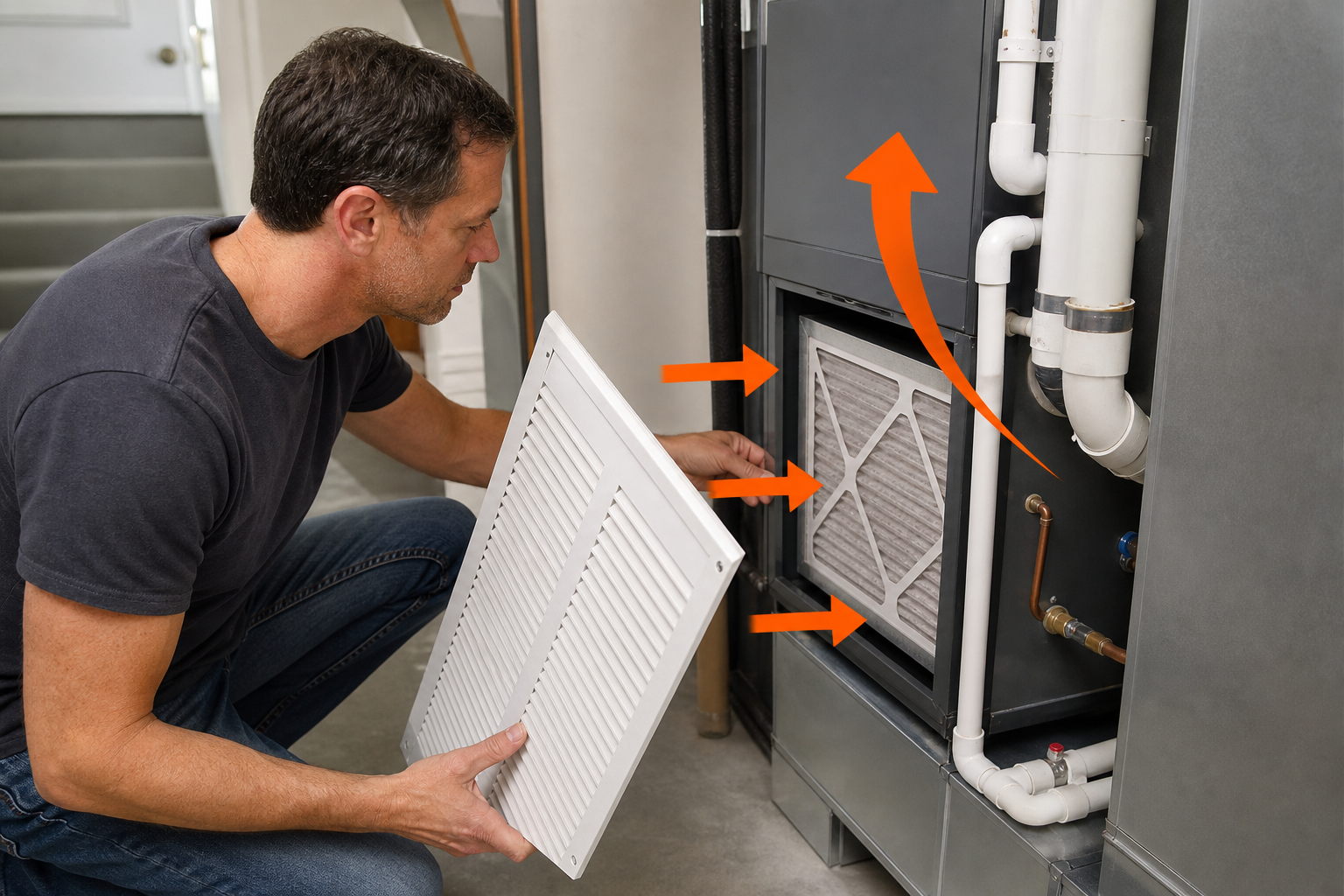
Next, trace the path with your eyes. Air moves from the room into the return grille. It passes through the filter. Then it reaches the blower and furnace. The filter arrow should follow that path.
If the old filter has no arrow, turn on the fan for a moment and hold a tissue near the slot. The tissue should pull toward the return opening. Turn the system off again before handling the filter.
We also suggest marking the cabinet with a small airflow arrow once you know the right direction. This helps during the next change, especially when the slot sits above your head or in a dark utility closet. You can also review the main equipment layout in Parts of an HVAC System Explained .
By now, you should know where the filter sits and which side leads toward the furnace.
Step 2: Point the Filter Arrow Toward the Furnace
For most disposable pleated filters, the furnace filter direction is simple: point the arrow toward the furnace, air handler, or blower motor.
Remove the old filter and read the arrow printed on its frame. Slide the new filter into the same slot with its arrow aimed toward the equipment. The arrow should point away from the room and into the return duct.
This rule stays the same in an upflow, downflow, or horizontal furnace. The physical direction changes with the equipment. The airflow path does not.
In an upflow furnace, the arrow usually points up.
In a downflow furnace, the arrow usually points down.
In a horizontal system, the arrow usually points across the cabinet toward the blower.
At a ceiling return, the arrow may point up and away from the room.
The reinforced or wire-mesh side normally faces the furnace. The open pleated side receives dirty return air first. Think of the arrow as the main instruction. Use the mesh side as a second check.
There is one detail that causes confusion. Not every manufacturer describes the arrow in exactly the same words. Some say it points toward the furnace or air handler. Others say it points toward the blower. In a standard return-side setup, those directions usually lead to the same place.
Still, read the instructions printed on your filter. If the frame gives a specific direction, follow that instruction. Never assume the arrow should face the room because the filter sits inside a return grille.
A backward filter can resist airflow because its support side faces the incoming pressure. The blower may work harder, airflow may drop, and dust can collect on the wrong side of the media. One mistake usually does not ruin a furnace, but repeated mistakes can add strain.
You can also review the basic system terms in Wikipedia's overview of heating, ventilation, and air conditioning .
After installation, close the grille or access panel fully. A loose panel can whistle and may let air leak around the filter.
Step 3: Install Washable, Metal Mesh, or Filterless-Arrow Filters Correctly
Filters without a printed arrow need a different visual check. For many washable or electrostatic filters, the metal mesh side helps show which way the filter belongs.
Place the mesh or reinforced side toward the furnace, blower, or air handler when that matches the filter's design. The more open side faces the return air. If the filter has a frame label, follow that label first.
Do not wash a disposable pleated filter. Its paper-like media is made for one use. Washing can damage the pleats and reduce its ability to trap particles. Only wash a filter that is specifically made for cleaning and reuse.
For a reusable filter, shut off the HVAC system before removal. Note its position. Rinse it according to the maker's instructions, then let it dry fully before putting it back. Moisture inside the return path can cause problems and lets dust stick to the filter.
Some filter frames have no arrow because the maker expects you to use the mesh side as the guide. Look at both faces under good light. One side may look more open, while the other has a tighter wire grid or support layer.
If both sides look the same, do not guess. Check the installation sheet or the markings on the frame. You can also ask an HVAC technician during a service visit. Home Worx Heating and Cooling can verify the filter position while checking a system in the Placer or Nevada County area.
Pro Tip:Once you confirm the direction, mark a clear airflow arrow beside the filter slot. Mark the cabinet, not the filter, so the reminder stays in place.
High-MERV filters need the same airflow direction as other filters. MERV means Minimum Efficiency Reporting Value, a scale used to describe how well a filter captures particles. A higher rating can also add airflow resistance, especially in a narrow one-inch slot.
The MERV rating describes how well a filter captures particles under a standard test. It does not tell you that every HVAC system can handle the highest rating.
Research supplied for this guide found that the listed residential recommendations centered on MERV 8 through MERV 13. Your equipment manual still takes priority. If you change filter type or rating and the system begins to whistle, short-cycle, or lose airflow, stop and have the setup checked.
Also check the frame for damage. A bent corner can leave a gap even when the arrow points the right way. Correct direction cannot fix a filter that does not sit flat. For local service in the Placer and Nevada County area, contact Home Worx Heating and Cooling.
Step 4: Check the Fit, Airflow, and Filter Replacement Schedule
Correct furnace filter direction is only half the job. The filter must also fit the slot with no large gaps around the frame.
Match the size printed on the old filter. A label such as 16 by 25 by 1 is a nominal size, so the actual filter can measure slightly less. That smaller size helps it slide into the housing. Do not force a thicker filter into a shallow slot.
With the filter in place, inspect each edge. The frame should sit flat. You should not see daylight around the sides. A gap lets air pass around the filter instead of through it, which defeats much of the filter's purpose.
Close the grille or cabinet panel, then restore power. Run the fan or heating system for a few minutes. Listen for new rattling, whistling, or a loud change in blower sound. Check that air still reaches the supply vents at a steady rate.
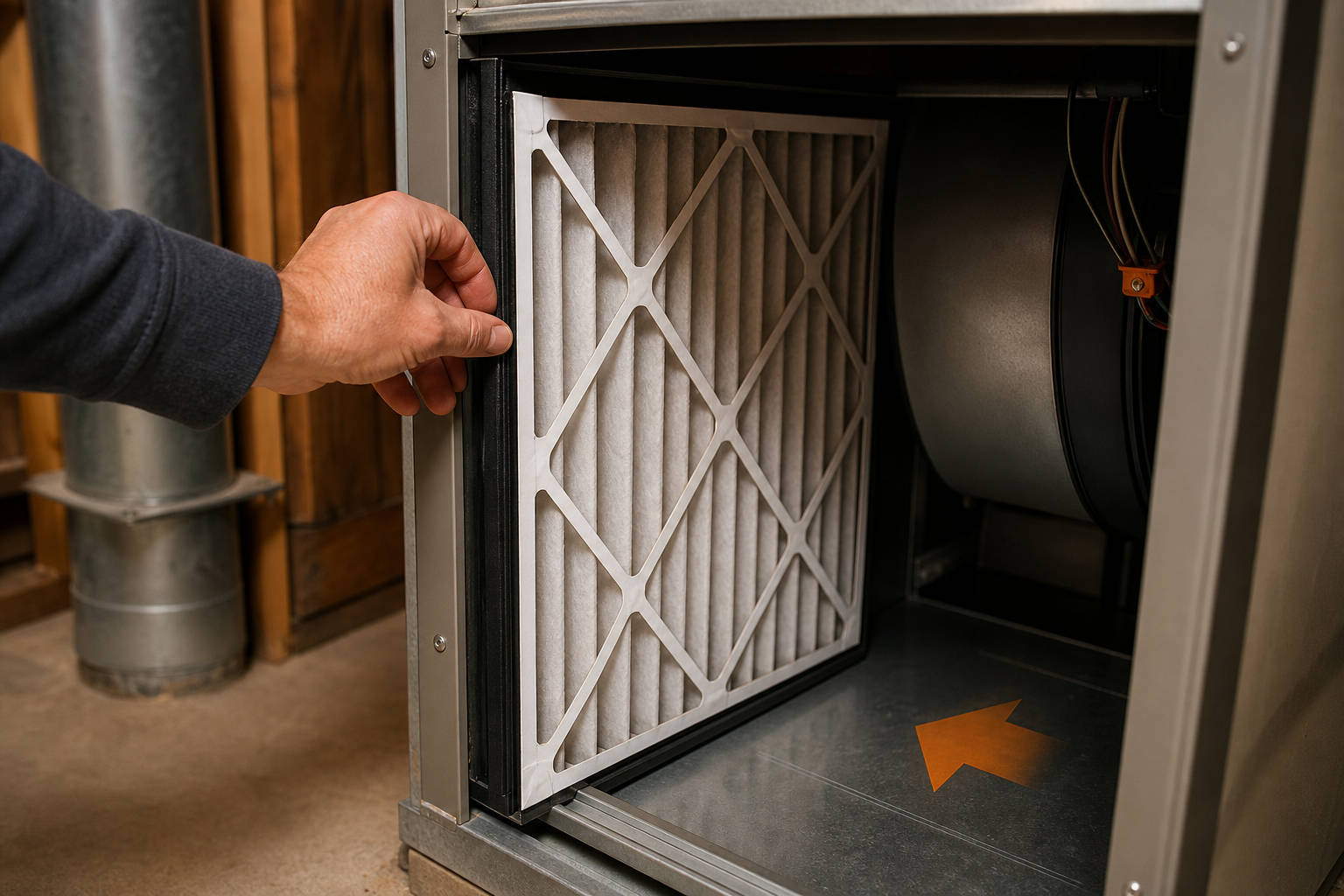
If the system sounds strained, turn it off and reseat the filter. The filter may be backward, too thick, bent, or loose. A new filter can also reveal an older airflow issue that was hidden by a badly clogged filter.
Write the installation date on the frame. Check the filter at least once a month at first. Replace it sooner if the media looks gray and packed, airflow drops, or your home has extra dust from pets, remodeling, or wildfire smoke.
Replacement timing depends on the filter and the home. A disposable pleated filter may need attention every 30 to 90 days. Smaller homes with one occupant may go longer, while homes with pets or heavy dust may need more frequent changes. Use the filter's instructions as your starting point.
Do not raise the MERV rating just because a higher number sounds better. Ask whether your blower and filter cabinet can handle it. A technician can measure airflow and check system pressure instead of making you guess.
Seasonal maintenance helps catch more than a dirty filter. Home Worx Heating and Cooling's winter furnace maintenance checklist includes the wider checks that help a system handle cold weather in the Sierra foothills.
Key Takeaway:A good installation has three parts: the arrow follows airflow, the frame fits snugly, and the filter gets checked before it becomes heavily loaded.
FAQ About Furnace Filter Direction
Which way should the arrow point on a furnace filter?
The arrow should point toward the furnace, air handler, or blower in most return-side systems. It shows the direction of airflow. Air leaves the room, enters the return duct, passes through the filter, and moves toward the equipment. If the arrow points back into the room, remove the filter and turn it around.
Does the arrow on an air filter point toward the furnace or away?
The arrow points toward the furnace or blower, not away from it. The filter sits on the return side, before the blower. At a ceiling grille, that may mean the arrow points upward. At a floor grille, it may point down. The location changes, but the airflow path decides the direction.
What if my furnace filter has no arrow?
If your filter has no arrow, use the frame markings or the reinforced mesh side as the clue. Many washable or electrostatic filters place the metal mesh toward the furnace or air handler. Check the maker's instructions before guessing. If both sides look alike, have a technician confirm the direction during service.
What happens if a furnace filter is installed backward?
A backward filter can restrict airflow and put extra load on the blower. It may also let more dust reach the equipment because the filter media is working against its intended support structure. One short mistake is usually not an emergency. Turn the filter around, then watch for weak airflow or unusual noise.
How often should I change my furnace filter?
Check the filter each month and replace it when it looks loaded or airflow drops. Many homes change a disposable filter every 30 to 90 days, but pets, dust, renovation work, and wildfire smoke can shorten that span. Follow the filter instructions and your equipment manual rather than relying on one fixed date.
Conclusion
Point a standard filter arrow toward the furnace or blower, then check that the frame fits without gaps. If the direction remains unclear, or the system develops weak airflow or new noise, let Home Worx Heating and Cooling inspect it. We help homeowners in Colfax, Auburn, and nearby Placer and Nevada County communities keep their HVAC systems working safely.