
How Does Central Air Conditioning Work?
Updated: Sep 24
Central air conditioning does one main job: it moves heat out of your home. The thermostat starts the cycle, refrigerant carries the heat, and the outdoor unit releases it. Then the blower sends cooler, drier air back through your rooms. Here’s how each part works, where energy gets lost, and when a repair needs a trained HVAC technician.
Table of Contents
The Central Air Conditioning Cycle: From Indoor Heat to Outdoor Air
To understand how central air conditioning works, picture two linked jobs. Inside, the system pulls heat from room air. Outside, it dumps that heat into the open air.
A typical split system has an indoor air handler and an outdoor condensing unit. Refrigerant lines connect the two. Ducts carry air through the home, while a thermostat tells the system when to run.
First, the thermostat senses that the room is warmer than the selected setting. It sends a signal to the control system. The blower starts moving warm return air toward the indoor coil.
That air passes over the evaporator coil . Cold refrigerant flows inside the coil, so heat moves from the air into the refrigerant. Moisture in the air can condense on the cold coil, too. This is why a working air conditioner can make a room feel less sticky.
The refrigerant leaves the evaporator as a low-pressure gas. It travels to the outdoor compressor. The compressor squeezes the gas, which raises its pressure and temperature. The hot refrigerant then moves through the outdoor condenser coil.
Outdoor air passes over that coil. The refrigerant gives up the heat it collected indoors and changes back toward a liquid. The system then lowers the refrigerant pressure through an expansion valve. That makes it cold again before it returns to the indoor coil.
This loop repeats until the thermostat detects that the room has reached its setpoint. The blower may stop at that point, or the system may continue a short fan cycle based on its controls.
The basic idea is well established. A control system helps operate equipment to maintain desired temperature setpoints. The thermostat is important, but it cannot cool the home by itself.
System type changes the layout. A split system keeps the indoor coil inside and the compressor outdoors. Some configurations put most parts in one outdoor cabinet. A ductless mini-split sends refrigerant to indoor units instead of using a whole-home duct network.
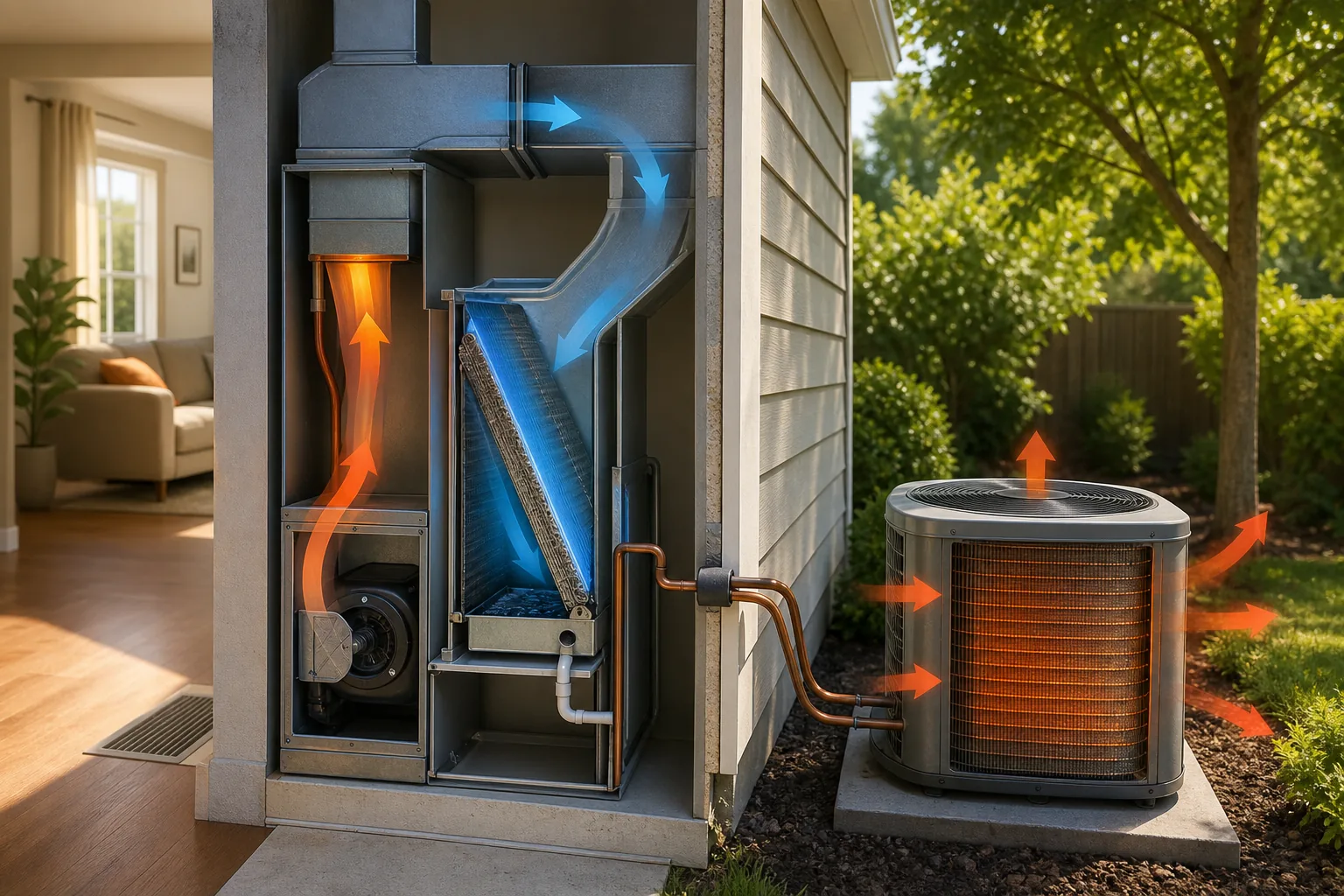
For homes in Auburn, Roseville, Colfax, and Grass Valley, this cycle often works hard during hot, dry summer afternoons. A system can still run for a long time if the ducts leak, the filter is blocked, or the outdoor coil cannot breathe.
Home Worx Heating and Cooling works with ducted whole-home systems in the local foothill climate. A check of the full cycle is more useful than swapping one part without finding the cause. Contact Home Worx Heating and Cooling for local service in Rocklin, Penn Valley, and Lincoln.
What Each Main Component Does
Knowing how central air conditioning works gets easier when you can match each task to a part. Each component has a job, a location, and a common way to fail.
Compressor and condenser coil
The compressor sits in the outdoor unit. It pressurizes refrigerant and keeps it moving through the sealed system. The condenser coil sits nearby and releases indoor heat outside.
Variable-speed compressor designs can improve efficiency when paired with the right system. Higher SEER2 ratings generally point to more efficient equipment, though the rating alone cannot fix poor duct design or bad installation. The outdoor unit also needs clear space around it. Leaves, weeds, and dirt can restrict airflow.
Compressor type and SEER2 efficiency affect equipment performance. A technician still needs to size the system for the home rather than pick a rating from a shelf.
Evaporator coil and expansion valve
The evaporator coil is inside the air handler or next to the furnace. It absorbs heat from return air. The expansion valve controls how much refrigerant enters the coil and reduces the refrigerant pressure before cooling begins again.
Dirt on the coil acts like a blanket. It blocks heat transfer and can raise energy use. A frozen coil may point to a dirty filter, low airflow, a dirty coil, or a refrigerant problem. Turning the system off lets ice thaw, but it does not fix the cause.
Blower and air handler
The blower moves air across the evaporator coil and into the supply ducts. It usually sits inside the indoor air-handler cabinet. A variable-speed motor can adjust airflow instead of running at one fixed speed.
High static pressure means the blower is pushing against too much resistance. A clogged filter, blocked register, undersized duct, or closed damper can create that resistance. The result may be weak airflow, noisy operation, or uneven rooms.
Key Takeaway:Cooling depends on the whole chain. A clean coil cannot make up for a weak blower, and a strong compressor cannot make up for leaking ducts.
Thermostat, filter, and condensate drain
The thermostat maintains the temperature you select. It starts and stops cooling through the control system. A programmable thermostat can reduce cooling costs when its schedule matches the household routine, but extreme settings can still make the system run for long periods.
The filter sits in the return duct or air handler. It catches airborne particles before they reach the blower and coil. A dirty filter reduces airflow. A very restrictive filter can also raise pressure drop, so the highest MERV rating is not always the right choice for the equipment.
Cooling pulls moisture from the air. That water collects in a drain pan and leaves through the condensate line. A blockage can cause water to spill near the indoor unit. An attic leak deserves quick attention because water can damage insulation, ceilings, and wood.
Homeowners can inspect the filter and keep supply vents open. Coil cleaning, refrigerant work, electrical testing, and drain repairs belong with a qualified HVAC professional.
For cooling guidance in Auburn, Colfax, Rocklin, Roseville, Grass Valley, Penn Valley, and Lincoln, contact Home Worx Heating and Cooling for local service.
How Air Moves Through Your Home
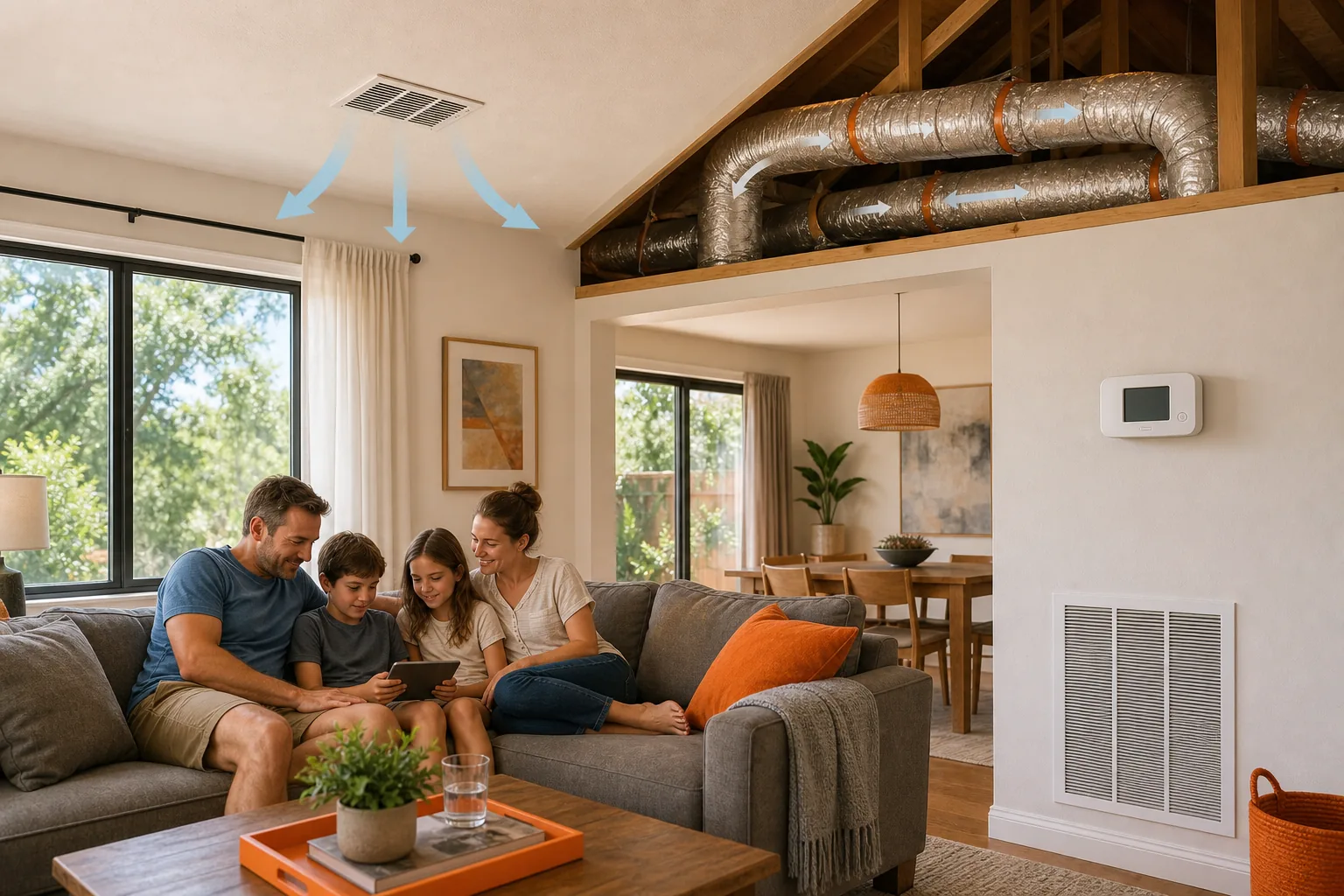
Central air conditioning works only when air can travel through the full duct path. The return side brings warm room air back to the indoor unit. The supply side sends cooled air to registers in living spaces.
Air first enters through return grilles. The filter catches particles before the air reaches the blower. Next, the blower pushes air across the cold evaporator coil. The cooled air then enters supply ducts and exits through registers.
After the air mixes with the room air, it returns to the grilles. This loop continues during the cooling call. Closing several registers does not make the system cool the open rooms better. It can raise pressure in the ducts instead.
Duct location matters. Ducts in a hot attic gain heat before the air reaches a room. Leaks can also send cooled air into the attic, crawlspace, or wall cavity. Sealing and insulating the duct system can prevent 20 to 30 percent of energy loss.
That is why a larger air conditioner is not always the answer to a warm room. A bigger unit may cool the thermostat area quickly while leaving other rooms uneven. It may also run in short bursts, which can reduce moisture removal.
A Roseville homeowner with one warm back bedroom may need a duct inspection rather than a new compressor. In Rocklin, a long attic duct run may need sealing and insulation. Home Worx Heating and Cooling can inspect airflow and duct condition before recommending a major change.
If you want to review the wider HVAC system first, our simple explanation of what HVAC means covers heating, ventilation, and air conditioning in plain language.
Keep return grilles clear. Move furniture away from supply registers. If one room stays warm after those checks, ask for airflow testing instead of guessing at the cause.
What Controls Efficiency, Comfort, and Indoor Moisture
How does central air conditioning work well in a Sierra foothill home? The answer depends on more than the equipment label. Airflow, coil condition, refrigerant charge, duct sealing, and controls all affect the result.
Equipment efficiency
SEER2 measures cooling efficiency across a defined test method. A higher rating can reduce energy use when the system is correctly sized and installed. Variable-speed equipment can also run at lower output for longer periods, which may improve comfort and moisture control.
But buying a high-rated unit will not solve every problem. A poorly matched indoor coil, restricted filter, or leaking duct can waste the gain. Installation quality matters as much as the number on the equipment tag.
Ducts and airflow
Duct sealing often gives a larger comfort gain than changing a thermostat setting. Air that escapes before reaching the room does no useful cooling. Insulation helps keep that air cool as it passes through hot spaces.
The outdoor condenser needs room to release heat. Keep plants, stored items, and debris away from the cabinet. If the coil is packed with dirt, the system may run longer while delivering less cooling.
Moisture and thermostat settings
The evaporator coil removes some moisture whenever warm air passes over its cold surface. A system that is too large for the home may reach the temperature quickly and stop before it removes enough moisture. Rooms can feel clammy even when the thermostat reads correctly.
Use a steady setting when possible. Large temperature setbacks can trigger long recovery cycles during a hot afternoon. A programmable thermostat works best when its schedule fits the household’s actual routine.
Pro Tip:Check the filter each month during heavy use. Replace it according to the equipment maker’s instructions, and ask a technician if a new filter makes airflow noticeably weaker.
For homeowners considering a different control style, a two-stage air conditioner explanation can help you compare longer low-output cycles with basic single-stage operation.
Home Worx Heating and Cooling can also review high-SEER equipment and available PG&E rebate information for eligible local projects. Rebate rules can change, so verify current terms before using one in a budget.
Common Problems and When to Call an HVAC Professional
Central air conditioning problems often begin with a small change in airflow or cooling time. The first step is to notice the pattern, not to replace a part at random.
Warm air or weak airflow
Check that the thermostat is set to cooling and that the filter is clean. Make sure supply registers are open. If the blower runs but the air feels warm, the issue may involve refrigerant, the outdoor unit, the compressor, or the control system.
Weak airflow can come from a blocked filter or duct problem. It can also point to a blower motor issue. If only one room is affected, inspect that room’s register and duct path. If the whole home is affected, stop guessing and arrange a system check.
Ice on the coil or refrigerant line
Ice usually means the evaporator is not absorbing heat as it should. Low airflow and low refrigerant are common causes. Turn the cooling off so the ice can thaw. Do not chip at the ice or keep running the system while it is frozen.
Refrigerant lines are sealed. A leak can reduce performance and may harm the environment. A trained technician needs to locate the leak, test the system, and handle refrigerant under the proper rules.
Water near the indoor unit
Water on the floor may come from a clogged drain, cracked pan, or frozen coil that has thawed. The risk is higher when the air handler sits in an attic. Shut the system down if water is spreading, then arrange an inspection.
Noise from the outdoor unit
Rattling can point to a loose panel or debris. Grinding, buzzing, or repeated clicking may involve the motor, capacitor, compressor, or electrical controls. Turn off the system if you smell burning, see smoke, or hear a harsh electrical sound.
Repair or replace?
The right choice depends on the system’s age, repair history, part availability, and expected efficiency after the repair. A compressor failure on an older system deserves a full replacement discussion. A clogged drain or worn capacitor may be a much smaller repair.
Annual maintenance helps catch dirty coils, weak electrical parts, drain restrictions, and refrigerant issues before peak summer demand. It does not prevent every failure, but it gives the technician a chance to find problems while the system still operates.
Home Worx Heating and Cooling provides repair, installation, maintenance, and indoor air-quality service for homes and small businesses in Colfax. The team also serves Grass Valley, Penn Valley, and Lincoln, along with the wider Placer and Nevada County area.
Use a professional when refrigerant, wiring, motors, compressors, or sealed components are involved. DIY work on those parts can damage the system and create a safety risk.
FAQ
How does central air conditioning work?
Central air conditioning removes heat from indoor air and sends that heat outdoors through a refrigerant cycle. The evaporator coil absorbs heat inside, while the compressor and condenser release it outside. A blower then pushes cooled air through ducts until the thermostat reaches the selected temperature.
What does the compressor do in central air?
The compressor pressurizes refrigerant and moves it through the system. It sits in the outdoor unit and sends hot, high-pressure refrigerant toward the condenser coil. A failing compressor can cause poor cooling, unusual noise, or a system that will not start.
Why is my AC running but not cooling?
An air conditioner can run without cooling because of restricted airflow, a dirty coil, low refrigerant, a failing compressor, or an outdoor unit problem. Start with the filter and open registers. If the issue continues, shut the system down if it freezes and arrange professional diagnosis.
How often should central air conditioning be serviced?
Central air conditioning should receive a professional check at least once a year, with spring being a sensible time for cooling equipment. Homeowners should inspect filters each month during heavy use. A technician can check coils, drains, airflow, electrical parts, and refrigerant performance.
Do ducts affect air conditioner efficiency?
Yes, ducts can affect efficiency more than many homeowners expect. Leaks send cooled air into unconditioned spaces, while poor insulation lets heat enter the duct run. Sealing and insulating ducts can improve room comfort and reduce wasted cooling, especially when ducts pass through a hot attic.
Conclusion
A central air conditioner works as one connected system. Keep the filter and outdoor area clear, watch for water or ice, and schedule a yearly tune-up before heavy summer use. If your home in Auburn, Colfax, Rocklin, Roseville, Grass Valley, Penn Valley, or Lincoln has uneven cooling, Home Worx Heating and Cooling can inspect the system and recommend the next sensible repair or upgrade.