
What Does HVAC Stand For? Simple Explanation
HVAC stands for heating, ventilation, and air conditioning . It describes the full system that keeps your home warm, cool, and supplied with clean air. In Auburn, Colfax, and nearby Sierra foothill towns, that system has to handle hot, dry summers and cold winter nights.
Here’s what each part does, which equipment may be in your home, and how the right terms can help you get better service.
Table of Contents
What Does HVAC Stand For?
HVAC means heating, ventilation, and air conditioning . The phrase covers the equipment that controls indoor temperature, airflow, and air quality. Air conditioning, or AC, is only one part of HVAC. It mainly removes heat and moisture from indoor air.
Heating keeps rooms warm when outdoor temperatures fall. A furnace may burn gas or use electricity to make heat. A heat pump moves heat indoors instead of making it in the same way. Some homes use boilers, which send hot water or steam to radiators or floor pipes.
Ventilation manages the air inside your home. It can bring in outdoor air and push stale air out. It also includes the return-air path that sends indoor air back through the system. Good airflow helps the system heat or cool each room without working harder than needed.
Air conditioning removes heat from indoor air and releases it outside. The system uses refrigerant to move that heat. In cooling mode, the indoor coil absorbs heat. The outdoor coil releases it.
The term HVAC is useful because these parts work as one system. A thermostat sends a call for heat or cooling. The air handler or furnace blower moves air through the ductwork. Filters catch dust before air returns to the equipment.
For a part-by-part look at the equipment found in many homes, to HVAC system parts . The exact setup depends on the home, its size, its ductwork, and the owner’s comfort goals.
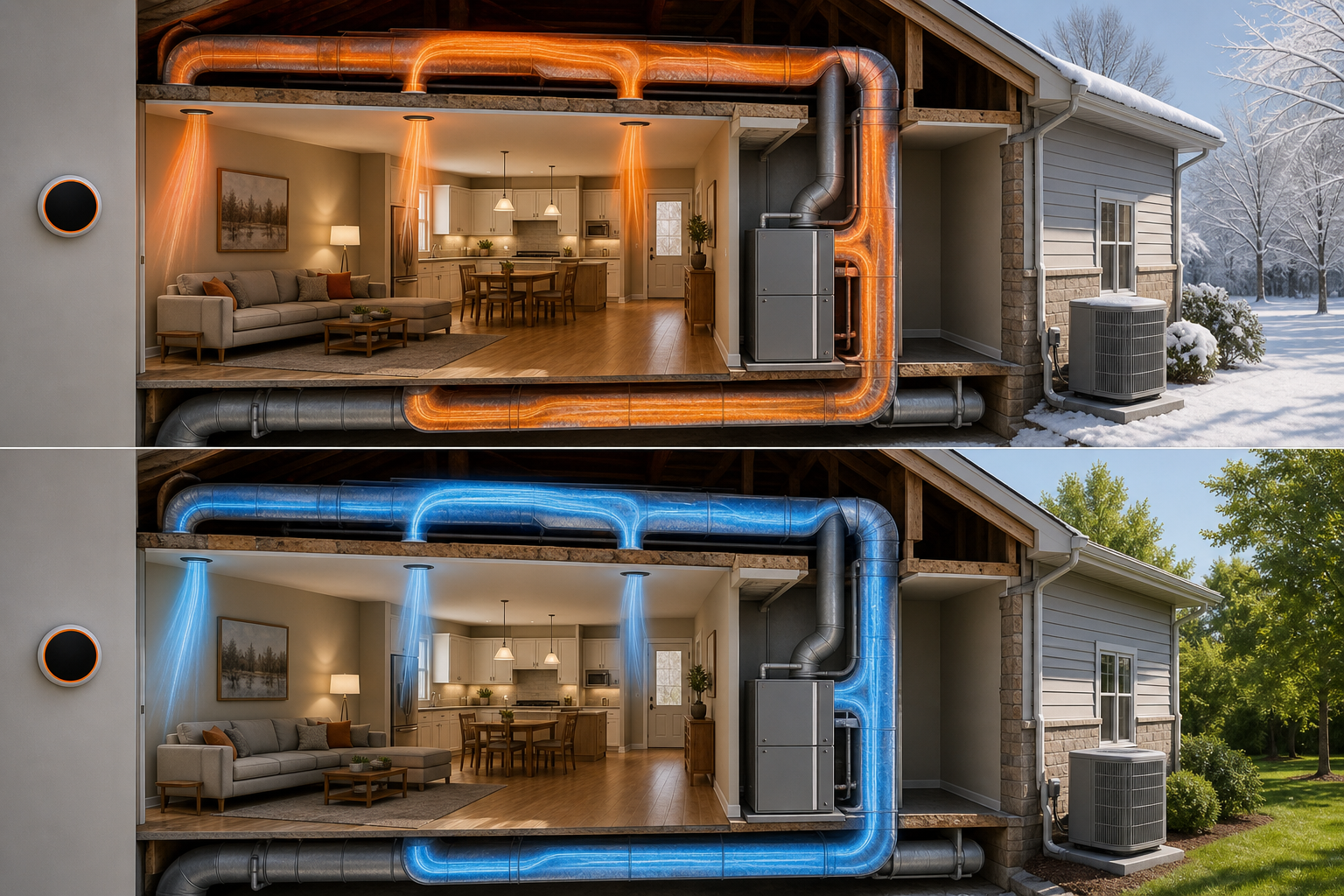
The word “ventilation” can cause confusion. It doesn’t always mean an open window. A home may use mechanical ventilation through exhaust fans, fresh-air intakes, or an energy recovery ventilator. Some systems exchange indoor and outdoor air while limiting the loss of heated or cooled air.
That’s why a furnace alone isn’t the same as HVAC. The furnace supplies heat, but the full HVAC system may also include cooling, air movement, filtration, and fresh-air control.
Key Takeaway:HVAC is the full indoor climate system. AC is one part of it, while heating and ventilation handle the rest.
How the Heating, Ventilation, and Air Conditioning Parts Work
To understand what HVAC stands for in daily use, picture the system as a loop. Your thermostat senses the room temperature. It then signals the equipment when the room needs heat or cooling.
During a heating cycle, the furnace or heat pump warms the air. The blower pushes that air through supply ducts. Warm air enters rooms through supply registers. Cooler room air travels back through return grilles so the cycle can begin again.
A furnace makes heat through gas, oil, or electricity. A heat pump takes heat from outdoor air and moves it inside. Even when the air feels cold, it still contains heat. The heat pump gathers it through the outdoor coil, then raises its temperature through the refrigeration process.
In summer, the cycle reverses. The indoor coil pulls heat from the air inside your home. Refrigerant carries that heat to the outdoor unit. The condenser releases the heat outdoors. The blower then sends cooler air through the ducts.
The system also removes some moisture while it cools. Moist indoor air passes over the cold evaporator coil. Water condenses on the coil and drains away. If the drain backs up, you may see water near the indoor unit or notice a musty smell.
Ventilation follows a different path. Instead of only recirculating indoor air, a ventilation system brings in outdoor air. It may also exhaust stale air from kitchens, baths, or the whole home. The design must balance fresh air with energy use.
Heat pumps deserve special attention because one unit can provide heating and cooling. Heat pump guidance explains that these systems transfer heat rather than produce it through combustion. That basic difference affects the equipment, wiring, controls, and service plan.
A ductless mini-split uses an outdoor unit with one or more indoor heads. Each head serves a room or zone. This can work well for an addition, a garage room, or a home where installing new ducts would be hard.
In Auburn, Colfax, Rocklin, Roseville, Grass Valley, Penn Valley, or Lincoln, a technician may also look closely at insulation, duct leaks, and thermostat placement. A system can be sized correctly yet still struggle if conditioned air escapes before it reaches the room.
Pro Tip:When a technician explains a repair, ask which part failed, what symptom it caused, and whether the fix affects heating, cooling, ventilation, or more than one function.
For local HVAC service in these communities, contact Home Worx Heating and Cooling , a family-owned contractor based in Colfax, CA, serving Placer County and Nevada County.
What Equipment Is Included in an HVAC System?
There is no single HVAC setup for every home. A central system in Roseville may look different from a ductless system in an older home near Colfax. Still, most systems use a few familiar parts.
Thermostat
The thermostat tells the system when to run. Basic models control temperature. Programmable models follow a schedule. Smart thermostats may adjust settings based on routines, sensors, or remote commands. A thermostat placed near a draft, sunny window, or heat source may read the room poorly.
Furnace or air handler
A furnace creates heat and often contains the blower that moves air. An air handler usually moves air without burning fuel. It may pair with a heat pump or electric heating elements.
Evaporator coil and condenser
The evaporator coil sits inside or near the indoor unit. It absorbs heat during cooling. The outdoor condenser releases that heat. The outdoor cabinet also houses parts such as the compressor, fan motor, and electrical controls.
Ductwork and registers
Ducts carry treated air through the house. Supply registers deliver it to rooms. Return grilles bring room air back to the equipment. Crushed flex duct, loose joints, poor insulation, or blocked returns can reduce airflow.
Filter and air-quality equipment
The filter catches airborne particles before they reach the blower and coil. Some homes also use air purifiers, humidifiers, or dehumidifiers. These add-ons address air quality or moisture. They don’t replace the need for correct airflow.
Ventilation equipment
Heat recovery ventilators and energy recovery ventilators exchange stale indoor air with outdoor air. They can reduce the energy penalty that comes with opening windows or running exhaust fans for long periods.
Ductless equipment
A ductless mini-split has an outdoor heat pump or AC unit plus indoor wall-mounted heads. It sends refrigerant through small lines instead of sending air through ducts. This makes room-by-room control possible.
When equipment is replaced, the indoor and outdoor parts must match. The technician should also check electrical capacity, refrigerant lines, drain paths, and the condition of the ductwork. A new outdoor unit cannot fix a return duct that is too small.
Our heat pump and air conditioner comparison can help you frame that discussion before an installation estimate. We at Home Worx Heating and Cooling can also explain which parts belong to the existing system and which parts would change with an upgrade.
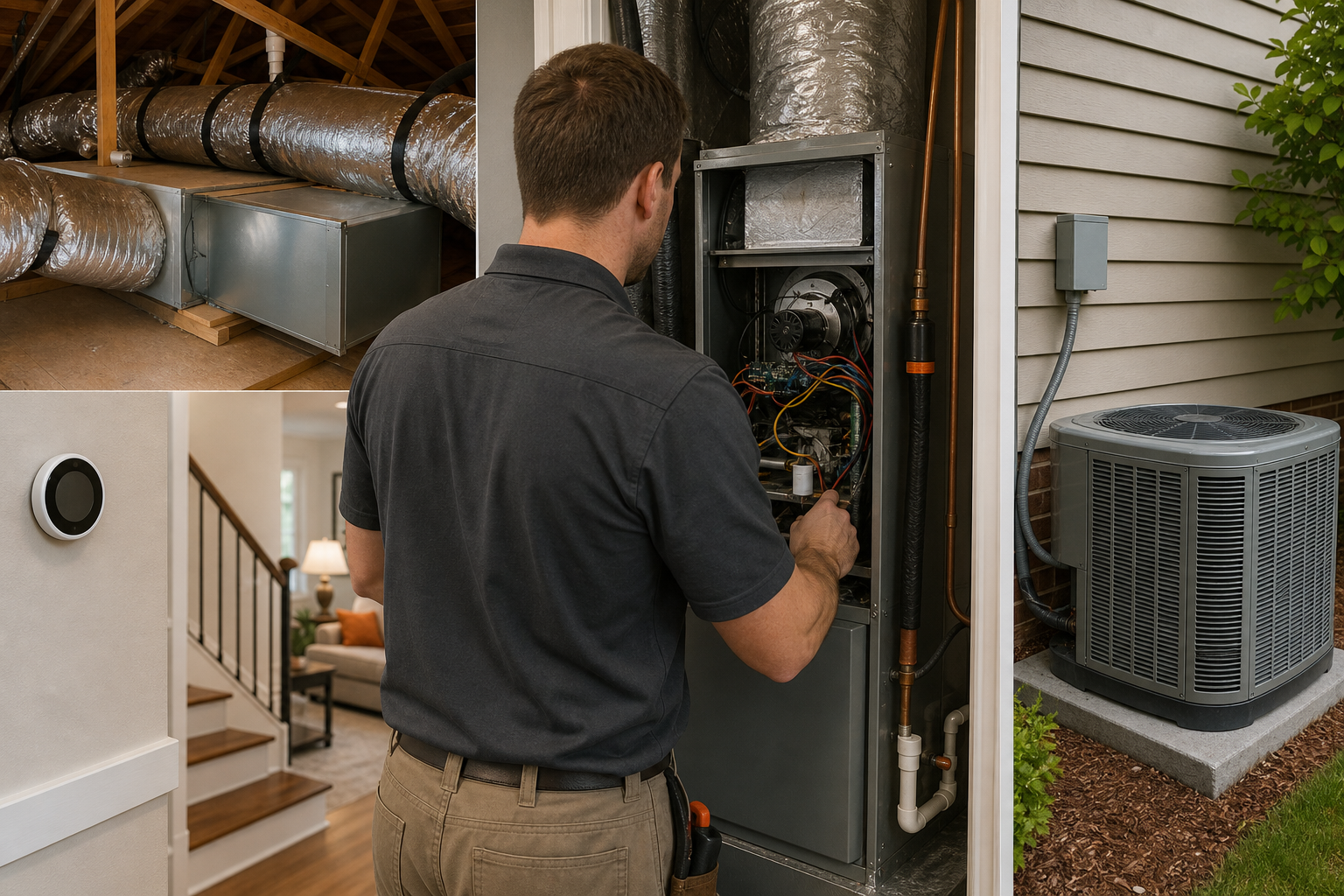
Some parts need trained service. Refrigerant work, electrical faults, gas burners, combustion checks, and sealed-system repairs are not good DIY projects. A homeowner can usually change a filter and clear items away from vents, but deeper work needs the right tools and safety checks.
Why HVAC Terminology Matters When You Need Service
Knowing what HVAC stands for helps you describe the problem with more detail. “My HVAC is broken” gives a technician little to work with. “The furnace runs, but the blower shuts off after two minutes” points toward a different inspection.
Start with the symptom. Is the air warm when the thermostat says COOL? Is the system short-cycling? Is one room uncomfortable while the rest of the home feels fine? Does the outdoor unit run while the indoor fan stays off?
Then note the timing. A problem that starts during the first hot week in Auburn may involve airflow or a stressed capacitor. A furnace that fails on the first cold night in Lincoln may need a different diagnosis. Don’t guess at the failed part. Report what you can see, hear, and feel.
Terminology also matters when you discuss a replacement. A contractor may ask about SEER2, HSPF2, or AFUE. SEER2 measures cooling efficiency. HSPF2 measures heat pump heating efficiency. AFUE measures how much fuel a furnace turns into useful heat.
Rebate eligibility requirements can vary, and the exact requirements can change. Ask the contractor to confirm current eligibility before you sign a contract. Also ask who handles permits and rebate paperwork.
California installation work may require local permits. The right process protects the homeowner during future resale and helps confirm that the system meets code. Home Worx Heating and Cooling serves homeowners and small businesses across Placer and Nevada counties, including Rocklin and Lincoln, with installation, maintenance, air-quality work, financing options, and 24/7 emergency repair listed among its services.
Emergency availability is useful, but it’s no longer the only question to ask. Several contractors advertise round-the-clock help. Coverage can be less clear, especially when a company lists Sacramento or only a few nearby towns. Home Worx Heating and Cooling lists service across Auburn, Colfax, Rocklin, Roseville, Grass Valley, Penn Valley, and Lincoln, which can make the local handoff simpler.
For routine care, a spring cooling check and a fall heating check give a service team a chance to catch blocked drains, worn electrical parts, dirty coils, or airflow problems before peak demand. Our guide to HVAC service and maintenance explains what homeowners can watch between visits.
If a breaker trips again, you smell gas, a carbon monoxide alarm sounds, or the system makes a sharp grinding noise, stop testing it. Shut the system down when safe and seek professional help.
Frequently Asked Questions About HVAC
What does HVAC stand for in simple terms?
HVAC stands for heating, ventilation, and air conditioning. In simple terms, it means the equipment that manages your home’s temperature, airflow, and indoor air quality. A furnace handles heat, an AC or heat pump handles cooling, and ventilation helps move stale air out while bringing fresh air in.
Is HVAC the same as air conditioning?
HVAC is broader than air conditioning. Air conditioning mainly cools and dehumidifies indoor air, while HVAC also includes heating and ventilation. A central home system may use one duct network for both furnace heat and AC cooling. A ductless system may serve rooms without any central ductwork.
What are the main parts of an HVAC system?
The main HVAC parts are the thermostat, indoor air handler or furnace, blower, filter, ductwork, indoor coil, outdoor condenser, compressor, and refrigerant lines. Some systems also have ventilation equipment, air purifiers, humidifiers, or dehumidifiers. The exact parts depend on whether the home uses central, heat pump, boiler, or ductless equipment.
Is a furnace part of HVAC?
Yes, a furnace is part of an HVAC system. Its job is to heat air and send it through the home. The full HVAC system may also include an air conditioner, thermostat, blower, filter, ductwork, and ventilation controls. A furnace alone provides heat, but it does not cover every HVAC function.
When should I call an HVAC professional?
Call an HVAC professional when the system stops heating or cooling, a breaker trips more than once, refrigerant lines freeze, you hear grinding or hissing, or you smell gas. Homeowners can check the thermostat and filter first. Leave electrical, gas, refrigerant, and combustion repairs to a trained technician.
Conclusion
HVAC stands for heating, ventilation, and air conditioning, the three functions that shape indoor comfort. If your system needs repair, maintenance, or replacement in Auburn, Colfax, Rocklin, Roseville, Grass Valley, Penn Valley, or Lincoln, contact Home Worx Heating and Cooling to discuss the symptoms and the right next step.