
How Long Does AC Installation Take? Timeline & Delays
A straightforward central AC replacement often takes 4 to 8 hours, so many homes are cooling again the same day. A new system or a job with ductwork changes can take several days; the home, equipment, and permit schedule all affect the clock.
Table of Contents
Typical AC Installation Time: From a Few Hours to Several Days
How long AC installation takes depends first on the system type and what is already in place. A like-for-like central air swap often takes 4 to 8 hours, while a project with new ductwork or major electrical work can take a few days. For homeowners in Auburn, Colfax and Rocklin, existing conditions still set the pace; hot, dry Sierra foothill summers make planning ahead useful.
For a standard replacement, the crew removes the old equipment, sets the new unit, connects it to existing lines and wiring, then tests the system. If those parts are in good shape and the new equipment fits the current layout, the work may finish within a single workday. A careful installation also includes checking that the system operates properly.
A new central AC system in a home without compatible ductwork takes longer. The team may need to plan duct routes, open up access points, or update electrical connections. Those tasks can push hands-on work beyond one day. Separate permit review or inspection scheduling can also stretch the calendar, even when the crew’s work time is limited.
System type changes the estimate, too. A window unit is generally a shorter job when the opening and power supply are suitable. A ductless mini-split needs an indoor unit, an outdoor unit, and a route for the refrigerant lines and drain. A single-zone installation may take a day or two; each additional zone adds work. Complex multi-zone projects can take several days.
These estimates describe different things: crew hours on site and the full project calendar. A job might need one workday but take longer to schedule or clear an inspection. For a broader look at how equipment and project scope affect a California system budget, see our California AC installation cost overview .
System or project | Typical hands-on timeline | What can extend it |
Central AC replacement | About 4 to 8 hours for a straightforward swap | Old or incompatible connections, electrical work, duct repairs |
New central system | Often 1 to 3 days, depending on the work | New ductwork, access limits, permit or inspection timing |
Ductless mini-split | About 1 to 2 days per zone in some installations | Number of indoor units, line routes, wall type, electrical changes |
Window unit | Usually a few hours if the opening is ready | Window fit, safe support, or electrical needs |
There’s no single timer that fits every house. A solid existing setup can make a replacement surprisingly quick; new construction and multi-zone work need more planning and labor. Homeowners in Grass Valley and Penn Valley can contact Home Worx Heating and Cooling for local AC installation service.
What Changes the AC Installation Timeline?
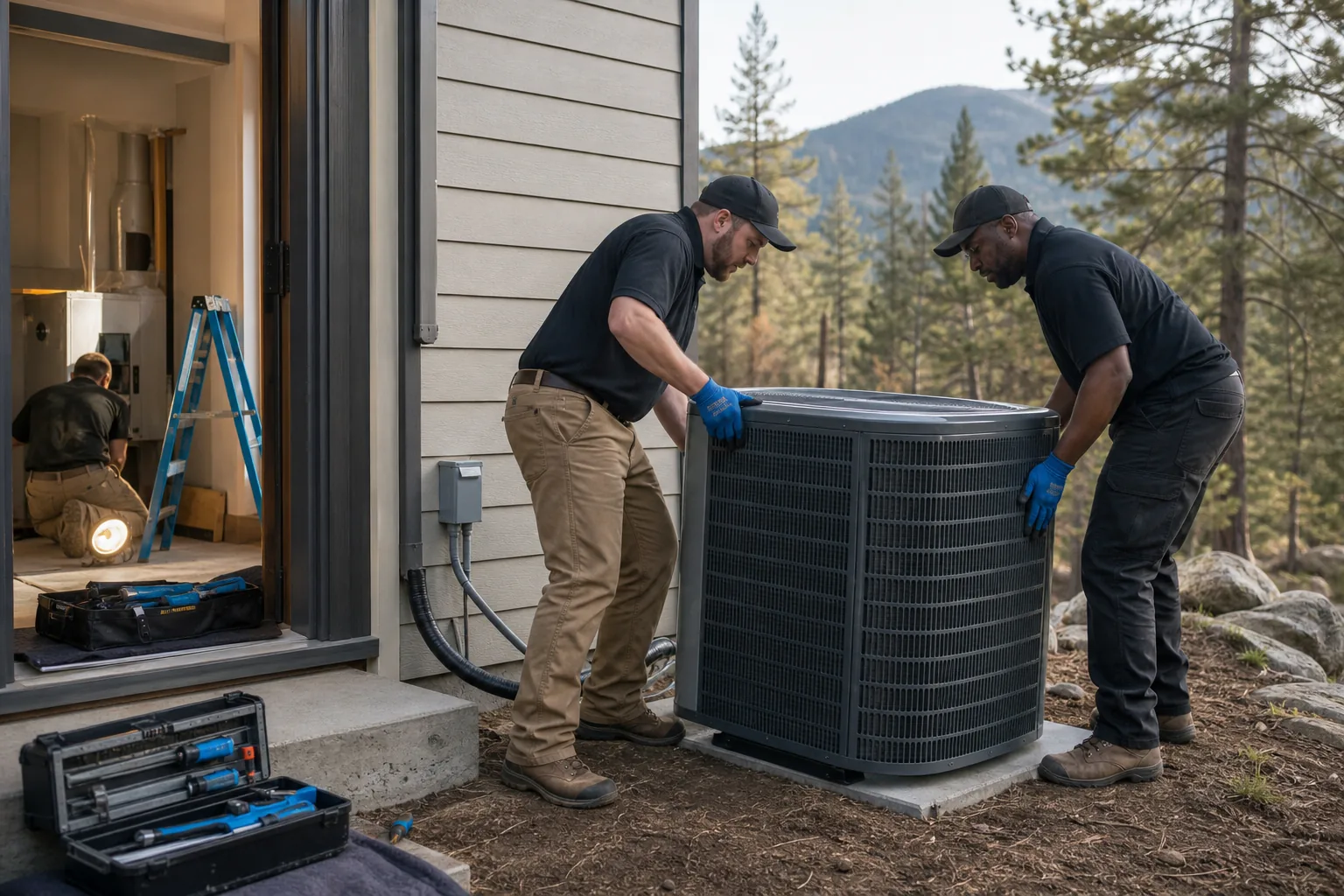
The estimate for how long AC installation takes can change after a technician checks the home. Equipment size matters, but existing ducts, wiring, access, and local scheduling often decide whether the work stays within one day.
System design and number of zones
A basic central air replacement has fewer steps than a system with multiple zones or new heating equipment. Each added indoor unit needs a location, connections, and a test. With ductless systems, the route between indoor and outdoor units also affects labor. A three-zone home can require several days of work, particularly when each line set follows a different path.
Central air and heat pumps can share parts of a home’s duct system, but a heat pump also provides heat. The chosen equipment and existing setup shape the installation plan. If you’re considering a ductless system, our ductless mini-split installation guide explains the main parts of that job.
Ducts, wiring, and access
Usable ductwork and safe, compatible wiring can keep a replacement moving. Leaks, damaged ducts, or an electrical connection that needs changes add work. In older homes, the crew may need to check an attic, crawl space, or wall cavity before deciding how to route parts. Tight access can slow equipment removal and make it harder to reach connections.
Home shape matters. A one-story house with clear attic access may be simpler than a two-story home with a cramped crawl space. A new addition can also mean that the old duct layout no longer serves the rooms well. The installer may need more time to assess the layout and test the finished system.
Permits, inspections, season, and weather
Local permit rules depend on the work and location. Ask the contractor whether the project needs a permit or inspection, and who will arrange it. A review or inspection can add calendar time without adding the same amount of crew labor.
In the Sierra foothills, summer demand can make the wait for an installation appointment longer. Rain, extreme heat, or unsafe outdoor conditions may also delay work on the condenser. If the crew finds hidden damage or needs a part that isn’t on site, ask for an updated timeline before the plan changes again.
Key Takeaway:Ask for separate estimates for work time and the full calendar, including any permit, inspection, or parts wait.
What Happens During an AC Installation?
AC installation follows a set of checks and work stages, though the exact order can vary by system. Knowing the sequence helps you see why a replacement with sound existing connections moves faster than a new system with duct or electrical changes.
Home review and planning
Before installation, the contractor reviews the home and the equipment plan. That includes checking the existing system, looking at duct condition and access, and confirming where the indoor and outdoor equipment will go. For central air, the crew should consider whether the system is sized for the home instead of assuming the old unit’s size is right.
Permits or inspections may be part of the plan, depending on the project and local requirements. Confirm who handles any paperwork and when the work can start. A delay here can affect the calendar before the installation crew arrives.
Removal and setup
On installation day, technicians protect the work area and remove the old equipment. They disconnect and remove parts that won’t be reused, then set the new indoor or outdoor equipment in place. If the job requires new ductwork, wiring, or a different equipment location, this stage can take much longer than a straightforward swap.
For a ductless mini-split, installers mount the indoor unit and outdoor condenser, then run insulated refrigerant lines and a drain route between them. The wall opening and line path must suit the home. Extra zones mean extra indoor units and connections to install.
Connections, system checks, and handoff
After setting the equipment, the crew connects the electrical parts and refrigerant lines. Technicians test the system for leaks, check the setup, and use the equipment manufacturer’s instructions during startup.
Then the crew runs the system and checks that it operates as intended. They should explain basic controls and filter access before wrapping up. If a test shows an issue, fixing it before the crew leaves may add time, but it’s better than treating an unfinished system as done.
DIY installation can look faster in a video than it is in a home. A window unit may suit a homeowner if the opening, support, and electrical supply are safe and the instructions allow it. Central AC and ductless systems involve electrical work and refrigerant connections. Leave those tasks to a qualified HVAC professional rather than attempting pressure tests or refrigerant handling without the right training and equipment.
How to Prepare and Plan for Installation in the Sierra Foothills
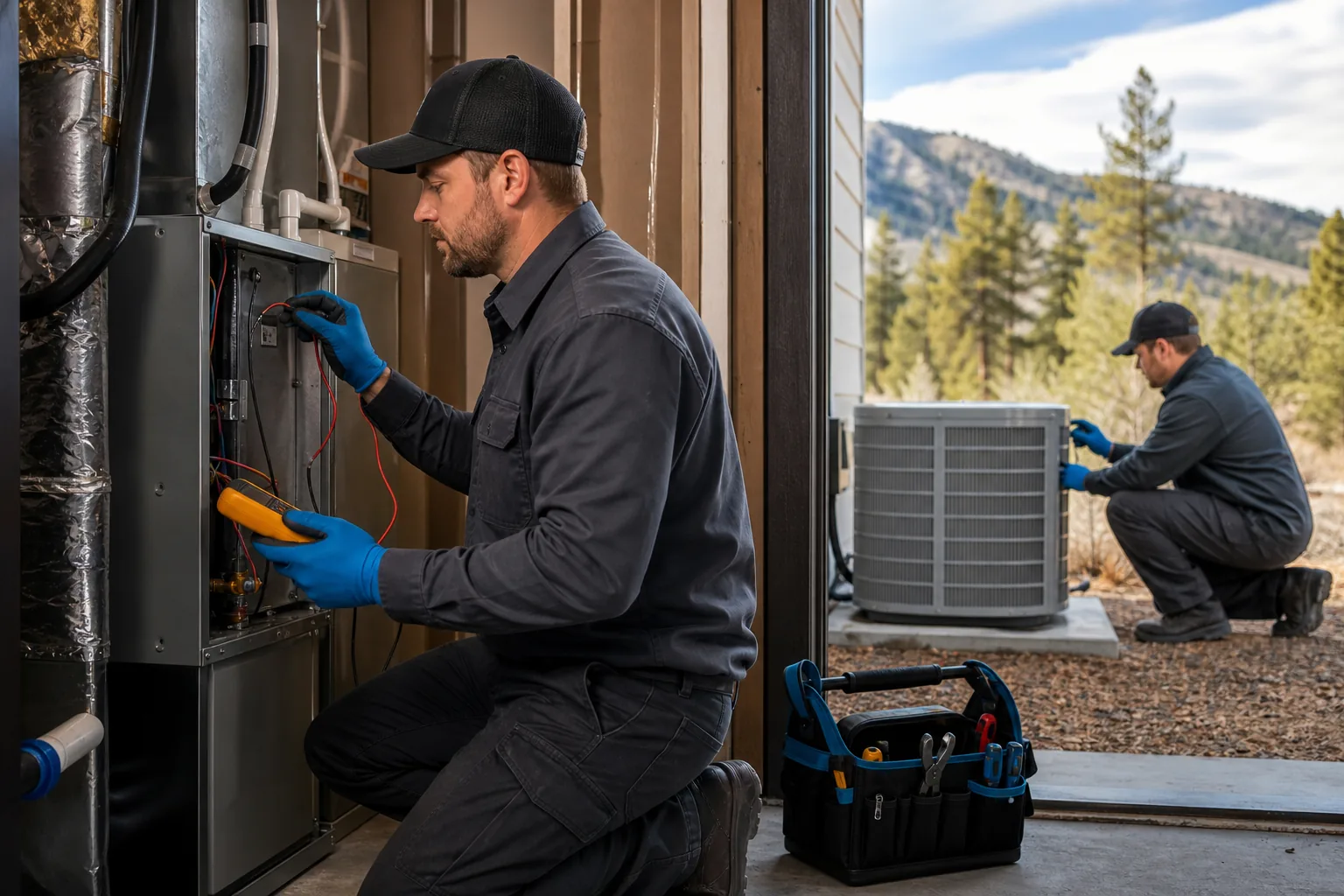
In the Sierra foothills, hot, dry summers can make a working AC system feel urgent, while cold winters can affect the timing of a full heating-and-cooling project. Booking before peak summer demand may give you more choice of appointment dates. It won’t remove the need for a permit or repair, but it can reduce the chance that scheduling becomes the main delay.
Before the estimate, tell the contractor what you know about the home. Mention any rooms that stay warm, past duct repairs, electrical concerns, or trouble reaching the attic or crawl space. Clear the path to the indoor equipment and the outdoor unit. Move stored items away from access points, and keep pets and children out of the work area.
Ask for a written scope that says what equipment is being replaced and whether the plan includes duct or electrical changes. Ask who will check permit requirements and coordinate inspections. If the contractor expects a one-day swap, ask what conditions could change that estimate. This makes it easier to plan around work, pets, or limited cooling.
Home Worx Heating and Cooling is a family-owned contractor based in Colfax. We serve Auburn and Colfax, as well as Rocklin and Roseville. Our service area also includes Grass Valley, Penn Valley, and Lincoln. Our team can review the home and discuss a realistic installation schedule for the planned system.
If a heat pump is part of the project, equipment choice and installation scope can change the work plan. Our overview of heat pump installation options can help you understand what to discuss before the estimate. Ask your contractor for current details on any applicable permits, inspections, or energy incentives rather than assuming they apply to every home.
Pro Tip:Take photos of the current equipment and any tight access points before the estimate. They can help you explain the layout and flag questions early.
Frequently Asked Questions
How long does it take to replace a central air conditioner?
A straightforward central AC replacement usually takes 4 to 8 hours of crew work. That estimate assumes the new system can use the existing ductwork and connections. If the crew finds damaged ducts, electrical needs, or a layout that doesn’t fit the equipment, work may take longer or continue another day.
Can AC installation be done in one day?
Yes, many like-for-like central AC replacements finish in one workday. A new system with ductwork changes or a multi-zone setup can take several days. The full calendar may also include time for a permit, inspection, parts, or appointment availability, which is separate from the hours the crew spends installing equipment.
How long does it take to install a ductless mini-split?
A ductless mini-split often takes 1 to 2 days per zone, depending on the home and line routes. A single-zone setup may be quicker than a multi-zone project. Wall access, electrical work, and the number of indoor units all affect the schedule, so ask for an estimate based on your specific layout.
Should I install an AC system myself?
A window unit may be a reasonable DIY task if it fits safely and the electrical supply is suitable. Central AC and ductless installations require more than mounting equipment. Electrical connections and refrigerant work need proper training and tools. For those systems, a qualified HVAC contractor can handle installation and test the equipment before use.
What can delay an AC installation?
New ductwork or electrical work can add labor days. Permit review, inspection timing, equipment delivery, hidden damage, and busy summer schedules can add calendar time. Weather may also pause outdoor work. Ask the contractor to separate expected hands-on hours from waits that depend on an outside party or a needed part.
Conclusion
Plan on 4 to 8 hours for a straightforward central AC replacement, then allow more time if the home needs new ductwork, electrical work, or multiple zones. Before booking, ask for a project-specific schedule that separates crew work from permits and other waits. Home Worx Heating and Cooling can review your home and help plan a local installation in the Sierra foothills.