
How to Clean an HVAC Condensate Drain Line
A clogged condensate drain can leave water around your indoor unit or stop your air conditioner from running. This guide to how to clean an HVAC condensate drain line walks you through a safe DIY check, a gentle flush, and the signs that mean it’s time to stop.
Table of Contents
Step 1: Turn Off the HVAC System and Gather Supplies
Start with power off. Set the thermostat to Off, then switch off the breaker for the indoor air handler or furnace. The thermostat alone may not cut power to every part of the equipment, so don’t skip the breaker.
If you can’t identify the right breaker, don’t guess. Check the equipment manual or ask an HVAC technician. Keep clear of any wet electrical parts, and don’t reach into a cabinet that has standing water inside.
Have a flashlight, a small bucket, a towel, and a wet/dry vacuum ready. You may also need distilled white vinegar or another cleaner, but only use a product the equipment maker allows. A drain line is often PVC, but systems differ. The condensate drain line carries moisture away from the air conditioner’s evaporator coil.
For a basic clean, you don’t need to take the air handler apart. Don’t remove access panels, touch wiring, or pour cleaner into a port unless you can identify it as the drain cleanout.
Homeowners in Auburn, Colfax, and Rocklin may run cooling hard during hot, dry summers, then leave systems idle through colder months. Before cleaning, check your owner’s manual for approved maintenance steps and cleaning agents. This is especially wise if your system is older or you’re unsure what the drain line is made of.
If water is near wiring, the cabinet, or a ceiling fixture, stop. Keep the system off and arrange professional service instead of trying to clear the blockage yourself.
Pro Tip:Keep the breaker off until the drain is clear and you’ve checked that the area around the equipment is dry.
For a related maintenance guide, see this article .
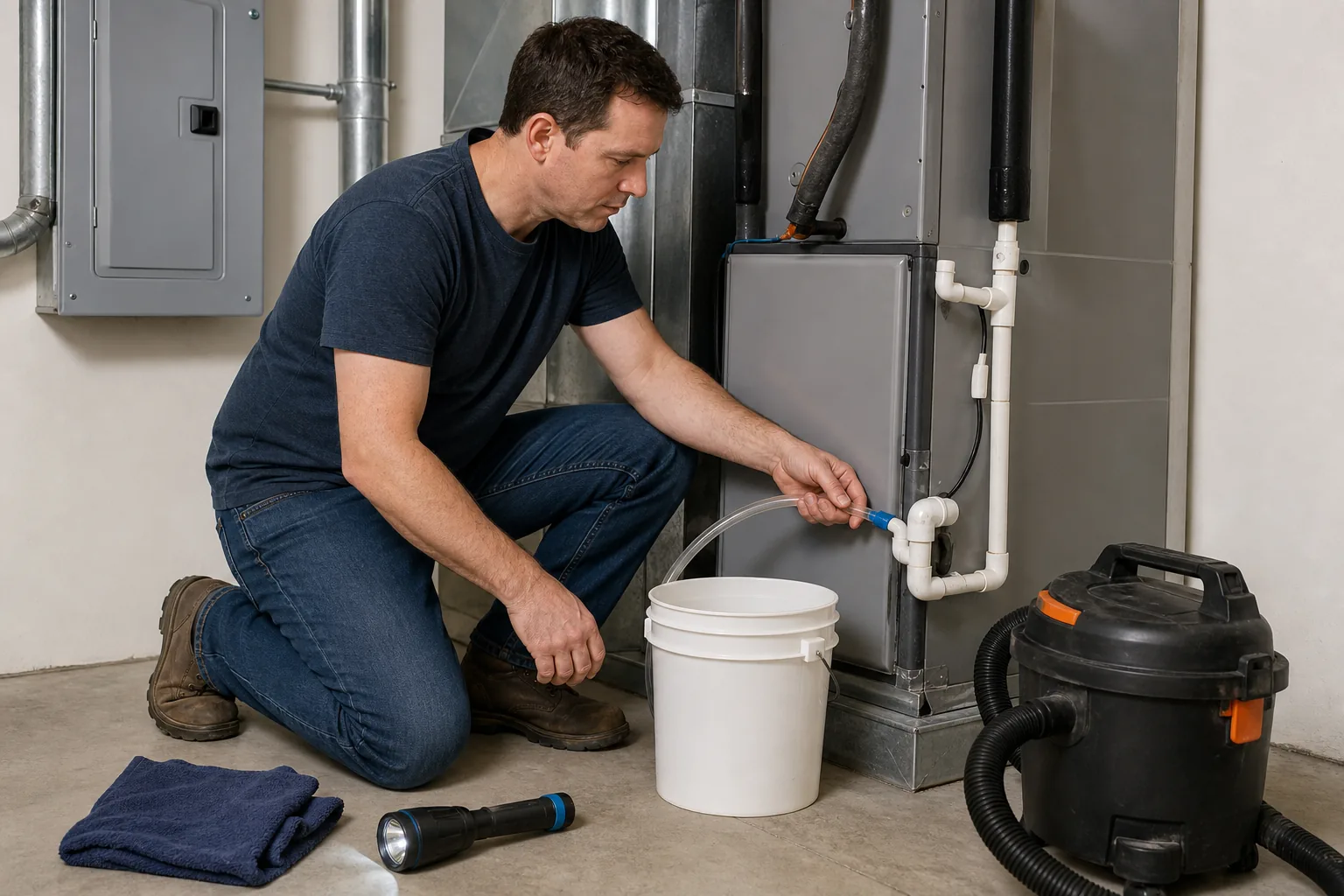
For local service in Roseville, Grass Valley, Penn Valley, and Lincoln, contact Home Worx Heating and Cooling .
Step 2: Locate the Condensate Drain Line and Access Point
The condensate drain carries water from the indoor unit to an outlet. In many homes, it’s a white PVC pipe near the air handler. The outlet may be outside near the unit, or the line may drain to a floor drain or another approved point.
Use your flashlight to look for a capped tee or vertical opening near the indoor equipment. That may be the cleanout. Don’t assume that every capped pipe is the drain. If the line isn’t clearly marked or you’re unsure, stop and have a technician identify it.
Follow the pipe with your eyes as far as you can without moving the equipment. Look for a loose joint, a visible crack, a sag, or a section that runs uphill. Those issues can affect drainage, and a flush won’t fix a damaged or poorly routed line.
The drain should lead away from the unit without an obvious dip that holds water. HVAC drain layouts vary, though. Some use a condensate pump to move water where gravity alone can’t carry it. Don’t disconnect a pump or its tubing as part of a routine clean.
Check the area around the indoor unit and the visible drain pan. Standing water, a musty smell, or water stains near the ceiling can point to a drain problem. A safety float switch may also shut off the system when water rises too high. Don’t bypass that switch to get cooling back.
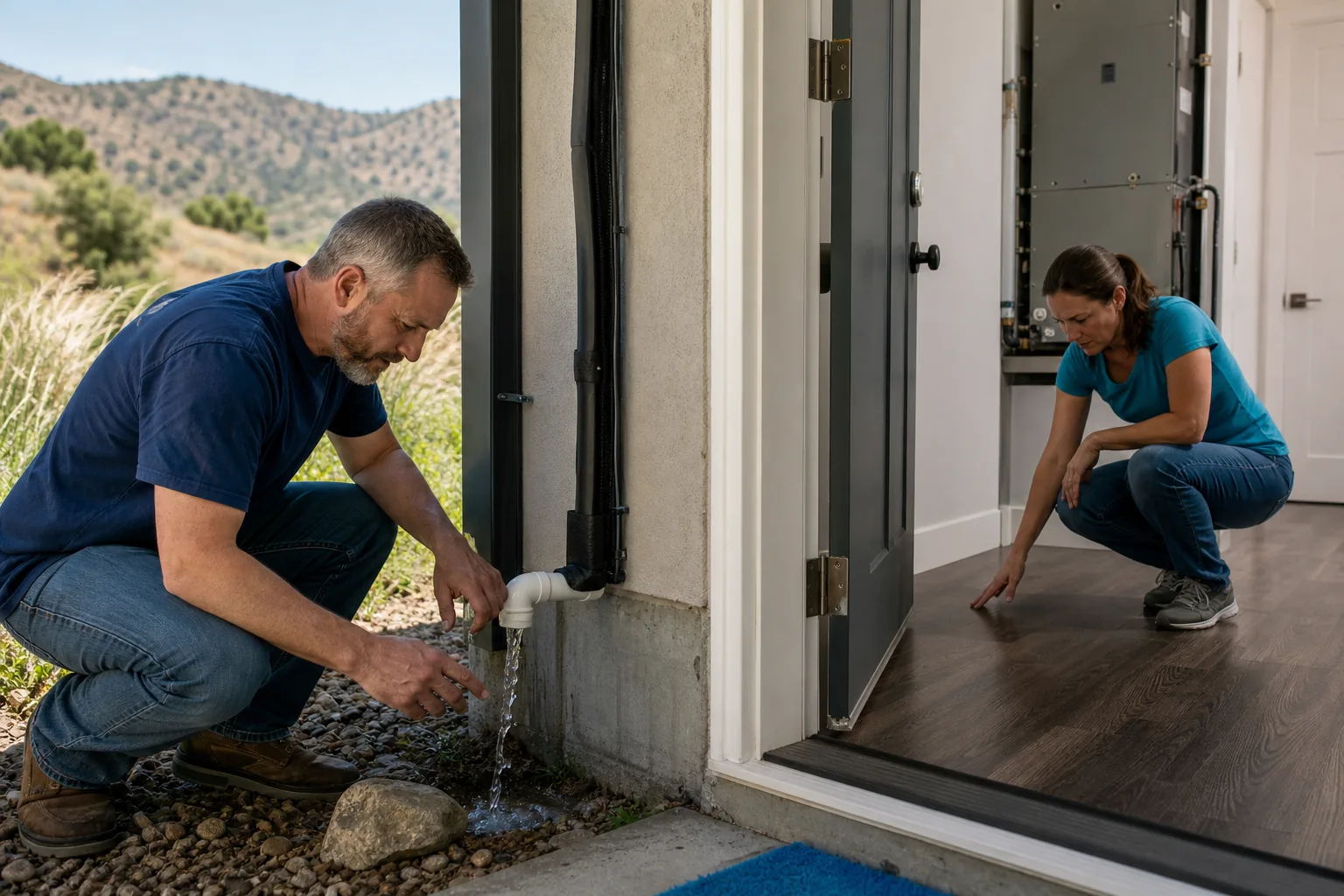
In homes around Auburn or Colfax, an outdoor drain outlet may be easy to spot near the foundation. Make sure you can identify the pipe before using a vacuum. If you see water discharging near the home, note whether it’s flowing from the drain outlet or pooling from another source.
Never force a tool into the pipe, pull hard on a fitting, or cut into the line to make an access point. If there’s no clear cleanout, Home Worx Heating and Cooling can inspect the drain and determine the right way to reach the blockage.
Key Takeaway:Only clean a drain line when you can identify both its access point and its outlet with confidence.
Step 3: Clear the Clog and Flush the Drain Line
Start by removing loose debris, not by pouring liquid into a blocked pipe. If water is standing in the drain pan, use a towel or wet/dry vacuum to remove what you can reach safely. Don’t let water spill into the equipment cabinet.
If the outdoor outlet is easy to reach and you’re certain it belongs to the condensate line, place the wet/dry vacuum hose over it. Seal around the hose with a cloth, then run the vacuum briefly. This pulls loose material toward the outlet rather than pushing it farther into the system.
Don’t use strong compressed air or forceful pressure. Too much pressure can loosen a fitting or push water back toward the equipment. Don’t use a wire or rigid rod to probe deep into the pipe either. Stop if the blockage doesn’t shift with gentle suction.
Once the line appears open, check your equipment manual before adding a cleaning solution. If it permits vinegar, pour it slowly into the confirmed cleanout. Don’t mix cleaning products, and don’t use bleach unless the manufacturer specifically approves it for your system and line materials. Some cleaners can harm seals or metal parts.
After the solution has had time to work as directed, flush with a small, slow pour of clean water. Watch the outdoor outlet or drain point. You’re looking for a steady flow, not water backing up at the cleanout or filling the pan again.
Stop DIY work if suction doesn’t clear the line, water returns quickly, or you can’t tell where the water is going.
Never keep pouring water into a line that backs up. A stubborn clog may sit in a trap or another part of the system, and adding more liquid can overflow the pan. If the drain is still blocked after a gentle attempt, leave the power off and arrange service.
Step 4: Restore Power, Test Drainage, and Prevent Repeat Clogs
Before restoring power, put the cleanout cap back in place. Wipe up any spilled water and check the floor around the unit. Look at the drain pan from a safe, visible spot. If you see a crack, rust, or water near electrical parts, don’t restart the system.
With the area dry and the line reassembled, switch the breaker back on. Set the thermostat to cooling and let the system run for a short time. Then check the drain outlet again. Water should leave through the line rather than collect around the indoor unit.
Keep an eye on the pan and the floor during the first cooling cycle. A clear flow at the outlet is a good sign, but it doesn’t rule out a damaged pan, loose joint, or recurring blockage. Turn the system off if water appears where it shouldn’t.
For a homeowner in Rocklin or Roseville, checking the visible outlet during the cooling season can help catch a slow drain before it backs up. In Grass Valley or Penn Valley, the system may sit idle during colder stretches, so take a quick look when you start cooling again. Don’t add a cleaner unless your manual allows it.
Keep up with routine filter changes and watch for new signs of a clog. Dust can enter the drain system, while the damp pipe can collect buildup over time. If you see water stains, hear gurgling, notice a musty odor, or find that the system keeps shutting off, don’t keep repeating the flush.
Follow the instructions for your own equipment first, since cleaning methods can vary by system.
Home Worx Heating and Cooling serves Lincoln along with Auburn, Colfax, Rocklin, Roseville, Grass Valley, and Penn Valley. We can check a stubborn clog, inspect the drain pan, or handle routine HVAC maintenance when a DIY clean isn’t enough.
Frequently Asked Questions
How often should I clean my HVAC condensate drain line?
Check the drain during routine system maintenance and follow the cleaning schedule in your equipment manual. How often it needs cleaning can depend on the system and how it’s used. If water backs up, the unit shuts off, or you notice a musty smell, inspect the visible drain area and arrange service if the cause isn’t clear.
Can I use vinegar to clean an HVAC drain line?
You can use vinegar only if your equipment maker allows it. First confirm that you’ve found the correct cleanout and that the line is not fully blocked. Don’t mix vinegar with bleach or another cleaner. If you can’t confirm the cleaning agent is safe for your system, skip it and ask an HVAC professional.
Can I use compressed air to clear a condensate drain?
It’s safer to avoid compressed air as a DIY fix. High pressure can loosen fittings or force water toward the indoor unit. A wet/dry vacuum may pull out loose debris when you can clearly identify the outlet. If gentle suction doesn’t work, stop rather than increasing pressure.
Why does my HVAC system shut off after the drain gets clogged?
A clogged drain can cause water to rise in the pan. Some systems have a float switch that shuts the equipment off to help prevent an overflow. Don’t bypass the switch or keep resetting the system. Turn it off and have the drain checked if it won’t stay clear or if water is near electrical parts.
Conclusion
For a visible, easy-to-reach clog, shut off power, use gentle suction, and confirm that water drains freely before restarting the system. If the line stays blocked or water returns, contact Home Worx Heating and Cooling for local service in Placer or Nevada County.