
How to Fix a Furnace That Won't Ignite
Updated: Sep 20
A furnace that won't ignite may have a simple cause, such as a dead thermostat battery or a dirty filter. It may also involve gas, wiring, or an ignition part that needs a trained hand. Follow these five checks in order. Stop at once if you smell gas, hear harsh noises, or see signs of fire.
Cold winters in Auburn, Colfax, and the nearby foothills can make a failed furnace urgent. These steps help you find the safe, easy causes before you arrange service with Home Worx Heating and Cooling .
Table of Contents
Step 1: Check for Immediate Safety Hazards
If your furnace won't ignite, check for gas odor or a carbon monoxide alarm before touching the thermostat, a panel or a switch. If you have a gas or propane furnace and smell rotten eggs, leave the home right away. Do not use a light switch, phone, match, or lighter inside the home. In Auburn and Colfax, cold winter conditions can make a working furnace especially important, but safety comes first.
Call emergency services from a safe location. Then contact your gas utility and an HVAC professional. A carbon monoxide alarm also calls for immediate evacuation. Carbon monoxide has no smell or color, so every home with a fuel-burning furnace should have working detectors. Homeowners in Rocklin and Roseville should also make sure alarms remain tested and operational.
Never try to find a gas leak with a flame. Do not relight a pilot while you smell gas. Keep children and pets away from the furnace room until a qualified person says it is safe. This precaution is just as important in Grass Valley homes during the heating season.
If there is no gas smell, switch off the furnace at its nearby service switch before checking the cabinet or filter. The switch often looks like a normal light switch. If you cannot find it, use the labeled furnace breaker. Wear work gloves when handling sheet metal. In Penn Valley, as elsewhere in the foothills, stop if the equipment is difficult to access safely.
Gas repairs can cause leaks or toxic fumes, while electrical work can cause shock. Review this furnace safety information only as general background; these risks are why this first step comes before troubleshooting. If you are in Lincoln and unsure what to do, contact a qualified HVAC professional instead of attempting a repair.
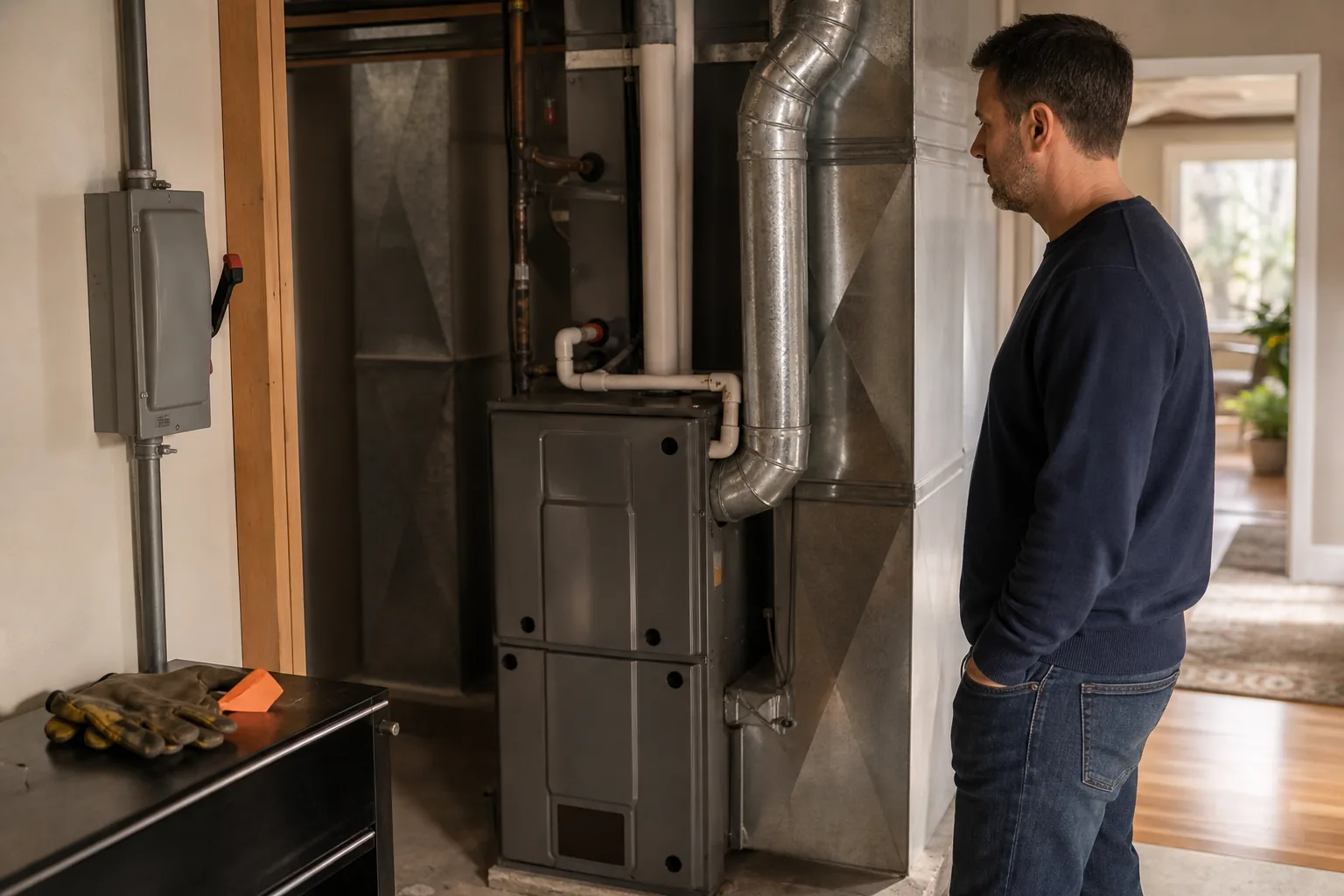
Also look for water around the furnace, scorched wires, a damaged flue pipe, or a loose access panel. Those signs mean you should stop. A panel that does not fit correctly can keep a safety switch from closing.
Key Takeaway:Gas odor, a carbon monoxide alarm, fire signs, or loud banging means leave the home and get professional help. Do not continue with DIY checks. For local service in Placer County and Nevada County, contact Home Worx Heating and Cooling.
Step 2: Confirm the Thermostat and Electrical Power
A furnace won't ignite when the thermostat never sends a call for heat. Stand at the thermostat and check the screen first. Replace weak batteries if the display is blank or faint.
Set the mode to Heat. Raise the target temperature three to five degrees above the room temperature. Set the fan to Auto, not On. The On setting can make the blower run while the furnace produces no heat, which can make the fault seem worse.
Wait several minutes after changing the setting. Many systems pause before starting. Listen for a small motor or feel for air at a nearby register. If the thermostat clicks but the furnace stays silent, continue to the power checks.
Find the furnace service switch. It may be on the side of the unit or on a nearby wall. Set it to On. Next, inspect the electrical panel. A furnace needs electricity even when gas supplies the heat. The blower, controls, igniter, and safety switches all need power.
If the furnace breaker is tripped, move it fully to Off first. Then move it back to On once. Do not keep resetting a breaker that trips again. Repeated trips can point to a short, a failing motor, or another electrical fault.
Some older systems have a small fuse inside the control area. Do not open the cabinet to test it unless your manual says the task is safe and you know how to shut off all power. An internal fuse that blows again needs diagnosis, not a larger fuse.
Furnace design varies. Learn more about central heating furnaces. Modern forced-air systems use electricity to move air through the heat exchanger and ductwork. That is why a gas furnace can lose heat even when other gas appliances work.
Homeowners in Rocklin, Roseville, Auburn, and Colfax often store boxes near the furnace during warm months. Check that nothing has bumped the service switch or blocked the access door. The same precaution applies in Grass Valley, Penn Valley, and Lincoln. If power returns but the unit still does nothing, move on rather than cycling the breaker again.
For a longer checklist that covers thermostat settings, breakers, and warning signs, see Home Worx Heating and Cooling's safe furnace checks for a system that won't turn on .
Step 3: Inspect the Air Filter, Vents, and Basic Airflow
A dirty filter can make a furnace shut down before ignition or stop shortly after it starts. Restricted airflow causes heat to build inside the unit. A safety limit switch may then stop the burners to prevent overheating.
Turn the furnace off before removing the filter. The filter usually sits beside the blower cabinet or inside the return air grille. Look for an arrow on the frame. It should point toward the furnace, in the direction of airflow.
Hold a disposable filter toward a light. If dust blocks most of the surface, replace it with the same size and type listed by the manufacturer. Do not run the furnace without a filter. That sends dust into the blower and heat exchanger.
If you have a washable filter, follow its care instructions. Let it dry fully before putting it back. A damp filter can restrict air and add moisture near electrical parts.
Next, walk through the home. Open supply registers. Move rugs, furniture, and storage bins away from them. Check return grilles too. A blocked return makes the blower work harder and can reduce the air that reaches the furnace.
Dry foothill weather can bring dust into homes in Auburn, Colfax, Rocklin, Roseville, Grass Valley, Penn Valley, and Lincoln. Wildfire smoke and seasonal debris may also load a filter faster. Check it during heavy use instead of waiting for a calendar date.
The blower pulls cool return air through the filter, moves it across the heat exchanger, and sends warm air into the ducts. A blocked filter can trigger a safety shutdown, and an airflow fault may look like an ignition fault.
After changing the filter, restore power and raise the thermostat. Give the furnace one full start attempt. If the blower runs but no flame appears, airflow may not be the main problem. The next check is the fuel supply and the startup sequence.
Pro Tip:Write the filter size on the inside of the furnace door. Keep one spare nearby, but never place boxes against the unit or its return grille.
Step 4: Verify Fuel Supply and Observe the Startup Sequence
If the furnace has power but won't ignite, check the fuel source without taking apart the burner assembly. For a natural gas system, see whether another gas appliance works. For propane, check the tank gauge if you can do so safely.
Look at the manual gas shutoff near the furnace. The handle is usually parallel with the pipe when open. Do not force a stuck valve. If you are unsure which valve controls the furnace, stop and ask a professional.
For propane systems, a low tank can prevent ignition. Do not adjust regulators or disconnect lines. Those tasks belong to a qualified technician. If other gas appliances also fail, the issue may involve the utility or fuel delivery rather than the furnace itself.
Now observe one startup attempt from a safe distance. The exact order varies by furnace, but you may hear the inducer motor first. Then a pressure switch may prove vent airflow. The igniter may click or glow. The gas valve may open. A flame should follow. The blower often starts after the heat exchanger warms.
What you notice | What it may suggest | Safe next move |
No sound at all | Thermostat, power, fuse, or control issue | Repeat Steps 1 and 2. Do not open the control board. |
Clicking with no flame | Igniter, gas supply, or burner issue | Stop after one or two attempts and arrange service. |
Igniter glows but gas does not light | Fuel valve, pressure, or ignition problem | Do not adjust the gas valve. |
Flame starts, then stops | Flame sensor, airflow, or safety switch issue | Turn the system off if it repeats and request diagnosis. |
Yellow or uneven flame | Dirty burner or combustion problem | Shut down the furnace and get professional help. |
Older furnaces may have a standing pilot. If your manual gives a relighting method, follow it exactly. Wait for gas to clear before trying. Never relight a pilot when you smell gas. Newer furnaces use electronic ignition, so there may be no flame to see until the thermostat calls for heat.
A sail switch or pressure switch can also stop the ignition sequence. These switches prove that air is moving before fuel is released. Dust or debris can keep one from closing. Do not bypass a switch, hold it shut, or bridge its wires.
In Colfax's cold winter weather, a stuck switch can leave the house cold even when the thermostat and breaker look normal. Homeowners in Auburn, Rocklin, Roseville, Grass Valley, Penn Valley, and Lincoln may see similar issues during cold weather. Home Worx Heating and Cooling can test the sequence and identify whether the fault sits with ignition, airflow, fuel, or a safety control.
If your furnace has a pilot that will not stay lit, use safe pilot light troubleshooting before attempting another start.
Step 5: Read the Error Code and Decide When to Call an HVAC Professional
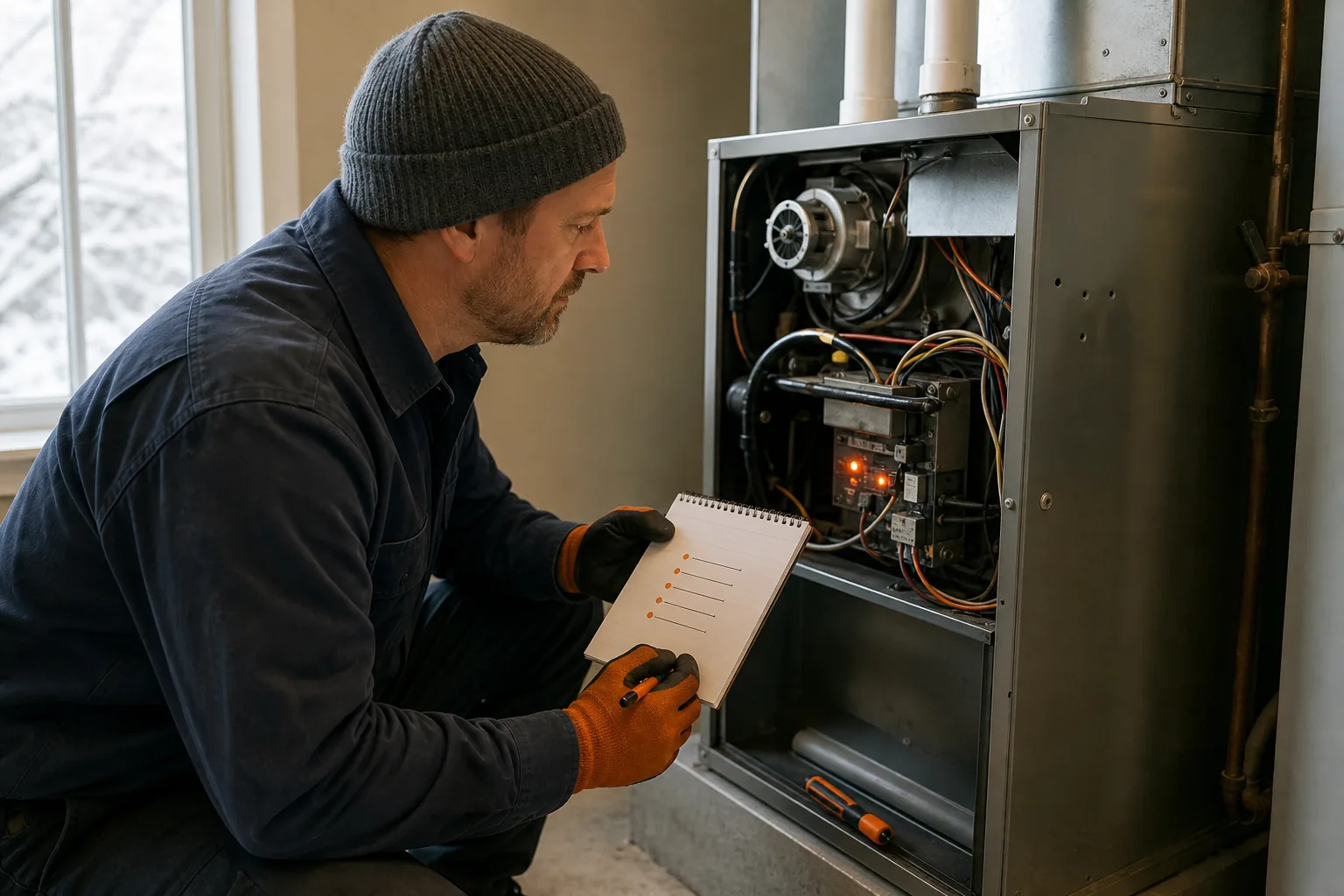
When a furnace won't ignite after the basic checks, read its diagnostic light before resetting it again. Many modern furnaces show a blinking pattern through a small window in the access panel. Count the flashes and write down the pattern.
Check the owner's manual for the meaning. Codes differ by model, so do not assume that two flashes mean the same thing on every furnace. Note what happens before the code appears. Does the inducer run? Does the igniter glow? Does a flame start and stop?
Give the technician the model number, the code, and the exact sound sequence. That short record can reduce guesswork. It can also help the technician bring the right test tools or part.
Do not keep pressing a reset button. A reset can clear a temporary lockout, but it does not fix the cause. If the unit locks out again, leave it off. Repeated attempts can place more wear on the igniter and may send unburned gas into the combustion area.
Call for professional service when:
You smell gas or see soot, scorch marks, or damaged wiring.
The carbon monoxide alarm sounds.
The breaker trips again after one reset.
The furnace clicks without lighting.
The flame is yellow, unstable, or rolls out of the burner area.
The blower runs but the furnace never heats.
A code points to a pressure switch, control board, heat exchanger, or gas valve.
You feel unsure about any step.
Home Worx Heating and Cooling provides furnace repair and maintenance for homes and small businesses across Placer and Nevada counties. That includes Auburn, Rocklin, Roseville, Grass Valley, Penn Valley, Lincoln, and Colfax. A technician can test the ignition circuit, flame sensor, sail switch, gas pressure, and combustion safety without asking you to bypass a safeguard.
For homeowners in Lincoln or Roseville, same-day availability may matter when temperatures drop. For a furnace in an older home, the visit may also reveal a venting or heat exchanger issue that basic checks cannot confirm. Do not make repair or replacement decisions from a blinking light alone.
Once the cause is fixed, ask about maintenance. A seasonal inspection can catch blocked airflow, worn ignition parts, and loose electrical connections before the next cold spell.
FAQ: Furnace Won't Ignite
Why won't my furnace ignite?
A furnace won't ignite most often because of a power issue, thermostat setting, blocked airflow, fuel problem, or failed ignition part. Start with the thermostat, service switch, breaker, and filter. If the system clicks without lighting, shuts down repeatedly, or shows a fault code, stop resetting it and arrange professional service.
Can a dirty filter stop a furnace from igniting?
Yes, a dirty filter can stop ignition by restricting airflow and triggering a safety switch. Turn off the furnace before removing it. Replace a disposable filter with the correct size, then restore power and try one start cycle. If the problem remains, the limit switch, blower, or another part may need testing.
Is it safe to relight a furnace pilot?
Relighting a pilot is safe only when your owner's manual gives clear instructions and you do not smell gas. Turn the control off and wait as directed before trying. Leave the home if you smell gas. Newer furnaces use electronic ignition, so they should not be treated like an older standing-pilot unit.
Why does my furnace click but not light?
Clicking usually means the thermostat has sent a heat signal and the ignition sequence has begun. The igniter may be worn, the gas supply may be interrupted, or a safety switch may be open. After one or two failed attempts, turn the system off. A technician should test the cause rather than bypassing a control.
When should I call Home Worx Heating and Cooling?
Contact Home Worx Heating and Cooling when safe checks do not restore heat or when the furnace has a gas odor, repeated breaker trip, unusual flame, loud noise, or error code. The team serves homeowners and businesses in Placer and Nevada counties, including Auburn, Colfax, Rocklin, Roseville, Grass Valley, Penn Valley, and Lincoln.
Conclusion
Start with safety, then check the thermostat, power, filter, vents, and fuel supply once. If the furnace still will not light, leave it off and contact Home Worx Heating and Cooling for local help. A proper diagnosis protects your home and gets heat back without guessing at gas or electrical parts.