
How to Increase Furnace Efficiency at Home
How to increase furnace efficiency starts with a few checks you can do before calling for service. A clean filter and sealed air leaks can help your furnace move heat where you need it. Work through these steps first, then bring in a trained technician for safety checks or equipment changes.
We analyzed 33 YouTube comments about increasing furnace efficiency and found that 24% mentioned difficulty cleaning condensate traps.
Table of Contents
Step 1: Check the Filter and Clear the Airflow
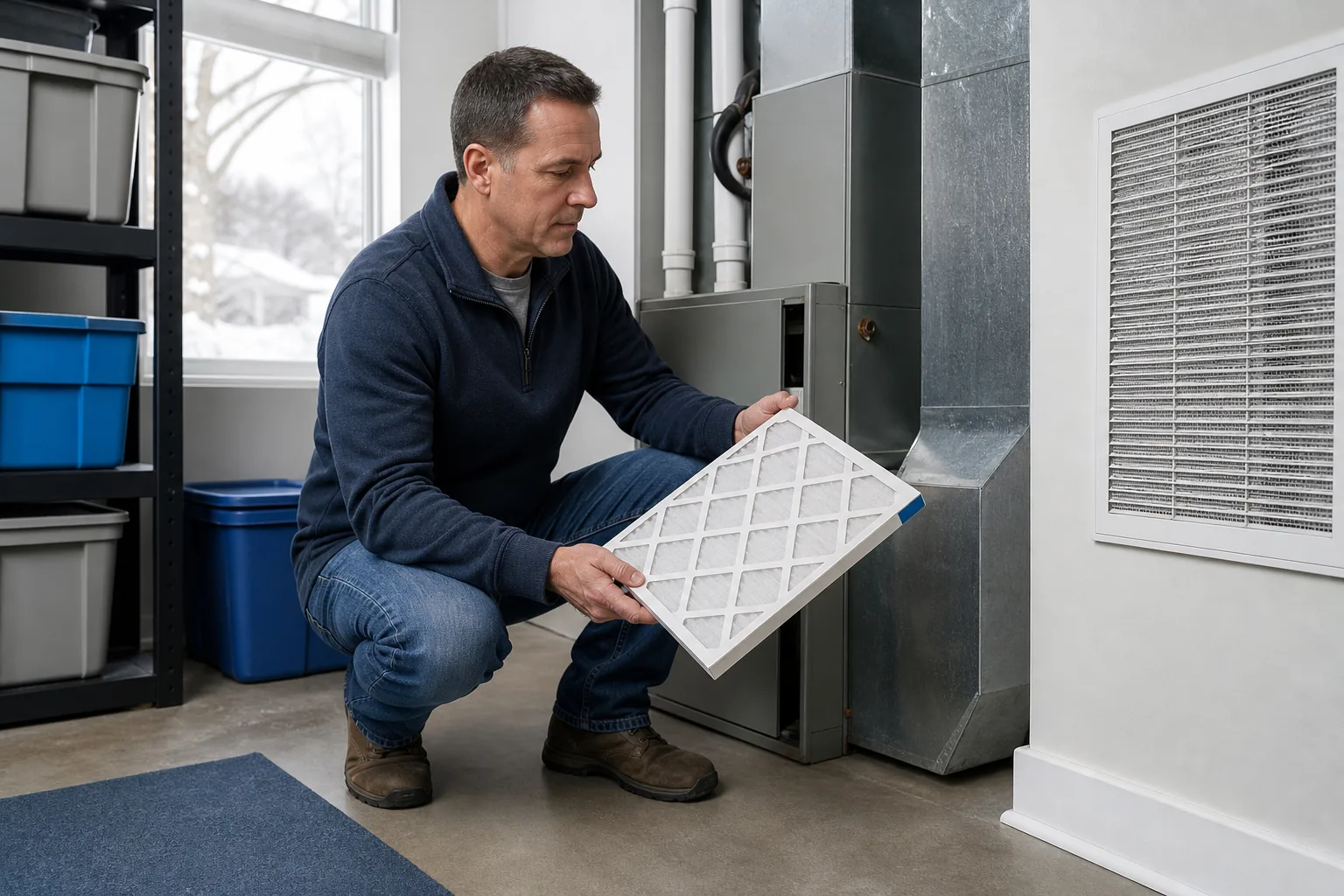
Start with the filter. A clogged filter slows airflow, so the furnace has to work harder to move warm air through the home. Carrier recommends checking filters regularly, especially during busy heating periods, and replacing them when they look dirty.
Turn the system off before changing the filter. Find the size printed on the old one, then fit a compatible replacement with its arrow pointing toward the furnace. Don't force a filter into a slot or run the system without one. If you can't find the filter door or the arrow is hard to read, check the equipment manual.
For a deeper look at filter timing and airflow, see our guide to how often to change a furnace filter . Check a one-inch filter monthly during heating season. A thicker filter may last longer, but the right schedule depends on its type and how much dust your home collects. Pets, renovation dust, or heavy furnace use can mean more frequent changes.
MERV is a rating for how well a filter captures particles. Higher ratings can catch smaller particles, but they may also make it harder for air to pass through. Match the rating and size to the furnace instructions. If you want more filtration, ask a technician whether your system can handle it.
Next, clear supply vents and return grilles. Move rugs or furniture that block them, and vacuum dust from the grille surface. Keep the area around the furnace free of clutter, especially items that can burn. Don't open the furnace cabinet or clean internal parts yourself.
A monthly visual check is an easy habit to keep through the cold months.
Step 2: Reduce Heat Loss Around the Home and Ducts
A furnace can heat air well and still waste energy if warm air escapes before reaching the rooms. Look for gaps around doors and windows. Also check the attic hatch and visible duct joints in an accessible basement or crawl space.
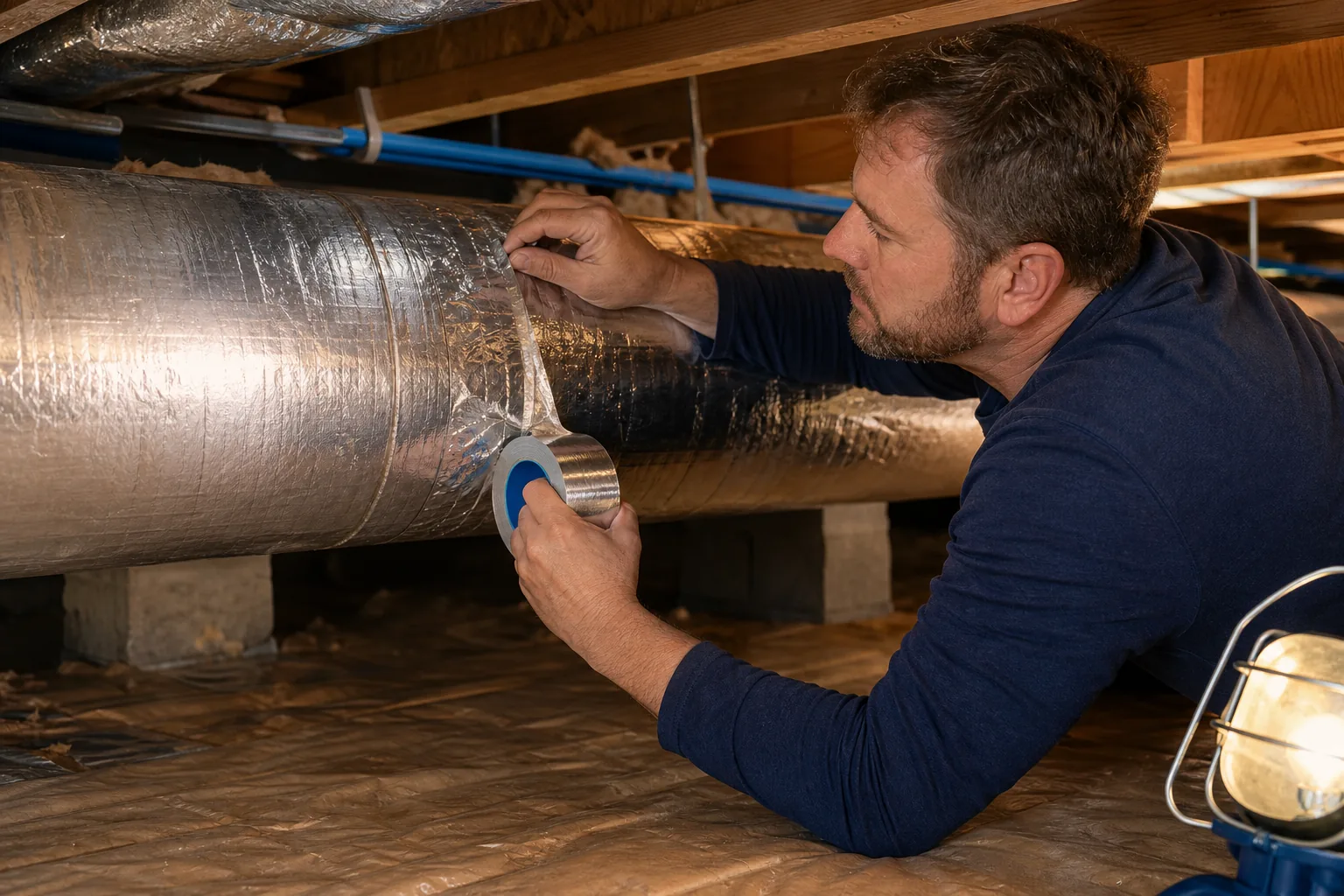
For small gaps around window trim or door frames, use weather stripping or caulk suited to that surface. Check the product directions first. If you can see a gap in an accessible duct joint, an HVAC-rated foil tape or duct sealant may help close it. Don't use ordinary cloth-backed duct tape for this task.
Before working near ducts, turn the heating system off. Don't seal furnace vents, flues, or any opening that supplies air for combustion. Those parts affect safe operation. If you can't tell whether a duct is part of the heating airflow or a safety vent, leave it alone and ask a technician.
Walk through each room while the furnace runs. A closed register, a blocked return, or a loose duct connection may explain why one room stays cold. Clean vent covers with a vacuum brush. Don't push a vacuum hose deep into the ductwork or take apart duct sections.
Insulation helps slow heat loss through ceilings and walls. If an attic feels much colder than the rooms below, or a draft remains after basic sealing, consider an insulation assessment. Our home energy efficiency tips cover other places to check for drafts and heat loss.
Some duct leaks are hidden or hard to reach. A technician can inspect the duct system and test for leakage instead of relying on a quick look. Home Worx Heating and Cooling can assess ductwork for homes in Auburn and Colfax, where foothill winters can make uneven heat especially noticeable.
Pro Tip:Fix easy drafts first, then note which rooms still feel cold. That detail helps a technician focus the duct inspection.
Step 3: Set the Thermostat for Efficient Heating
Set a schedule that matches the hours people are home. If the house is empty for part of the day, program a lower setting during that time, then return to your preferred comfort setting before you get back. Avoid large changes that leave the home uncomfortable or prompt you to keep adjusting the controls.
A programmable thermostat can follow set times without daily changes. A smart thermostat can also let you adjust settings remotely, depending on the model. Many smart thermostats support remote temperature changes and schedules. The main value is simple: the system can follow your routine rather than heating an empty home at the same setting all day.
Start with a basic schedule. Set the time you leave, the time you return, and the hours you sleep. Then watch how the home feels for several days. If rooms take too long to warm, make smaller adjustments or ask a technician to check the thermostat location and system operation.
Keep the thermostat away from direct sun, drafts, or heat from a lamp or appliance. Those conditions can affect what it senses. If it uses batteries, replace them when the display warns you or the controls stop responding.
Furnace design affects how heat is delivered, too. A single-stage furnace runs at one heat output when it is on. A multi-stage model can use a lower setting in milder conditions and a higher setting when more heat is needed. Variable-speed motors can adjust airflow rather than running at one fixed speed. These features depend on the equipment and its setup, so ask a technician how a specific system works before choosing an upgrade.
In Rocklin or Roseville, where a home may have rooms with different sun exposure, a steady schedule can help you spot which comfort issues come from settings and which may come from airflow. Make one change at a time so you can tell what helped.
Step 4: Schedule a Professional Furnace Tune-Up
Book a tune-up before the coldest stretch, when there's time to address a problem before the furnace runs often. An annual visit gives a trained technician a chance to inspect parts and test how the system runs. Carrier recommends yearly maintenance and says a typical tune-up may cost $70 to $200, depending on the system, location, labor, and condition.
A tune-up is more than a filter change. The technician may inspect the heat exchanger, burners, blower, electrical connections, and venting. They can also check safety controls and test combustion. These checks need training and test tools, so don't try to copy them by opening the furnace or handling gas components.
Ask what the service includes and request a clear summary of any findings. If a repair is suggested, ask what was found and what the work will address.
Home Worx Heating and Cooling provides heating maintenance and seasonal tune-ups for local homes. We serve Colfax and Auburn, as well as nearby communities including Grass Valley, Penn Valley, Rocklin, Roseville, and Lincoln. Scheduling before the rush can make it easier to plan a visit that fits your home and system.
Ask the technician to check airflow if some rooms stay cold despite clear vents and a clean filter. A tune-up can reveal a maintenance issue, but it may also show that duct repairs or a thermostat adjustment deserve separate attention. Keep the service notes with your furnace records, especially if the system is under warranty.
If you smell gas, leave the home right away and call PG&E or 911 from outside. Stop using the furnace and get prompt professional help if you hear a new loud sound or suspect a venting problem. For less urgent signs, such as short cycling or uneven heat, arrange service rather than adjusting internal parts yourself.
Step 5: Decide Whether Repair or Replacement Makes Sense
Don't judge a furnace by its efficiency rating alone. AFUE means annual fuel utilization efficiency . It describes the share of fuel energy a furnace turns into useful heat over a year. A higher AFUE rating means less fuel is lost during the rating test, but your actual energy use also depends on the home's insulation, ductwork, thermostat settings, and heating needs.
Check the rating label on the furnace or ask a technician to identify the model. Compare the AFUE rating of your current unit with the proposed replacement. ENERGY STAR describes certified furnaces on its furnace product page . Installed costs and savings vary from home to home, so ask for a written estimate before you weigh any payback period.
Before replacing a furnace, ask for an assessment of the whole heating system. A newer unit won't fix a blocked return, leaking ducts, or poor insulation. Ask the contractor to explain the system's size, airflow, venting needs, and the work included in the estimate. For a gas furnace, the installation may also involve permitting requirements, so confirm local permit needs with the contractor and the relevant building department.
Repair may make sense when the problem is limited and the furnace otherwise heats the home as expected. Replacement deserves a closer look when repairs keep recurring, comfort remains poor, or the current unit can't meet the home's needs. Get the diagnosis in writing, then compare the repair scope with the replacement proposal.
Home Worx Heating and Cooling handles furnace repairs and installations in Rocklin, Roseville, Lincoln, and the surrounding service area. We can review the equipment and discuss whether maintenance, repair, or a new system fits the issue. Financing options are available; ask us for the current terms that apply to your project.
Key Takeaway:Fix airflow and heat loss before paying for a higher-rated furnace. The equipment can only heat your home well when air can move and stay where it belongs.
Frequently Asked Questions
What is the easiest way to make a furnace more efficient?
Start by checking the air filter and replacing it if it looks dirty. Then make sure supply vents and return grilles aren't blocked. These simple checks support airflow without opening the furnace. If the filter is clean but the system still runs poorly, book a technician to inspect the furnace and ducts.
How often should I check my furnace filter in winter?
Check the filter about once a month during the heating season. Replace it when it looks dirty, while following the furnace and filter maker's directions. A one-inch filter may need more frequent changes than a thicker media filter. Pets, dust, and long furnace run times can also shorten the interval.
Does duct sealing improve furnace efficiency?
Yes, sealing leaks in heating ducts can help keep warm air from escaping before it reaches your rooms. You can seal a small, accessible duct joint with HVAC-rated tape or sealant when the system is off. Leave hidden leaks and any vent or flue work to a trained technician.
What does AFUE mean on a furnace?
AFUE is short for annual fuel utilization efficiency. It measures how much of the fuel a furnace uses becomes useful heat over a year. A higher rating means less fuel is lost in the rating test. It doesn't predict your exact bill, since home insulation, duct losses, and thermostat use also matter.
Can I make an old furnace efficient with a smart thermostat?
A programmable or smart thermostat can help match heating to your schedule, but it can't repair worn parts or stop duct leaks. Start by setting times for when you're home, away, and asleep. If comfort or airflow remains uneven, ask a technician to check the furnace and duct system before buying new controls.
Conclusion
Begin with the filter, open airflow paths, and easy draft fixes. If uneven heat or high energy use continues, ask Home Worx Heating and Cooling to inspect the furnace and ducts in your area. We'll help you decide what needs attention before you commit to a larger upgrade.