
How to Reduce Dust in House: 6 Simple Steps
Dust doesn't take a day off. If you're wiping down the same shelves every week and still finding a gray film by Thursday, the problem isn't your cleaning routine , it's what's feeding the dust in the first place. These six steps attack the sources directly, so you're not just chasing particles around your home.
Step 1: Replace Carpet with Hard Flooring
Carpet is a dust trap. The fibers hold onto skin cells, pet dander, pollen, and fine particles , then release them back into the air every time someone walks across the room. Swapping carpet for hard flooring, especially in bedrooms where you spend the most hours breathing, removes that reservoir almost entirely.

Hard flooring provides a smooth, low‑porosity surface that makes dust easier to remove compared with carpet. It is far easier to clean than carpet.
One honest caveat: hard floors don't eliminate dust , they just make it easier to remove. You still need to damp-mop regularly. If you sweep dry, you push fine particles back into the air. A damp microfiber mop picks them up and keeps them down. In the dry Sierra Foothills climate around Auburn and Colfax, where outdoor dust blows in freely during summer, that weekly mop makes a real difference.
If replacing all your carpet isn't in the budget right now, start with the bedroom. That's where you spend six to eight hours a night breathing close to the floor. Even one room swap cuts your overnight dust exposure significantly.
Key Takeaway:Hard floors don't eliminate dust, but they stop it from hiding , damp-mop weekly to actually remove what settles.
Step 2: Install MERV 13‑Rated Filters in Your HVAC System
Your HVAC system moves air through every room in your house. If the filter can't catch fine particles, the system just circulates them. A MERV 13-rated filter captures 98% of particles including bacteria, dust mites, and allergens as small as 0.3 microns , that's the level where real dust control happens. Basic MERV 1-7 filters catch lint and large debris but miss almost everything that causes sneezing and irritation.
MERV 13 filters strike the right balance for most homes. They filter aggressively without restricting airflow enough to stress a standard residential HVAC system. You can learn more about how HVAC systems reduce home allergens through proper filter selection and fan settings. Plan to swap the filter every one to three months , more often during high-pollen spring months or after wildfire smoke events, which are a real concern in Placer and Nevada County.
If you want whole-home results without the guesswork, Home Worx Heating and Cooling offers professional air-quality service visits for homeowners across the Rocklin, Auburn, and Colfax area. A trained technician installs the right filter grade for your specific system, checks for gaps around the filter frame where unfiltered air can sneak through, and inspects the ductwork. Twice a year , spring and fall , is the recommended schedule for Sierra Foothills homes.
One thing most people miss: even a perfect filter fails if the housing isn't sealed. Air always takes the path of least resistance. If there's a gap around the filter, dusty air bypasses it entirely. Seal any gaps with HVAC-rated foam tape before you consider the job done.
Step 3: Vacuum with a HEPA vacuum cleaner with sealed system
A regular vacuum can make your dust problem worse. Many older models pull dust in through the bag or canister and then push fine particles back out through the exhaust. HEPA vacuum cleaners equipped with sealed housings prevent dust from being recirculated, trapping particles inside the unit.
Vacuum at least once a week. If you have pets or live in a high-dust area, which describes most of the Placer County foothills in summer, twice a week is better. Focus on the edges of rooms, under furniture, and along baseboards. Dust settles in corners and along walls first, so those spots accumulate fastest.
When you vacuum, go slowly. Fast passes just push surface debris around. A slow, overlapping pass gives the suction time to pull embedded particles out of rugs and upholstery. After vacuuming upholstered furniture, give it a few minutes before you vacuum the floor beneath it, disturbed particles from the couch will settle down and you'll pick them up in the same session.
Pro Tip:After vacuuming soft furniture, wait five minutes before vacuuming the floor beneath it, dislodged particles need time to settle so you can capture them in the same pass.
Step 4: Dust Using Damp Microfiber Cloths
Feather dusters are decorative at best. They move dust from one surface to another and send a good portion of it airborne. Microfiber cloths work differently: the fine fibers generate a static electric charge when rubbed against a surface, which attracts and holds dust particles rather than scattering them. This charge‑based retention makes the cloth genuinely superior to conventional fabrics such as cotton and wool, which do not generate the same static field.
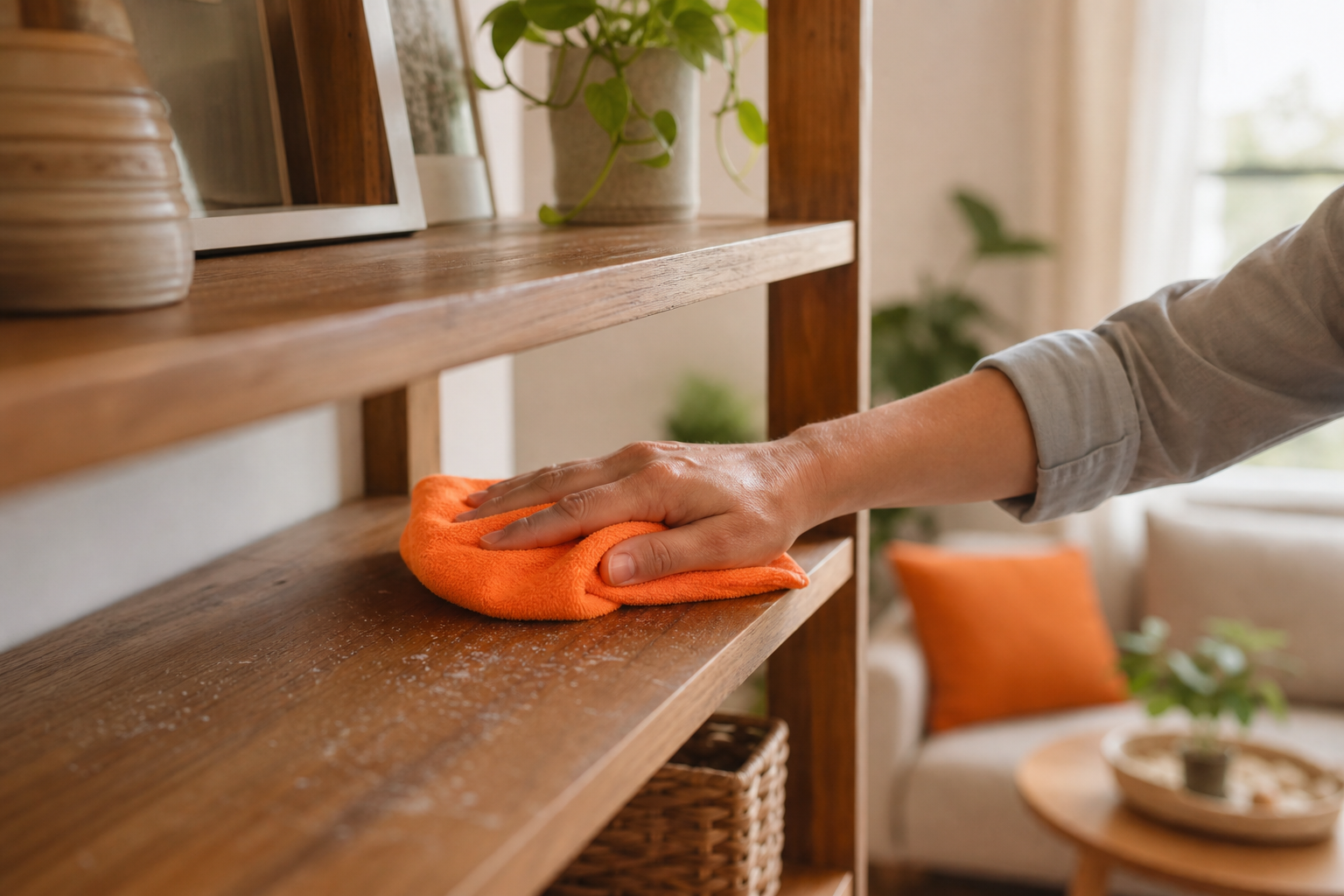
For most surfaces, a dry microfiber cloth is enough. For sticky residues or stubborn buildup on shelves and window sills, dampen a small section of the cloth slightly. A lightly damp cloth traps particles that a dry cloth might miss, without losing its electrostatic properties. Don't soak it , you want barely damp, not wet.
Dust from the top of the room down. Start with ceiling fans, light fixtures, and the tops of cabinets. Work your way to shelves, furniture surfaces, and finally baseboards. That way, any particles you dislodge fall onto surfaces you haven't cleaned yet. An extendable microfiber duster handles high spots like ceiling fan blades without a ladder , and it captures more than a feather duster would on the same surface.
Weekly dusting is the right cadence for most homes. In dustier months , late summer in the Sierra Foothills when the ground is dry and winds pick up , you may find every five days is more realistic. The goal is to remove dust before it accumulates enough to become airborne again on its own.
Step 5: Control Indoor Humidity with a Hygrometer and Dehumidifier
Humidity is a hidden driver of dust. Dust mites don't drink water , they absorb moisture from the air. When indoor relative humidity climbs above 60%, mite populations grow fast. Drop humidity below 50% and their breeding slows significantly. Keep it between 40% and 50% and you've removed the conditions they need to thrive.
A basic hygrometer , a small device that costs very little , tells you exactly where your indoor humidity sits. Without one, you're guessing. With one, you can see whether you need a dehumidifier (if humidity runs high) or a humidifier (if the air is too dry). In the Sierra Foothills, winters are cold and dry while summers are hot and arid, so the problem shifts by season. A hygrometer removes all the guesswork.
It removes the moisture that lets dust mites and mold thrive, which tackles the allergen source rather than the airborne particles themselves. For particles already in the air, you still need a HEPA air purifier or your HVAC filter doing its job. The two tools work together, not as substitutes.
Home Worx Heating and Cooling installs air purifiers with sealed HEPA filtration that integrate directly with your HVAC system, treating every room rather than just one. For homeowners in the Placer and Nevada County area, that whole‑home approach is often more effective than a portable unit running in a single bedroom. You can see the full range of indoor air quality solutions available for Rocklin-area homes , including humidity control and advanced filtration.
Step 6: Adopt a Shoe‑Off Habit
A significant portion of indoor contaminants enter from outdoors. Shoes track in pesticides, pollen, lead dust, and biological material, and the highest concentration of that debris ends up in carpet near the entryway. The fix costs almost nothing and takes five seconds per person.
Encourage everyone to remove shoes at the door. A simple shoe rack or a designated area for footwear helps keep outdoor dust from being tracked inside.
Shake out any floor mats regularly. A mat that becomes saturated with dirt can release particles back into the air. Choose durable, easy‑to‑clean options and replace them when they wear out.
If you have pets, the same logic applies. Wipe paws before they come inside. A small towel or pet‑cleaning mat near the door takes seconds and prevents a surprising amount of tracked‑in grime, especially in the dry, dusty summer months common across Placer County.
The shoe‑off habit is the one step that costs nothing and requires no equipment. It also compounds well with everything else on this list: a MERV 13 filter and a HEPA vacuum work harder when less outdoor dust enters the home in the first place.
FAQ
Why is my house so dusty no matter how much I clean?
Frequent cleaning without addressing the source just moves dust around. The main culprits are carpet (which holds and re-releases particles), a low-efficiency HVAC filter (which recirculates fine dust), and outdoor debris tracked in on shoes. Fix those three things first. If your HVAC filter is below MERV 13, upgrading it alone can make a noticeable difference within a week.
How often should I change my HVAC filter to reduce dust?
For a MERV 13 filter in a typical home, every one to three months is the standard range. Change it closer to monthly if you have pets, run the system heavily, or live in a high-dust area like the Sierra Foothills during summer. A clogged filter doesn't just let dust through , it strains the blower motor and reduces airflow across the whole system.
Does a dehumidifier actually help with dust?
Indirectly, yes. A dehumidifier doesn't filter dust particles from the air, but it removes the moisture that dust mites need to survive. Keeping indoor humidity between 40% and 50% cuts off mite breeding and reduces the allergen proteins they produce. For airborne particles, you still need a HEPA air purifier or a properly rated HVAC filter working alongside it.
What's the best way to dust without spreading particles around?
Use a microfiber cloth , dry for most surfaces, slightly damp for stubborn spots. Microfiber's fine fibers generate a static charge that attracts and holds dust rather than scattering it. Always dust from the top of the room downward: ceiling fans first, then shelves, then furniture, then baseboards. That way particles you dislodge fall onto surfaces you haven't cleaned yet.
How much does professional HVAC air quality service cost in Placer County?
A professional air-quality maintenance visit from Home Worx Heating and Cooling typically runs in the range that covers a thorough filter upgrade, system inspection, and duct check. Pricing varies by system type and scope of work. Home Worx serves Colfax, Auburn, Rocklin, and surrounding Placer and Nevada County communities , contact them directly for a current quote.
Can I reduce dust without replacing my carpet?
Yes, though carpet makes the job harder. If you're keeping carpet, vacuum twice a week with HEPA vacuum cleaners with sealed systems, have it professionally deep-cleaned at least once a year, and focus your other efforts on HVAC filtration and humidity control. Short-pile and closed-loop carpets are easier to keep clean than loose-pile styles, which trap particles deeper in the fibers.
Conclusion
Start with your HVAC filter , it's the single change that affects every room at once. Swap to MERV 13, seal the housing, and set a replacement reminder. Then layer in the rest: hard flooring where you can, weekly microfiber dusting from top to bottom, a HEPA vacuum, humidity kept between 40% and 50%, and shoes off at the door. If you want a professional to handle the filter upgrade, duct check, and humidity setup in one visit, the team at Home Worx Heating and Cooling serves Placer and Nevada County homeowners year-round. You can also review what to look for when hiring an HVAC company before you book. Reach out to Home Worx to schedule your air-quality visit.