
How to Reduce Energy Bill in Summer: 6 Options
Updated: Oct 4

Summer cooling can push a foothill power bill up fast, especially during long hot spells in Placer and Nevada counties. The biggest savings usually come from fixing the home and HVAC system, not from one thermostat trick. Here are six options, ranked by the kind of help they provide and who should use them.
Table of Contents
1. Home Worx Heating and Cooling
Home Worx Heating and Cooling is the best fit when your current system is old, strained, or costly to run. We help homeowners and small businesses in Auburn, Colfax, Rocklin, Roseville, Grass Valley, Penn Valley, and Lincoln assess their cooling needs before choosing a repair, tune-up, or replacement.

That matters because a high-efficiency system can change the size of the problem. Small habits may trim a modest share of summer use. A properly sized HVAC upgrade can make a much larger difference, especially when the old unit runs for long stretches without reaching the set temperature.
We look at the equipment, ductwork, insulation, airflow, and the way each space is used. A system that works well in a compact Auburn home may not suit a larger house in Lincoln. Foothill homes also face sharp temperature swings, so the right choice may be an appropriately matched cooling system or heat pump.
Home Worx Heating and Cooling also provides maintenance, indoor air-quality work, installations, and emergency repair. Financing options are available, with a new efficient system listed at as low as $120 per month. Ask for current terms and eligibility before making a decision.
The caveat is simple: replacement isn't the first answer for every high bill. If a filter, refrigerant issue, failed part, or duct leak is driving the cost, a repair may make more sense. Contact Home Worx Heating and Cooling for a local inspection to separate those cases.
2. Programmable Thermostat - Reduce Cooling During Empty Hours
A programmable thermostat is a low-cost choice for homeowners who leave the house on a set schedule. It can raise the temperature while you're away, then bring the home back toward your comfort setting before you return.
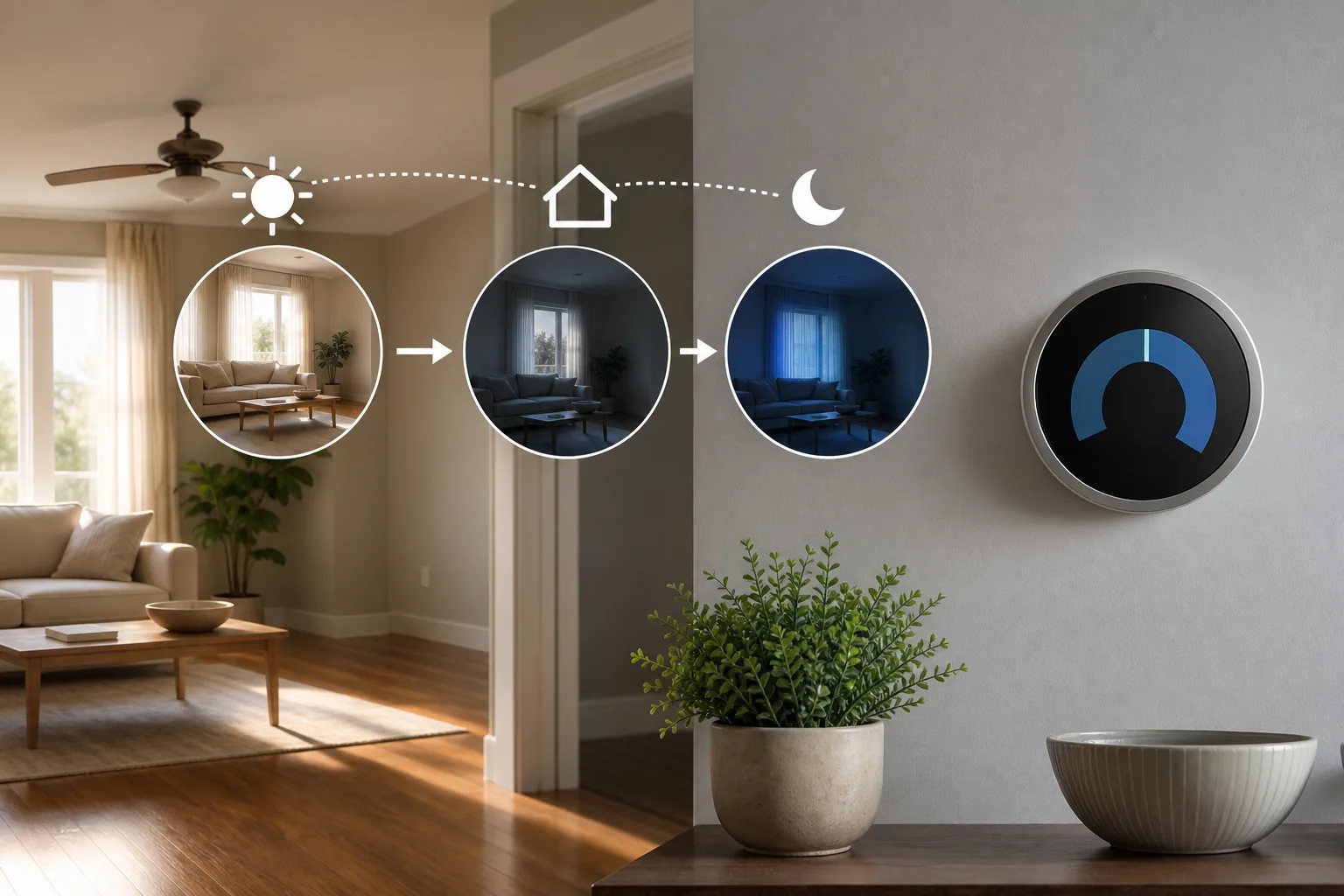
For many households, 78°F is a useful starting point when someone is home. Raise the setting during work hours if the house is empty, then test a lower setting only when people are home and need it.
Don't make the thermostat chase comfort. A very low setting won't cool the house faster. It will keep the system running longer. Try a small change first, such as increasing the away setting by several degrees, then check your energy use over the next billing period.
This option works best when the schedule is predictable. It may be less useful for a household with someone home all day, pets that need stable conditions, or rooms that already have uneven airflow. Ceiling fans can help people feel cooler, but they don't lower the room temperature, so turn them off in empty rooms.
Residents in Roseville, Rocklin, Auburn, Colfax, Grass Valley, Penn Valley, and Lincoln can also review time-of-use details with their utility before shifting laundry or other heavy loads. The thermostat won't solve a poorly sealed house, but it can stop your AC from cooling an empty one.
Quick test:compare one week with your old schedule against one week with a higher away setting. Keep the change only if comfort stays steady. For local service, contact Home Worx Heating and Cooling.
3. Caulking and Weather-Stripping - Stop Cool Air From Escaping
Caulking and weather-stripping are good choices when cool air leaks around doors, windows, or other openings. These simple materials close small gaps so your AC doesn't have to replace the air that slips outside.
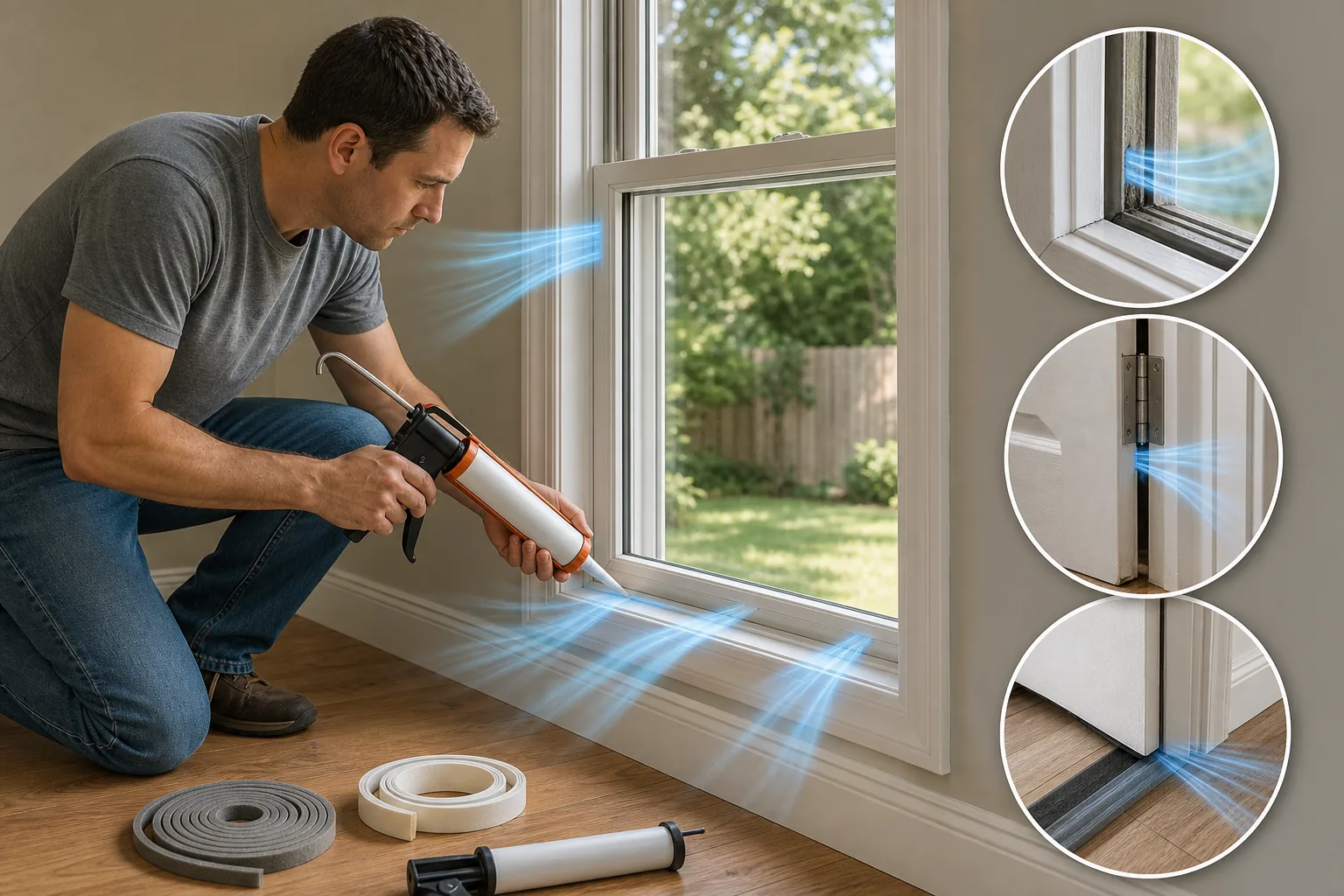
Start with the doors used most often. On a hot afternoon, stand near the frame and feel for warm air. Check window edges, pipe openings under sinks, and the joint where walls meet the floor. A thin gap may seem harmless, but several leaks can add up across the house.
Use exterior-grade caulk for fixed cracks. Use weather-stripping on a moving door or window. The material must compress when the opening closes. If it prevents the door from latching, it's too thick or in the wrong spot.
Air sealing works alongside thermostat control and filter care. The point is to reduce the load before asking the equipment to work harder.
This is usually a homeowner task, but don't seal over drainage paths or block required vents. Older homes can have moisture issues that need a wider inspection. A persistent hot room may also point to weak insulation, a duct problem, or a system that needs service.
For a Colfax or Penn Valley home, focus first on openings exposed to strong afternoon sun. In Auburn, Rocklin, Roseville, Grass Valley, and Lincoln, start with the same sun-exposed openings. A door that opens to a hot garage can be a bigger comfort problem than a small gap on a shaded wall.
4. Attic Insulation - Keep Foothill Heat Out
Attic insulation helps when heat from the roof moves into the rooms below. It is a strong option for homeowners with hot ceilings, uneven upstairs rooms, or an attic where the insulation looks thin, disturbed, or missing.

During a Northern California heat wave in Auburn, Colfax, or Rocklin, the roof can stay hot for hours after sunset. Without enough insulation, that heat keeps moving downward. Your AC then runs longer after outdoor temperatures begin to fall.
Look for bare spots around the attic floor, compressed insulation, and gaps near access hatches. Homeowners in Roseville should not cover recessed lights or other equipment unless the product and fixture allow it. A professional can also check air sealing at the attic floor, since insulation works better when outside air isn't moving through it.
Attic insulation is a homeowner energy-saving measure. For broader system context, see guidance on ductless heating and cooling . Better insulation can reduce demand, but it won't correct an oversized or failing AC unit.
Attic work can be dusty and uncomfortable in summer. It also needs care around wiring and roof vents in Grass Valley or Penn Valley. If you're unsure what is safe to touch, get an assessment before adding material.
This option is most useful for Lincoln homeowners when the attic is the weak link. If the attic is already well insulated, sealing ducts or servicing the AC may bring a better return.
Contact Home Worx Heating and Cooling, a family-owned HVAC contractor based in Colfax, for local service in Placer County and Nevada County.
5. Well-Planned Landscape - Shade Walls, Windows, and Outdoor Equipment
A well-planned landscape can lower heat reaching windows, walls, and outdoor HVAC equipment. It is a long-term choice for homeowners with strong afternoon sun and enough yard space to add shade without blocking service access.

Shade works best when it reaches the parts of the home that take the most sun. A tree or tall planting near a west-facing window may reduce indoor heat gain. Shade near an outdoor condenser can also help the unit avoid direct sun, but airflow around the equipment must remain clear.
Don't plant too close to the condenser. Leaves and grass can clog the coil, while roots may affect walkways or underground lines. Keep the service side open so a technician can inspect the unit without cutting through a mature planting.
A well-planned landscape may reduce AC costs by 15% to 50%, though results depend on the home, climate, plant placement, and existing shade. Treat that range as a possible planning reference, not a promise for every yard.
Homeowners in Grass Valley, Auburn, and Penn Valley may need a plan that handles dry summers and cold winters. In Colfax, Rocklin, Roseville, and Lincoln, pick plants for the site and place shade where it helps the building. A landscape designer or local nursery can help with plant choice, while an HVAC technician can confirm that the condenser still has enough clearance.
Solar is another path for reducing grid electricity use, but it needs its own site review. A residential solar provider such as a local solar company can help with project planning. Solar won't fix a leaky duct or inefficient AC, so deal with those loads first. Contact Home Worx Heating and Cooling for local service in Placer and Nevada counties.
6. Seasonal AC Tune-Ups - Improve Cooling Efficiency Before Peak Heat
A seasonal AC tune-up is the right choice when the system runs longer than usual, blows weak air, cycles on and off, or has not had a recent professional check. A technician can inspect the parts that homeowners can't safely test alone.
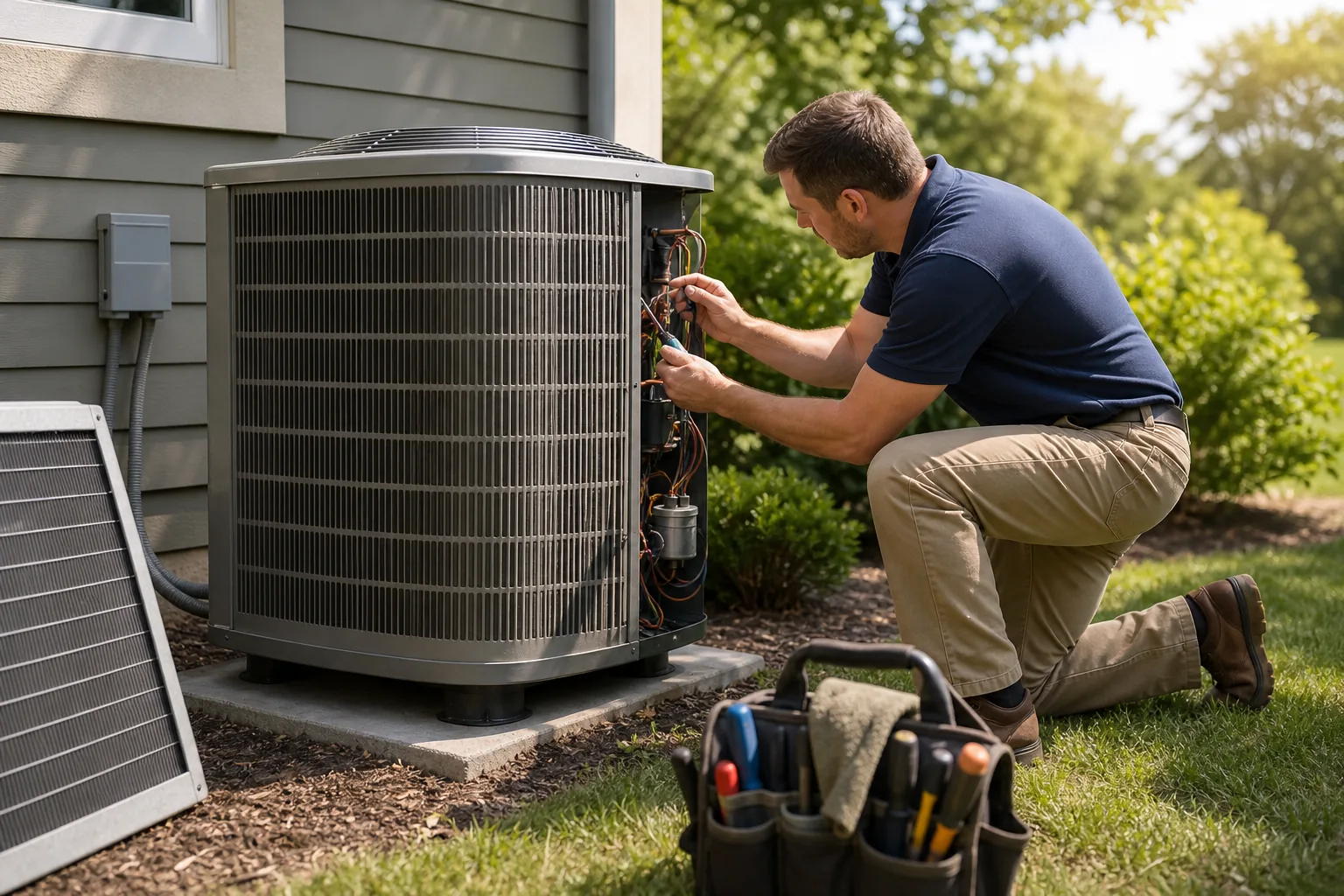
A tune-up may include checking system operation, airflow, electrical parts, the outdoor coil, and signs of refrigerant trouble. The exact work depends on the unit and the service plan. Cleaning a filter is useful, but it doesn't replace a full inspection when performance has changed. For a homeowner-friendly list of seasonal tasks, use the summer HVAC maintenance checklist before scheduling professional service.
Home Worx Heating and Cooling handles maintenance and repair across the local service area, including Colfax, Roseville, and Grass Valley. We can also help you understand whether the current unit is worth keeping. If the system needs frequent repairs or struggles through every hot spell, compare the repair path with a replacement plan.
Efficiency ratings matter when you replace equipment. SEER2 is a seasonal efficiency rating for cooling systems. The SEER and SEER2 HVAC guide is available for additional reading.
What you notice | First option to consider | What to watch for |
Bill rises but comfort feels normal | Thermostat schedule or air sealing | Check usage before replacing equipment |
Weak airflow in several rooms | Seasonal AC inspection | Filter, duct, blower, or coil problems |
Upstairs rooms stay hot | Attic insulation review | Air leaks and duct location matter |
Outdoor unit runs for long periods | Professional tune-up | Dirty coil, airflow trouble, or low refrigerant |
System needs repeated repairs | Repair versus replacement review | Ask about efficiency, sizing, and available rebates |
Schedule service before the first extreme heat stretch if you can. During a heat wave, repair demand rises and a small fault can become a full breakdown.
For homeowners in Auburn, Rocklin, Lincoln, or Penn Valley, a maintenance plan can make seasonal checks easier to remember. The best choice depends on the system's age, condition, and repair history, not on a promise of a fixed savings percentage.
FAQ
What is the fastest way to reduce an energy bill in summer?
The fastest low-cost step is to raise the thermostat when you're away and seal obvious air leaks. If your AC is old or failing, a professional inspection may find a larger source of waste. Start with the change that matches the problem. A thermostat won't fix weak airflow, and new insulation won't repair a failed compressor.
Does setting the AC to 78 degrees really save money?
Setting the AC near 78°F while you're home can reduce cooling demand compared with a much lower setting. Comfort varies, so use fans in occupied rooms and close blinds during strong sun. Raise the setting while you're away. Track your usage after the change instead of assuming the same result in every home.
Should I repair or replace my air conditioner?
Repair the unit when the fault is limited and the system still meets your comfort needs. Consider replacement when repairs repeat, the unit cannot keep up, or operating costs keep rising. Home Worx Heating and Cooling can inspect the system and explain both paths before you commit to new equipment.
Can landscaping lower summer cooling costs?
Landscaping can lower summer cooling costs when it shades sun-facing windows or walls without blocking HVAC airflow. Results depend on plant placement, the home's design, and existing shade. Keep plants away from the condenser and leave room for service. Shade is a long-term fix, not a substitute for a damaged or dirty system.
Are HVAC rebates available in California in 2026?
California HVAC rebates and federal tax credits may apply to qualifying high-efficiency equipment, but eligibility depends on the system, household, utility, and program rules. Check current terms before buying. A local contractor can help identify equipment that may meet program requirements, but the agency or utility makes the final approval.
Conclusion
Start with a thermostat schedule and a quick air-leak check, then book a professional HVAC assessment if your system still runs hard. Home Worx Heating and Cooling can help homeowners across Auburn, Colfax, Rocklin, Roseville, Grass Valley, Penn Valley, and Lincoln choose the next sensible step for comfort and lower summer use.