
How to Reduce Humidity in Your House
A muggy room can feel uncomfortable even when the thermostat says the temperature is fine. If you’re wondering how to reduce humidity in your house, start by measuring it and finding where the moisture comes from. Then use your AC, ventilation, or a dehumidifier to remove it.
We analyzed 87 comments and questions from YouTube, Reddit and Quora about reducing indoor humidity and found that 29% mentioned sources of moisture.
Table of Contents
Step 1: Measure Indoor Humidity and Find the Moisture Source
Step 2: Stop Adding Moisture and Ventilate at the Right Time
Step 3: Use Your Air Conditioner or Heat Pump to Remove Moisture
Step 4: Choose and Run a Dehumidifier for Persistent Dampness
Step 5: Fix Building Moisture and Get Help for Recurring Problems
Step 1: Measure Indoor Humidity and Find the Moisture Source
First, check whether the air is truly damp. A digital hygrometer measures relative humidity , or how much water vapor is in the air compared with how much it could hold at that temperature. Put one in a main living area and another in a room that feels damp, such as a basement or bathroom.
Keep each meter away from windows, exterior walls, and heating or cooling vents. Check readings at different times, then note whether humidity rises after a shower, while cooking, or after rain. A single high reading may reflect a short-lived spike. A pattern that sticks around points to a source worth finding.
Many home guides suggest keeping indoor relative humidity around 30% to 50%. A reading that stays above 60% deserves attention. Moisture-control guidance also stresses finding and fixing the moisture problem, not just drying the air.
Look for condensation on windows, damp patches, peeling paint, soft drywall, or a musty smell. Check under sinks and around plumbing, appliances, the attic access, and the HVAC system. If the lower level reads much higher than the main floor, focus your first checks there. For a fuller list of possible sources, see common causes of high humidity in a house .
In Auburn or Colfax, a damp crawl space can affect rooms above it. In Rocklin or Roseville, compare a suspicious room with a dry one before buying equipment. In Grass Valley, Penn Valley, or Lincoln, record the readings and what was happening at the time. That gives you a useful baseline.

Step 2: Stop Adding Moisture and Ventilate at the Right Time
Before adding equipment, cut down on moisture from everyday tasks. Cooking, showers, and wet laundry all put water vapor into indoor air. Small changes help, especially when several moisture sources happen in the same part of the house.
Run the bathroom fan during a shower and afterward. Make sure it sends air outdoors, not into an attic or another room.
Use a range hood that vents outdoors when cooking. If you boil water, put a lid on the pot when it makes sense.
Dry clothes outside when conditions allow. If you use a dryer, check that its vent leads outdoors.
Water houseplants only as needed, and don’t leave damp soil or standing water sitting indoors.
A bathroom mirror may fog briefly after a hot shower. But if the room stays damp, check that the fan works and that its duct isn’t blocked or disconnected. A timer can help the fan keep running after you leave. If laundry has to dry indoors, open the door to the room and use suitable ventilation rather than trapping wet air in a closed space.
Opening windows can help, but only when outdoor air is drier than indoor air. On a warm, muggy day, an open window may bring more moisture inside, especially in a cool basement. In the Sierra foothills, a cool, dry morning may be a better time to air out a room than a hot afternoon. Compare indoor and outdoor conditions, and close the windows if the air outside feels damp.
Ventilation needs care in a tightly sealed home. Exhaust fans remove moist air, but the house also needs a planned way for replacement air to enter. A ventilation system can help manage that exchange. If moisture remains after you change daily habits, ask a qualified contractor to check the fans and duct paths rather than adding vents at random.
In Roseville, try the fan during and after showers before investing in a room-sized appliance. Then check the meter again. The change in the reading will tell you whether that step is enough.
Step 3: Use Your Air Conditioner or Heat Pump to Remove Moisture
For above-ground living spaces, air conditioning is a key way to remove moisture while cooling the home. Warm indoor air passes over the system’s cold coil. Water vapor condenses on the coil, then drains away. Air conditioning is the most effective method for reducing humidity in these areas.
Let the system run long enough to cool and remove moisture. A unit that cools the house very quickly and shuts off again may not run long enough to pull out much water. If the AC starts and stops often, or the rooms feel clammy even when they’re cool, ask an HVAC technician to check system size, airflow, and drainage.
Start with checks you can do safely. Set the thermostat fan to Auto rather than On, since a continuously running fan can move air after cooling stops. Check the filter and replace it if it’s dirty, following the system maker’s instructions. Keep supply vents and return grilles open so air can move as designed.
Don’t force the thermostat to a very low setting in hopes of drying the house faster. A steady, comfortable setting is a better starting point. If the system still can’t control moisture, the issue may be a blocked drain, damaged duct, dirty coil, or a system that short-cycles. Leave refrigerant work and internal repairs to a trained technician.
Home Worx Heating and Cooling provides air-conditioning, heat-pump, and HVAC maintenance services in Auburn, Colfax, Rocklin, Roseville, Grass Valley, Penn Valley, and Lincoln. We can assess whether your system is removing moisture as it should. For help weighing a separate drying unit against cooling, see our guide to dehumidifiers versus air conditioners .
Don’t judge the AC by temperature alone. Check the humidity reading after the system has run and compare it with your baseline. Contact Home Worx Heating and Cooling for local service.
Step 4: Choose and Run a Dehumidifier for Persistent Dampness
A dehumidifier makes sense when one area stays damp or when your AC can’t keep humidity in check. A portable unit can target a basement, laundry room, or other problem space. A whole-home unit connects with the HVAC system and is better suited to a moisture issue that affects multiple rooms.
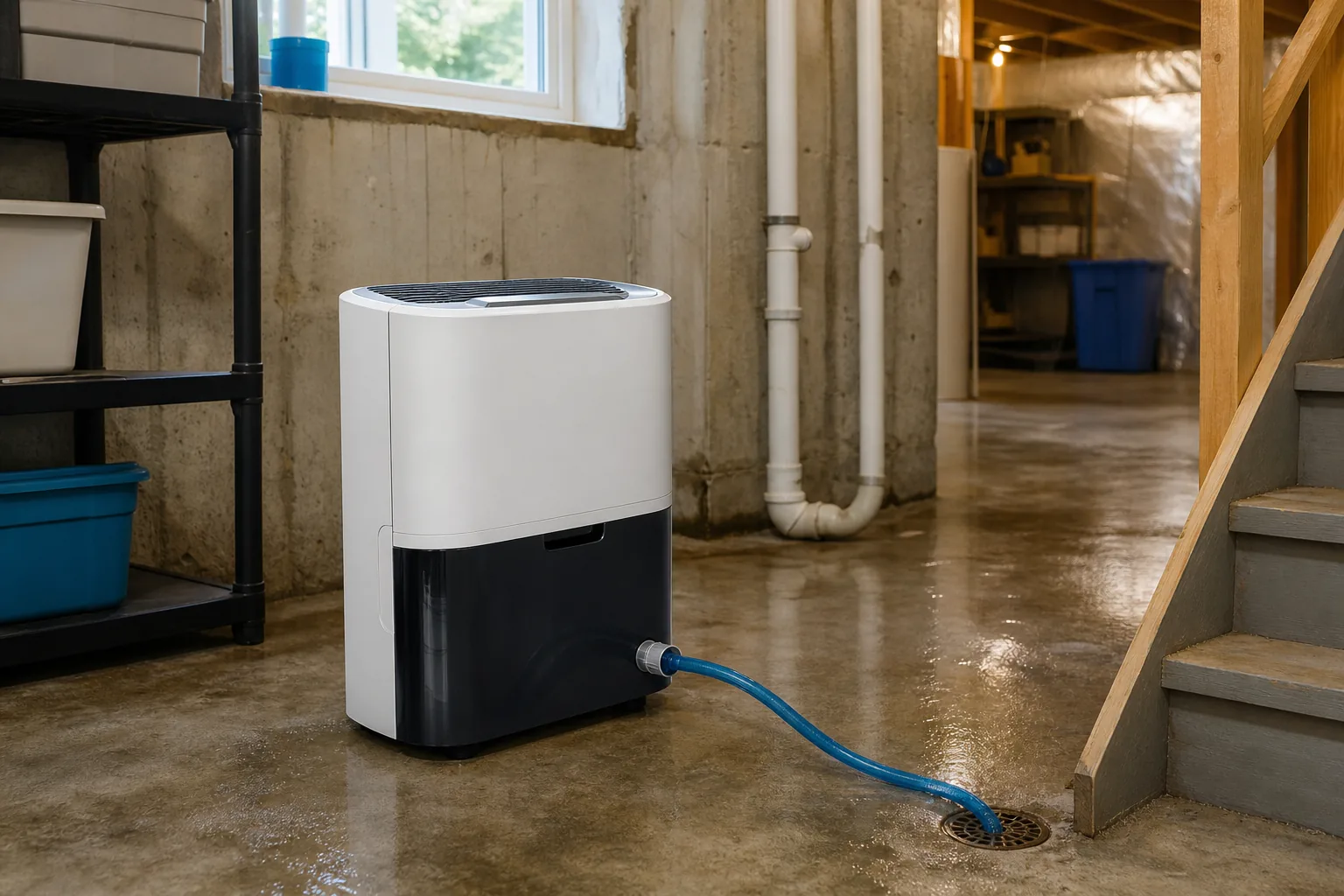
Size the unit for the area you want to treat. Follow its room-size guidance and instructions, and place it where air can move around it. Keep it away from walls or furniture if the maker calls for open space. Empty the tank as directed, or use a drain hose if the unit supports one and you have a suitable drain.
Set a humidity target based on the unit’s instructions and your home’s conditions. If the air still feels damp, adjust the setting as directed. For a portable model, placement and drainage affect how well it works. Homeowners in Auburn and Colfax can also check for water entry or leaks.
Keep the unit clean as its manual directs. Check the filter and water container on the schedule the maker gives you. If it runs often but the reading barely changes, don’t assume a larger appliance will solve the cause. Look for water entry, a leak, or poor airflow first. This can be useful for homes in Rocklin and Roseville, as well as Grass Valley, Penn Valley, and Lincoln.
A basement unit can help in damp areas, while air conditioning removes moisture from above-ground living spaces. Home Worx Heating and Cooling can help assess whether a portable or whole-home approach fits your home. Contact us for local service.
Step 5: Fix Building Moisture and Get Help for Recurring Problems
Drying the air won’t solve water that keeps entering the home. After rain, look for pooling near the foundation, wet soil against the house, or dampness around basement walls. Clear blocked gutters and make sure downspouts carry water away from the foundation. If the ground slopes toward the house, ask a qualified contractor whether regrading would help.
Check for gaps around doors, windows, plumbing openings, and attic access points. Weatherstripping and caulk can seal small leaks. Duct leaks in an attic or crawl space need the right repair materials, so don’t use ordinary household tape as a lasting fix. If you find a leak, repair it and dry wet materials rather than relying on a dehumidifier alone.
Air sealing and insulation can reduce drafts and help keep indoor surfaces warmer, which can lower the chance of condensation. But sealing a home changes how air moves through it. Proper ventilation matters too, especially in a tightly sealed house. A contractor can check whether the home needs planned fresh-air ventilation after air leaks are addressed.
Pay attention to less obvious areas. An open or damp crawl space, a disconnected return duct, or insulation gaps around an overhang can affect indoor comfort. Recurring moisture near one wall or ceiling may point to a building issue rather than a need for more cooling. A blower-door test can help locate air leaks; a contractor can explain whether it’s a suitable next step.
In Grass Valley, Penn Valley, and Lincoln, Home Worx Heating and Cooling serves homeowners with HVAC repairs, installations, and maintenance. Our air-quality solutions include whole-house air purifiers, high-efficiency filters, UV-light sanitizers, dehumidifier units, duct cleaning, and ionization. We can help sort out whether the next move is HVAC service, targeted dehumidification, or a building repair.
If humidity keeps returning, share your meter readings and notes about when it rises. That gives a technician a better starting point than a vague report that the house feels damp.
Frequently Asked Questions
What should I set my house humidity to?
For many homes, a relative humidity near 30% to 50% is a useful target. Avoid letting it stay above 60%, and watch for condensation, damp surfaces, or musty odors. In cold weather, even a lower reading may be needed to prevent moisture on cold windows or walls. Use your meter and your home’s conditions, not one number alone.
Will opening windows lower humidity?
Opening windows can lower indoor humidity when outdoor air is drier than the air inside. On a warm, humid day, it may add moisture instead. That risk is greater in a cool basement, where damp outdoor air can condense on cold surfaces. Compare conditions first, and use your AC or a dehumidifier when outside air is muggy.
Why does my house feel humid when the AC is on?
Your AC may cool the house before it runs long enough to remove much moisture. A dirty filter, blocked drain, airflow problem, or frequent short cycles can also affect humidity control. Check the filter and thermostat fan setting. If the AC starts and stops often, or the house stays clammy, ask an HVAC technician to inspect it.
Should I use a dehumidifier in the basement?
A dehumidifier can help when a basement stays damp, especially if your AC doesn’t control moisture there. Also check for leaks or water entry. The appliance can dry the air, but it won’t repair a wet foundation or plumbing leak.
Conclusion
Measure first, then stop the moisture source before adding equipment. If humidity stays high or your AC short-cycles, contact Home Worx Heating and Cooling for local help in the foothill communities we serve.