
What Causes High Humidity in House? 10 Causes
A sealed, energy-efficient home can feel more humid than an older drafty one. That sounds backward, but less air exchange can trap moisture from daily life. The main causes include indoor water vapor, leaks, poor ventilation, HVAC problems, and humidifier settings. Here’s how to spot each one and what to do next.
Table of Contents
The Main Causes of High Humidity in a House
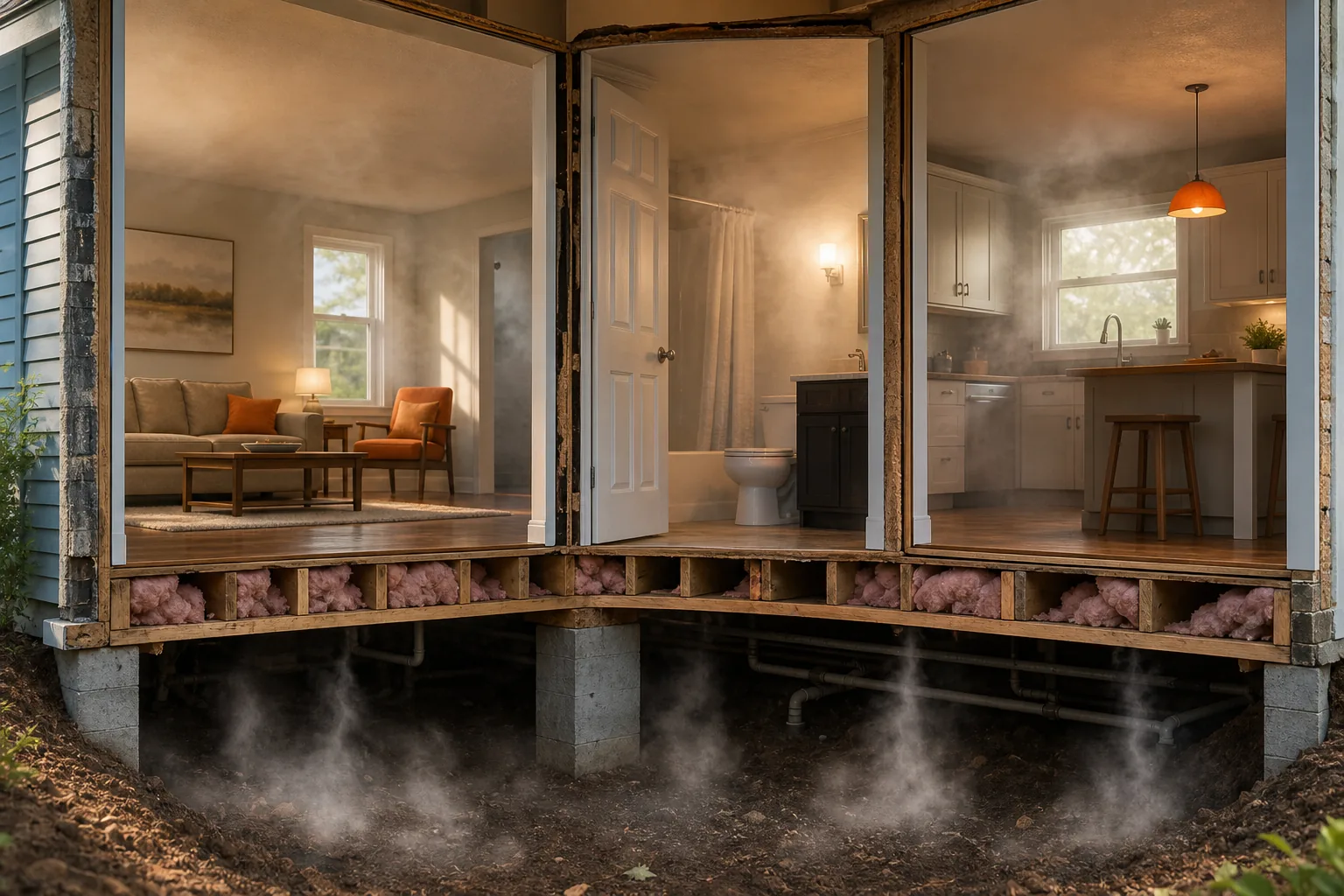
When you ask what causes high humidity in house, start with the source of the water vapor. Moisture may come from a shower you took ten minutes ago. It may also enter through a crawl space, roof leak, foundation crack, or cooling system that runs without removing enough water. In homes in Auburn and Colfax, the same source-first approach applies.
These are the 10 most common causes:
Long showers
Boiling or steaming food
Running water for long periods
Drying clothes indoors
Many houseplants
Overuse of a humidifier
Leaks through floors, walls, roofs, or plumbing
Moist crawl spaces or bare earth floors
A tight home without enough fresh-air exchange
An HVAC system, thermostat, or ventilation setup that does not control moisture well
The first six causes add moisture during normal household tasks. The next few often stay hidden. That’s why a home can feel damp even when no one sees standing water. In Rocklin and Roseville, identifying the source remains the first step.
Humidity can be managed at the central building level or within a single room . In a house, that may mean improving the air-conditioning setup, adding whole-home equipment, or using room-level control where the problem is limited.
Look for clues before changing equipment. Fogged windows point to moisture meeting a cold surface. A musty smell may suggest damp materials. Peeling paint or swollen wood can point to a leak. A humidistat that reads high in every room suggests a broader issue. Homeowners in Grass Valley and Penn Valley can use these clues to narrow down the source.
Key Takeaway:Find the moisture source before buying equipment, because a dehumidifier cannot repair a leak or replace missing ventilation.
For local service in Lincoln, contact Home Worx Heating and Cooling .
How Showers, Cooking, Laundry, and Plants Add Moisture
Daily household tasks explain many cases of high humidity in a house. The moisture starts as liquid water, then turns into vapor and spreads through the air. Warm vapor later condenses on cooler windows, walls, ducts, or supply registers.
Bathrooms are a common starting point. A long, hot shower sends warm vapor into the room. If the exhaust fan is weak, dirty, or rarely used, that vapor can move into bedrooms and hallways. Keep the fan running during the shower and for a while afterward. If the fan vents into the attic instead of outdoors, it can move the moisture into the building rather than out of it. In Colfax or Rocklin, regular fan use can help limit moisture from daily showers.
Cooking adds moisture when water boils or food steams. Use the range hood during those tasks. A hood that only filters air and does not vent outside may control odors but remove less moisture. Keep lids on pots when possible. Small changes help when cooking happens every day.
Laundry can add a large burst of moisture when wet clothes dry on racks inside the home. Check that the dryer exhaust line is connected and clear. Never vent a dryer into a garage, attic, crawl space, or laundry room. In Roseville, moving indoor laundry to a room with outdoor ventilation may help reduce added moisture.
Plants also release water vapor. One plant rarely causes a whole-house problem. A crowded indoor garden in a small room may add enough moisture to affect that space, especially when windows stay closed. This can also matter in homes in Grass Valley or Penn Valley when rooms remain closed during cool weather.
For more information, see indoor air quality guidance . Persistent moisture deserves attention.
In Auburn or Lincoln, try a simple test. Use the bathroom fan during a shower, cover boiling pots, and move indoor laundry to a room with outdoor ventilation. Watch the humidity reading for several days. If it stays high, daily activities may be only part of the cause.
For persistent high humidity in Auburn, Colfax, Rocklin, Roseville, Grass Valley, Penn Valley, or Lincoln, contact Home Worx Heating and Cooling for local service.
Leaks, Seepage, and Moisture Entering Through the Building Envelope
Leaks can raise indoor humidity even when your habits have not changed. Water may enter through a roof seam, window joint, plumbing line, foundation crack, crawl space, or basement floor. It then dries into the air or remains inside wood, insulation, drywall, or flooring.
Basement floor seepage is easy to miss. A small amount of water may appear only after rain. It can also rise through porous concrete without forming a clear puddle. Damp soil in a crawl space creates a similar problem. The air picks up moisture, then carries it into the living space through gaps around ducts, pipes, wiring, and floor registers.
Check these areas first:
Under sinks and behind toilets
Around water heaters and washing machines
At the base of exterior walls
Below windows after rain
Inside crawl spaces and near foundation walls
Around attic ducts and roof penetrations
A musty smell often means materials have stayed damp for too long. Look for dark marks, soft drywall, warped trim, or peeling paint. Do not seal over a damp area before fixing the water path. That can trap moisture behind the new finish.
Homes in Colfax and Grass Valley can see sharp swings between dry summer weather and wet winter storms. Those swings can expose small roof or foundation defects. A home may seem fine for months, then show damp spots after a long rain.
Building-envelope work may need more than a patch. A crawl space with a bare earth floor may need a vapor barrier. A drainage problem may need grading or a drain solution. A roof leak needs repair at the roof, not only a ceiling stain covered with paint.
Home Worx Heating and Cooling can help when moisture points toward ductwork, HVAC drainage, or indoor air movement. For a water leak, you may also need a roofer, plumber, or foundation specialist. The right trade depends on where the water starts.
Keep a short log of rain, room readings, visible damp spots, and when the smell appears. That record can help a technician separate a weather-linked leak from a steady indoor moisture source.
Why a Tight House or High Humidistat Can Trap Excess Moisture
A tight house can hold more humidity because less outdoor air enters to dilute indoor moisture. Energy-efficient windows and sealed gaps can lower unwanted drafts. They can also reduce natural air exchange when the home lacks planned ventilation.
Think of a closed house after several showers, meals, and loads of laundry. Each task adds water vapor. If that vapor has no clear path out, it stays in the house. The air may feel clammy even when the walls look dry.
Use kitchen and bath fans when moisture is produced. Make sure they vent outdoors. Briefly opening a window can help in suitable weather, but it is not a year-round control plan. In hot, humid conditions, open windows may add more moisture instead of removing it.
A humidistat set too high can also cause trouble. The clearest warning is excess moisture on windows or other cold surfaces. Condensation can collect at night when indoor air meets cool glass. Check the setting before assuming the equipment has failed.
Do not raise a humidistat just because the air feels dry in one room. A single cold room may have an insulation or air-sealing issue. Raising humidity across the whole house can worsen condensation elsewhere.
Homes in Rocklin and Roseville may stay closed during hot summer afternoons. That keeps outdoor heat out, but it can also hold indoor moisture in. A ventilation plan should match the house, the HVAC system, and the local weather.
Pro Tip:Place a basic humidity meter in the main living area and another in the dampest room. Compare readings at the same time each day before changing thermostat or humidistat settings.
When the HVAC System or Ventilation Is Part of the Problem
HVAC problems are a common answer to what causes high humidity in house. Air conditioning should remove some moisture as it cools. But the system may not run long enough, may have a drainage problem, or may not match the home’s needs.
An oversized air conditioner can cool a room quickly and shut off before it removes enough water. The temperature looks fine while the humidity stays high. A system that short-cycles can create the same pattern. Short cycling means the unit turns on and off too often.
Other warning signs include:
Water near the indoor unit
A clogged condensate drain
A dirty filter that reduces airflow
Weak airflow from several registers
Rooms that feel damp after the AC shuts off
A musty smell near vents
A cooling coil should collect water as warm indoor air passes over it. That water should drain away. If the drain line clogs, water may back up; review common causes of an AC leaking water to understand the warning signs. If the coil freezes, the system may stop removing moisture until the fault is fixed.
Check the filter and confirm that supply vents are open. Do not take apart the indoor unit or work on refrigerant lines yourself. Those tasks need the right tools and training.
If your AC is making unusual sounds while humidity rises, our guide to common AC noises and their causes can help you describe the symptom before service.
Ventilation can be the missing piece in a well-sealed home. A bath fan removes moisture at the source. A whole-home ventilation setup can exchange stale indoor air without relying on random leaks around windows and doors.
Home Worx Heating and Cooling provides HVAC service, maintenance, indoor air quality solutions, and system installations in the area. Our Air Quality Solutions approach may combine HVAC tuning, ventilation work, and dehumidifier installation when one fix will not solve the issue.
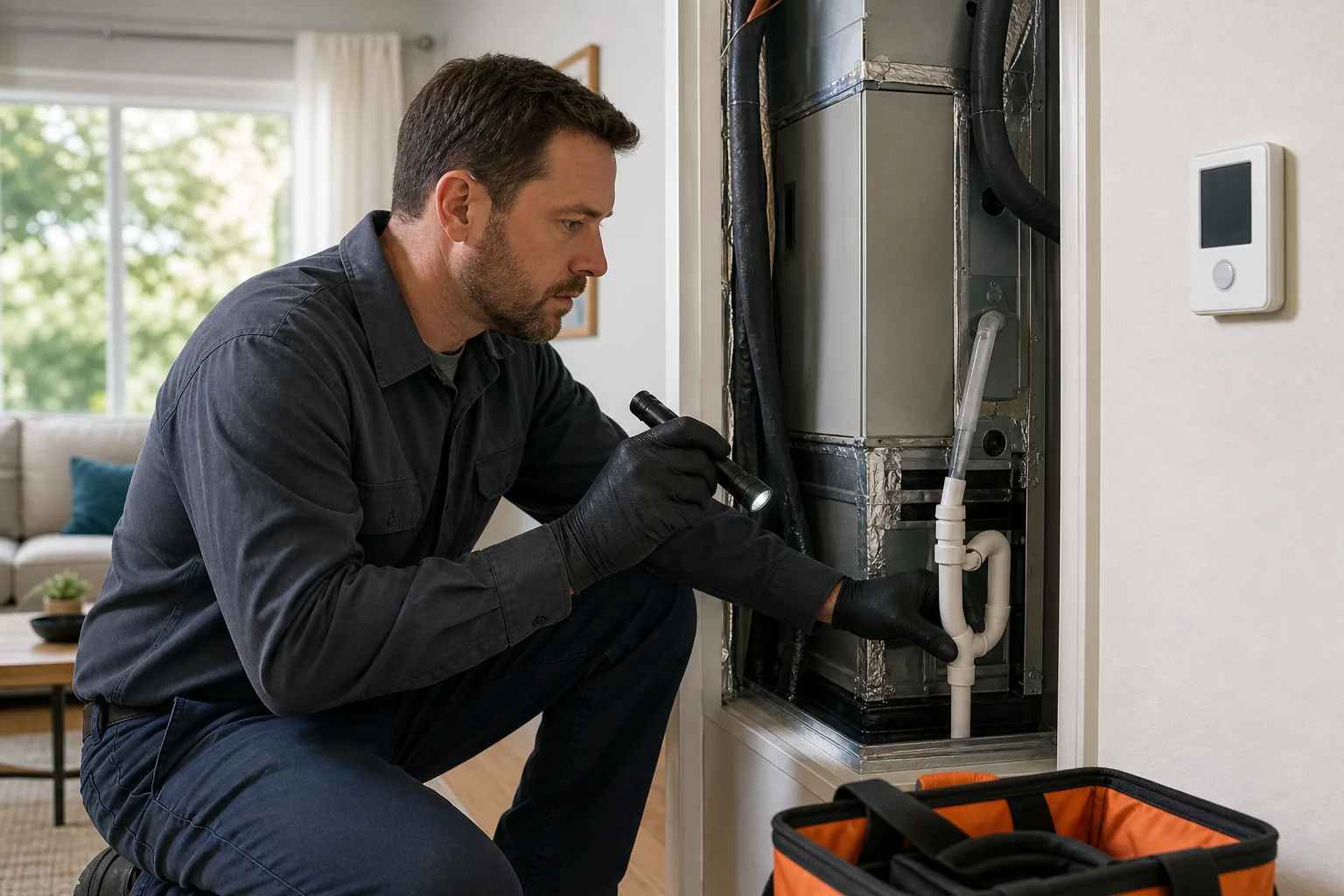
In Penn Valley, a cool room with high humidity may need system testing rather than a lower thermostat setting. In Roseville, a sealed newer home may need better air exchange. In each case, the cause determines the repair.
How to Recognize the Cause in Auburn, Colfax, and Nearby Homes
The fastest way to find the cause is to match the humidity pattern to the event that creates it. A bathroom spike after a shower points toward source ventilation. A steady rise after rain points toward the building envelope. High readings in every room suggest a whole-home issue.
Use the timing of the problem
Write down when the air feels damp. Does it happen after cooking? Does it start when the AC runs? Does it appear only after storms? Does one room stay worse than the rest?
Next, compare rooms. A laundry room may be the source. A crawl space may affect the floor above it. A bedroom with closed windows may read higher than the main living area. Room-by-room readings help show whether the problem is local or central.
Check the simple controls first
Run bathroom fans during moisture-producing tasks.
Make sure fans vent outdoors.
Keep the dryer vent clear and properly connected.
Inspect visible plumbing and HVAC drain areas.
Review humidistat settings.
Replace a dirty HVAC filter.
Do not ignore a damp crawl space because the living room looks clean. Hidden moisture can keep feeding indoor humidity. Likewise, do not blame the HVAC system before checking a roof leak or wet foundation area.
Homeowners in Auburn, Colfax, Rocklin, Roseville, Grass Valley, Penn Valley, and Lincoln deal with different home ages, layouts, and exposure to summer heat. The same humidity reading can have a different cause in each house.
When the source is unclear, Home Worx Heating and Cooling can inspect the HVAC side of the problem and discuss dehumidification or ventilation options. Keep your readings and notes ready. They make the visit more useful.
FAQ
What causes high humidity in house even when the AC is running?
High humidity can remain when the AC cools the home too quickly, short-cycles, has weak airflow, or cannot drain condensate. A clogged drain or frozen coil can also stop normal moisture removal. Check the filter and vents first, then have an HVAC technician test the system if the readings stay high.
Can a tight house have more humidity than an old house?
Yes, a tight house can have more indoor humidity because it allows less uncontrolled air exchange. Daily moisture from showers, cooking, laundry, and breathing stays inside longer. Planned ventilation helps remove that moisture while keeping the benefits of better air sealing.
Can plants cause high humidity in a house?
Plants can add moisture, especially when many plants sit in a small room with little airflow. One plant rarely explains high humidity throughout a home. Move some plants to a better-ventilated area and compare room readings before treating plants as the main cause.
How do I know if a leak is causing high indoor humidity?
A leak may be the cause when humidity rises after rain or when you see stains, peeling paint, swollen wood, or musty odors. Check under sinks, near windows, around HVAC drains, and inside crawl spaces. Persistent dampness needs a source inspection before you seal or repaint the area.
When should I call an HVAC professional for high humidity?
Call an HVAC professional when humidity stays high after basic ventilation changes, when the AC short-cycles, or when you see water near the indoor unit. Home Worx Heating and Cooling can check system operation, condensate drainage, airflow, ventilation, and dehumidification needs.
Conclusion
Start by finding where the moisture enters or forms. Improve source ventilation, check for leaks, and have the HVAC system tested before choosing new equipment. If the issue continues, contact Home Worx Heating and Cooling for local help in Placer and Nevada County, including Auburn, Colfax, Rocklin, Roseville, Grass Valley, Penn Valley, and Lincoln.