
How to Reduce Pet Dander in Your Home
A pet can leave dander behind long after it leaves the room. If you're wondering how to reduce pet dander in your home, start by keeping it out of the bedroom, then add steady cleaning and air filtration.
We analyzed 69 comments and questions from Reddit, YouTube and Quora about pet dander reduction and found that 16% mentioned air purifiers.
Table of Contents
Step 1: Make the Bedroom a Pet-Free Zone
Keep pets out of the bedroom all the time, not only while you sleep. Close the door, and keep pet beds and favorite blankets in another room. This gives you one space with less direct exposure during the hours you spend resting.
Dander can cling to bedding and other soft surfaces. Pet allergens can remain even when loose fur isn’t visible. So a short-haired pet can still leave allergens behind.
Wash sheets and pillowcases weekly, using the hottest water the fabric care label allows. A hot dryer cycle can help remove allergen material from washable bedding, too. Add zippered covers to the mattress and pillows, then wash those covers as directed.
In Auburn, foothill dust can come in on shoes and clothes during dry weather. Take off outdoor clothes before bed if they’ve picked up visible dust or pet hair. If a bedroom has carpet, vacuum it with a HEPA vacuum 1–2 times a week. A purifier sized for that room can help capture airborne particles, but it won’t clean dander already settled in fabric.
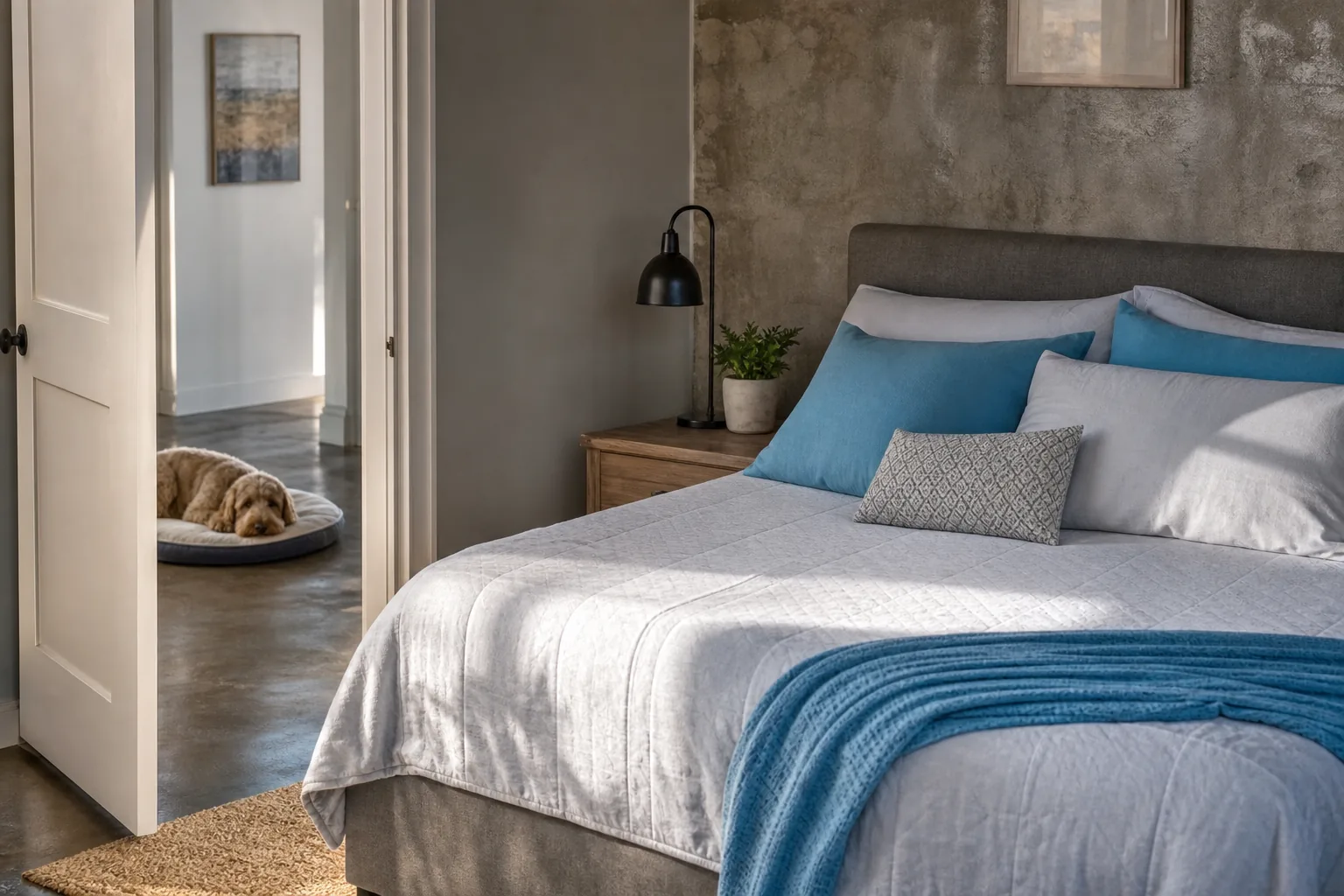
Set a clear rule for everyone in the home: the pet stays off the bed and out of the room. It may take time to change an old habit, so give your pet a comfortable sleeping spot elsewhere.
By now, you should have one lower-dander room with clean bedding and a closed door.
Step 2: Remove Dander from Floors, Furniture, and Fabrics
Pick a weekly cleaning day and work from high surfaces down to the floor. Use a damp cloth on shelves, tables, and hard furniture. Dry dusting can send settled particles back into the air, while a damp cloth helps hold them.
Vacuum carpets, rugs, upholstered furniture, and pet sleeping areas once or twice a week. Move slowly, especially along rug edges and under furniture where hair and dust gather.
If your vacuum has a bagless bin, empty it outdoors when you can. Open it away from your face and avoid shaking out the contents. If you have strong symptoms, ask someone else to handle vacuuming or wear a well-fitting mask while cleaning.
Wash pet bedding, blankets, and washable toy covers regularly, ideally on a weekly routine. Use the hottest water the care label allows. For sofas, washable slipcovers can make cleanup easier. In Colfax, where dry summer days can bring dust indoors, wipe hard floors with a damp mop instead of sweeping dust into the air.
Carpet holds more settled material than smooth flooring. If you’re not replacing it, keep a washable area rug in high-use spots and clean it often. Blinds or shades can be easier to maintain than heavy curtains; vacuum them as part of the routine.
For more ways to control particles beyond pet allergens, our steps for reducing allergens at home include bedroom and cleaning habits that fit into the same weekly plan.
By now, you should have a repeatable routine for floors, furniture, and pet fabrics.
Step 3: Capture Airborne Dander with a HEPA Air Purifier
A portable HEPA air cleaner can capture some of the dander and allergen-carrying particles floating in a room. It can’t remove material already settled on a sofa or carpet, so use it alongside cleaning rather than in place of it.
Start with the bedroom or the room where your pet spends the most time. Check the purifier maker’s room-size guidance, then place the unit where furniture or curtains won’t block its air intake and outlet. Run it often, and replace its filter on the schedule in the manual.
In Rocklin, a portable unit may suit a bedroom where someone has symptoms at night. In an open living area, check whether the device is sized for that space before relying on it. A small unit in a large room may not move enough air to meet your needs.
Home Worx Heating and Cooling ’s Air Quality Solutions are a whole-home option for allergen control. Because a whole-home system works with the HVAC setup, the right fit depends on your equipment and home. We can help homeowners review air-quality options for their space. A portable purifier can still add targeted coverage in a room where pets spend a lot of time.
If you’re comparing room units, our air purifier picks for pet allergies explain why room size, filter type, and placement all matter.
By now, you should have a purifier plan for the room where airborne dander bothers you most.
Step 4: Check Your HVAC Filter and System Settings
Your HVAC filter can catch particles as air moves through the system. First, check the size printed on your current filter. Then look for its MERV rating, which indicates how well it captures particles of different sizes.
A higher-rated filter can capture smaller particles, but it may also make it harder for air to pass through. Don’t swap in a higher-MERV filter without checking that your furnace or air handler can handle it. Poor airflow can affect system operation, so ask an HVAC professional if you’re unsure.
Check the filter regularly and follow the maker’s replacement guidance. Homes with pets may need more frequent checks because hair and dust can load a filter faster. For homes with pets or allergies, check the system filter more often and replace it on schedule.
Roseville homeowners can add a reminder before the winter heating season, when the system may run more often. In Grass Valley, check again during heavy use or after indoor dust builds up. Keep supply vents and return grilles clear so air can move through the system.
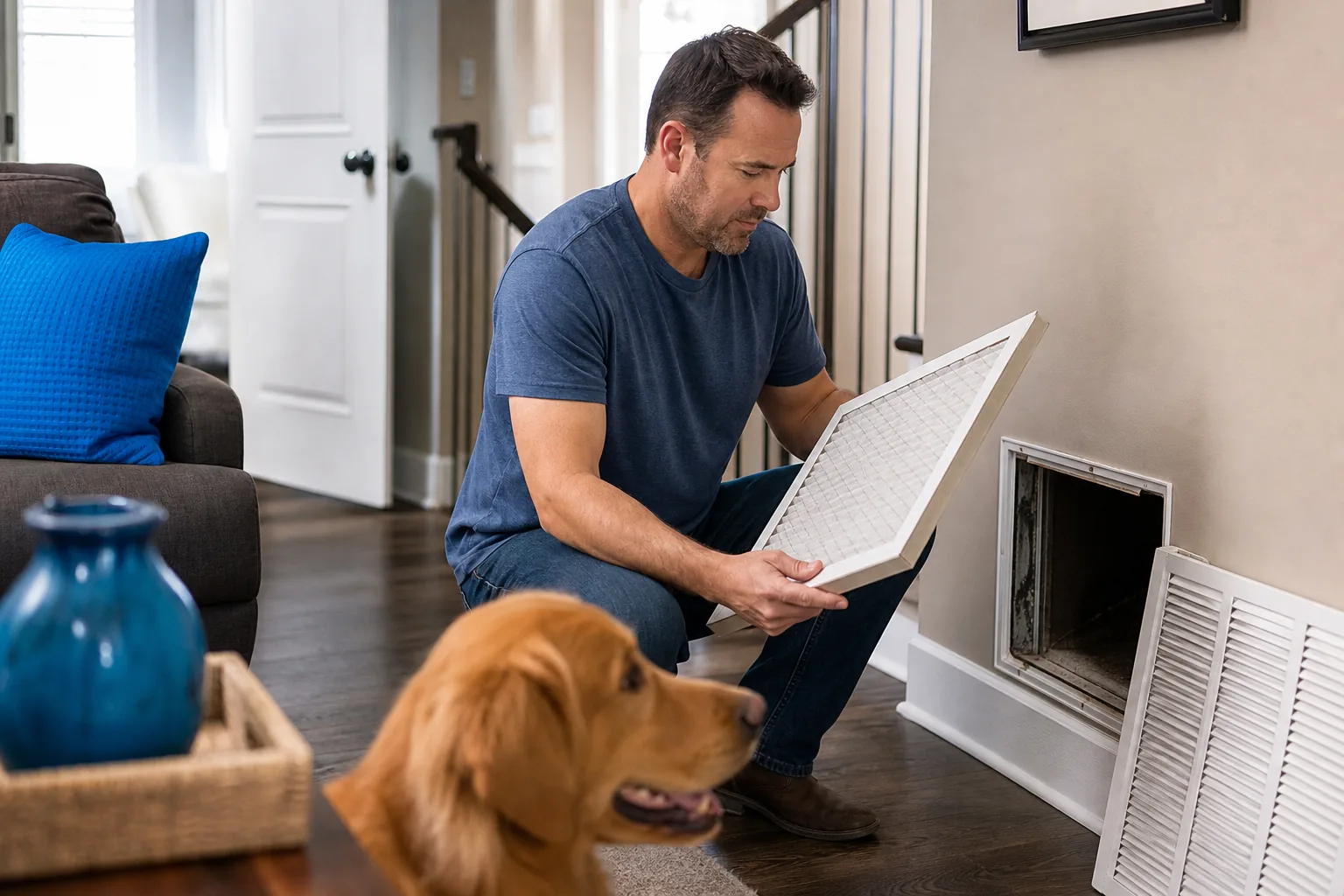
If you’re unsure about the filter type or replacement schedule, our HVAC filter replacement guide explains what to check based on system use, pets, and local seasons.
By now, you should know your filter size, have a safe replacement plan, and have kept vents clear.
Step 5: Reduce Dander at the Source with Pet-Care Habits
Brush your pet outdoors when possible, especially during heavier shedding. That lets you remove loose hair and skin flakes before they spread onto indoor fabrics. Wash your hands after petting or grooming, and try changing clothes before bed if you’ve had close contact with your pet.
Weekly bathing or grooming can significantly reduce allergen load. Ask your veterinarian how often bathing is right for your pet’s skin and coat.
Keep pet beds outside sleeping areas. Wash their covers and blankets on a regular schedule. If your pet rides in the car, use a washable seat cover or carrier, then clean the carrier and vacuum the seats after trips. Dander can transfer from clothes even when the pet hasn’t been in the vehicle.
Keep indoor humidity moderate, especially in rooms that feel damp. Excess moisture can support mold and dust mites, which may add to allergy symptoms. A dehumidifier may help in a persistently damp space, but it won’t remove pet dander by itself.
In Penn Valley and Lincoln, keep the same habits through warm and cool seasons. If symptoms continue despite home changes, talk with a health care professional about allergy testing and relief options. Medicines or allergy shots may help symptoms, but they don’t remove dander from your home. Make grooming one part of a broader plan; learn more about grooming .
By now, you should have a pet-care routine that limits how much dander enters the rooms you use most.
Frequently Asked Questions
What is the fastest way to reduce pet dander at home?
Keep your pet out of the bedroom and wash the bedding first. Then damp-dust nearby surfaces and vacuum the floor. These steps reduce direct exposure and remove some settled material. A HEPA air cleaner can help with airborne particles, but it won’t replace cleaning fabrics and floors.
Does a HEPA air purifier remove pet dander?
A HEPA air purifier can capture some airborne particles that carry pet allergens. It can’t remove dander already settled on bedding, carpet, or furniture. Choose a unit suited to the room, keep its airflow clear, and follow the filter replacement schedule. Pair it with regular vacuuming and damp-dusting.
How often should I vacuum if I have pets?
Vacuum carpets and upholstery once or twice a week as a starting routine. Focus on rooms where your pet spends time and around its bed. Regular vacuuming can help remove settled material. If symptoms are strong, have someone else vacuum or empty the bin outdoors to limit exposure while cleaning.
Does bathing a dog reduce pet dander?
Weekly bathing and grooming can significantly reduce allergen load. Ask your veterinarian about a safe bathing schedule, and keep up with cleaning and air filtration.
Should I change my HVAC filter more often if I have a pet?
Check it more often, since pet hair and dust can load a filter sooner. Follow the filter and equipment maker’s instructions for replacement. Before using a higher-MERV filter, confirm your HVAC system can handle the added airflow resistance. If you’re unsure, ask an HVAC professional to check the fit.
Conclusion
Start with a pet-free bedroom, then keep up with weekly fabric care and HEPA vacuuming. If you want help reviewing air filtration or an HVAC filter in Auburn, Colfax, Rocklin, Roseville, Grass Valley, Penn Valley, or Lincoln, contact Home Worx Heating and Cooling to discuss local service options.