
How to Test a Furnace Capacitor Safely
A furnace blower that hums but won’t spin may have a weak capacitor. Learning how to test a furnace capacitor starts with one rule: cut power and treat the part as charged until it’s been safely discharged.
We analyzed 61 comments and questions from YouTube, Reddit and Quora about furnace capacitor testing and found that 34% mentioned different testing methods.
Below, we explain what to check, how to compare a meter reading with the label, and when to leave the work to an HVAC technician.
Table of Contents
Step 1: Shut Off Power and Check for Electrical Hazards
Goal:Make sure the furnace can’t start or send power to the part while it’s being inspected. A thermostat set to Off isn’t enough.
Turn the thermostat off. Then switch off the furnace service switch, if it’s safely accessible, and turn off the furnace breaker at the electrical panel. Don’t touch the equipment if you see damaged wiring, smoke, water near electrical parts, or signs of arcing. If you smell gas, leave the building without operating switches and seek help from a safe location.
Capacitors store electrical energy after the power is cut. That stored charge can cause a serious shock. Don’t assume it’s safe just because the furnace is off.
Homeowners who aren’t trained to work around electrical parts should stop here and arrange service. Don’t bypass the furnace door switch, reach into the cabinet, or test live wiring. A suitable voltage-checking device can help a trained person confirm power is off, but it doesn’t replace safe work practices or prove a capacitor is discharged.
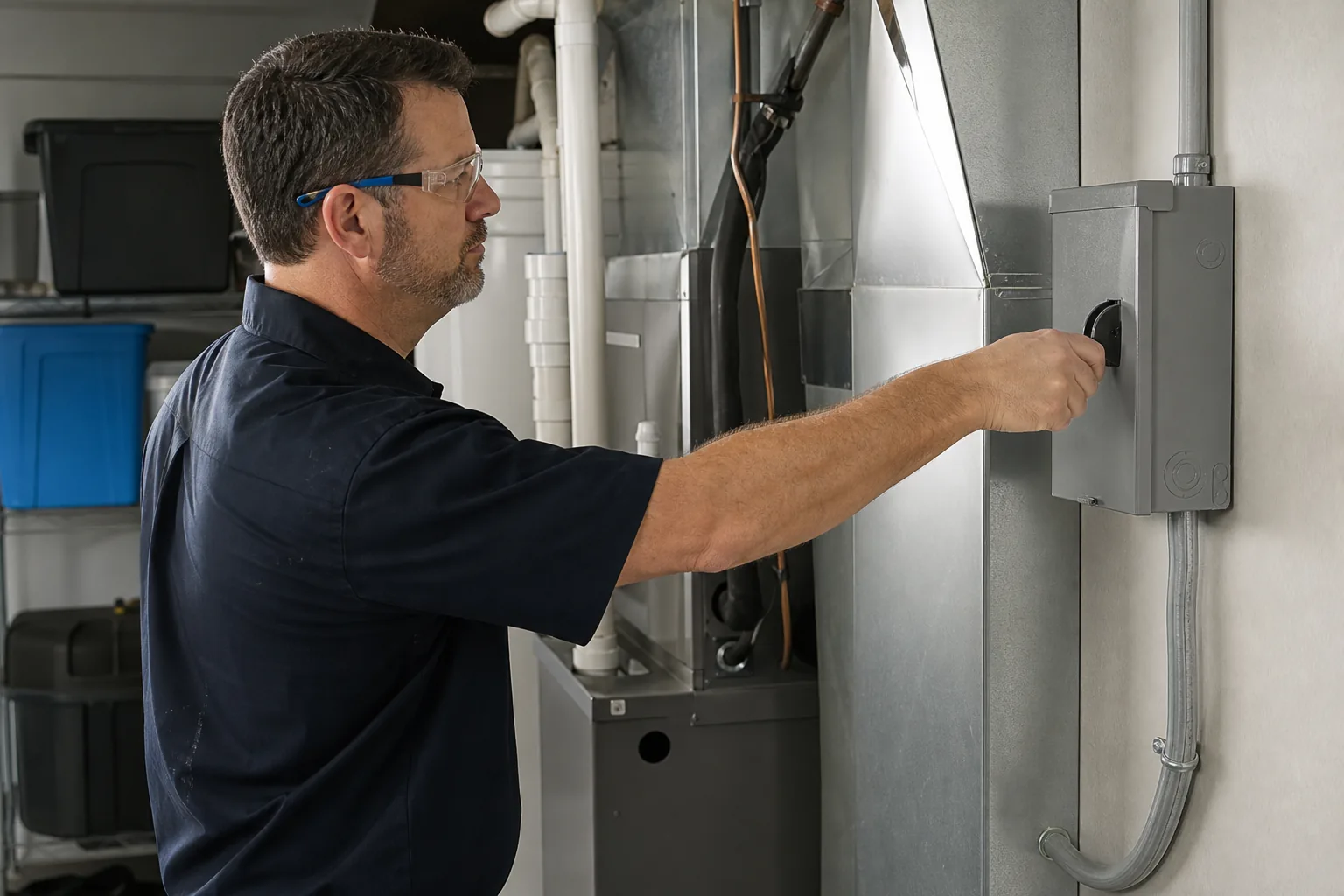
Home Worx Heating and Cooling serves homeowners in Auburn and Colfax, as well as Rocklin and Roseville, where cold winter weather can make a blower problem urgent. Homeowners in Grass Valley, Penn Valley and Lincoln can also request local service. If you’re unsure how to isolate the system safely, leave the cabinet closed and contact Home Worx Heating and Cooling for professional help.
Key Takeaway:Turn off the furnace at its switch and breaker, and stop if you see signs of electrical damage.
Step 2: Locate the Capacitor and Inspect Its Label and Condition
Goal:Confirm that your furnace has a capacitor and record its rating before any wires are moved.
Only continue if you’re trained and the power is off. Follow the furnace manual to access the blower compartment. On many systems, a small round or oval capacitor sits near the blower motor and is held by a strap. Don’t assume every furnace has one. Some electronically commutated motor, or ECM, systems don’t use a separate run capacitor.
Look at the label without touching the terminals. Write down the microfarad rating, shown as µF or MFD, and the voltage rating. Use the ratings printed on the part rather than assuming a value. Some capacitors have more than one rating. On those parts, read the diagram or have a technician identify the terminals.
Capacitor configurations vary by equipment. Don’t guess which terminals belong to which circuit. Read the diagram or have a technician identify them.
Look for a raised or dome-shaped top, bulging sides, oily residue, or scorched connections. Any of these signs means the part needs professional attention. Don’t handle a damaged capacitor to test it. A weak capacitor may look normal, so visual inspection alone can’t confirm that it works.
If your concern comes from a summer cooling problem, our AC capacitor testing steps cover the outdoor-unit context. The safety basics still apply: shut power off and don’t guess at wiring.
Grass Valley and Penn Valley homeowners may notice weak airflow or a humming blower as heating season begins. Those symptoms can point to a capacitor, but they don’t prove one has failed. A dirty filter, motor fault, or control problem can cause similar trouble.
Homeowners in Auburn, Colfax, Rocklin, Roseville and Lincoln can contact Home Worx Heating and Cooling for local service.
Step 3: Isolate the Capacitor Only After It Is Safely Discharged
Goal:Keep the meter reading separate from the rest of the furnace circuit without touching a charged component.
A capacitor can hold a charge after power is off. A trained person should follow the equipment maker’s instructions to discharge it using appropriate equipment. Don’t use an improvised tool or touch the terminals. Discharging can be hazardous, and an insulated handle by itself doesn’t make a procedure safe.
Some repair instructions describe using a resistor or an insulated screwdriver. That doesn’t make either method safe for every person, tool, or capacitor. If you don’t have the right training and equipment, don’t attempt this step. Electrical shock can cause serious injury.
After the capacitor has been discharged, a trained person should verify it with an appropriate meter before handling the terminals. If any voltage remains, stop and repeat the approved discharge and verification procedure. Don’t rely on a brief pause or the absence of a spark as proof that the charge is gone.
Before removing wires, take a clear photo of their positions and label them. Pull connectors by their metal terminals, not by the wire. For a capacitor with multiple sections, test each section separately according to its markings. Don’t mix the wires or bridge terminals while removing them.
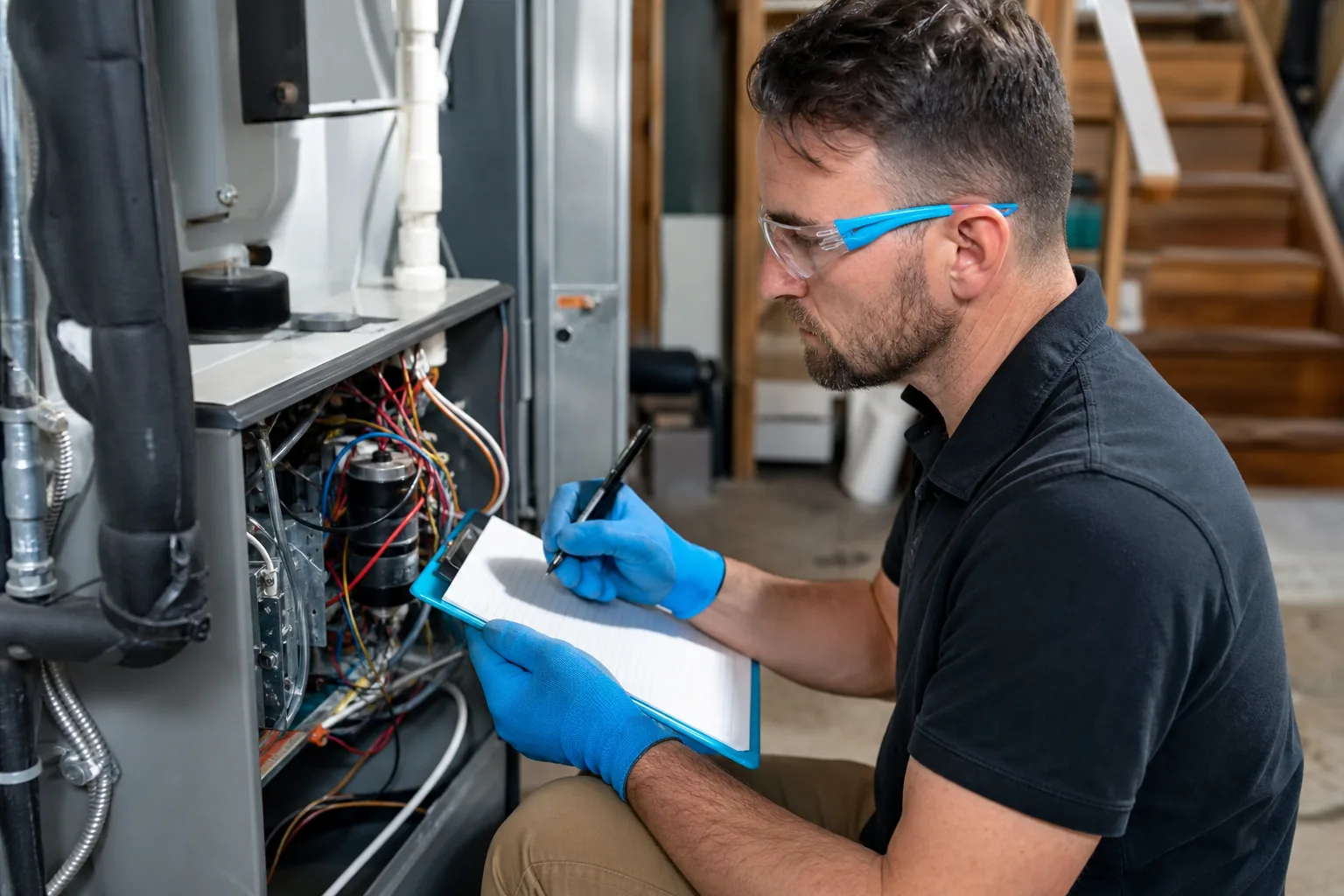
By now, the unit should be off, the capacitor discharged and verified, and the wire positions documented. If you can’t confirm each condition, don’t disconnect the wires. Home Worx Heating and Cooling serves Auburn, Colfax, Rocklin, Roseville, Grass Valley, Penn Valley and Lincoln; contact us for local service.
Step 4: Measure Capacitance With a Multimeter
Goal:Get a capacitance reading for the isolated part and compare it with the rating on its label.
Use a multimeter with a capacitance setting, often marked µF, MFD, or with a capacitance symbol. A meter that only measures voltage and resistance can’t give a direct capacitance reading. Check the meter instructions and make sure its battery is in good shape before testing.
With the capacitor safely discharged and its wires disconnected, set the meter to capacitance mode. Place one probe on each terminal for a single-value capacitor. Probe direction doesn’t matter for this test. Wait for the display to settle, then write down the result.
If the capacitor label lists multiple capacitance values, compare each test reading with the corresponding value. Test the sections separately. A reading for one section doesn’t tell you whether the other is good.
Some meters give jumpy or odd readings on the first try. Turn the meter off and on, check its battery, then test again after confirming the capacitor is still isolated. If the reading keeps changing, don’t keep probing or reconnect the part based on a guess. Ask a technician to check the meter and circuit.
An ohms-mode check can show some open or shorted conditions, but it doesn’t measure capacitance and can’t confirm that the part meets its rated value. A resistance reading that rises toward open may be normal on some capacitors, but meter behavior varies. Use the capacitance mode and the label for the main pass-or-fail check.
Homeowners who want a yearly service check can review our local HVAC service guidance . A technician can assess the capacitor as part of broader system care, without asking you to handle stored charge.
Step 5: Interpret the Reading and Decide What to Do Next
Goal:Decide whether the reading fits the capacitor’s stated tolerance, or whether the part needs professional replacement.
Find the plus-or-minus tolerance on the label. Many capacitors use a tolerance around ±5% or ±6%, but follow the rating printed on your part. To find the lower limit, multiply the labeled µF value by one minus the tolerance. Use the same method with one plus the tolerance to find the upper limit.
Use the same method for the upper and lower bounds of each section on a capacitor with multiple sections. Compare each section’s reading with the acceptable range calculated from its label and tolerance.
Within the label’s range:The reading meets the stated capacitance tolerance. If the furnace still has a problem, the cause may be elsewhere.
Outside the range:Don’t keep running the system to see if it improves. Have the capacitor and related motor checked.
Bulging, leaking, or scorched:Stop testing and arrange service, even if a meter reading looks close.
A failed capacitor can make a blower hum without starting, but that symptom alone doesn’t confirm the diagnosis. If the capacitor tests within range and the blower still won’t run, the motor, control board, wiring, or another part may be at fault. Replacing parts based on sound alone can add cost without fixing the problem.
The capacitor itself is usually an inexpensive part, while the full repair cost depends on diagnosis and labor. A motor repair can involve a larger component and more work, so confirm the fault before approving a replacement. Ask the technician what they tested and what result supports the recommendation.
Cold winters in Auburn and Colfax, as well as Grass Valley and Penn Valley, can make reliable furnace operation important. Home Worx Heating and Cooling provides heating repair and maintenance in Rocklin, Roseville, and Lincoln, along with service in nearby communities. If you find an out-of-range reading or damaged part, keep the furnace off and contact Home Worx Heating and Cooling to arrange an inspection rather than trying to wire in a replacement.
Frequently Asked Questions
Can I test a furnace capacitor without removing it?
A capacitance reading is most useful when the capacitor is disconnected from the circuit. Other components can affect a measurement taken with wires attached. Disconnecting terminals involves stored electrical charge, so it isn’t a safe shortcut for an untrained homeowner. If you can’t discharge and isolate the capacitor safely, ask an HVAC technician serving Auburn or Colfax to test it.
What should a furnace capacitor read on a multimeter?
A good reading should fall within the tolerance printed on the capacitor label. The part’s own specification is what counts. Follow the label for the capacitor being tested.
Can I use an ohms test instead of capacitance mode?
An ohms test can sometimes reveal an open or shorted capacitor, but it doesn’t measure the part’s capacitance. A rising resistance reading may suggest the meter is charging the capacitor, yet that alone can’t show whether the µF value is within tolerance. Use a capacitance-capable meter for the rating check, or have a technician serving Grass Valley or Penn Valley test it.
Does every furnace have a blower capacitor?
No. Some furnaces use blower motors with a capacitor, while some ECM motor designs don’t use one in the same way. Check the furnace manual or have a technician identify the motor before looking for a capacitor. Don’t assume a missing part means something has been removed or that the motor has failed.
When should I stop and call an HVAC technician?
Stop if you see a bulging or leaking capacitor, scorched wiring, smoke, or water near electrical parts. Also stop if you can’t confirm power is off or don’t know how to discharge and verify the component. Home Worx Heating and Cooling serves the Placer and Nevada County area, including Rocklin, Roseville and Lincoln. Contact us for local service and help identifying the cause of the blower problem.
Conclusion
Only test a furnace capacitor if you’re trained to isolate and discharge it safely. Compare the meter reading with the label, and stop if the part is damaged or the result falls outside its tolerance. For local help across Auburn, Colfax, Rocklin, Roseville, Grass Valley, Penn Valley, and Lincoln, contact Home Worx Heating and Cooling to arrange service.