
Inflation Reduction Act HVAC Rebates: How to Apply
Inflation Reduction Act HVAC rebates can be worth thousands, but the program rules and available funds don’t always line up. We’ll show you how to check current California eligibility, confirm the equipment and timing rules, and keep the records you’ll need before you commit.
We analyzed 59 comments and questions from YouTube, Reddit and Quora about Inflation Reduction Act HVAC rebates and found that 31% mentioned income eligibility thresholds.
Table of Contents
Step 1: Check Which HVAC Incentives Are Available in 2026
Start with program status, not a rebate estimate. The Inflation Reduction Act set up federal home energy rebate programs to help households make energy upgrades. Check the current status of California's IRA-funded home rebate programs before planning work.
For single-family homes, there’s an important limit right now: California says HEEHRA Phase I reservations are fully reserved statewide, and it isn’t accepting new income verification requests. The state is still processing projects with approved reservations. That means a household that meets the income rules may not be able to start a new claim today.
The income tiers help explain the advertised amounts. Eligible households below 80% of area median income could qualify for up to $8,000, while those between 80% and 150% could qualify for up to $4,000. But those figures don’t mean funds are open. Check the current rebate status and eligibility rules before scheduling work.
Multifamily properties have a separate HEEHRA rebate that can reach $14,000 per dwelling unit for qualifying upgrades. Its availability and application path differ from the single-family program, so a property manager should confirm current funding and reservation rules before approving a project.

Watch for scams. People may falsely claim to represent state or federal rebate programs. For HEEHRA work, use a participating TECH-certified contractor, and avoid sharing financial information with anyone offering to submit a rebate for you.
In Auburn, Colfax, Rocklin and Roseville, as well as Grass Valley, Penn Valley and Lincoln, hot, dry summers and cold winters can make a system change a major home decision. Contact Home Worx Heating and Cooling for local service.
Key Takeaway:An income-qualified household still needs an open program and an approved reservation before HEEHRA work can receive funding.
Step 2: Match Your HVAC Project to the Right Rebate or Tax Credit
Write down what you plan to replace, what will take its place, and when the new system will be put in service. Then compare those details with the incentive rules. The word “rebate” can describe several different programs, but eligibility depends on the specific equipment, household, and timing.
Incentive path | Who or what it may fit | What to check first |
California HEEHRA, single-family | Income-qualified California homeowners or qualifying rental homes replacing a non-heat-pump heating source with a qualifying heat pump | Current program status, income verification, contractor status, and reservation approval |
California HEEHRA, multifamily | Income-qualified multifamily properties considering eligible heat pump or related electrification work | Property eligibility, available funding, and the current reservation process |
Federal 25C tax credit | Qualifying heat pump equipment placed in service by December 31, 2025 | The credit is not available for equipment installed in 2026. |
Utility or local offers | Customers whose service area and equipment meet a specific offer’s rules | Utility territory, eligible model, application window, and whether approval must come before installation |
The federal 25C credit and a state rebate aren’t the same thing. A tax credit affects your federal tax bill, while a rebate is tied to program rules and funding. For tax-year details, review the applicable credit guidance .
For a 2026 installation, focus on currently open state, utility, or local offers instead of assuming an expired federal credit will reduce the bill. You can also use our overview of California HVAC rebates and energy-efficiency incentives to organize the program questions you’ll need to verify.
Keep the project scope clear. A heat pump that replaces an existing furnace may fit one program, while a standard air conditioner or a high-efficiency furnace may follow different rules. Don’t assume that one incentive’s equipment list applies to another.
Step 3: Choose Eligible Equipment and Confirm Installation Requirements
Once you know which program is open, confirm the exact system and installer requirements before you sign. California’s single-family HEEHRA rules focus on a qualifying heat pump that replaces an existing non-heat-pump source of space heating. A product category alone isn’t enough to prove eligibility.
Ask the contractor to identify the proposed equipment by manufacturer and model number. Request the specification sheet and have the contractor check the model against the program’s current criteria. Efficiency ratings are the measures used to compare how much heating or cooling a system provides for the energy it uses. The program may set its own qualifying threshold, so don’t rely on a general claim that a unit is “high efficiency.”
Installation rules matter as much as the equipment. For HEEHRA, California requires a TECH-certified and HEEHRA-trained contractor. An approved reservation must be in place before work begins, or the project won’t receive HEEHRA funding. Confirm the contractor’s status and the reservation in writing before setting an installation date.
Here’s a simple handoff checklist to use with the estimate:
Write down the current heating system and the system being proposed.
Save the model number and equipment specification sheet.
Ask who will confirm program eligibility and submit the reservation.
Get written confirmation of any permit or inspection steps that apply locally.
In Rocklin and Roseville, as elsewhere in the foothills, system sizing and the existing ductwork can affect comfort after installation. Ask how the contractor will check that the proposed system fits the home. Home Worx Heating and Cooling handles heat pump work, full system installation, ductless systems, and duct services across its Northern California service area.
Don’t let work start while a required application or reservation is still pending. For a homeowner, that can be the difference between a documented eligible project and an expense the program won’t cover.
Step 4: Calculate Your Expected Savings Before You Commit
Make a written estimate of your likely net cost before approving the project. Start with the full installed price. Subtract only incentives that you’ve confirmed are open and that your household, equipment, and contractor appear to meet. Treat any pending application as $0 in your first calculation.
For example, imagine a homeowner in Grass Valley replacing an older heating system with a heat pump. If the homeowner expects an HEEHRA rebate, first check whether the program is accepting new reservations. Since California reports that single-family reservations are fully reserved, the homeowner shouldn’t subtract the advertised rebate from the project estimate unless an eligible reservation has already been approved.
Next, ask the utility that serves your address whether it has a current HVAC offer. Utility incentives can have separate model rules and application dates. A PG&E customer should verify eligibility directly for the home’s service area rather than assume that a program available elsewhere in California also applies there.
Keep the calculation in three parts:
Confirmed:incentives you’ve verified in writing and can apply to this project.
Pending:incentives that need a reservation, income review, or program approval.
Not included:expired credits or offers that don’t match the home, equipment, or timing.
Then compare systems on more than the incentive amount. Note the quoted installation price and the expected heating and cooling setup. A heat pump provides both heating and cooling, while a separate furnace and air conditioner use different equipment. Your home’s layout, existing ducts, and winter comfort needs all matter. Don’t treat a projected energy-bill reduction as guaranteed savings without a home-specific estimate.
Ask for a written proposal that separates the installed cost from each incentive. Home Worx Heating and Cooling provides HVAC installation and financing options; ask the team to explain the project cost and any program requirements that apply before you approve the work.
Pro Tip:Keep a copy of the estimate that shows the incentive status on the day you decide. If funding changes later, you’ll still know which savings were confirmed and which were only possible.
Step 5: Save Your Records and Submit the Rebate or Tax-Credit Claim
Set up one folder before installation, either on paper or on your computer. Save the signed proposal and the equipment details first. Add every program approval or reservation notice as soon as you receive it, whether the project is in Auburn or Colfax.
For a California HEEHRA project, follow the current program’s submission steps with the participating contractor. Don’t begin work until the required reservation is approved. Keep your income verification code or approval document for the contractor, but don’t hand over sensitive financial records to someone who can’t show they’re part of the official process.
After the work, save the final invoice and proof of installation. In Rocklin or Roseville, include the equipment model, installation date, and any permit or inspection records that apply to the project. These details help you answer follow-up questions without trying to reconstruct the job months later.
If you’re claiming a tax credit for eligible work completed by the applicable deadline, keep the invoice and manufacturer information with your tax files. Check the applicable tax-year instructions, and ask a tax professional how the credit applies to your return. A tax credit can reduce tax owed; it isn’t the same as a rebate payment.
Homeowners in Penn Valley, Lincoln and Grass Valley can use the same folder method even when pursuing a utility offer instead of a state rebate. Follow that program’s own deadlines and submission instructions. Some programs require approval before installation, so don’t wait until the final invoice to read the rules.
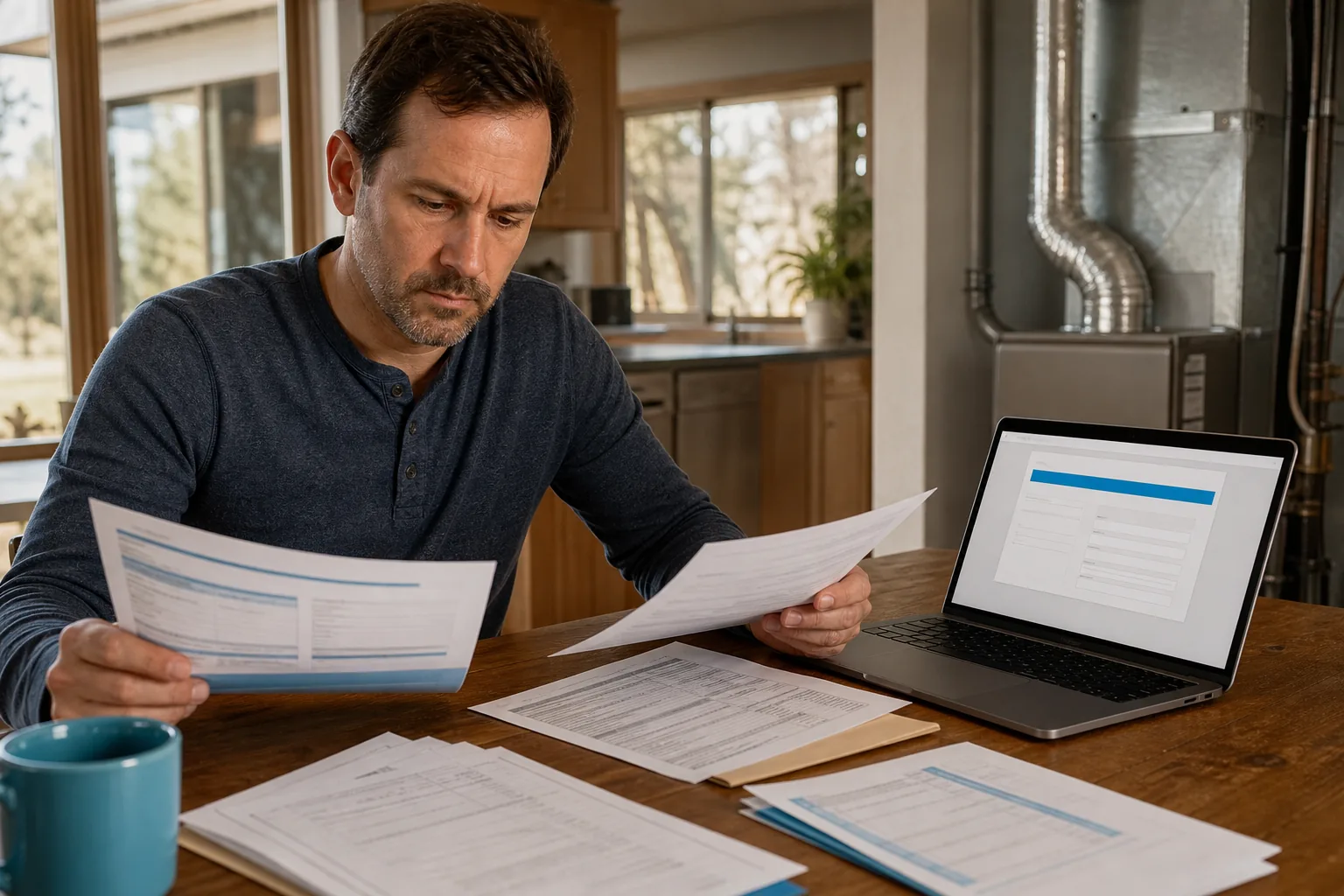
Program payment times can vary. Save the submission confirmation and note the date you filed. If the program asks for more information, respond through its official channel and keep a copy of what you send.
For help planning a heat pump application, our page on how to apply for a California heat pump rebate covers the related eligibility and paperwork questions. Contact Home Worx Heating and Cooling for local service.
Frequently Asked Questions
Are California HEEHRA rebates open to new single-family applicants?
Not right now. The California Energy Commission says single-family HEEHRA rebates have been fully reserved statewide since February 24, 2026, with unapproved requests on a waitlist. Homeowners in Auburn and Colfax should check the program’s current status before planning around a rebate.
Can I get an Inflation Reduction Act tax credit for a new HVAC system in 2026?
No. The federal 25C credit covers qualifying equipment placed in service by December 31, 2025, so a system installed in 2026 doesn't qualify. If you completed qualifying work in 2025, claim it on that year's return. Homeowners in Rocklin and Roseville can ask a tax professional how a credit applies to their return.
What HVAC equipment can qualify for an IRA rebate in California?
California’s HEEHRA single-family rebate is for qualifying heat pump HVAC systems that replace an existing non-heat-pump source of space heating. Multifamily rebates cover a wider set of eligible home energy equipment. For homes in Grass Valley and Penn Valley, check the specific program’s current equipment list before choosing a model, since rules can differ by project type.
Can I combine a state rebate with a utility incentive?
Possibly, but you need to confirm each program’s rules before you count on combined savings. Check whether both offers cover the same equipment and whether either requires advance approval. For a home in Lincoln, ask your utility about the address and model, then keep each program’s approval and application records with the project invoice.
Are HVAC rebates taxable income?
Tax treatment depends on the type of incentive and the rules that apply to your situation. A tax credit reduces eligible tax owed, while a rebate is handled under its own program and tax rules. Keep the award notice and payment record, then ask a tax professional whether you need to report the rebate.
Contact Home Worx Heating and Cooling for local HVAC service in these communities.
Conclusion
Check program status before you choose equipment or sign an installation contract. If you’re planning an HVAC upgrade in Auburn, Colfax, Rocklin, Roseville, Grass Valley, Penn Valley, or Lincoln, contact Home Worx Heating and Cooling to discuss the project and confirm what to verify before work begins.