
Should I Cover My AC Unit in Winter?
- Bryn Fortmuller
- Aug 6
- 9 min read
A full cover can protect an idle AC condenser from falling debris, but it can also trap moisture, invite pests, and cause rust. The right answer depends on your system and your winter weather. For most homeowners, a clean unit and clear space are safer than a sealed wrap. If extra protection makes sense, use a breathable top cover and remove it before cooling season.
Table of Contents
Step 1: Confirm Whether Your Outdoor Unit Needs a Winter Cover
Before you ask, “should I cover my AC unit in winter,” identify the equipment outside. A standard central AC condenser usually sits idle during cold weather. A heat pump or ductless mini-split may keep running all winter to heat your home.
Never cover a heat pump that runs in heating mode. It needs open airflow across its coil. The unit also needs space to complete its defrost cycle , which melts frost from the outdoor coil during normal operation. A cover could block that airflow and stop the system from heating well.
Central AC units are different. They don't need to move heat in winter, so a cover may help in a few narrow cases. Consider partial protection if the unit sits below a roof edge where ice falls, near a tree that drops branches, or in a spot where wind pushes heavy debris against the cabinet.
Even then, skip a full plastic or vinyl wrap. A heat pump moves heat between indoors and outdoors , so blocking the outdoor coil interferes with the basic process that lets it heat your home. The same airflow concern applies if someone mistakes a heat pump for a cooling-only condenser.
Homes in Auburn and Colfax may see cold nights, wind, rain, and occasional snow. Higher or more exposed homes near Grass Valley and Penn Valley may face more snow and falling debris. That doesn't mean every unit needs a cover. It means the property around the unit deserves a closer look.
Use this quick decision test:
If the outdoor unit is a heat pump or mini-split, leave it uncovered.
If a standard AC condenser has no unusual exposure, skip the cover.
If falling ice or branches pose a clear risk, consider a breathable top cover.
If you're unsure which system you have, ask an HVAC technician before buying anything.
Home Worx Heating and Cooling can identify the system type and check its winter exposure before you spend money on a cover. That short inspection may prevent a bad fit or a cover that creates a spring repair.
By now you should know whether you're protecting an idle condenser or accidentally blocking a heating system.
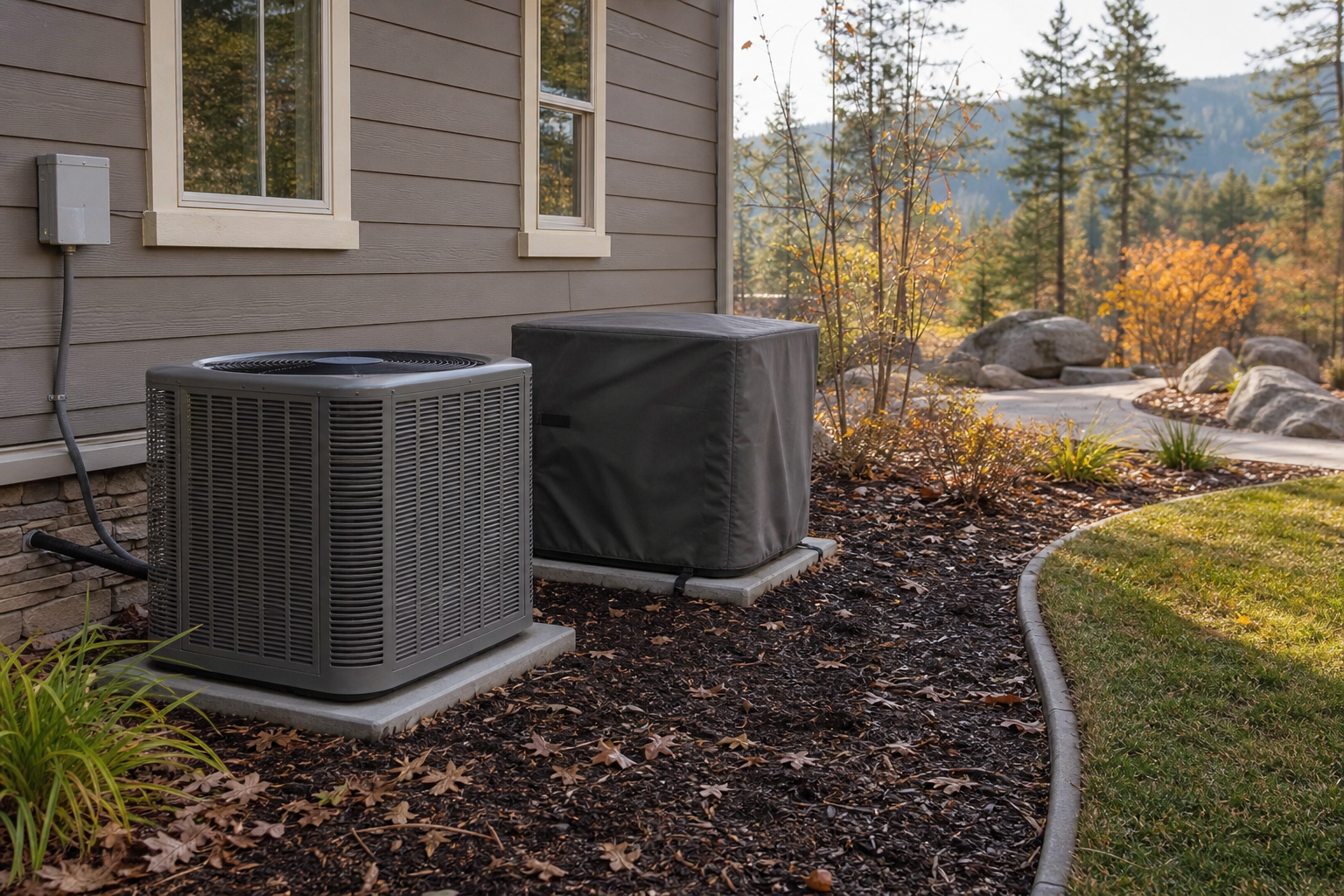
Step 2: Turn Off Power, Clean the Condenser and Check for Damage
If you decide a cover fits your setup, start with a clean and dry condenser. Covering leaves, mud, or a nest traps that material against the cabinet for months.
Set the thermostat to heat or off, depending on your system. For a cooling-only condenser, switch off the outdoor disconnect near the unit. You can also turn off the air conditioner breaker, but don't open electrical panels or remove service covers unless you're trained to do so.
Walk around the cabinet. Look for bent fins, loose panels, cracked insulation on the refrigerant line, rust at the base, and chewed wires. Don't straighten damaged fins with a knife or screwdriver. Thin fins bend easily, and a technician should handle major damage.
Remove leaves and twigs by hand. Use a soft brush for dry debris on the cabinet. If the coil needs washing, use a gentle hose spray and let the unit dry fully. Don't aim a pressure washer at the fins. High pressure can fold them over and reduce airflow.
Check the base after rain. Standing water or a sinking pad can leave the cabinet damp all winter. A cover won't fix poor drainage. It may hide the problem until corrosion has spread.
Protect the insulated refrigerant line, too. If the foam jacket is split or missing, make a note for service. The line insulation helps keep the system working as designed. It isn't a reason to wrap the entire outdoor cabinet.
Our HVAC service checklist includes seasonal checks that help catch these issues before the next cooling season. You can also review the condition of the pad and nearby drainage while the area is clear.
Don't spray household chemicals, coil cleaner, or anti-rust products inside the unit unless the product is made for HVAC equipment and the label allows that use. If you see heavy corrosion, exposed wiring, or evidence of rodents, stop the DIY work.
Pro Tip:Take a photo of the clean unit before you cover it. Keep the photo with the cover so you can compare the cabinet when you remove it in spring.
By now you should have a dry, clean unit with any visible faults recorded. If the unit has active damage, have it checked before adding protection.
Step 3: Choose and Install a Breathable Cover Correctly
A winter cover should block debris without sealing in damp air. That is the key difference between useful protection and a damp box that breeds rust or mold.
Measure the outdoor cabinet before shopping. Record its width, depth, and height. Include the top grille and any unusual pipe or control-box position. A cover that is too tight may pull on panels. One that is too loose may flap in wind and let debris enter.
For Sierra foothill homes, compare the cover by its airflow and fit rather than by fabric weight alone. A heavy waterproof fabric may shed rain well, but it can still trap condensation if it has no vent or mesh panel.
Cover style | Best use | Main risk | What to check |
Breathable top cover | Falling leaves, light snow, roof-edge drips | Limited side protection | Secure fit and enough overhang |
Mesh cover | Leaves, grass clippings, and cottonwood fluff | Little protection from driving snow | Open weave and wind-resistant fasteners |
Ventilated full cover | More exposed idle condensers | Condensation or pest shelter | Vent flap, mesh panel, and snug fit |
Solid plastic or vinyl wrap | Generally avoid | Trapped moisture and poor airflow | Don't use unless the equipment maker specifically approves it |
Some products in the research use open mesh to let air pass through while stopping leaves. Others use coated polyester or Oxford fabric with straps and ventilation flaps. Those features can help, but no retail cover can account for your roof runoff, local wind, elevation, or snow load.
Install the cover after the unit is dry. Place it over the top without pressing it into the fan grille. Fasten straps or bungees under the cabinet, but don't cinch them against refrigerant lines or electrical conduits.
Never drill into the cabinet to add hooks. Don't use bricks directly on the cover. They can dent the top grille or fall into the fan area. If wind is a concern, choose a cover with its own secure fastening system or ask a technician about a top shield that doesn't rest on the fan.
Home Worx Heating and Cooling can assess the unit before installation and explain whether a cover makes sense. For a full residential HVAC installation and winterization project, the documented cost range is $3,000 to $12,000. That figure is for broader work, not a promise of what a simple cover visit will cost. Ask for a written scope so you can separate inspection, repair, insulation, sealing, equipment, and any permit work.
The cover is ready when it stays secure, leaves ventilation paths open, and does not touch moving parts. If you can't achieve those three conditions, leave it off.
Step 4: Protect the Area Around the Unit Without Blocking Airflow
In many homes, the best winter protection is outside the unit rather than wrapped around it. Clear the space so wind, rain, and melting snow can move away from the cabinet.
Keep leaves, pine needles, grass, and branches away from the coil. Trim shrubs so they don't press against the cabinet. Don't stack firewood, bins, tools, or snow shovels beside the unit. The condenser needs open space when it runs again.
Watch the roof above it. If a gutter spills onto the cabinet, clear the gutter or redirect the discharge. If an eave drops ice onto the fan grille, a non-contact shield above the unit may work better than a full cover. The shield must stay clear of the cabinet and must not block the unit's discharge air.
Never build a box around the condenser with plywood. A top panel may deflect falling ice, but side walls can restrict airflow. Any temporary shield must be secure in wind and easy to remove before the system starts.
Snow management matters in Colfax and Grass Valley, while windblown leaves can be a bigger issue in Rocklin and Roseville. In Lincoln, a unit near a garage or fence may collect yard debris in one corner. Penn Valley homes can have a mix of exposed lots and tree cover. The right fix depends on the exact spot.
Keep the drain path open around the pad. Meltwater that freezes beside the base can shift the pad or leave the lower cabinet wet. Don't bury the unit in snow. For a heat pump, clear snow away from the coil without scraping the fins.
Key Takeaway:Clear space and good drainage protect an outdoor unit without creating the moisture and airflow problems caused by a sealed cover.
If the unit sits in a difficult spot, ask Home Worx Heating and Cooling about a site-specific fix. A technician can tell you whether the issue is debris, roof runoff, pad height, line insulation, or the equipment itself.
Step 5: Remove the Cover and Restart the System Safely in Spring
The cover must come off before the system runs in cooling mode. A forgotten cover can block airflow and overheat the compressor.
Remove the cover when freezing weather has passed and before you switch the thermostat to cool. Don't wait until the first hot afternoon. In Northern California, warm spring days can arrive while nights still feel cold, so mark the removal date on your calendar.
Inspect the cover before storing it. Look for tears, mildew, nesting material, and damp spots. Let it dry fully. Fold it loosely and store it in a dry place where mice can't use it for bedding.
Inspect the unit again. Look inside the top grille with a flashlight. Check for leaves, nests, standing water, bent fins, and damaged wiring. If you find a nest, don't reach into the fan area. Turn off power and arrange service.
Clear the area around the cabinet. Confirm that no shield, board, tarp, or loose strap remains near the fan. Restore the disconnect only after the unit is uncovered and dry.
Set the thermostat to cool and lower the temperature a few degrees below the room temperature. Let the system run for a short period. Listen for grinding, buzzing, or repeated clicking. Check that the outdoor fan starts and that air leaves the top of the cabinet.
Don't keep resetting a breaker that trips. Don't run the AC if the fan doesn't start, the cabinet shakes, or you smell burning insulation. Those signs need a technician.
Spring is also a good time to schedule a maintenance visit. Home Worx Heating and Cooling serves Auburn, Colfax, Rocklin, Roseville, Grass Valley, Penn Valley, and Lincoln, along with nearby Placer and Nevada County communities. A technician can check electrical parts, airflow, refrigerant operation, and the condition of the coil before hot weather sets in.
Our winter furnace maintenance checklist covers the heating side of the same seasonal handoff. Keeping both sides of the system in order helps prevent a missed switch from heating to cooling.
For units that have sat covered through a wet winter, a professional check is wise. Corrosion often starts where you can't see it, especially around the base, wiring, and coil connections.
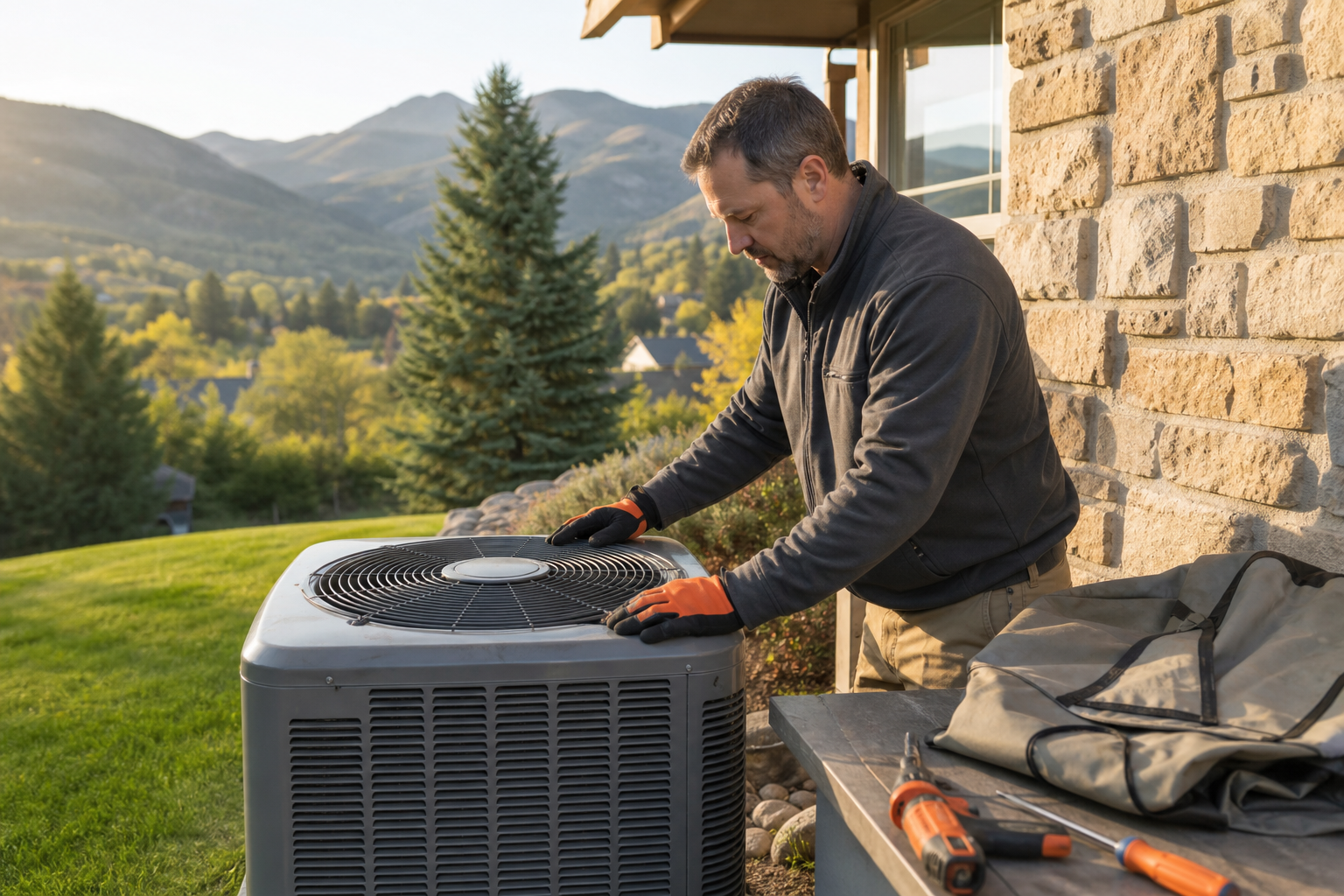
By now the system should be uncovered, dry, clear of debris, and ready for a controlled test run. If any part of that sequence feels unsafe, stop before restoring power.
FAQ
Should I cover my AC unit in winter?
Most standard AC condensers don't need a full winter cover. Modern outdoor units are built for rain and cold. A breathable top cover may help if falling ice, branches, or heavy debris threaten the cabinet. Never cover a heat pump or mini-split that runs in winter because it needs open airflow.
Can I cover my AC unit with a tarp?
You shouldn't cover an outdoor condenser with a tarp. A tarp can hold damp air against the cabinet and block ventilation. That raises the risk of rust, mold, and pest problems. If protection is needed, choose a properly sized breathable cover with mesh or a ventilation flap.
Should a heat pump be covered in winter?
No, a heat pump should stay uncovered while it operates in winter. It pulls heat from outdoor air and needs airflow across the coil. Covering it can interfere with heating and defrost cycles. Clear snow from around the cabinet without scraping the fins, and call for service if ice won't clear.
When should I remove my AC cover?
Remove the cover before switching the thermostat to cooling in spring. Inspect the unit after removal and make sure no leaves, nests, straps, or shields remain near the fan. Test the system only after the cabinet is dry and clear. If the breaker trips or the fan fails to start, stop and arrange service.
What is the safest way to protect an outdoor AC unit?
The safest approach is to keep the area clean, maintain drainage, and leave airflow open. Add a breathable top cover only when the unit faces a clear hazard, such as falling ice or branches. In Auburn, Colfax, or nearby foothill areas, a local HVAC inspection can account for the home's exact exposure.
Conclusion
For most homes, skip the full wrap. Keep the condenser clean and clear, then use a breathable top cover only when the site has a real winter hazard. If you're unsure whether your equipment is a heat pump or a cooling-only AC, contact Home Worx Heating and Cooling for a local assessment in Placer or Nevada County. We can help you protect the system without blocking the airflow it needs.