
What to Do When Your Furnace Stops Working
When your furnace quits on a cold Sierra foothill night, start with safety, not switches. What to do when your furnace stops working begins with checking for gas, smoke, or a carbon monoxide alarm before you try basic checks.
We analyzed 66 comments and questions from Reddit, YouTube and Quora about furnace not working and found that 15% mentioned portable space heaters.
Then check the thermostat, power, filter, and vents. If those steps don’t bring back heat, stop and arrange professional service.
Table of Contents
Step 1: Check for Gas, Smoke, or Carbon Monoxide Dangers
Your first goal is to spot a hazard and get everyone to safety. Don’t troubleshoot a furnace that smells like gas or shows signs of fire.
If you smell rotten eggs or another strong gas odor, leave the home right away. Don’t turn lights or appliances on or off. Don’t use a phone inside. Once you’re outside and away from the odor, contact 911 if there’s a strong smell, hissing, illness, or an active leak concern. You can also contact your gas utility from a safe place. In much of this region, that may be PG&E.
If a carbon monoxide alarm sounds, get everyone outside and contact emergency services from a safe location. Carbon monoxide has no smell, so don’t wait for another warning sign. Don’t go back inside until emergency responders or the utility says it’s safe.
Smoke, sparks, visible flames, scorched wiring, or a strong burning smell also mean stop. Leave if there’s a fire risk and seek emergency help. Don’t open the furnace cabinet to find the source.
After the home has been cleared as safe, note what you saw or smelled and share it with the technician. Home Worx Heating and Cooling serves homeowners in Auburn and Colfax, and safety concerns should come before any repair visit.
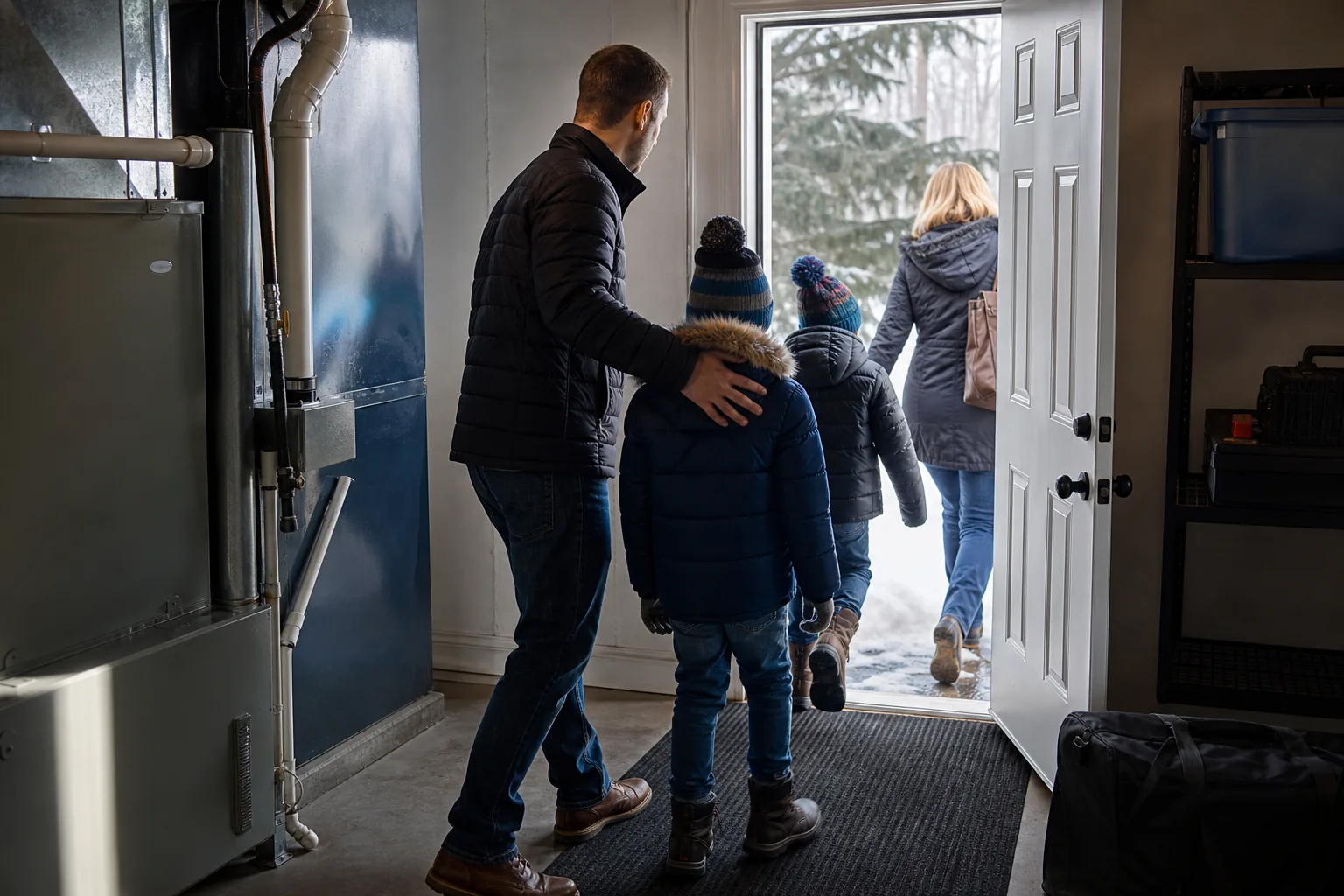
Key Takeaway:A gas odor or carbon monoxide alarm means leave first. Troubleshooting can wait until the home is safe.
Step 2: Check the Thermostat, Power, and Furnace Switch
Once there are no safety warnings, check the controls you can reach without opening the furnace. A small setting or power issue can stop a system that’s otherwise ready to heat.
Set the thermostat to Heat. Raise the target temperature several degrees above the room temperature, then give the system a few minutes to respond. If the screen is blank or dim, replace the batteries if your thermostat uses them. Check that the fan is set to Auto, not On. On can keep the blower running when the furnace isn’t making heat.
If you use a smart thermostat, check its screen for an alert or loss of power. A Wi-Fi connection issue may affect remote control, but it doesn’t always mean the furnace itself has failed. Use the thermostat’s own controls to set Heat and raise the temperature. Don’t remove the thermostat or handle its wiring.
Next, look for the furnace service switch. It often resembles a light switch near the unit or on its side. Confirm it’s on. Then check the electrical panel for a breaker marked furnace, HVAC, or air handler. If it’s tripped, move it fully to Off, then back to On once. If it trips again, leave it off and arrange service.
Even a gas furnace needs electricity to run its controls and blower. Thermostat settings, a tripped breaker, a dirty filter, or a switched-off furnace are common reasons a furnace won’t start.
For a fuller walk-through of these homeowner checks, our safe checks for a furnace that won’t turn on explain what to inspect without handling wires.
Homeowners in Rocklin and Roseville can use the same sequence: thermostat first, then the visible switch and breaker. Don’t keep resetting a breaker that won’t stay on.
Step 3: Inspect the Air Filter and Clear Vents
A clogged filter or blocked vent can restrict airflow. Some furnaces shut down when airflow is poor, so check these simple points before assuming a part has failed.
Turn the thermostat off before removing a filter. Find it at the return grille or in a filter slot near the furnace. Slide it out without reaching into the unit. If the filter looks matted with dust, replace it with the same size and type. The size is usually printed on the frame. Follow the airflow arrow on the new filter so it points toward the furnace.
Don’t run the furnace without a filter as a workaround. Dust can enter the system, and the cause of the shutdown may remain. Check the filter monthly during heavy use, then follow its label and the furnace manual for replacement timing. Homes with pets or frequent dust may need more frequent checks.
Walk through the rooms and look at supply registers. Open any that are closed. Move rugs, furniture, or boxes away from them. Then check the larger return grilles. Those need an open path too, so the furnace can draw air back through the system.
A dirty filter and blocked supply or return grilles are common airflow issues to check. A limit switch, which helps stop overheating, should never be bypassed. Your furnace manual has the model-specific advice.
If you’re unsure about filter size or replacement timing, our guide to when to replace a furnace filter can help you check the frame and plan routine inspections.
In Grass Valley or Penn Valley, a filter that looks clean and open vents still won’t rule out an internal fault. If the furnace keeps stopping, move on to the next step rather than removing panels or cleaning internal parts.
Pro Tip:Take a quick photo of the old filter’s size and airflow arrow before you remove it. That gives you a simple reference when choosing and placing its replacement.
Step 4: Note Any Error Codes and Try Only a Safe Reset
Your goal is to record what the furnace reports, then reset it only if the manual describes a homeowner-safe method. An error light can point a technician toward the fault, but its meaning depends on the model.
Look through the viewing window or at the outside of the furnace for a blinking light or displayed code. Don’t remove a panel to reach the control board. If you can see a code without opening anything, write down the exact pattern. Note unusual sounds too, such as repeated clicking or a loud hum.
Check the owner’s manual for what the code means and whether it gives a safe reset step. Some furnaces have different controls and reset directions, so don’t assume instructions for another model apply to yours. A reset doesn’t fix the cause of a shutdown.
If the manual allows a basic power reset, set the thermostat to Off. Turn the furnace switch off, wait for the period stated in the manual, then restore power once. Watch for a normal start. If the furnace shuts down again, stop there. Don’t press an unidentified button or try to reset a rollout switch. Never bypass a safety control.
Home Worx Heating and Cooling has a separate guide on how to reset a furnace safely , including checks to make before attempting a reset.
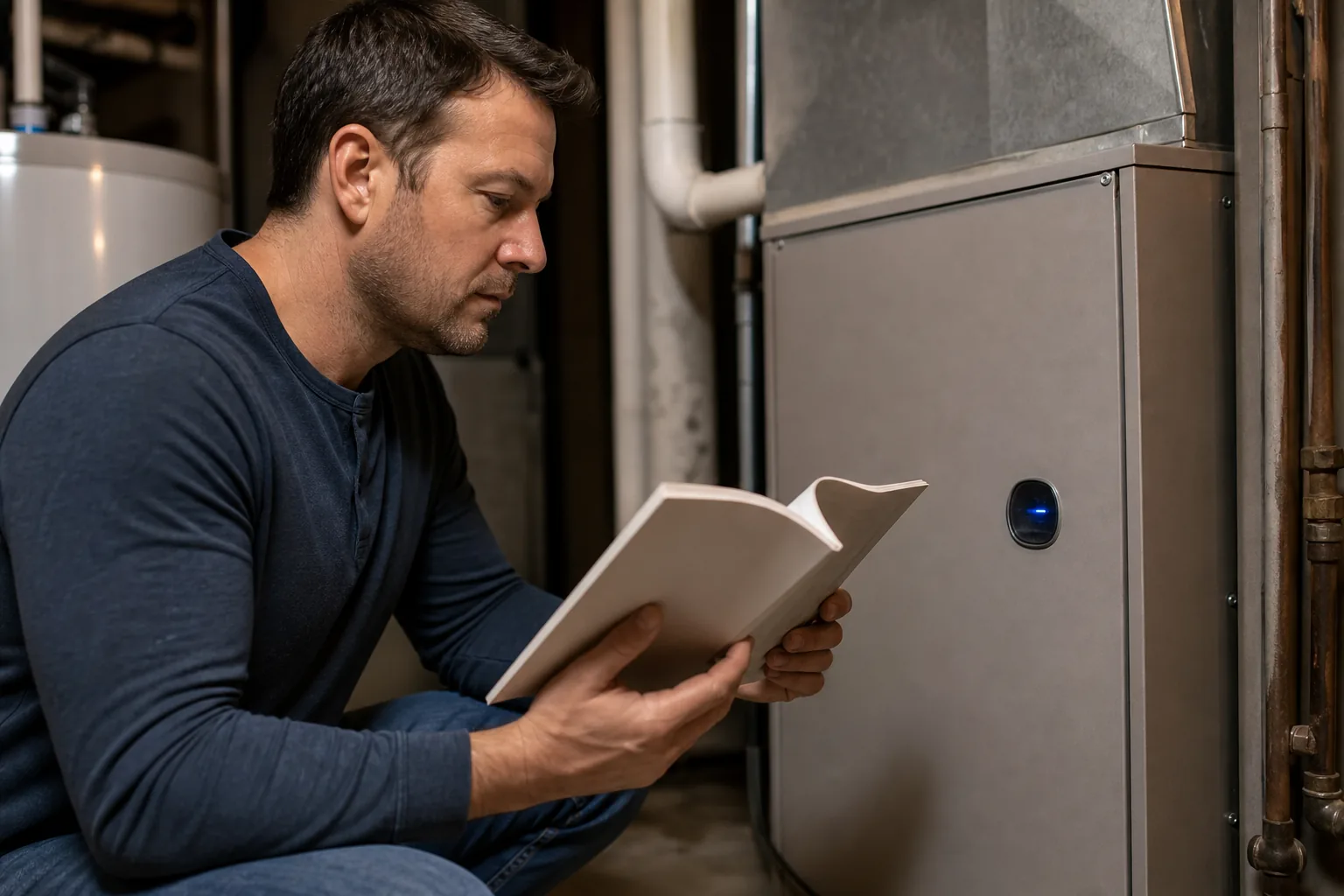
Repeated shutdowns are a stop signal, not an invitation to keep pressing reset. Share the code and what happened before the furnace stopped with the technician.
Step 5: Call an HVAC Technician When Basic Checks Don’t Restore Heat
If the thermostat, power, filter, and vents look right but you still have no heat, arrange professional diagnosis. Internal ignition parts, gas controls, wiring, blower components, or safety switches need a trained technician.
Stop and request service if the breaker trips again, the furnace repeatedly starts and shuts down, or you hear harsh grinding or banging. Do the same if you see soot, scorch marks, water around the unit, or a damaged vent pipe. Don’t clean a flame sensor, test voltage with a multimeter, inspect a gas valve, or open the control compartment. Those steps can expose you to electrical or combustion hazards.
When you arrange service, tell the technician the furnace make and model if you can read them safely. Describe what the thermostat showed and whether the unit was silent, clicked, or started before stopping. Mention any code you saw. This gives the technician a useful starting point without you taking the furnace apart.
Repair prices depend on what failed, the parts needed, and when service is required. Rather than rely on a broad online estimate, ask what the diagnostic visit covers. Before approving work, request an explanation of the fault and an itemized quote. If the repair points toward replacement, ask what makes repair or replacement the better fit for your system.
While waiting, keep people warm with layers and by gathering in one room. If you use a portable heater, follow its maker’s safety directions and keep it away from bedding, curtains, and other items that can burn. Don’t use an oven or outdoor grill to heat the home. If the house gets too cold to stay in safely, find a warmer place to wait. In freezing weather, ask the technician how to protect plumbing if heat will be off for a while.
Home Worx Heating and Cooling provides heating system repair and 24/7 emergency repair service. We serve Colfax, Auburn, Rocklin, Roseville, Grass Valley, Penn Valley, and Lincoln, as well as the wider Placer and Nevada County area.
For seasonal prevention, check the filter regularly and arrange routine furnace maintenance before peak heating demand. A yearly inspection can help find concerns before a cold night puts the system to work.
Frequently Asked Questions
What should I check first when my furnace stops working?
Check for gas odor, smoke, or a carbon monoxide alarm first. Leave the home if you notice a hazard, and contact emergency help from outside. If there’s no danger, check the thermostat setting, furnace switch, breaker, filter, and open vents. Stop if the breaker trips again or the furnace keeps shutting down.
Can I reset my furnace myself?
You can try a reset only if the owner’s manual gives a safe method for your model and there are no signs of a safety problem. Follow the manual once, then watch the next start attempt. If the furnace shuts down again, don’t keep resetting it. A repeated fault needs professional diagnosis.
Should I relight a furnace pilot light?
Only consider relighting a pilot if your furnace has a standing pilot and its manufacturer’s instructions explain how to do it. Never try if you smell gas or a carbon monoxide alarm has sounded. Don’t use a lighter near a gas odor. If the pilot won’t stay lit, stop and arrange service.
How much does furnace repair usually cost?
Furnace repair costs vary with the failed part, labor, system type, and timing. A general online figure may not match a local repair. Ask what the service visit includes, then request an itemized quote before approving work. The technician can explain the diagnosis and the options for your specific system.
How can I stay warm while waiting for furnace repair?
Wear warm layers and gather in one room to conserve heat. If you use a portable heater, follow its safety directions and keep it clear of bedding or curtains. Never heat your home with an oven or outdoor grill. If indoor temperatures become unsafe, arrange a warmer place to stay.
Conclusion
Start with safety, then work through the basic checks without opening the furnace or bypassing a control. If heat doesn’t return, contact Home Worx Heating and Cooling for local service in Auburn, Colfax, Rocklin, Roseville, Grass Valley, Penn Valley, or Lincoln.