
When to Replace an Air Conditioner: Signs and Timing
Updated: Oct 1
An air conditioner can lose efficiency long before it stops cooling. Older units may use about 40% more electricity than new 17-SEER2 models. Age, repair history, comfort, and energy use together can show when replacement deserves a closer look.
We pulled cost-guide ranges for three common AC repairs, plus current R-22 pricing. Applying the $5,000 rule, an average compressor repair of $1,133 to $2,867 already crosses the threshold on units 1.7 to 4.4 years old. R-22 refrigerant itself now retails at $80 to $150 per pound installed. That combination shows a repair estimate on an aging R-22 system can cross $5,000 well before year 10, favoring an earlier replacement look.
Table of Contents
How an Air Conditioner’s Age Affects Replacement Timing
Age is a useful starting point when deciding when to replace an air conditioner, but it isn’t a deadline. Many systems run for 10 to 15 years, and maintenance, use, and installation quality all affect how long a particular unit lasts.
Once a system passes the 10-year mark, pay closer attention to its energy use and repair record. ENERGY STAR advises considering replacement for air conditioners and heat pumps over 10 years old. It says a properly installed replacement air conditioner can save up to 20% on heating and cooling costs. That’s a potential saving, not a promise for every home.
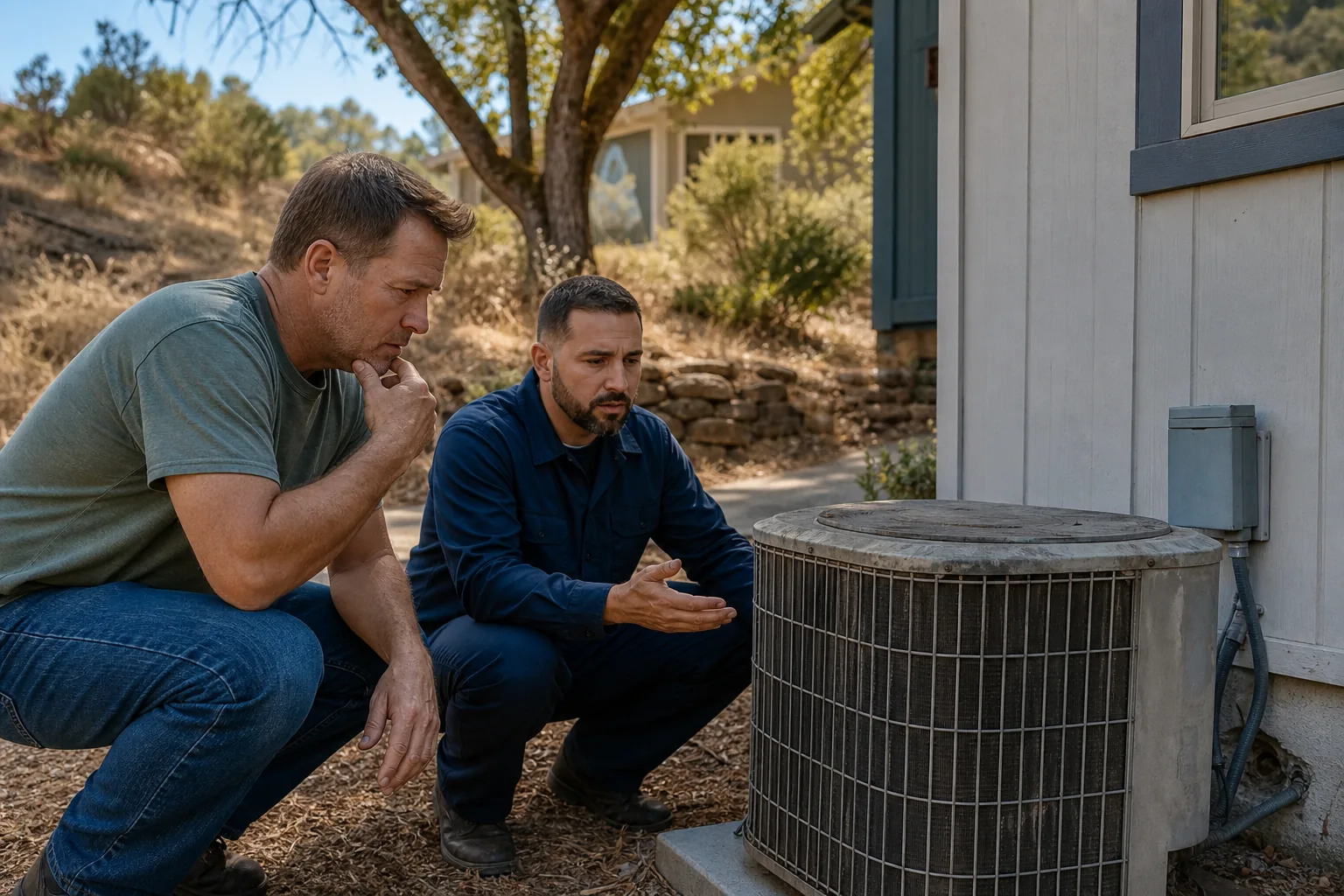
Electricity use varies with the equipment, how often it runs, and how well your home holds cool air.
In Colfax, long hot spells can push an aging unit to run for hours. Check your power bills against the weather and your usual cooling habits. If electricity use keeps climbing without a clear reason, ask a technician to check the system before assuming its age is the only cause.
SEER2 is a rating that compares cooling output with electricity use. The rating helps you compare equipment, but it doesn’t tell the whole story. Duct leaks, poor airflow, or an incorrect system size can undermine a high-rated unit. Our guide to choosing a good SEER rating for your home explains why the full setup matters.
Age should raise the question, not decide the answer. A well-kept 12-year-old system with steady bills and one small repair may have useful life left. An 11-year-old unit with repeated failures and rising power use deserves a replacement assessment. Contact Home Worx Heating and Cooling for local service and help assessing your system.
Warning Signs That Performance Is Declining
When cooling gets worse, first look for a pattern. One hot afternoon may not mean much, but ongoing comfort problems can help show when to replace an air conditioner or repair a smaller fault.
Notice how each room feels during the hottest part of the day. Persistent hot and cold spots can come from aging equipment, but they can also point to blocked airflow, leaky ducts, or poor insulation. A technician should check those causes before recommending a new system.
Watch for a steady rise in energy use, too. Compare similar months and account for hotter weather or changes in how often you run the AC. If your habits and the weather are similar but bills keep going up, the system may be working harder to deliver the same amount of cooling.
Other signs call for a closer inspection:
The system runs for long stretches but doesn’t reach the thermostat setting.
Indoor air feels damp, or the home has new humidity problems.
You hear new rattling, buzzing, or grinding sounds.
Water pools near the indoor unit, or you see signs of a refrigerant leak.
The system needs repairs more often than it used to.
Some warning signs have more than one possible cause. Dust in the home, for example, may come from leaky ducts rather than an old air conditioner. A repair visit can help separate equipment wear from issues elsewhere in the home.
In Rocklin and Roseville, a system that struggles through repeated hot days may be nearing its limits, but don’t treat one symptom as proof that replacement is needed. If the AC stops cooling or develops an urgent fault, our page on signs an air conditioner needs emergency repair can help you judge when to seek prompt service.
R-22 refrigerant is another reason to ask questions. Its production and import have been phased out in the United States, though existing systems aren’t automatically required to be replaced. If an older unit has a refrigerant leak, ask what repair would involve and whether recurring leak work makes replacement a better long-term choice.
When Repair Costs Make Replacement the Better Choice
A repair quote can make the decision feel urgent. To judge when to replace an air conditioner, compare the repair with the system’s age, recent repair history, and current performance instead of looking at the quote alone.
One common screening tool is the $5,000 rule: multiply the unit’s age in years by the estimated repair cost. If the result is over $5,000, replacement may be worth considering. For example, a 12-year-old system with a $500 repair reaches $6,000 under this formula. It’s a rough prompt for a closer review, not a rule that can diagnose equipment.
A simple written list of the quoted parts and labor can help you organize a repair estimate before weighing it against replacement. Check whether the quote describes the failed part and any related work. Also ask if the repair is likely to address the underlying problem or only restore cooling for now.

A minor repair on a younger system may be a sensible choice, especially if it has a solid service history. A major compressor or coil repair on an older unit calls for a wider comparison. If the system has needed several repairs in a short time, include those recent costs in your decision.
Your local electricity use, repair warranty, system condition, and how long you plan to stay all affect the decision.
Before approving a major repair, ask for the diagnosis and estimated repair cost in writing. Ask what part failed and whether other parts show wear. Then request a replacement estimate for comparison. For homeowners in Auburn, Colfax, Rocklin, Roseville, Grass Valley, Penn Valley, and Lincoln, contact Home Worx Heating and Cooling to assess the system and explain the repair and installation options without treating a rule of thumb as a verdict.
What to Expect From a Replacement Assessment in the Foothills
A sound replacement assessment should explain why the system is struggling and what a new setup would need to do. In foothill communities such as Colfax, hot, dry summers and cold winters make it useful to consider the home’s cooling and heating needs together.
The technician should inspect the existing equipment and ask about comfort concerns. Mention rooms that stay warm, changes in your bills, unusual sounds, and past repairs. These details help connect the symptoms you notice with what the equipment is doing.
The assessment should also look beyond the outdoor unit. Duct condition, airflow, insulation, and the indoor equipment affect how well a replacement can cool the home. If the ducts leak or the system is poorly matched to the house, replacing only the outdoor unit may leave the same comfort problem in place.
Ask how the contractor will size the replacement. A home’s floor area alone doesn’t tell the full story. Windows, insulation, layout, and local weather all affect cooling needs. The proposed equipment should fit the home rather than simply copy the size of the old unit.
In Auburn or Grass Valley, be specific about rooms that heat up during summer afternoons. Those details give the technician a chance to check airflow and duct performance before choosing equipment. A separate cooling option may suit some spaces, but it won’t be the right answer for every house.
Ask for the equipment model and efficiency rating in the written proposal. You can also ask what the quoted work includes, such as equipment, installation labor, permits, and startup checks. Permit steps can depend on the project and local requirements, so have the contractor confirm what applies before work begins.
Rebates and utility incentives can change, and eligibility depends on the program and equipment. A Roseville or Lincoln homeowner considering a high-efficiency upgrade should check current California and PG&E offers before counting on a rebate. Home Worx Heating and Cooling can help you review available options, but confirm program rules before budgeting around them. Contact Home Worx Heating and Cooling for local service.
Making the Decision: Replace Now or Monitor the System?
When you’re unsure when to replace an air conditioner, weigh the evidence together. Age by itself doesn’t settle it. A pattern of higher bills, weaker cooling, and repeated major repairs makes replacement more worth exploring.
Repair may be the better move when the system is relatively young, has one clear fault, and has otherwise kept the home comfortable. Ask about parts and labor coverage for the repair. Keep the invoice so you can track whether the same issue returns.
Replacement deserves serious consideration when the system is older and a major repair is due. The case grows stronger if the unit also runs longer than before or leaves rooms uncomfortable. An older system that uses R-22 and has recurring refrigerant problems calls for a careful repair-versus-replacement comparison.
It’s also reasonable to monitor a system that still cools well and has a steady repair history. Keep an eye on energy use during similar weather. Note how often it runs and whether comfort changes. Schedule seasonal maintenance so a technician can catch issues before peak summer demand.
Homeowners in Lincoln can use the same approach: document bills and repairs, then compare them with the next estimate. Home Worx Heating and Cooling serves Lincoln and nearby foothill communities, including Auburn, Colfax, Rocklin, Roseville, Grass Valley, and Penn Valley. Financing options may help spread the cost of a replacement; ask about current terms before deciding.
Key Takeaway:Get a replacement assessment when an older system has more than one warning sign, or when a major repair would add to a pattern of rising costs.
Frequently Asked Questions
How old should an air conditioner be before replacing it?
Consider a replacement assessment when an air conditioner is about 10 years old or older, especially if it needs frequent repairs or no longer cools evenly. Age alone doesn’t mean it must go. A well-maintained unit may keep working, while poor performance or rising energy use can make an earlier replacement worth discussing.
Is it worth repairing a 10-year-old air conditioner?
It can be, if the repair is minor and the rest of the system is in good shape. To judge when to replace an air conditioner, compare the repair estimate with the unit’s condition, energy use, and recent repair history. Get a replacement quote before approving a costly repair on an older system.
What is the $5,000 rule for air conditioners?
The $5,000 rule multiplies the system’s age by the estimated repair cost. A result above $5,000 suggests comparing replacement options, but it doesn’t prove replacement is best. The formula leaves out factors such as energy use, repair coverage, and the condition of other system parts.
Can uneven cooling mean I need a new AC?
Yes, but uneven cooling can also come from duct leaks, blocked airflow, or insulation problems. If your home has hot and cold spots, ask a technician to check those causes before recommending replacement. Persistent uneven cooling on an older system can support replacing it once other issues are ruled out.
Conclusion
If your air conditioner is older and shows repeated warning signs, ask for a written assessment that compares repair with replacement. Home Worx Heating and Cooling serves homeowners across Placer and Nevada counties. Contact our team to review your system and discuss the next step for your home.