
Why Does My AC Smell Musty? Causes and Fixes
- Bryn Fortmuller
- Aug 4
- 9 min read
A musty AC smell usually points to moisture trapped somewhere in the cooling system. The usual suspects are a dirty filter, clogged condensate drain, wet drain pan, or mold near the evaporator coil . Here’s how to tell which problem you may have, what you can safely check, and when Home Worx Heating and Cooling should take over.
Table of Contents
What a Musty AC Smell Usually Means
If you’re asking, “why does my AC smell musty,” start with moisture. Your air conditioner pulls water from indoor air as it cools your home. That water should collect in a drain pan and leave through a condensate line.
When water sits inside the system, dust and organic debris give mold and mildew something to grow on. The blower then spreads that stale smell through the vents whenever the AC runs. The odor may be strongest when the system starts after sitting off for hours.
A faint smell during the first use of the season may fade after a day or two. A smell that keeps returning is different. It suggests that moisture, dirt, or growth remains inside the system.
Mildew is a type of fungus that prefers damp surfaces. An AC can provide those surfaces around the coil, pan, filter, or ductwork. General guidance about mildew in air conditioners notes that condensation, moist air, and dust can combine inside an HVAC system.
Pay attention to how the odor behaves. A smell that comes only from one vent may point to a local duct or register issue. A smell that fills the whole house often starts near the indoor unit or return side of the system.
There’s also a less obvious cause: an oversized AC. A unit that cools the room too fast may shut off before it removes enough humidity. The coil stays damp, and repeated short cycles can give mold more time to grow.
People with asthma, allergies, or strong sensitivity to indoor air may notice symptoms sooner. A musty smell doesn’t prove that dangerous mold is present, but it does give you a reason to find the moisture source instead of masking the odor.
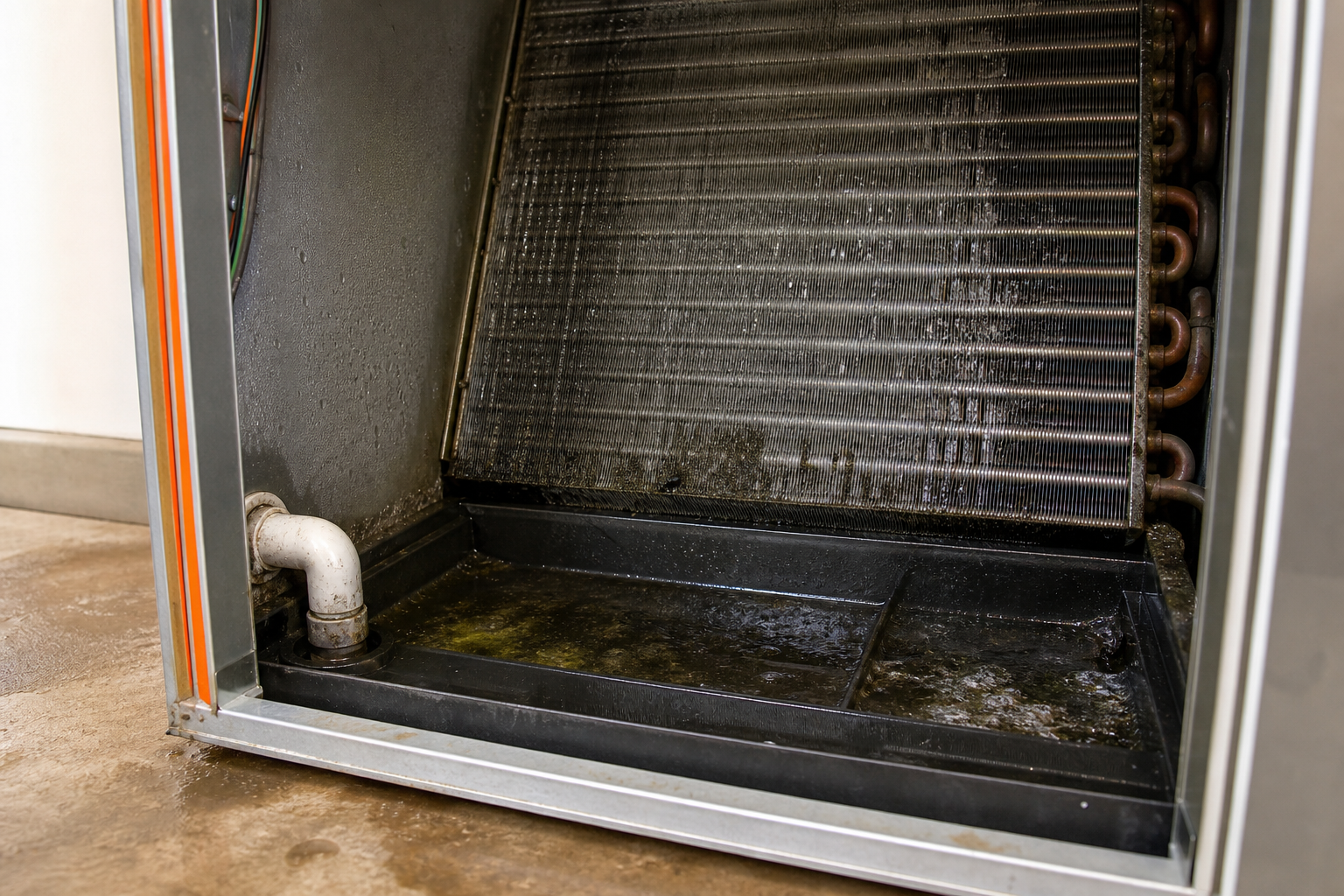
Key Takeaway:A musty odor is usually a moisture problem first and a cleaning problem second. Find where water is collecting before you reach for an air freshener.
For local help with a musty AC in the Placer County or Nevada County area, contact Home Worx Heating and Cooling .
Common Causes: Filters, Drainage Problems, and the Evaporator Coil
When homeowners ask why their AC smells musty, we check the filter and drainage path early. These parts are easy to overlook, yet they control airflow and water removal.
Dirty or wet air filters
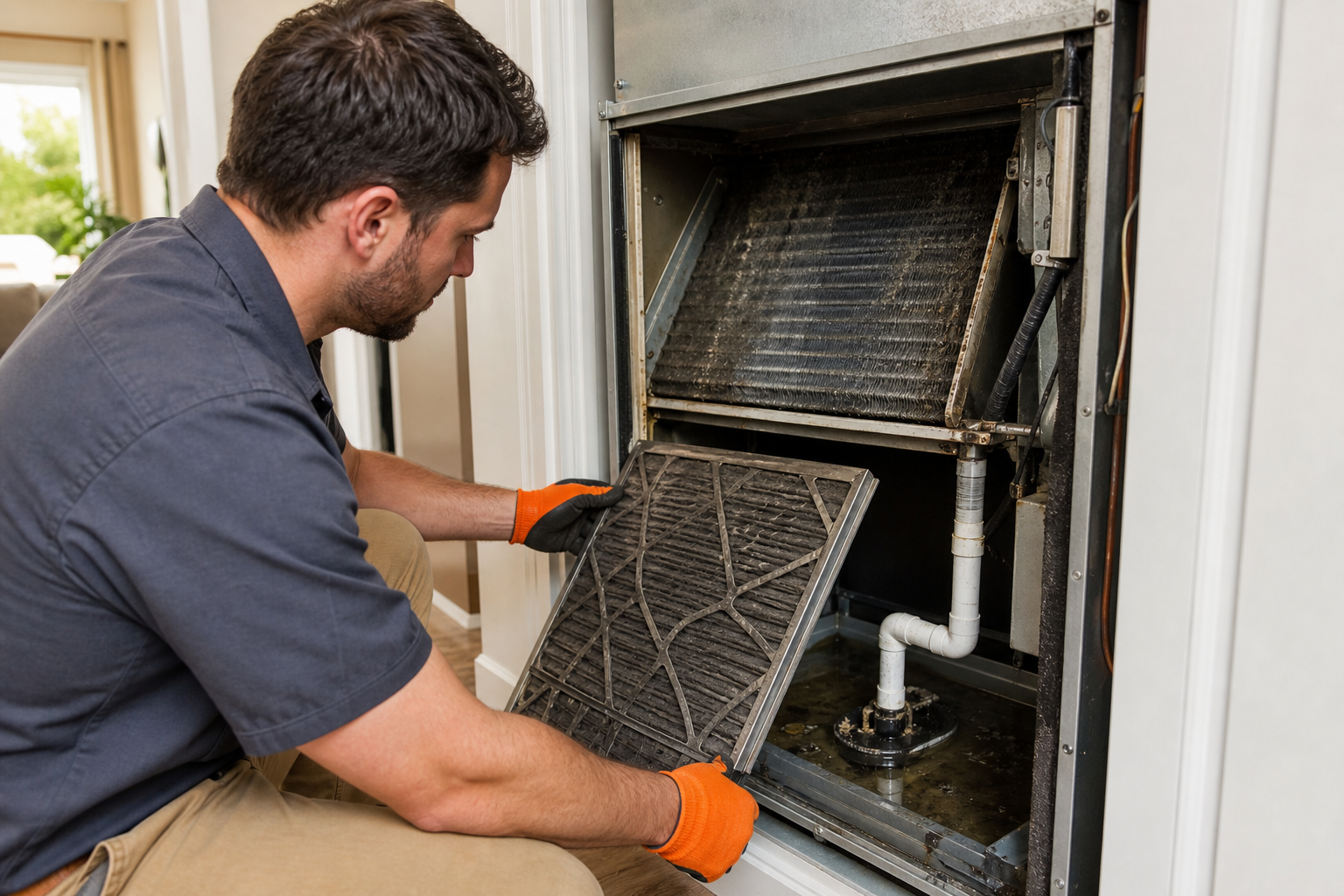
A clogged filter restricts airflow across the evaporator coil. Less air moves through the system, so moisture can remain on the coil or freeze in place. A wet filter points to a separate moisture problem and should be replaced while the cause is investigated.
Check the filter at the return grille or inside the air handler. Hold it toward a light. If dust blocks much of the surface, replace it with the correct size and type listed by the system maker. Most homes need a check every one to three months, though pets, smoke, construction dust, and heavy summer use can shorten that interval.
Keep furniture and curtains away from return grilles. A clean filter cannot fix a return vent that is blocked by a cabinet or large sofa.
Clogged condensate line or drain pan
Cooling creates water. The drain pan catches it, and the condensate line carries it away. Sludge, algae, dust, or debris can block the line. A cracked pan can leak even when the line is clear.
Look below the indoor unit for pooled water, rust marks, or damp insulation. A full pan may trigger a safety switch that turns the AC off. Standing water also gives mold and mildew a place to grow.
Homeowners who feel comfortable with basic maintenance can review our AC drain line cleaning steps . Turn off power before touching the drain system. If water returns, the line will not clear, or the pan looks cracked, stop and arrange service.
Dirty evaporator coil
The evaporator coil sits inside the indoor section of a split system. It gets cold as refrigerant moves through it. Warm indoor air passes over the coil, and moisture condenses on its surface.
Dust on the coil can hold moisture. Mold growth on the coil can release a dirty-sock smell each time the blower runs. Coil cleaning is best left to a trained technician because the fins bend easily and nearby wiring can be damaged.
Trane’s musty AC troubleshooting guide connects this odor with dirty filters, standing water, drain issues, and moisture around ductwork. That matches the pattern we see in homes: the smell is often a chain of small problems, not one isolated fault.
Home Worx Heating and Cooling can inspect the filter, pan, drain path, coil, and airflow during one service visit. That matters when the odor disappears for a week after a quick clean, then comes back.
Could Moisture or Mold Be Hiding in the Ductwork?
If you’re still asking why your AC smells musty after replacing the filter, the ductwork may need attention. Ducts should carry conditioned air through a dry, sealed path. Moisture changes that.
Leaky ducts can pull humid air into the system. If that air meets a cold duct surface, condensation may form inside the duct. Dust then sticks to the damp area, which can support mold or mildew growth.
Look for clues at the registers and return grilles. Dark spotting, damp insulation, water stains, or a musty smell from one branch deserve a closer look. Do not assume every dark mark is mold. Dust, soot, and old insulation can look similar.
A duct inspection may require equipment that lets a technician see beyond the opening. Cleaning only the visible vent cover won’t solve a wet section deeper in the run. The moisture source must be fixed first.
Whole-system cleaning may include the coil, blower area, drain pan, and accessible duct surfaces. If mold is confirmed, ask what will be cleaned and what will be sealed. A vague promise to “sanitize the ducts” is not enough.
Our air duct cleaning cost guide explains why scope matters. Home size, duct access, vent count, and possible mold work can change the job. Ask for an itemized quote rather than choosing based on a low headline price.
In some homes, the ductwork is not the cause. The indoor coil may be staying wet because the unit is oversized or short-cycling. A technician can review cycle length, airflow, insulation, and system size before recommending major work.
Pro Tip:If the odor comes from one room, compare that vent with others while the system runs. A single affected branch points toward local duct moisture or a nearby register.
Safe Checks You Can Make Before Calling an HVAC Professional
Basic checks can help you answer why your AC smells musty without opening dangerous parts of the system. Keep your hands away from electrical compartments, refrigerant lines, motors, and sealed coil sections.
Start with the filter
Turn the thermostat off. Remove the filter and check whether it is dirty, damp, damaged, or installed backward. Replace it with the correct size if needed. If the new filter becomes wet, don’t keep running the system and hope it dries out.
Check for water
Look around the indoor unit and beneath the air handler. A puddle, water stain, rust mark, or sagging insulation suggests a drain or pan issue. Don’t pour liquid into an unfamiliar opening unless the owner’s manual identifies it as a drain access point.
Clear the easy airflow blocks
Make sure return grilles and supply registers are open. Move rugs, boxes, curtains, or furniture away from them. Poor airflow can make the coil too cold and may lead to freezing, dripping, or a stronger odor.
Notice the type of smell
A musty smell usually calls for a moisture check. Other odors need faster action.
Burning or hot electrical smell:Turn the system off. Do not reset a breaker again and again.
Sweet chemical smell:Stop using the system and arrange professional inspection for a possible refrigerant problem.
Rotten-egg smell:Leave the building if you suspect gas. Contact emergency services from a safe location.
Exhaust smell:Turn off the AC and seek prompt professional help.
Never spray bleach, perfume, or household cleaner into supply vents. It may damage materials and spread fumes through the home. A technician has the tools to test airflow, inspect the coil, find leaks, and handle electrical work safely.
If someone in your home develops repeated coughing, wheezing, headaches, or eye irritation when the AC runs, shut the system down until the source is checked. People with asthma or weakened immune systems may need extra care.
Home Worx Heating and Cooling can help when a basic filter change does not solve the problem. We’ll look for the reason the odor returns instead of treating the smell alone.
How to Prevent Musty AC Odors in Placer and Nevada Counties
Preventing a musty AC smell in Placer and Nevada Counties starts with steady airflow and a clear path for condensate. Hot, dry Sierra foothill summers can keep your system running for long stretches, so small maintenance gaps show up quickly.
Check the filter each month during heavy cooling. Replace it when it is dirty, or follow the interval set by the filter maker and your HVAC technician. A filter should never stay in place simply because it has not reached a certain date.
Schedule a cooling check before the hottest part of the season. A technician can inspect the drain pan, test the condensate line, check coil condition, and review airflow. Seasonal service also gives you a chance to spot a short-cycling problem before damp equipment starts to smell.
Keep the area around the indoor unit dry and free of stored boxes. Outside, clear leaves and plant growth away from the condenser. The outdoor unit does not create the musty smell by itself, but blocked airflow can make the whole system work harder.
Ask about humidity control if your home feels damp even when the thermostat reaches its set point. An AC that runs briefly and shuts off may cool the room without removing enough moisture. The right fix may involve airflow changes, duct repairs, equipment sizing, or a separate air-quality option.
Property managers and small business owners should log filter changes and service visits. That simple record helps reveal patterns. For example, an odor that returns after every long vacancy may point to stagnant moisture, while an odor that starts after a roof leak may point to wet insulation or ductwork.
Home Worx Heating and Cooling provides repair, maintenance, system installation, and air-quality solutions for homes and small businesses near Colfax, Auburn, and the wider Placer and Nevada County area. We can also discuss service plans when regular seasonal checks make sense for your property.
One warning: air fresheners only cover the odor. They do not dry a drain pan, clear a blocked line, or clean a moldy coil. If the smell returns after a filter change, book an inspection before the next heat wave.
Frequently Asked Questions
Why does my AC smell musty when I first turn it on?
A musty smell at startup usually comes from moisture and buildup on the evaporator coil, filter, drain pan, or nearby ductwork. A brief odor after long downtime may fade within a day or two. If it keeps returning, replace the filter and check for water. Persistent smells need a deeper inspection.
Can a dirty AC filter cause a musty smell?
Yes, a dirty AC filter can cause a musty smell by restricting airflow and holding dust against damp surfaces. Remove the filter and replace it if it looks packed with dust or feels wet. A wet replacement filter means there is another moisture problem, such as a blocked drain or coil issue.
How do I get rid of a musty smell from my air conditioner?
Start by replacing a dirty filter and checking for standing water near the indoor unit. If the smell remains, the drain line, pan, coil, or ductwork may need cleaning or repair. Don’t spray household chemicals into the vents. A qualified HVAC technician should handle hidden mold, electrical faults, and refrigerant concerns.
Is a musty AC smell dangerous?
A musty AC smell is usually a sign of moisture or microbial growth, not an immediate emergency. It can still worsen indoor air concerns for people with asthma, allergies, or other sensitivities. Burning, chemical, rotten-egg, or exhaust odors are more urgent. Turn off the system and seek professional help for those smells.
When should I call an HVAC professional for a musty smell?
Call an HVAC professional when the odor lasts after a filter change, returns quickly, comes with water, or affects several rooms. You should also get help if the coil or ductwork may contain mold. Home Worx Heating and Cooling can trace the source and recommend repair, cleaning, or maintenance for local properties.
Conclusion
A musty AC smell usually means water is collecting where it shouldn’t. Replace a dirty filter, look for visible moisture, and stop using the system if the odor changes to burning, chemical, gas, or exhaust. If the smell lingers, contact Home Worx Heating and Cooling for local HVAC service in the Placer and Nevada County area.