
Why Is My AC Not Cooling? Common Causes Explained
Your AC is running, but the air coming out feels like room temperature. Frustrating , especially when Sierra-foothill summers push temperatures well past 100°F. The good news is that most of the time, the fix is simpler than you'd expect. Here's a plain-English breakdown of the most common reasons your AC isn't cooling and what to do about each one.
Clogged Air Filter – What Happens and How to Fix It
A dirty air filter is the single most common reason an AC stops cooling effectively. When the filter gets packed with dust, pet hair, and debris, it chokes off the airflow your system needs to function. Less airflow means the evaporator coil can't absorb heat properly , and your home stays warm no matter how low you set the thermostat.
The system doesn't just blow less air. It works harder, runs longer cycles, and your electricity bill climbs. In bad cases, the evaporator coil can actually freeze over, which makes cooling worse and can damage the compressor if you leave it running.
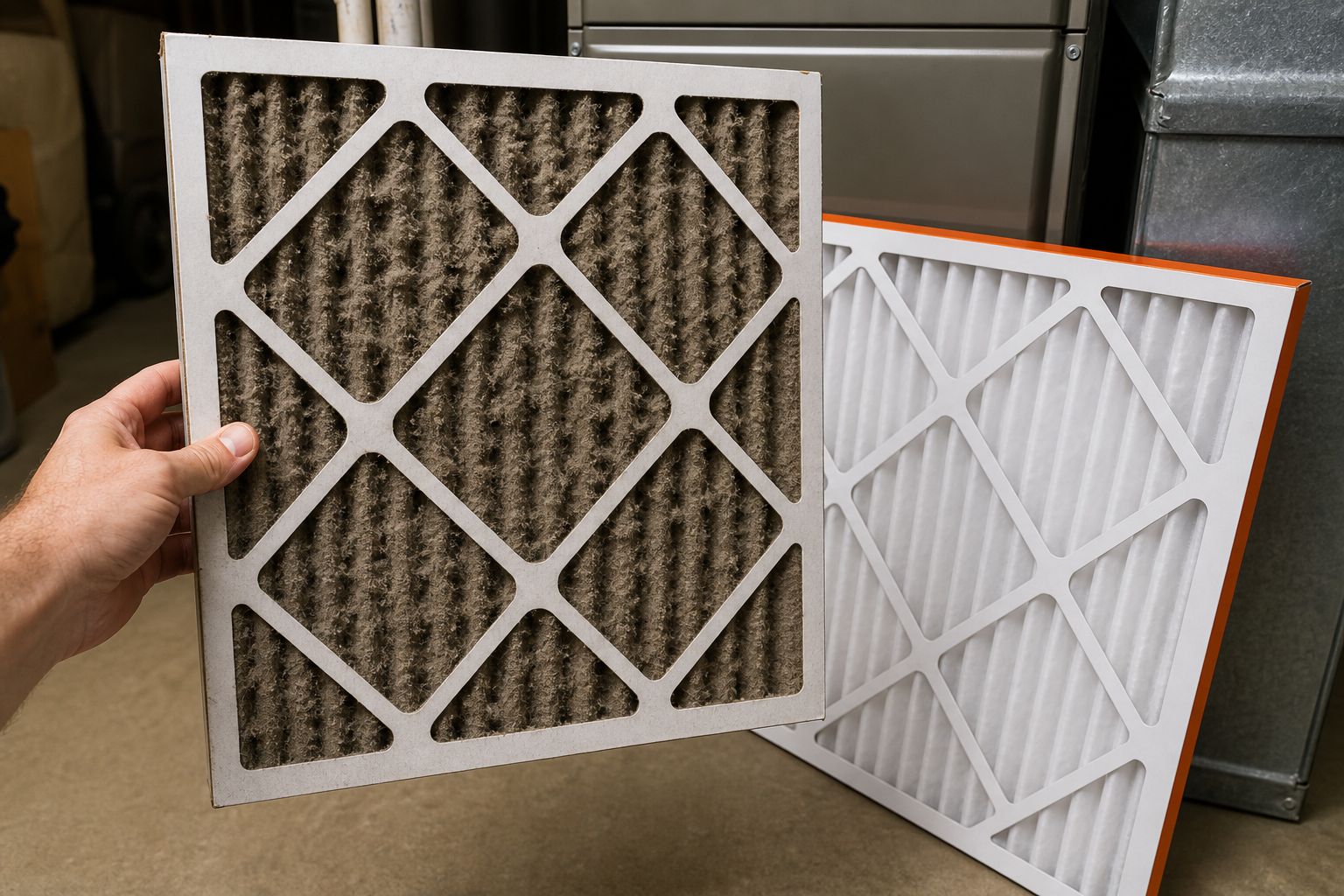
The fix is straightforward. Pull the filter out and hold it up to a light. If you can't see light through it, it needs to go. Most filters should be replaced every 30 to 90 days depending on your home , more often if you have pets or live near wildfire-prone areas like the Colfax foothills. A basic replacement filter costs as little as $15, making this the cheapest AC fix on the list.
One thing people miss: the filter size matters. A filter that doesn't fit snugly lets unfiltered air bypass it entirely, which defeats the purpose and lets debris reach the coil. Check the frame size printed on your current filter and match it exactly.
Replacing a clogged air filter can lower your AC's energy consumption. That's a meaningful benefit for a $15 fix. If you've already swapped the filter and your system still isn't performing, the problem is likely deeper , and that's where a professional inspection makes sense. The team at Home Worx Heating and Cooling's emergency AC repair service can diagnose what a filter change won't solve.
Low Refrigerant Levels – Signs, Causes, and Professional Repair
Refrigerant is what actually moves heat out of your home. It absorbs heat from the indoor air and carries it outside. When refrigerant levels drop, the system loses its ability to cool , warm air blows from the vents, and the unit runs almost constantly without making a dent in the temperature.
Low refrigerant almost always means a leak. Refrigerant doesn't get "used up" the way fuel does. If your system is low, something is wrong with the refrigerant lines or coils. Common signs include:
- Warm or lukewarm air from the vents even after the system has run for 20+ minutes
- Ice forming on the refrigerant lines or the outdoor unit
- A hissing or bubbling sound near the indoor unit
- Longer-than-normal run times with little temperature change
This is not a DIY repair. Handling refrigerant requires an EPA Section 608 certification , it's illegal for unlicensed individuals to purchase or vent refrigerants. Beyond the legal issue, finding and sealing the leak requires specialized equipment. Simply topping off the refrigerant without fixing the leak is a temporary patch that will fail again.
Refrigerant repairs can be costly, with expenses ranging from modest amounts for a minor leak to higher amounts if compressor damage is involved. Home Worx Heating and Cooling offers financing options starting at $120 per month, which can make a significant repair manageable rather than a crisis.
Key Takeaway:If your AC blows warm air and you hear hissing near the unit, stop running the system and call a licensed HVAC technician , continued operation with a refrigerant leak can damage the compressor, turning a mid-range repair into a major one.
Dirty Condenser Coils – Impact on Performance and Cleaning Tips
The condenser coils sit inside your outdoor unit and do the job of releasing heat to the outside air. When they're coated in dirt, grass clippings, or cottonwood fluff , common in Placer and Nevada County yards , that heat has nowhere to go. The system overheats, efficiency drops, and your home stays warm.
Here's the part that surprises most homeowners: dirty condenser coils don't just hurt cooling performance. They put serious strain on the compressor, which is the most expensive component in your system. Replacing a compressor can be a significant expense. Keeping the outdoor coil clean is one of the better ways to protect that investment.
For light buildup, a garden hose on a low-pressure fan setting can rinse the coils clean. Spray from the inside out , meaning from inside the unit outward through the fins , so you push debris away rather than pack it deeper. Never use a pressure washer; it bends the thin aluminum fins and permanently restricts airflow. For heavier grime, a foaming coil cleaner designed for HVAC aluminum works well. Our detailed guide on how to clean air conditioner coils walks through 10 methods depending on how dirty your unit is.
Beyond the coils themselves, check the area around the outdoor unit. Shrubs, fence boards, or debris piled against the unit restrict airflow just as effectively as dirty coils. Keep at least 18 to 24 inches of clearance on all sides. In the Sierra foothills, pine needles and oak leaves accumulate fast , a quick check every few weeks during cooling season is worth the two minutes it takes.
If you've rinsed the coils and cleared the area but performance is still off, a professional cleaning with a commercial-grade coil cleaner and a full system inspection is the next step. Routine maintenance , typically twice a year , prevents most condenser coil problems before they affect your comfort.
Thermostat Issues – Misreading Temperatures and Solutions
Sometimes the AC itself is fine. The thermostat is the problem. An old or faulty thermostat can misread the actual room temperature, which means it tells your system to stop cooling before the room is actually cool. Or it might not communicate with the AC unit reliably, causing erratic starts and stops.
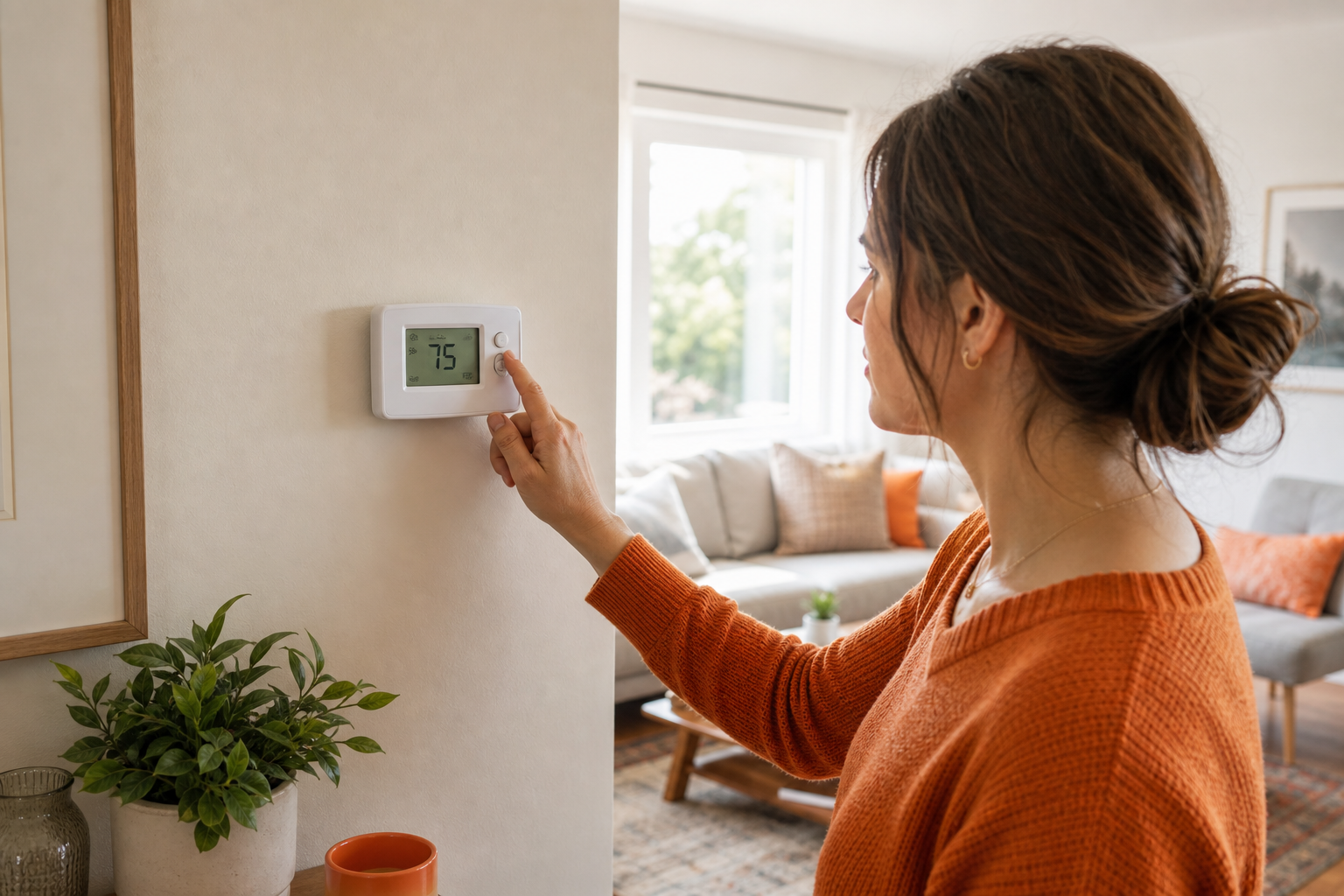
A few things to check before assuming the thermostat is broken. First, confirm the setting is on "Cool" and not "Fan Only" , fan mode circulates air without cooling it, which is a surprisingly common source of warm-air complaints. Second, check that the temperature is set at least 5 degrees below the current room temperature. Third, if it's a battery-powered thermostat, swap the batteries. A weak battery can cause the display to work while the signal to the AC unit is too faint to trigger cooling.
Location matters too. A thermostat mounted near a sunny window, above a lamp, or close to the kitchen will read warmer than the rest of the house. It'll keep calling for cooling even when the room is already comfortable , or stop calling too early because the local heat source fools it into thinking the target temp has been reached.
If your thermostat is more than 10 years old and you're having repeated issues, replacement is worth considering. Smart thermostats with remote sensors can read temperatures from multiple rooms, which solves the placement problem entirely. The cost of smart thermostat installation varies, and many California homeowners qualify for PG&E rebates that can reduce out‑of‑pocket expenses.
One caveat: if you've confirmed the settings are correct and the thermostat is in a reasonable location but the AC still won't cool, the thermostat is probably not the culprit. Move on to checking the other causes in this guide before replacing hardware you don't need to.
Pro Tip:Tape a small thermometer next to your thermostat for 24 hours. If the two readings differ by more than 2 to 3 degrees consistently, the thermostat sensor is drifting and replacement makes sense.
Capacitor Problems – Why Your AC Might Not Start and When to Call a Pro
Capacitors are small cylindrical components inside your outdoor unit that give the motors the jolt they need to start and keep running. There are typically two: a start capacitor and a run capacitor. When either one fails, the motor it serves can't do its job.
A bad capacitor often shows up in a specific way. You hear the outdoor unit humming but the fan isn't spinning. Or the system tries to start, clicks, and shuts off after a few seconds. In hot weather , the exact time you need your AC most , capacitors fail more often because heat degrades them faster. Capacitors store and release electrical charge, and repeated thermal stress from summer heat cycles shortens their lifespan.
Signs a capacitor may be failing:
- The outdoor unit hums but the fan blade isn't turning
- The system starts then shuts off within a minute or two
- You notice a clicking sound when the system tries to start
- The AC runs but takes much longer than usual to cool the space
Capacitor replacement is not a DIY job. Even with the unit powered off, capacitors hold a charge that can cause a serious electric shock. A licensed technician can test the capacitor with a multimeter, confirm it's the problem, and swap it in under an hour. The part itself is inexpensive , usually $20 to $60 , so the bulk of the cost is labor. Catching a failing capacitor early also protects the motor it serves. A motor that struggles to start against a dead capacitor can burn out, and motor replacement costs significantly more.
If your system is more than 10 to 12 years old and you're seeing capacitor failures, it's worth having a technician assess the overall system health. Repeated component failures in an aging unit can signal that the cost of repairs is approaching the point where replacement makes more financial sense. Home Worx Heating and Cooling offers honest assessments for homeowners in Placer and Nevada County , no pressure, just a clear picture of what your system actually needs.
Frequently Asked Questions
Why is my AC running but not cooling the house?
The most common reasons are a clogged air filter, dirty condenser coils, or a thermostat set incorrectly. Start by checking and replacing the filter, then confirm your thermostat is set to "Cool" mode at least 5 degrees below room temperature. If neither fixes it, the issue may be low refrigerant or a failing component that needs a licensed technician.
Can I fix my AC not cooling myself?
Some causes are safe DIY fixes, replacing the air filter, clearing debris from around the outdoor unit, and checking thermostat settings. Anything involving refrigerant, electrical components like capacitors, or the compressor requires a licensed HVAC technician. Attempting those repairs without proper training and certification can be dangerous and may void your equipment warranty.
How long should it take for AC to cool a house?
A properly functioning central AC system should drop indoor temperature by about 1 to 2 degrees Fahrenheit per hour under normal conditions. On a very hot day, above 95°F outside, it may struggle to keep up if the system is undersized. If the temperature inside isn't dropping at all after 30 minutes of running, something is wrong with the system itself.
Why does my AC blow warm air?
Warm air from the vents usually points to low refrigerant, a frozen evaporator coil caused by restricted airflow, or a thermostat set to "Fan" instead of "Cool." Check the thermostat setting first. If it's correct and the air is still warm, turn the system off and let it sit for two hours, a frozen coil needs time to thaw before you can accurately diagnose the next step.
How much does AC repair cost in Placer County?
Costs range widely depending on the problem. A filter replacement is relatively inexpensive. A capacitor swap involves parts and labor costs. Refrigerant leak repair can be more costly depending on severity. Home Worx Heating and Cooling offers financing options, making major repairs more manageable.
How often should I service my AC to prevent cooling problems?
Most HVAC professionals recommend a tune-up once a year, ideally in spring before the cooling season starts. A standard maintenance visit covers filter condition, coil cleaning, refrigerant level check, and electrical component inspection. Staying on a regular schedule catches small issues, like a weakening capacitor, before they cause a full breakdown on the hottest day of summer.
Get Your AC Cooling Again
Most AC cooling problems come down to airflow or refrigerant , and the airflow issues are often things you can fix yourself in under 10 minutes. Start with the filter, check the outdoor unit, and verify your thermostat settings. If you've worked through those and your home still isn't cooling, it's time to bring in a pro. Home Worx Heating and Cooling serves homeowners across Placer and Nevada County with 24/7 emergency service and honest diagnostics. Reach out to schedule an inspection before the next heat wave hits.