
Why Is My Furnace Blowing Cold Air? 7 Causes
- Bryn Fortmuller
- Aug 4
- 8 min read
A furnace that blows cold air can have a simple thermostat setting problem, or it can have a failed safety part. Start with the easy checks, then stop before touching gas or electrical components. Here are seven common causes and the signs that tell you when to contact a heating professional.
Table of Contents
The Most Common Reasons a Furnace Blows Cold Air
When you're asking why is my furnace blowing cold air, first notice when the cold air starts. Cold air for a short time at startup can be normal. Many furnaces wait for the heat exchanger to warm before turning on the blower.
If the air stays cold, the furnace may not be making heat at all. The most common causes include:
The thermostat fan is set to On instead of Auto.
A dirty filter has restricted airflow.
The pilot light or electronic igniter has failed.
A safety limit switch has shut off the burners.
The furnace has a fuel supply problem.
Duct leaks are mixing warm air with cold air from an attic or crawlspace.
A blower motor, control board, condensate line, or heat exchanger needs service.
Listen to the startup sequence. You may hear the inducer motor begin, followed by the igniter and burners. If the blower runs but the burners never light, the problem sits inside that sequence.
Also check whether every room feels the same. One cold room points more toward a blocked vent or duct leak. Cold air from every register points more toward the furnace, thermostat, or main airflow path.
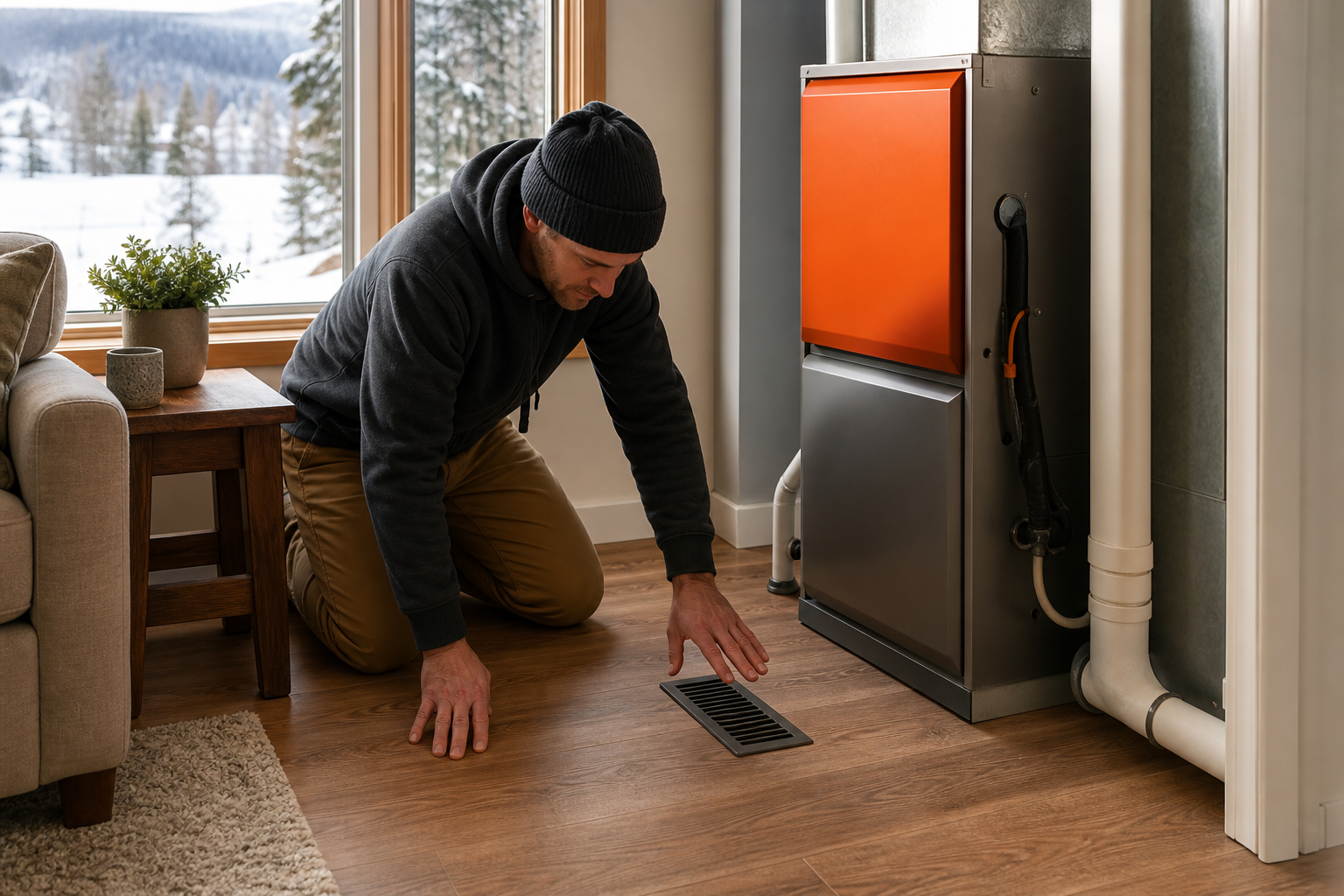
Home Worx Heating and Cooling works with both gas and electric heating systems in the Placer and Nevada County area. If a basic check doesn't restore heat, our team can inspect the full heating cycle instead of guessing from the vent temperature.
Thermostat, Airflow, and Filter Problems
A thermostat set wrong is often the quickest answer to why is my furnace blowing cold air. Set the mode to Heat. Then set the fan to Auto, not On.
The On setting keeps the blower running all the time. When the burners are off between cycles, the fan pushes room-temperature air through the vents. That air feels cold even though the furnace may be working correctly.
Raise the setpoint several degrees above the current room temperature. Wait a few minutes. A programmable thermostat may also be following a schedule that overrides your manual setting, so check for a temporary hold or schedule change.
Next, inspect the filter. A packed filter blocks the return airflow. The furnace then gets too hot inside, and the high-limit switch shuts off the burners. The blower may keep running while the heat exchanger cools.
Replace the filter with the right size and install it in the direction shown by the airflow arrow. Do not use a filter that is too restrictive for your system. If the furnace still trips after a fresh filter, the blower, duct system, or limit switch needs testing.
Keep supply vents open. Closing several vents raises pressure in the duct system and can reduce airflow across the furnace. Move rugs, boxes, and furniture away from both supply registers and return grilles.
Carrier's furnace guidance explains that a fan set to On can circulate room-temperature air, while a dirty filter can trigger a safety shutdown. Those two checks take only a few minutes and should come first.
For homeowners in Lincoln, Auburn, or nearby foothill communities, our parts of an HVAC system explanation can also help you identify the filter, blower, return, and supply vents before you arrange service.
Don't keep resetting the furnace if the same issue returns. A repeated limit shutdown means the cause is still present.
Ignition, Pilot Light, and Furnace Cycling Issues
Ignition trouble is another common reason a furnace blows cold air. The blower may run even when the burners fail to light, so you feel air without heat.
Older gas furnaces may use a standing pilot light. If that flame goes out, the burners cannot start. You can check for the flame and follow the relighting directions printed on the furnace or in the owner's manual.
Stop there if the pilot will not stay lit. A dirty pilot opening, failed thermocouple, or fuel problem needs professional attention. Never work on a gas valve or burner assembly yourself.
Newer furnaces often use a hot-surface igniter or intermittent pilot. A cracked igniter, failed sensor, or control board fault can interrupt the startup sequence. The furnace may try more than once, then lock out and leave the blower running.
Short cycling creates a similar symptom. The burners light for a brief period, shut off, and leave the blower pushing cool air. Restricted airflow is one cause. A dirty flame sensor can also tell the control board that the flame is missing, so the gas supply shuts off as a safety measure.
High-efficiency furnaces have another possible fault. A blocked condensate drain or trap can activate a safety switch and stop the burners. Water near the furnace, repeated ignition attempts, or a fault light on the control board are useful details for the technician.
Write down any blinking light pattern before turning the system off. The code may point to an ignition, pressure, or limit problem. Don't remove panels while the furnace is operating unless the owner's manual clearly allows it.
Home Worx Heating and Cooling provides 24/7 emergency repair service for situations where a failed ignition system leaves a home without heat overnight. After-hours help matters most when temperatures drop and you can't safely diagnose the furnace yourself.
Ductwork, Blower, and Heat Exchanger Problems
Sometimes the furnace makes heat, but that heat never reaches the rooms. Leaky ductwork can pull cold air from an attic, crawlspace, or wall cavity into the air stream.
Check accessible ducts while the furnace runs. Feel around joints for escaping air. Metallic foil tape or mastic can seal a small visible gap. Ordinary cloth-backed duct tape is a poor long-term choice because its adhesive can fail with heat and dust.
If one room stays cold while nearby rooms are warm, look for a closed register, a crushed flex duct, or a disconnected section. Hidden leaks need a proper inspection. A technician may need to test duct pressure before deciding where sealing work belongs.
A weak blower motor can also reduce airflow. The furnace may overheat and shut off its burners, even though the fan keeps turning. Grinding sounds, a slow blower, or air that feels weak at every register point toward this problem.
The heat exchanger needs special care. It separates combustion gases from the air sent through the home. A crack can allow carbon monoxide into the air stream, though it does not always cause cold air by itself.
Leave the home and contact emergency services if a carbon monoxide alarm sounds. Do not restart the furnace until qualified responders say the home is safe. A technician can then inspect the furnace before it runs again.
For a plain-language look at how the blower, filter, heat exchanger, and ductwork fit together, see our HVAC parts explanation . Knowing the names helps you describe the fault clearly during a service visit.
In foothill homes, dust and wildfire smoke can load a filter faster than expected. Check it more often during smoky periods, especially if airflow drops or the furnace starts cycling more often.
What You Can Check Safely and When to Call an HVAC Professional
You can safely check the thermostat, filter, vents, and visible signs of a fuel problem. You should not open gas controls, test live electrical parts, or bypass a safety switch.
Safe checks to make first
Set the thermostat to Heat and the fan to Auto.
Raise the temperature above the room temperature.
Replace a dirty filter with the correct size.
Open blocked supply vents and return grilles.
Check whether other gas appliances work, if your furnace uses gas.
Look for a furnace fault light and record its blink pattern.
If you have an older furnace with a standing pilot, follow only the relighting steps in the manufacturer's instructions. If the flame goes out again, stop trying.
Do not repeatedly press a reset button. One reset may be reasonable when the manual permits it. If the furnace fails again, repeated resets can hide the fault and may allow unsafe conditions to continue.
Call a qualified HVAC professional right away if you smell gas, see soot, hear unusual combustion noise, notice water near the furnace, or hear a carbon monoxide alarm. Leave the home if you smell gas or an alarm sounds. Contact the gas utility or emergency services from outside.
Carrier's furnace troubleshooting information also separates simple checks from issues involving gas valves, limit switches, condensate lines, and ignition parts. Those internal repairs belong with a trained HVAC technician.
When you need help locally, Home Worx Heating and Cooling serves Colfax, Auburn, Rocklin, Roseville, Lincoln, Grass Valley, and Penn Valley. We offer emergency repair, next-day appointment scheduling, maintenance plans, and financing options. Ask about the available options before work begins so an unexpected repair is easier to plan for.
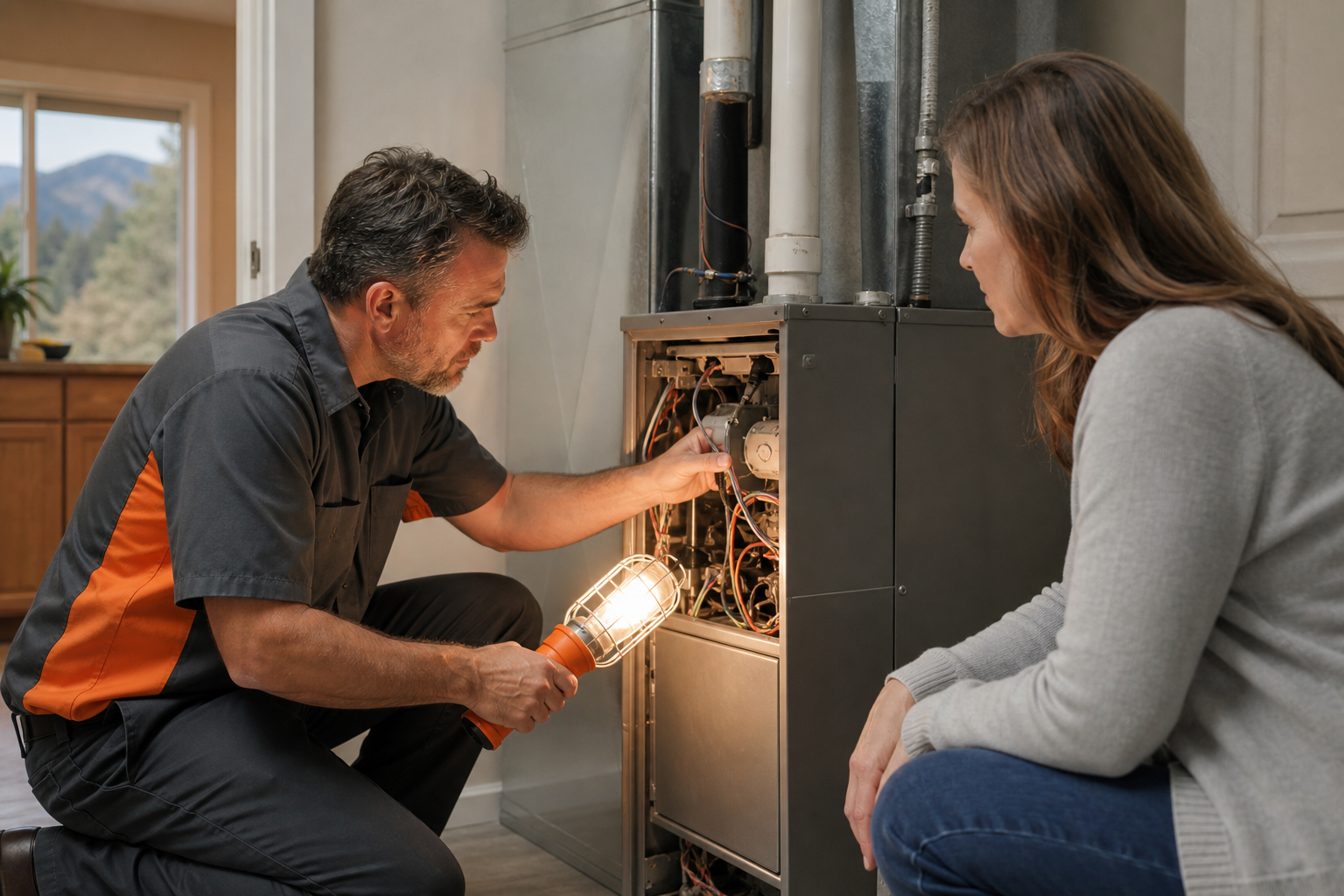
Our local service area also means we understand the winter heating needs of Placer and Nevada County homes. If the basic checks fail, arrange a diagnosis rather than running a furnace that keeps shutting down.
Frequently Asked Questions About a Furnace Blowing Cold Air
Why is my furnace blowing cold air but still running?
A furnace can blow cold air while running when the fan is set to On, the filter has caused a limit shutdown, or the burners failed to ignite. Set the fan to Auto and check the filter first. If the burners keep shutting off, stop resetting the unit and arrange professional service.
Is cold air normal when the furnace starts?
Cold air can be normal for a short time when the furnace starts. Many systems warm the heat exchanger before the blower sends air through the vents. If the air remains cold after the startup delay, the ignition, limit switch, filter, or control system may need inspection.
Can a dirty filter make a furnace blow cold air?
Yes, a dirty filter can make a furnace blow cold air. Restricted airflow can overheat the furnace, which causes a safety switch to turn off the burners while the blower keeps running. Replace the filter with the correct size. If the problem returns, have the airflow and furnace safety controls checked.
Should I reset my furnace if it blows cold air?
You can try one reset only if your owner's manual permits it, but don't keep resetting the furnace. A repeated shutdown may point to an ignition fault, gas issue, blocked vent, or overheating problem. If it fails again, turn it off and contact a qualified HVAC professional.
When should I call an HVAC professional?
Call an HVAC professional when basic thermostat and filter checks don't restore heat, or whenever you smell gas, see soot, hear unusual sounds, or notice repeated short cycling. Gas controls, electrical parts, heat exchangers, and safety switches need trained service.
Conclusion
Start with the thermostat, fan setting, filter, and open vents. If your furnace still blows cold air, or if you notice a safety warning, turn it off and contact Home Worx Heating and Cooling for local service in the Placer or Nevada County area.