
Why Is My Furnace Making Noise? Common Causes
Why is my furnace making noise? The sound may come from a loose panel, restricted airflow, or a part that needs prompt repair. In the Sierra foothills, a startup bang might be ductwork shifting as it warms, or a sign of delayed ignition. Here’s how to tell the difference and what to do next.
We analyzed 50 comments from YouTube and Reddit about furnace noise and found that 22% mentioned identifying specific furnace noises.
Table of Contents
What Different Furnace Sounds Can Tell You
A furnace makes some sound during normal operation. A brief click at startup or a steady, soft hum may be part of its regular cycle. A new, loud, or repeated sound is different. Its tone and timing can help narrow down what needs attention, though sound alone can’t confirm a failed part.
Start by noting where the noise seems to come from and when it happens. Is it near a vent, at the furnace cabinet, or deeper in the ductwork? Does it start with the burners, the blower, or the end of a cycle? Those details can help a technician find the cause without guessing.
Sound | What it may mean | First move |
Whistling | Restricted airflow from a dirty filter, blocked register, or tight return path | Check the filter and make sure registers are open |
Light rattling | Loose access panel, screw, or duct connection | Check only accessible outer panels while the system is off |
Popping | Duct metal expanding as it warms or cools | Note whether it’s brief and tied to startup or shutdown |
Grinding or scraping | Blower wheel or motor bearing may be rubbing | Turn the furnace off and arrange service |
Squealing | Worn belt on some older units, or a motor bearing problem | Arrange a technician inspection |
Buzzing or loud humming | Possible electrical part or motor issue | Don’t open the furnace; arrange a diagnosis |
Bang or boom at ignition | Possible delayed ignition in a gas furnace | Stop using the furnace and seek prompt service |
A whistle often points to air struggling to pass through a filter or vent. In a Rocklin home, check whether the filter looks loaded with dust and whether furniture blocks a return grille. Use a filter that matches the size and type recommended for your equipment; a poor fit can cause its own airflow trouble. In cold foothill winters around Auburn and Colfax, note new noises during a heating cycle.
A rattle may be as simple as an access panel that isn’t seated. If the sound continues after an accessible panel is secure, it could come from the blower or another internal part. Don’t remove the furnace cabinet to investigate. The same accessible-panel check may help homeowners in Roseville and Grass Valley.
A brief pop from ductwork can happen as sheet metal heats and cools. A hard bang at the furnace during ignition isn’t the same sound and needs more care. For repeated clicking that continues without the furnace lighting, see our guide to repeated furnace clicking .
Furnaces heat air and use a blower to move it through ducts, so some sounds begin as the blower starts rather than at ignition. For local furnace service in Penn Valley and Lincoln, contact Home Worx Heating and Cooling .
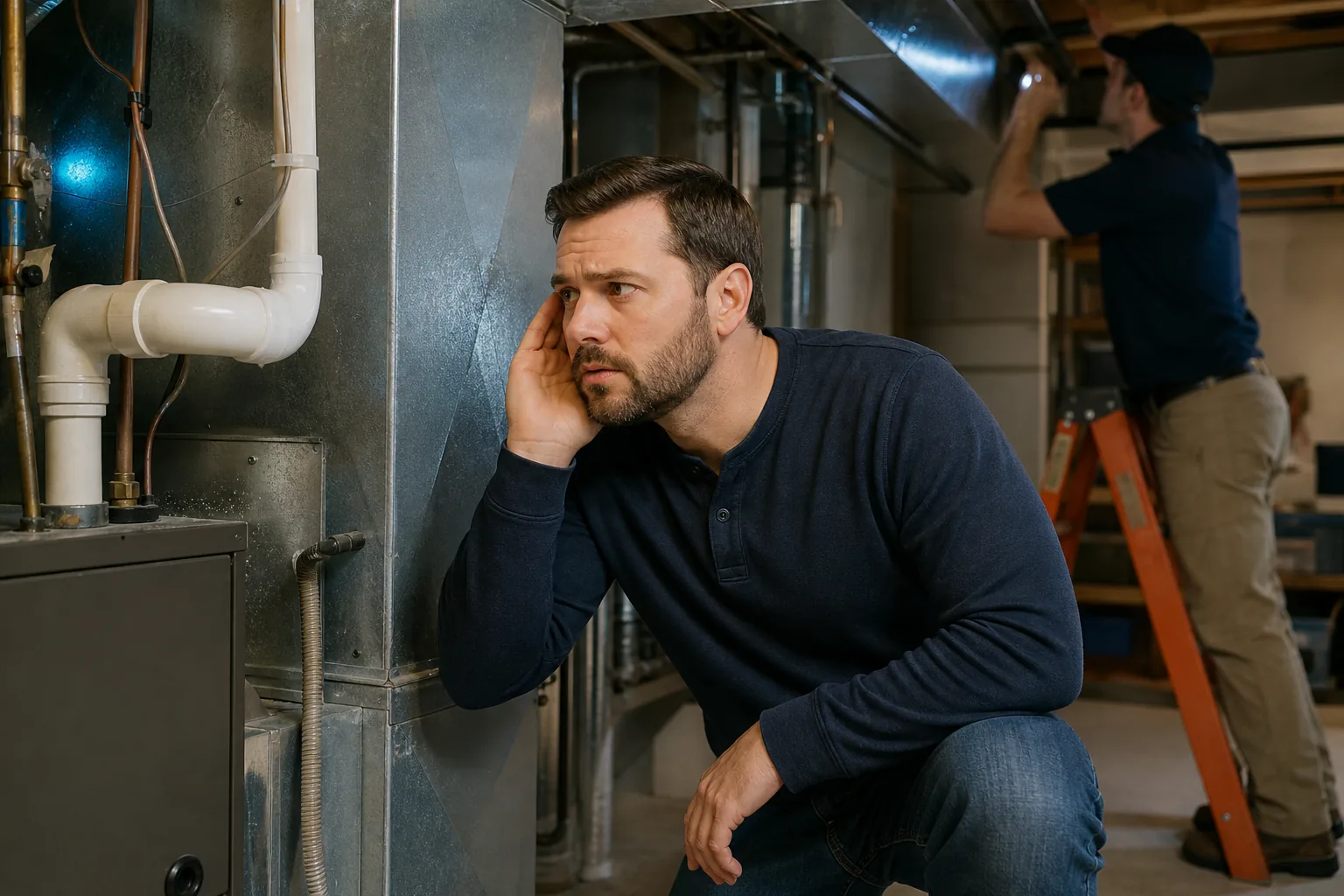
Why Furnace Noises Change During the Heating Cycle
A furnace doesn’t start every part at once. The exact sequence varies by system, but a call for heat can start a draft motor and ignition process first. The burners then heat the system, and the blower moves warm air through the ducts. When the cycle ends, the burners stop before the blower does.
That timing is useful. A brief click at startup may come from a relay or ignitor. Repeated clicking without a flame can point to an ignition problem. A hum that begins when the blower should start may suggest a motor or electrical part is struggling. Don’t keep restarting the system to test a loud or alarming noise.
Ducts also change shape slightly as their temperature changes. Warm air moves through cool metal when the furnace starts; as the system cools, the metal contracts again. A short pop from a duct near the furnace or along a ceiling can fit this pattern, especially if it happens at the start or end of a cycle.
Cold, dry winter weather in Placer County can make heating cycles more noticeable. In Roseville or Lincoln, a system that has been idle may make a few soft duct sounds when heat first runs. That’s different from a new, forceful bang at the furnace itself or a noise that grows louder each cycle.
Airflow can change the sound, too. A clogged filter or blocked return makes it harder for the blower to move air. The system may whistle or strain, and restricted airflow can affect how it runs. Keep registers clear rather than closing rooms off to force more air elsewhere.
Write down the point in the cycle when the noise starts. For example, “one pop as the blower starts” is more useful than “it bangs sometimes.” If the furnace also starts and stops often, our page on why a furnace keeps turning off explains how that pattern differs from a sound alone.
Which Furnace Noises Are Urgent?
Some sounds call for a quick check. Others mean stop using the furnace and get help. Volume matters, but so do timing and other warning signs. A soft duct pop at startup is not the same as a hard bang from the burner area.
Shut the system down and get prompt help
A loud bang or boom right as a gas furnace lights may mean delayed ignition. Gas can build up before it catches, which makes this a combustion concern. Turn the furnace off and arrange prompt service rather than waiting to see if the next cycle sounds better.
Grinding or metal scraping can mean a blower wheel has shifted or a motor bearing is worn. Continued operation may cause more damage to the blower. Shut the furnace off and have it inspected.
A hissing sound needs context. Air leaking at a duct joint can make a hiss, but a hiss near a gas line may signal a gas leak. If you smell rotten eggs or suspect gas, leave the home without operating switches or electronics inside. Contact the gas utility or emergency services from outside. Our instructions for a gas smell near the furnace cover the immediate response.
Also leave the home if a carbon monoxide alarm sounds or people feel suddenly ill near a fuel-burning appliance. Carbon monoxide has no smell, so your nose can’t rule it out.
Arrange service soon
A steady buzz or loud hum can point to an electrical part, such as a capacitor or transformer, or a motor that isn’t starting as it should. Repeated clicking with no ignition may point to an ignitor, flame sensor, or relay issue. Don’t open the cabinet or touch wiring. Arrange a technician visit, especially if the furnace fails to heat.
A high squeal may come from a worn belt in an older belt-drive furnace or a motor bearing that needs attention. It may not require the same immediate response as a grinding sound, but it can signal a part close to failure. Get it checked before the furnace stops on a cold night.
Check simple causes, then keep watch
A light rattle from an outer panel or an occasional duct pop is often less urgent. Turn the system off before checking that an accessible panel is seated. If the rattle continues, grows louder, or seems to come from inside the unit, stop there and arrange service.
A cracked heat exchanger is a serious concern because combustion gases can enter the home. Noise by itself can’t diagnose a crack. If a bang comes with soot, a strong burning smell, or a carbon monoxide alarm, leave the home and seek help rather than trying to inspect the exchanger yourself.
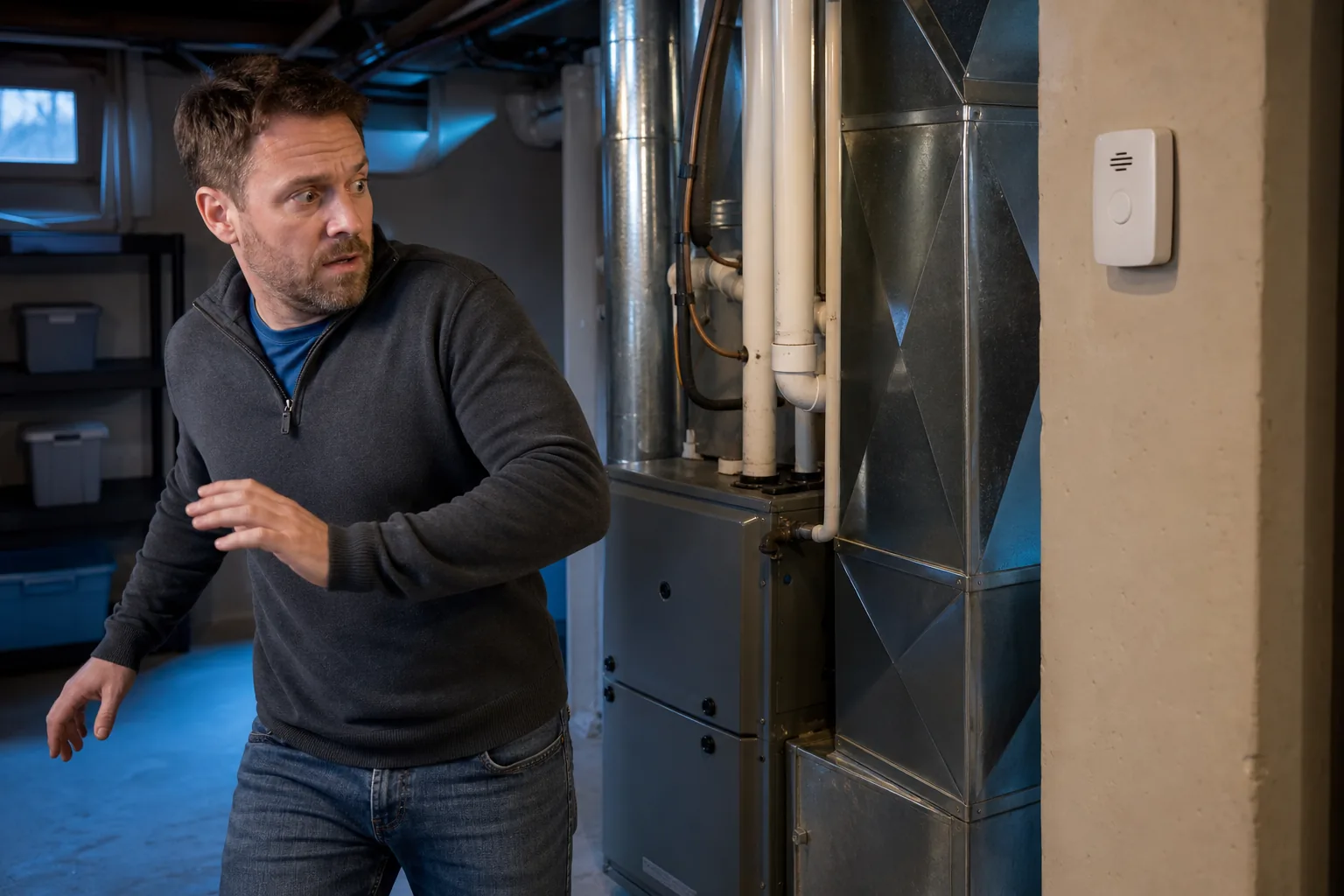
Safe Checks Homeowners Can Make and When to Call a Technician
Keep checks to things you can see and reach without opening the furnace cabinet. If you hear grinding, a hard ignition bang, or smell gas, skip the checks and follow the safety steps above.
Check the filter.Turn the system off before removing it. If it’s visibly dirty, replace it with the right size and approved type.
Clear airflow paths.Move items away from supply registers and return grilles. Make sure registers are open.
Look at the outer panels.With the furnace off, see whether an exterior access panel looks loose or out of place. Don’t reach inside or remove covers.
Note the sound.Record when it happens, where it seems loudest, and whether the furnace still heats normally.
These checks may resolve a simple filter or panel issue. They won’t diagnose a motor bearing, electrical fault, burner problem, or internal blower damage. A stethoscope or vibration tool doesn’t make those repairs safe for a homeowner; moving parts and electrical components need trained handling.
If a new noise persists after the safe checks, schedule an inspection. In Colfax or Grass Valley, tell the technician if the sound happens only at startup or continues through the whole heating cycle. That detail helps separate duct movement from a problem that follows the blower or burner sequence.
Home Worx Heating and Cooling serves Auburn, Colfax, Rocklin, Roseville, Grass Valley, Penn Valley, and Lincoln, along with nearby Placer and Nevada County communities. Our team handles heating repairs, maintenance, and installations, and we offer 24/7 emergency repair service. A technician can assess the sound and explain the repair options for your system.
Pro Tip:Before a service visit, note the sound’s timing and whether it comes from a vent, duct, or furnace cabinet. Don’t run the furnace again to capture a noise that felt unsafe.
Routine maintenance can catch issues such as loose parts or worn components before peak heating demand. Check the filter regularly during the heating season, and ask a technician about a seasonal tune-up if noises return or airflow seems weak.
Frequently Asked Questions
Is it normal for a furnace to make noise when it starts?
Some brief sounds at startup are normal, such as a soft click or a low hum. Duct metal can also pop as it warms. A loud bang at the furnace, repeated clicking without ignition, or a new grinding sound isn’t something to treat as routine. Note when it happens, then arrange service if it’s loud, repeated, or affects heating.
Why does my furnace make a loud bang when it turns on?
A loud bang at ignition may come from delayed ignition in a gas furnace, where gas builds before the burners light. A duct can also make a pop as it heats, but a hard bang from the furnace is a safety concern. Turn the system off and arrange prompt professional service rather than running another cycle.
Can a dirty furnace filter cause noise?
Yes. A clogged filter can restrict airflow and contribute to whistling or a strained-sounding blower. Turn the furnace off before checking the filter, then replace it if it’s dirty using the correct size and type for your system. If the noise continues with a clean filter, the cause may be elsewhere and needs a closer look.
Should I turn off a furnace that is grinding?
Yes. Grinding can mean that a blower wheel or motor bearing is rubbing, and continued use may cause more damage. Turn the furnace off and arrange a repair. Don’t remove the cabinet or try to reach moving parts. If you also smell gas or a carbon monoxide alarm sounds, leave the home and seek help from outside.
Conclusion
Don’t ignore a new furnace sound that is loud, repeated, or tied to ignition. Turn the system off for grinding or a hard startup bang, and contact Home Worx Heating and Cooling for local service in the foothill communities.