
Why Your Furnace Keeps Turning Off
Updated: Sep 28
A furnace that keeps turning off usually gives you a clue before it fails. The most common clues are weak airflow, a dirty filter, a bad thermostat signal, or a safety switch that detects too much heat. This guide explains what the pattern means, which checks are safe, and when Home Worx Heating and Cooling should inspect the system.
We compared short-cycling troubleshooting pages from 5 manufacturers, Carrier, Trane, Lennox, Bryant, and American Standard. All 5 name a clogged air filter as the first check, ahead of blocked registers, a dirty flame sensor, or a blocked vent. Bryant calls a dirty filter its top winter service call, and a Zebra poll of 1,000 Americans found 82% skip monthly filter changes. Across those 5 guides and the survey, a clogged air filter is the most likely reason a furnace keeps turning off.
Table of Contents
What It Means When a Furnace Keeps Turning Off
When a furnace starts, runs for a few minutes, then shuts down before the room feels warm, the system may be short-cycling. It starts again soon after, then repeats the same pattern.
A normal heating cycle changes with the outdoor temperature and the home's heat loss. But a cycle that lasts only a few minutes is a warning sign. The furnace may never run long enough to spread heat through the ductwork, so some rooms stay cold while others feel too warm.
Short cycling also puts extra strain on parts that must start and stop often. The igniter, blower motor, flame sensor, and control board all see more startup activity. The pattern can also point to a safety problem, such as overheating or poor venting.
Start with the simple causes. A clogged filter can limit airflow across the heat exchanger. The furnace then gets too hot and shuts off the burners through its limit switch . A misplaced thermostat can also sense warm air near the unit and end the heating call too soon.
Carrier explains that restricted airflow can cause a furnace limit switch to shut down the burners when the heat exchanger gets too hot. Its furnace troubleshooting guidance also points homeowners toward basic checks before service.
Key Takeaway:If the furnace runs for three to five minutes, stops, and starts again soon after, treat the pattern as a fault to diagnose, not normal operation.
This pattern can show up in Auburn during a cold spell or in Colfax when a home has been closed up for days. The first check is the same in both places: look at airflow before assuming the furnace needs replacement.
Common Reasons Your Furnace Starts and Then Shuts Down
If your furnace keeps turning off after ignition, the cause often falls into one of five groups. Some are easy to spot. Others need tools and training.
1. The air filter is clogged
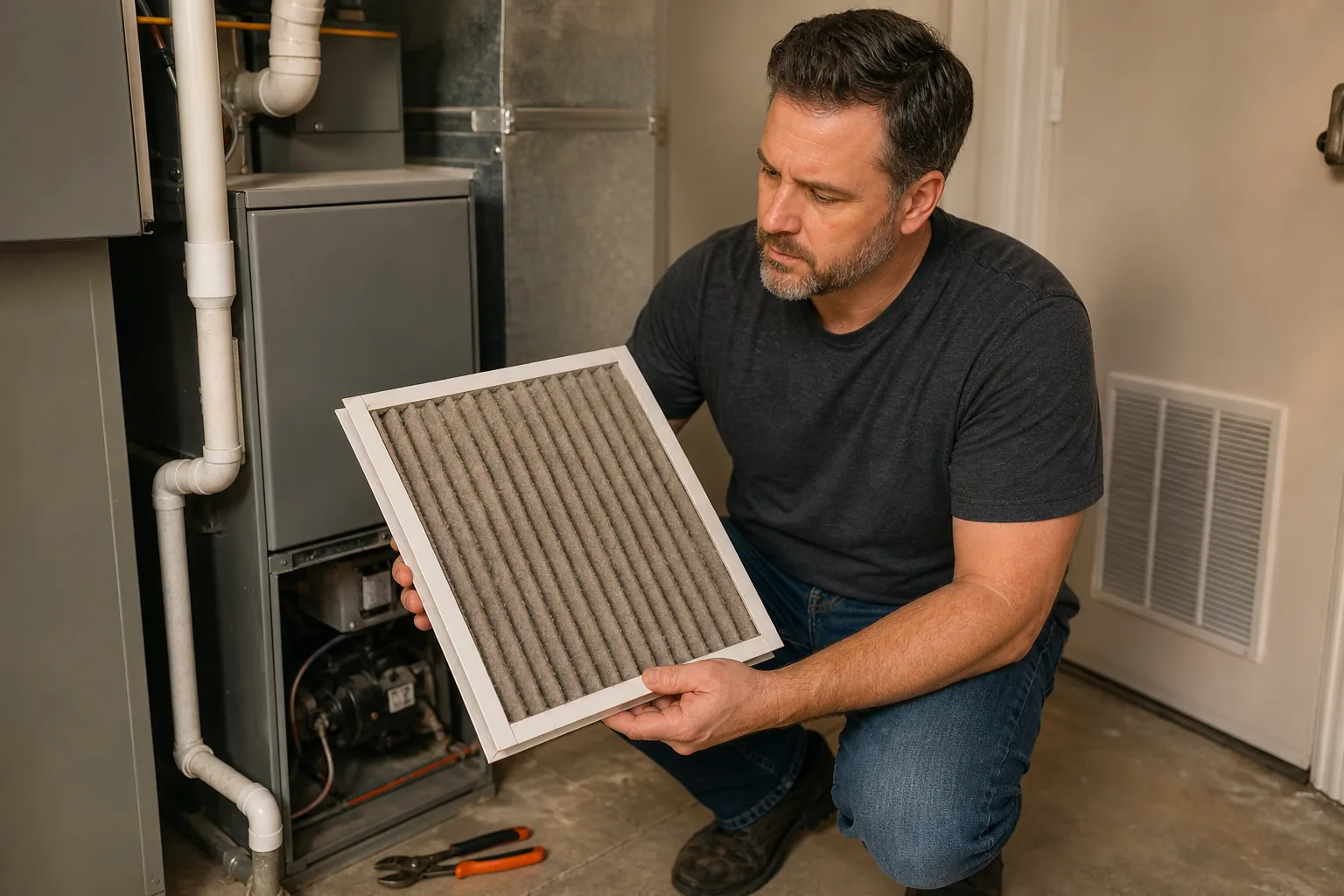
A dirty filter blocks the air moving through the furnace. Heat builds up around the heat exchanger, and the high-limit switch shuts off the burners. Hold a disposable filter up to a light. If the filter looks gray or you can barely see light through it, replace it with the correct size.
Check the filter monthly during heavy heating use. Many manufacturers and HVAC guides suggest replacement every one to three months, but dust, pets, construction, and filter type can change that schedule.
2. Registers or return grilles are blocked
A couch, rug, storage bin, or closed register can cut airflow. Walk through the home and make sure supply registers are open. Keep furniture away from them. Also check the return grille, since the furnace needs a clear path to pull air back in.
3. The flame sensor is dirty
The flame sensor confirms that the burners lit. If soot coats the sensor, the control board may decide that no safe flame exists. The gas valve then closes within seconds, even though the furnace did ignite.
This pattern is different from overheating. The burners may light for five to fifteen seconds, then go out. For background on the component and the cleaning process, see how to clean a furnace flame sensor step by step . Internal cleaning is best left to a trained technician because power and gas must be shut off before the cabinet is opened.
4. The vent or intake is blocked
High-efficiency furnaces use intake and exhaust pipes that lead outdoors. Leaves, snow, debris, or animal nests can block those pipes. A pressure switch may then stop the furnace during startup.
5. The thermostat or furnace power has a fault
A blank thermostat, weak batteries, the wrong mode, or a low temperature setting can stop a normal heat call. A tripped breaker or switched-off service switch can do the same. If the breaker trips again after one reset, stop resetting it.
Trane describes the burner, flame sensor, control board, and blower as parts of the furnace startup and safety sequence. Its burner shutdown guidance explains why a furnace may close the gas valve when it cannot confirm safe combustion.
Oversizing is another possible cause. A furnace that produces more heat than the home needs may satisfy the thermostat quickly, then shut down. Fixing that issue takes a pro, not a thermostat adjustment. In homes across Rocklin and Roseville, a technician should check the equipment size against the building before recommending replacement.
Safe Checks Homeowners Can Make Before Calling for Service
Before you reset anything, check for danger. If you smell rotten eggs, see smoke, notice sparks, or hear loud grinding, stop. Leave gas-related work and electrical repairs to a professional.
Start with the thermostat
Set the mode to Heat. Set the fan to Auto. Raise the target temperature several degrees above the current room temperature. If the display is blank, replace the batteries if the thermostat uses them.
Notice where the thermostat sits. Direct sun, a draft, a kitchen, or a nearby supply register can make it read the wrong temperature. That can make the furnace shut down while the rest of the room remains cold.
Inspect the filter and airflow
Turn the thermostat off before removing the filter. Check the size printed on the frame. Install the replacement with the airflow arrow pointing toward the furnace or air handler.
Next, open the supply registers. Move rugs and furniture away from them. Do not remove furnace panels or reach near burners, wiring, or a blower wheel.
Check the power path once
Look for the furnace service switch near the unit. It often resembles a light switch. Confirm that it is on. At the electrical panel, find the breaker marked furnace, HVAC, or air handler. If it sits between On and Off, move it fully to Off, then back to On once.
If the breaker trips again, leave it off. Repeated trips suggest an electrical fault or failing part. In Penn Valley or Lincoln, where winter nights can turn cold fast, it may be tempting to keep trying. That can make the damage worse.
You can review the safe sequence in Home Worx Heating and Cooling's guide to resetting a furnace safely . A reset is a test, not a repair. If the furnace repeats the shutdown, stop using the reset as a fix.
Pro Tip:Write down what happens during startup. Note whether the burners light, how long they run, whether the blower starts, and which lights flash on the control board.
Those details can save time during a service visit. They also help separate a flame-sensor issue from an airflow or thermostat issue.
When a Furnace Shutdown Is an Emergency
Some shutdowns need prompt service. A furnace that keeps turning off after a filter change may be protecting you from a deeper problem.
Leave the home if you smell gas
A rotten-egg smell near a gas furnace can signal a gas leak. Do not operate light switches or use electronics near the odor. Leave the home, then contact the gas utility or emergency services from outside.
Take an indoor safety warning seriously
If an indoor safety alarm sounds, leave the home immediately and seek emergency help. Do not assume the furnace caused it, but do not keep testing the furnace indoors. Some hazardous conditions have no reliable smell, so a working alarm matters.
Stop after an electrical warning
Smoke, sparks, scorched wires, burning plastic smells, or a breaker that trips twice all call for professional service. Keep the furnace off until the cause is found.
Watch for venting problems
A blocked exhaust pipe can stop a furnace through its pressure safety controls. Do not dismantle vent pipes or reach into outdoor openings. A technician can test pressure and check the vent path without guessing.
Older equipment deserves extra care. A damaged heat exchanger can allow combustion gases to mix with household air. Signs can include soot, unusual smells, or repeated safety shutdowns. These clues do not prove a cracked exchanger, but they justify shutting the system down until it is inspected.
Home Worx Heating and Cooling provides local emergency HVAC service for homes in Grass Valley, Auburn, Colfax, Rocklin, Roseville, Penn Valley, Lincoln, and nearby communities. We can check the safety sequence, venting, airflow, and controls instead of replacing parts at random.
How a Professional Diagnoses and Prevents Repeated Shutdowns
When basic checks fail, a professional follows the furnace's startup sequence. That keeps the diagnosis focused and reduces guesswork.
First, the technician confirms the symptom
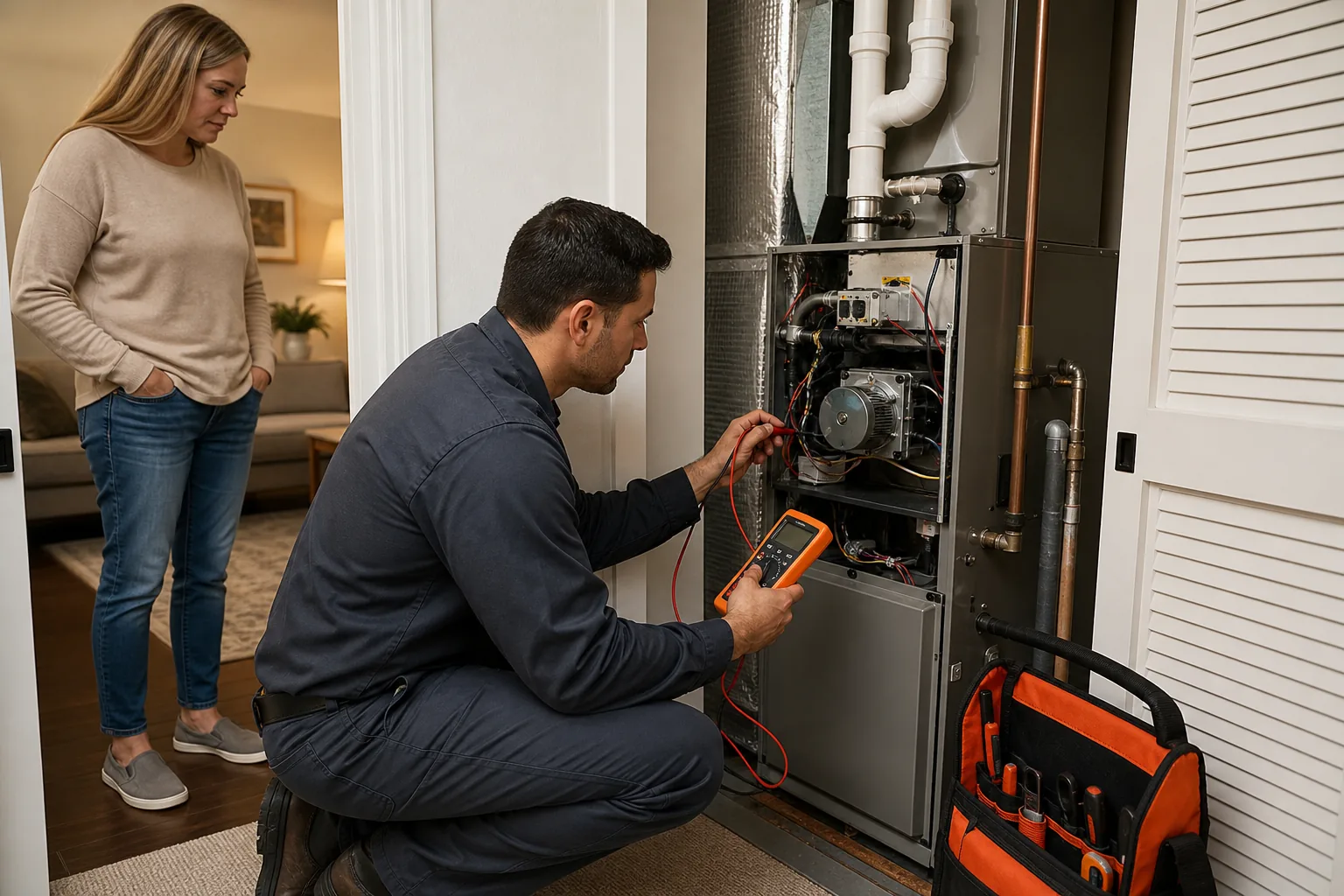
The technician watches a full cycle. They note whether the inducer starts, ignition occurs, the burners stay lit, and the blower moves air. The timing matters. A shutdown after ten seconds points in a different direction than one after five minutes.
Then, they test airflow and temperature
The technician checks the filter, return path, supply registers, blower wheel, and duct restrictions. They may measure temperature rise across the furnace. A reading outside the equipment's allowed range can point to poor airflow or a control problem.
Next, they check safety controls
A limit switch, flame sensor, pressure switch, and control board each protect a different part of the startup process. A technician can test continuity, read fault codes, and measure pressure with the right instruments. Homeowners should not bypass these controls.
Finally, they address the cause
The repair might involve a filter change, flame-sensor cleaning, vent clearing, thermostat repair, blower service, or part replacement. If the furnace is badly oversized, the long-term answer may involve a load calculation and new equipment.
During maintenance, our team at Home Worx Heating and Cooling inspects the parts that can cause repeated shutdowns. We also look for issues tied to the Sierra foothill climate, such as dust after a dry summer, blocked outdoor vents, and heavy winter runtime.
For homeowners in Auburn, Colfax, Rocklin, Roseville, Grass Valley, Penn Valley, and Lincoln, local service also helps with code and equipment details. Furnace replacement or major HVAC work may require California and local permit review. Rebate rules can change, so check current state and utility programs before counting on an incentive.
Annual maintenance can catch a weak flame sensor, dirty blower wheel, loose wire, or restricted vent before the first cold night. It cannot prevent every failure, but it can make repeated shutdowns less likely.
FAQ: Furnace Keeps Turning Off
Why does my furnace keep turning off after a few minutes?
A furnace that shuts off after a few minutes often has restricted airflow or an overheating limit switch. Check the filter first. Then make sure registers and return grilles are open. If the furnace still stops, the blower, limit switch, thermostat, or duct system needs professional testing.
Why does my furnace light and then shut off after a few seconds?
A furnace that lights and shuts off within seconds may have a dirty or failing flame sensor. The sensor must confirm a stable flame before the gas valve stays open. Turn the system off and arrange service rather than repeatedly restarting it.
Can a dirty filter make a furnace keep turning off?
Yes, a dirty filter can restrict airflow enough to overheat the furnace. The limit switch then shuts off the burners as a safety measure. Replace a clogged filter with the correct size, then watch one full cycle. If the shutdown returns, schedule an inspection.
Should I reset my furnace if it keeps shutting down?
You can check the thermostat, furnace switch, and breaker once if there is no gas smell or other danger. If the breaker trips again, or the furnace shuts down again, stop resetting it. Repeated shutdowns need diagnosis, not more resets.
When should I call an HVAC professional?
Contact an HVAC professional when safe checks do not solve the problem, or when you notice gas odor, signs of dangerous indoor air, smoke, sparks, loud mechanical noise, or repeated breaker trips. Home Worx Heating and Cooling can inspect the system for homes across the seven local service cities.
A furnace that keeps shutting off should not be ignored, even when a new filter gets it running for one night. Check the filter, thermostat, registers, and power once. If the pattern returns, contact Home Worx Heating and Cooling for a local inspection in Auburn, Colfax, Rocklin, Roseville, Grass Valley, Penn Valley, or Lincoln.