
5 Signs You Need a New Furnace
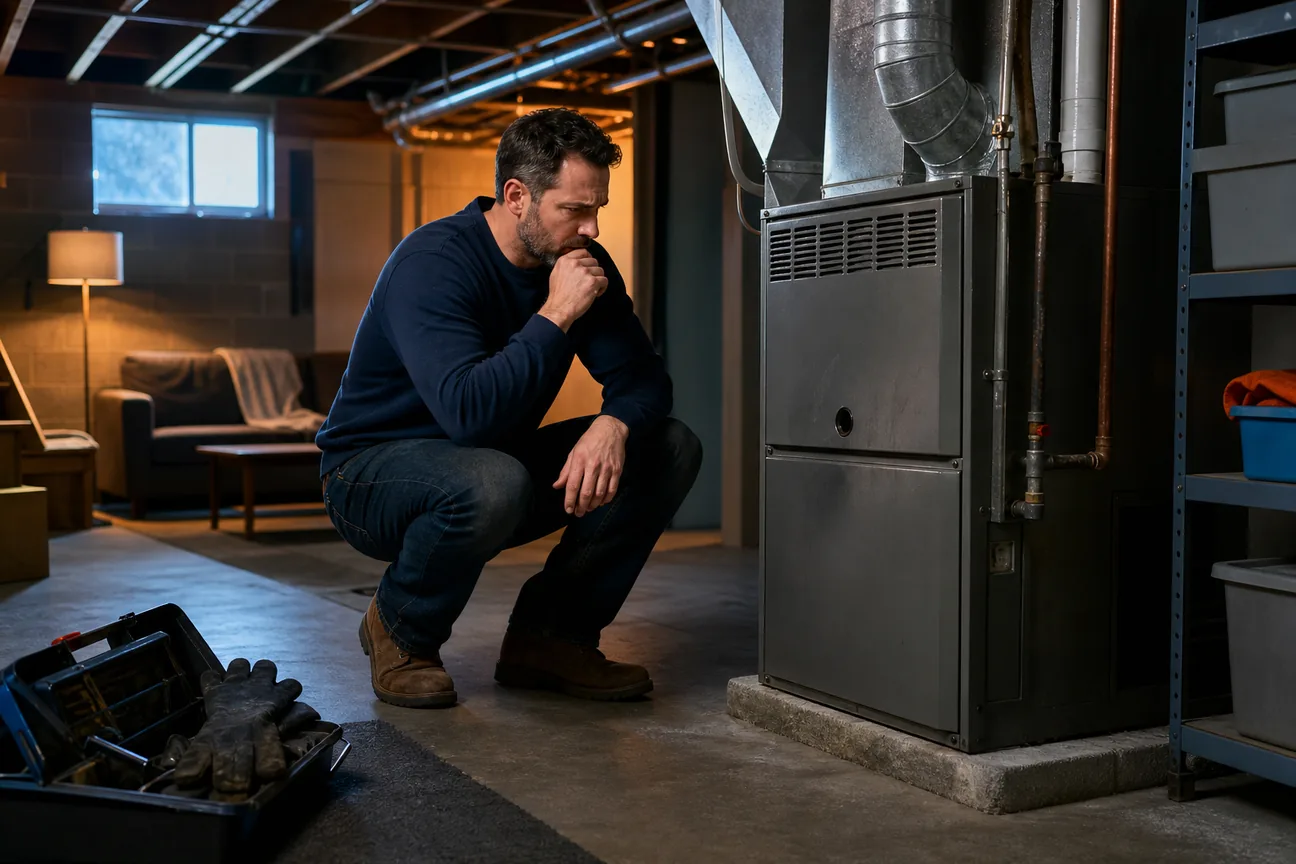
If your home feels cold while the furnace keeps running, it may be giving you an early warning. Age, higher bills, uneven heat, and repeat repairs can all point to a system nearing the end of its useful life. Here are five signs to watch for, plus ways to tell when a repair may still make sense.
We pulled furnace efficiency figures from ENERGY STAR's certified furnace data, Carrier's AFUE reference page, and ServiceTitan's aggregated contractor replacement records. ENERGY STAR certified furnaces reach 95% to 97% AFUE against an 80% federal minimum for standard units, saving up to $160 a year in northern climates and $60 in southern ones. ServiceTitan's contractor data puts the median furnace at 17.7 years when replaced, with a quarter of units gone by 12.8 years and three quarters still running at 22.3 years. Rising energy bills on a furnace already past 12 years align with the stretch where replacement starts to outperform repair.
Table of Contents
Get a Local Furnace Assessment From Home Worx Heating and Cooling
Home Worx Heating and Cooling is a family-owned HVAC contractor based in Colfax, serving homeowners across Placer and Nevada counties. If you’re seeing signs you need a new furnace, we can inspect the system and help you compare repair and replacement options without making a diagnosis from symptoms alone.

We handle furnace repairs, system installations, maintenance, and indoor air-quality work. Our installation service includes high-efficiency furnace options, and homeowners can request a free estimate. Financing options are also available, though terms depend on the plan and approval.
That local support matters when a furnace starts failing during a cold spell. We serve Auburn, Colfax, Rocklin, Roseville, Grass Valley, Penn Valley, and Lincoln. In foothill homes, cold winter nights can make a weak system’s limits clear, while long periods of use can make a small performance change easier to spot on utility bills.
When comparing a replacement, ask what efficiency rating the proposed system has and how the contractor will size it for your home. ENERGY STAR’s heating and cooling replacement guidance can help you review replacement considerations. You can also learn about how furnace age and performance work together before deciding whether to replace.
We can help you plan before a breakdown forces a rushed choice. Start by noting the furnace’s age, recent repairs, and changes in comfort or energy use.
1. Your Energy Bills Keep Rising
Higher heating bills can be one of the signs you need a new furnace, especially when your thermostat habits and home routines haven’t changed. An aging furnace may need to run longer to provide the same heat. The extra run time can show up in your energy use.
Look at several bills across similar winter weather, not just one cold month. If your usage has gone up, note that trend along with any change in how warm the house feels. Costs can also rise for reasons unrelated to the furnace, such as colder weather, a new thermostat schedule, or changes in energy rates. A service check can help separate those factors.
Efficiency ratings can help you compare equipment. AFUE means annual fuel utilization efficiency . It describes how much of a furnace’s fuel becomes heat over a year. A higher rating means less fuel is lost in the heating process, but the best fit depends on your home and energy costs. Ask the contractor to explain the rating and how it relates to your expected use.
Before replacing the furnace, rule out simple causes of higher use. A dirty filter can restrict airflow, and leaky or poorly sized ducts can waste heat before it reaches a room. If bills keep climbing alongside an older system or repeat repairs, replacement may deserve a closer look.
For a fair comparison, ask the HVAC professional to review the furnace’s condition, airflow, and ductwork. Don’t base the decision on the bill alone.
2. Some Rooms Stay Too Hot or Too Cold
Uneven heating is another clue, but it doesn’t prove the furnace needs replacement. A bedroom that stays chilly while the living room warms up could point to weak furnace airflow. It could also come from a blocked vent, duct leak, thermostat location, or insulation issue.
Notice whether the problem affects one room or much of the house. Check that supply vents and return grilles aren’t blocked by rugs or furniture. If the furnace runs for long stretches but several rooms still feel cold, ask a technician to check airflow and the system’s ability to heat the home.
It’s worth checking the ductwork before choosing a new furnace. A damaged or undersized duct can limit warm air even when the furnace itself works. A replacement that keeps the same airflow problem may leave you with the same cold room. Ask the contractor to explain what they found and whether the duct system needs repair or adjustment.
We see this kind of comfort concern in homes across the area, including older homes in Roseville and hillside properties near Colfax. A professional assessment can help sort out whether the trouble is equipment, airflow, or the house itself. For another common airflow-related fault, see our notes on furnace blower motor issues .
One cold room by itself usually calls for an investigation, not an immediate replacement decision.
3. The Furnace Makes Strange Noises or Cycles Frequently
New banging, rattling, squealing, grinding, or repeated buzzing deserves attention. A loose part or worn motor may be repairable, while a costly failure in an older furnace can change the repair-versus-replace balance. Note when the sound happens and whether it’s getting louder or more frequent.
Furnaces normally turn on and off as they meet the thermostat’s call for heat. But frequent starts and stops, known as short cycling, may point to a dirty filter, restricted airflow, a thermostat issue, or a failing part. It can also mean the system isn’t well matched to the home. A clean filter and clear vents are sensible checks, but don’t open the furnace cabinet to inspect internal parts.
New or persistent odors matter too. A brief dusty smell when heat first starts can happen, but a strong burning odor or rotten-egg smell is different. If you smell gas, leave the home without using switches or electronics inside. Contact the gas utility or emergency services from a safe place outside.
Noises and short cycling can have several causes, and some need a trained technician. If your system keeps starting and stopping, our advice on why a furnace keeps turning off explains why repeated cycling calls for a closer look.
Get unusual sounds checked before they turn into a no-heat day, especially when the furnace is older or has needed repairs this season.
4. You See Rust, Cracks, or Other Visible Damage
Visible rust, cracks, or scorch marks are warning signs you shouldn’t ignore. Rust can point to moisture or age-related wear. A crack in a key part such as the heat exchanger can raise a safety concern because combustion gases may enter the home.
Don’t remove panels or try to inspect internal parts. Look only at what you can see safely from outside the unit. If you notice a crack, soot, scorching, or a damaged vent, stop using the furnace if you can do so safely and arrange professional service.
A yellow or flickering flame on a gas furnace can also signal a combustion problem. A properly operating gas burner generally has a steady blue flame, but homeowners shouldn’t treat flame color as a full safety test. Carbon monoxide has no color or smell, so a working carbon monoxide alarm is an important safeguard. If an alarm sounds, leave the home and seek emergency help.
Some visible damage may be repairable, but the technician needs to assess the cause and the condition of the rest of the system. If the furnace is older and the repair is major, compare its cost with replacement rather than approving work based only on the first estimate.
Safety concerns call for prompt attention, not a wait-and-see approach.
5. The Furnace May Not Make It Through Another Winter
Age, repeated repairs, and declining comfort together make a stronger case for replacement than age alone. Many homeowners start planning around the 15-year mark, since older equipment can lose efficiency and face more wear. That doesn’t mean every 15-year-old furnace must go. Its repair history and current condition matter too.
Frequent service visits in one heating season can be a sign that repair costs are adding up. A common rule of thumb is to weigh a major repair against the cost of a new system. If a repair is near half the replacement cost, and the furnace is already well into its expected life, replacement may be the better financial choice. It’s a guide, not a firm rule.
Use the table as a starting point for a conversation with an HVAC professional:
What you notice | Repair may make sense when | Replacement deserves a closer look when |
Age | The unit is relatively young and has worked reliably. | The unit is around 15 years old or older and has other warning signs. |
Repair history | The issue is isolated and the repair is modest. | Several repairs recur, or the repair is near half the cost of replacement. |
Comfort | A blocked vent or duct issue explains the problem. | The furnace struggles to heat the home after airflow issues are checked. |
Safety | A technician confirms a contained fault can be fixed safely. | A serious defect or combustion concern is found. |
Before approving a replacement, ask how the new system will be sized for your home. The old furnace’s size isn’t proof that it was the right size. Have the contractor review insulation, windows, ductwork, and the home’s heating needs. Ask whether any duct repairs are part of the plan, since airflow problems can limit comfort even with new equipment.
Planning before winter gives you more time to compare estimates and ask about equipment efficiency. You can also check current California or PG&E incentive rules directly, since eligibility and funding can change. Home Worx Heating and Cooling can provide a local assessment and an estimate, so you can weigh the options before winter.
Frequently Asked Questions
How old should a furnace be before I replace it?
Many homeowners start considering replacement when a furnace reaches about 15 years, but age alone isn’t enough. A well-maintained unit may still work safely, while a younger one may have a serious fault. Look at age alongside repair frequency, energy use, and comfort. An HVAC professional can inspect it and explain whether repair or replacement fits its condition.
Can rising energy bills mean I need a new furnace?
Yes, rising bills can be one of the signs you need a new furnace, but they don’t prove it’s the cause. Colder weather, energy rates, airflow problems, or duct leaks can also raise costs. Compare energy use across similar weather, then have the system checked if usage keeps rising or the home feels less comfortable.
What does it mean if my furnace makes a banging noise?
A banging sound may point to a loose or worn part, delayed ignition, or another mechanical issue. Some causes are repairable, so the noise alone doesn’t mean you need a new furnace. Turn the system off if the sound is severe or comes with a burning or gas odor, then arrange professional service.
Should I repair a furnace if the repair costs half as much as a new one?
Not always. The 50% rule is a guide: compare the repair cost with replacement, then factor in the furnace’s age, past repairs, and safety. A modest fix on a newer, reliable unit may make sense. A major repair on an older furnace with repeat problems may be harder to justify.
Conclusion
If your furnace is older and showing more than one warning sign, arrange an inspection before winter demand rises. Home Worx Heating and Cooling serves homeowners across Placer and Nevada counties. Contact our team to discuss repair or replacement and request an estimate.