
Are Heat Pumps Good in Cold Weather? What to Know
Are heat pumps good in cold weather? Yes, many can keep heating below freezing, but their output and efficiency drop as outdoor air gets colder. The exact limit depends on the model and your home. In the Sierra foothills, the best fit starts with equipment sized for local winter conditions, plus a clear plan for backup heat.
We analyzed 74 comments from YouTube and Reddit about heat PUMPS in cold weather and found that 35% mentioned insufficient heating capacity in extreme cold.
Table of Contents
How Heat Pumps Pull Heat From Cold Air
A heat pump moves heat rather than making it by burning fuel. In heating mode, refrigerant absorbs heat from outdoor air, then carries it indoors. The compressor raises the refrigerant’s pressure and temperature, so the indoor coil can release heat into your home.
Even cold air contains heat. But the colder it gets outside, the harder the system has to work to bring that heat indoors. The unit may run for long stretches to hold your thermostat setting. That steady sound does not, by itself, mean the system is broken.
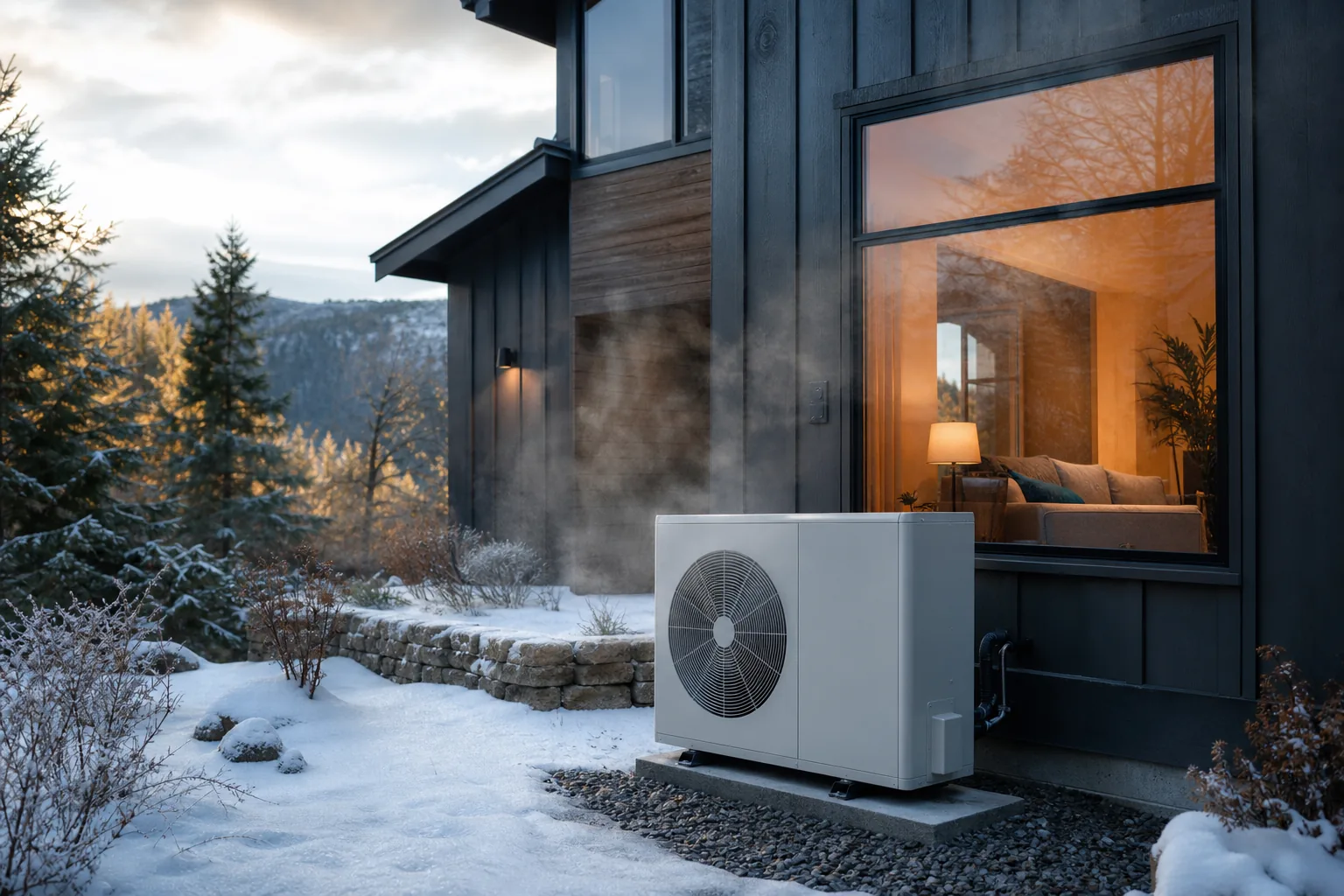
Air-source heat pumps use an outdoor coil, where moisture can freeze during cold, damp weather. To clear frost, the system briefly reverses its cycle and warms the outdoor coil. That defrost cycle is normal. You might hear a change in sound, see steam rise from the unit, or feel cooler air from the vents for a short time.
Keep the outdoor unit clear of snow and leaves. It needs room for air to move, and water from defrost must be able to drain away. Some newer units use a side-discharge fan, which blows air out the side rather than straight up. The design can make it easier to plan airflow around the unit, but it still needs open space and protection from deep snow.
For a technical overview of heat pump systems, see this resource . In local homes, good design matters as much as the equipment: a unit in Colfax may face different winter demands than one in Auburn or Rocklin, and conditions can vary in Roseville, Grass Valley, Penn Valley, and Lincoln.
Home Worx Heating and Cooling serves foothill homeowners with heat pump installation, repair, and maintenance. Contact Home Worx Heating and Cooling for help assessing whether your existing setup is keeping up or needs a closer look.
Cold-Weather Efficiency: COP, Temperature Limits, and Newer Technology
Heat pump efficiency is often described with COP, or coefficient of performance . A COP of 2 means the system delivers two units of heat for each unit of electricity it uses. That number changes with outdoor temperature, indoor settings, and the equipment itself. It is not a fixed rating for every winter day.
As temperatures fall, a heat pump usually delivers less heat and uses more effort to do it. Standard models can begin losing efficiency well before freezing, while some cold-climate models are built to maintain more heating capacity at lower temperatures. That does not mean every model has the same cutoff. Check the maker’s low-temperature operating range and capacity data for the specific unit being considered.
Some conventional heat pumps may struggle to provide enough heat at very low outdoor temperatures. Others keep running but need supplemental heat to meet the home’s demand. So separate two questions: can the unit still operate, and can it heat your home efficiently at that temperature? A manufacturer’s capacity data helps answer both. Winter conditions vary across the Sierra foothills, including Auburn and Colfax.
Cold-climate equipment may use variable-speed compressors, which adjust output rather than switching only between full power and off. Some designs also use vapor injection, a method that supports compressor performance in colder conditions. These features can help, but they do not replace correct sizing, sound ductwork, or a home that holds heat.
When comparing equipment, ask for its rated heating capacity at more than one outdoor temperature. A model’s rating near mild conditions may not show how it performs on a cold night. Also ask which temperature triggers auxiliary heat and how that setting affects electricity use.
For homeowners in Roseville or Lincoln, the right model may differ from one chosen for a higher, colder foothill site. Homeowners in Rocklin, Grass Valley, and Penn Valley can also compare cold-weather ratings when choosing equipment. See energy-efficient HVAC system options for related information.
Key Takeaway:There is no single outdoor temperature that defines every heat pump’s limit. Check the model’s capacity and efficiency data at the temperatures your home is likely to face. For local guidance, contact Home Worx Heating and Cooling.
Heat Pumps vs. Gas, Propane, and Oil: What Affects Running Costs?
A heat pump uses electricity to move heat. A gas, propane, or oil furnace burns fuel to make heat. That difference affects how each system performs and what it costs to run, but the equipment type alone cannot tell you which bill will be lower.
Your cost depends on local electricity and fuel rates, the heat pump’s efficiency at that day’s temperature, and how much heat your home needs. Insulation and air leaks matter too. A drafty house loses heat faster, so any system must run longer to keep rooms comfortable.
Heat pumps can deliver more heat energy than the electrical energy they use because they transfer heat instead of creating it through combustion. Their advantage tends to shrink as outdoor temperatures fall. A furnace’s heat output is less tied to outdoor air temperature, though its operating cost still depends on fuel price and system efficiency.
Propane and oil can cost more or less than electricity depending on current local rates. Compare bills using the home’s actual energy use and the utility rates that apply to you. A contractor can estimate the heat pump’s likely use from the home’s heating load and the model’s performance data. Avoid relying on a broad savings claim that leaves out your house and energy prices.
A dual-fuel setup pairs a heat pump with a gas or propane furnace. The heat pump handles milder weather, then controls can shift heating to the furnace when a set temperature or cost point is reached. An all-electric system may use resistance heat strips instead. Those strips can provide backup heat, but they use electricity directly to make heat, so extended use can affect the bill.
In Grass Valley, a homeowner comparing a heat pump with an older oil system may reach a different cost result than a homeowner with low-cost natural gas. Ask for the assumptions behind any estimate, including the utility rate and the outdoor temperature used. For a closer look at control settings, see this page . Home Worx Heating and Cooling serves Auburn, Colfax, Rocklin, Roseville, Grass Valley, Penn Valley, and Lincoln; contact the team for local service.
Backup Heat, Maintenance, and What to Expect Over Time
Backup heat helps when the heat pump cannot meet the home’s heating demand on its own. That point depends on the equipment and the house. A well-insulated home with a correctly sized cold-climate model may need less help than a larger, draftier home with the same outdoor conditions.
Electric resistance strips are common in all-electric systems. A dual-fuel setup can use a gas or propane furnace instead. The system’s controls should manage the changeover based on the installer’s settings. Ask your HVAC contractor to explain when backup heat will run and how you can tell it is on.
Don’t switch to emergency heat just because the outdoor temperature is below freezing. In many systems, that setting disables normal heat pump operation and relies on backup heat. Follow your system’s instructions, and contact a technician if the home is losing heat or the unit shows a fault.
Frost that clears during a defrost cycle is normal. A thick layer of ice that stays in place, a fan that stops, or repeated fault messages call for service. Don’t chip ice off the coil or reach into the unit. Clear loose snow from around the base without blocking airflow, then arrange a check if the problem returns.
Routine maintenance helps catch airflow and operating issues before peak winter demand. Keep the outdoor area clear and replace or clean the air filter as directed for your system. A seasonal tune-up can also check key parts and controls. For service information, visit Home Worx Heating and Cooling’s HVAC services page .
Our family-owned team serves homeowners in Penn Valley as well as Colfax and the wider region. Across Auburn, Rocklin, Roseville, Grass Valley, and Lincoln, cold-weather performance depends on the home and equipment. Home Worx also lists financing options for HVAC installations, with terms and conditions applying. A service plan or repair visit can help you understand how your current setup handles cold weather before you decide on a replacement.
Pro Tip:Ask your installer to show you the balance point, the outdoor temperature when the system switches to backup heat. That setting should fit both your equipment and your home.
For local heat pump service, contact Home Worx Heating and Cooling.
Frequently Asked Questions
Do heat pumps work below freezing?
Yes, many heat pumps keep working below freezing, though their heating output and efficiency usually decline as outdoor air gets colder. The low-temperature range varies by model. Check the equipment’s published capacity data instead of assuming every heat pump stops at the same temperature. A backup system may help if the unit cannot meet your home’s heat demand.
At what temperature does a heat pump need backup heat?
There is no universal temperature for backup heat. The changeover point depends on the heat pump’s capacity, the home’s heat loss, and the system controls. Ask your contractor to explain the balance point for your setup. The outdoor temperature where backup begins may differ from the unit’s lowest operating temperature.
Is ice on a heat pump normal in winter?
A light layer of frost can be normal, and a working defrost cycle should clear it. Persistent thick ice, a fan that stops, or recurring fault messages may point to a problem that needs service. Keep snow clear of the unit, but don’t chip ice from the coil or put your hands near the fan.
Are cold-climate heat pumps different from standard models?
Yes. Cold-climate models are designed to retain more heating capacity at lower outdoor temperatures than standard models. Performance still varies by make and model, so compare their capacity data at low temperatures. Correct sizing matters too. A cold-climate label cannot make up for poor ductwork or a system that does not match the home.
Can a heat pump cost less to run than a gas furnace?
It can, but the answer depends on local electricity and gas rates, outdoor temperatures, and the home’s heating needs. Heat pump efficiency falls as it gets colder, while fuel costs also change by area. Compare estimated energy use with your actual utility rates, and check whether backup heat could affect the result.
Conclusion
Heat pumps can work well through cold weather when the model, home, and backup plan fit together. Ask for low-temperature capacity data and a clear explanation of when auxiliary heat will run. If you’re in Auburn, Colfax, Rocklin, Roseville, Grass Valley, Penn Valley, or Lincoln, contact Home Worx Heating and Cooling to discuss your home’s heating needs and local service options.